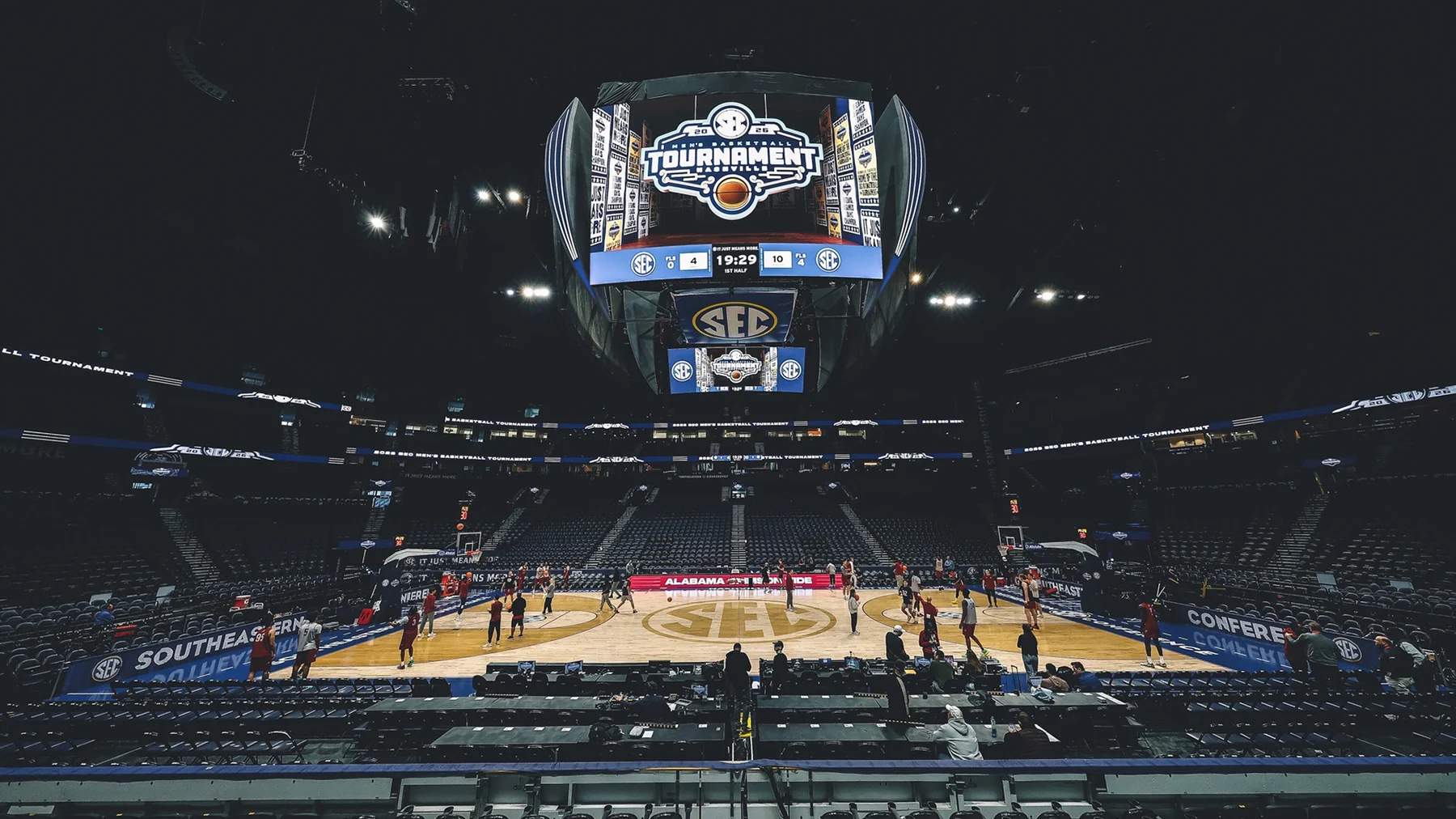
What counts as an SEC basketball championship?
SEC basketball has separate regular-season and tournament winners. The tables below cover the completed seasons ending in 2015 through 2026, with men's and women's results kept apart. A school can win both titles, win one or share a regular-season championship. None of those labels, by itself, says that the school won the NCAA national championship.
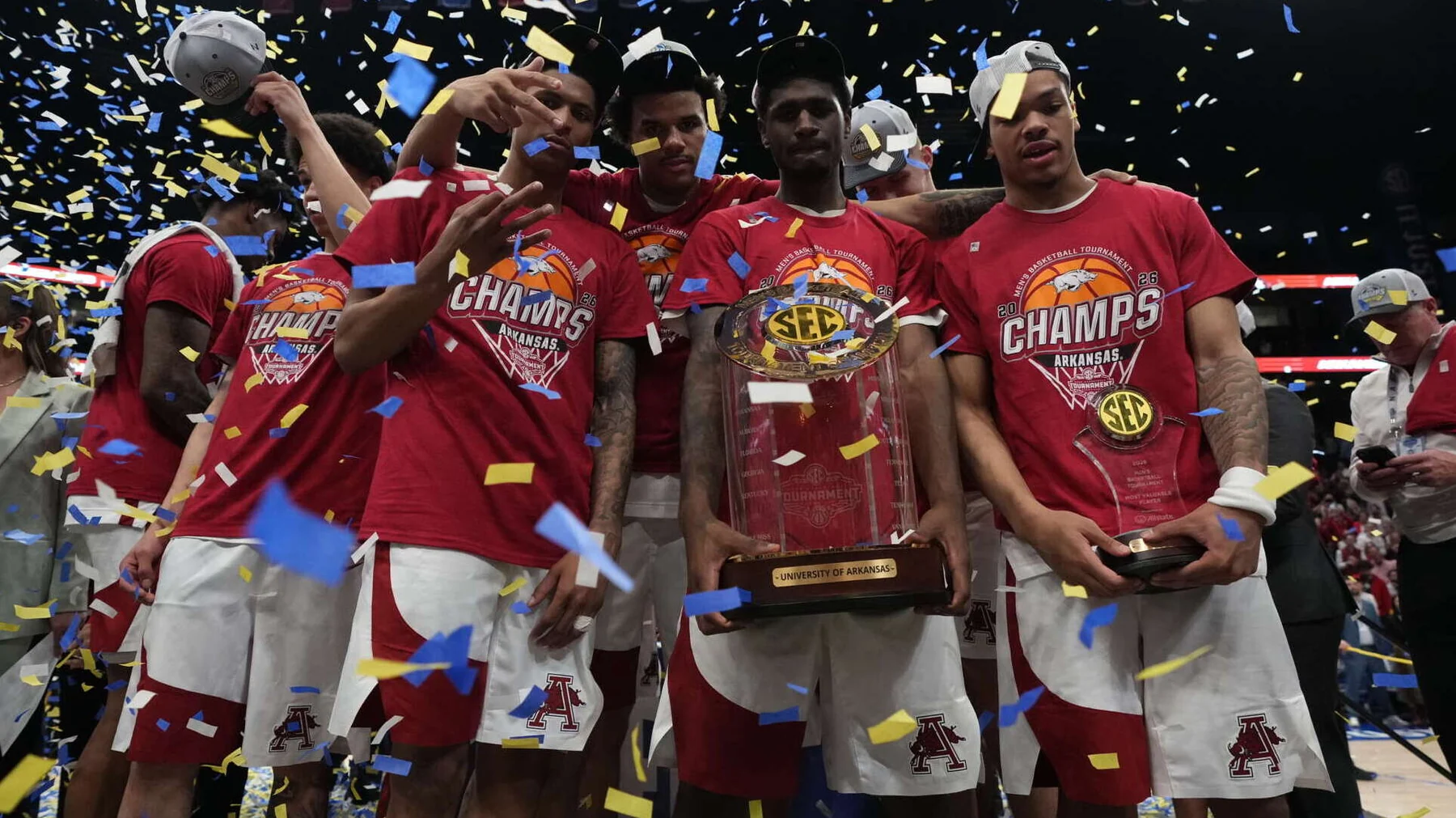
The distinction resolves an apparent contradiction in the most recent men's season. Florida won the 2025-26 regular-season SEC title; Arkansas won the 2026 SEC Tournament. Both statements are correct. Florida's championship describes the conference race, while Arkansas's describes the postseason event. Calling one school simply the SEC champion without naming the competition can hide the other achievement.
How the year labels work
In this guide, the short year is the year in which the season ended. The 2026 row therefore means the 2025-26 season and its spring 2026 tournament. It does not mean the 2026-27 campaign that began later in the same calendar year. Both the full season and ending year appear in the tables so that a reader moving between a school media guide and a tournament recap can match the records.
There is no 2027 winner in this historical list. As of November 12, 2026, that season's conference championships had not been decided. A preseason favorite, a first-place team during the race and the eventual champion are three different things. Keeping the date boundary visible prevents an early-season projection from entering a permanent winners table.
The two titles reward different kinds of work. A regular-season race tests a team across home and road dates, different opponents and changing circumstances. A tournament compresses the task into a bracket, where one loss ends the run. That difference helps explain why a team can deserve credit for a consistent league season even when another opponent beats it in March. It also explains why a lower-seeded tournament winner should receive the full tournament credit rather than an asterisk suggesting the trophy was accidental.
Use the columns to answer a precise question. For a debate about who led the league over the schedule, read the regular-season column. For a question about who lifted the conference tournament trophy, read the tournament column. For an NCAA question, leave this table and consult the national championship record. That habit is more useful than combining several competitions into an unlabeled count of championships.
Men's SEC champions by year, 2015–2026
The SEC's official men's champions record identifies both winners for each school year. This extract preserves every shared regular-season title in the 2015–2026 window. The tournament column says no champion in 2020; Kentucky's regular-season title remains in the adjacent column.
| Ending year | Season | Regular-season champion(s) | SEC Tournament champion |
|---|---|---|---|
| 2026 | 2025-26 | Florida | Arkansas |
| 2025 | 2024-25 | Auburn | Florida |
| 2024 | 2023-24 | Tennessee | Auburn |
| 2023 | 2022-23 | Alabama | Alabama |
| 2022 | 2021-22 | Auburn | Tennessee |
| 2021 | 2020-21 | Alabama | Alabama |
| 2020 | 2019-20 | Kentucky | No champion — tournament canceled |
| 2019 | 2018-19 | LSU | Auburn |
| 2018 | 2017-18 | Auburn and Tennessee | Kentucky |
| 2017 | 2016-17 | Kentucky | Kentucky |
| 2016 | 2015-16 | Texas A&M and Kentucky | Kentucky |
| 2015 | 2014-15 | Kentucky | Kentucky |
Read across a row before reading down a school name. Alabama's paired entries in 2021 and 2023 show seasons in which the same program completed both jobs. The different winners in 2024, 2025 and 2026 show why an article about one conference title cannot automatically stand in for the other. These are different routes through the same season, rather than competing versions of the historical record.
Florida's 2026 regular-season championship came with a 16-2 league record. Arkansas's tournament championship came with an 86-75 final victory over Vanderbilt. In the latter game, Darius Acuff Jr. supplied 30 points and 11 assists. Those facts give the two columns basketball substance: one describes the accumulated league race, while the other records a decisive championship performance. Neither should be removed because the other happened later.
The list is also a useful antidote to treating a tournament seed as a championship category. The winners table records the titles a program earned. A bracket adds information about entry position, byes and opponents, but the bracket does not rewrite the regular-season column once games begin. When comparing two seasons, preserve both the title and the route rather than flattening them into a single ranking.
This table is a recent-season reference, not an all-time ranking of SEC programs. A school absent from these twelve rows may have a substantial earlier history. Conversely, several appearances within this window do not establish an all-time lead. For that question, use the full official record and a clearly stated rule for counting shared titles, vacated results and the two competitions.
Women's SEC champions by year, 2015–2026
The women's table uses the same ending-year convention and keeps shared regular-season championships intact. Its foundation is the SEC's women's champions record, checked against current official season records and recent championship recaps. The men's tournament cancellation in 2020 must not be copied into this table: the women's tournament had already produced a champion.
| Ending year | Season | Regular-season champion(s) | SEC Tournament champion |
|---|---|---|---|
| 2026 | 2025-26 | South Carolina | Texas |
| 2025 | 2024-25 | South Carolina and Texas | South Carolina |
| 2024 | 2023-24 | South Carolina | South Carolina |
| 2023 | 2022-23 | South Carolina | South Carolina |
| 2022 | 2021-22 | South Carolina | Kentucky |
| 2021 | 2020-21 | Texas A&M | South Carolina |
| 2020 | 2019-20 | South Carolina | South Carolina |
| 2019 | 2018-19 | Mississippi State | Mississippi State |
| 2018 | 2017-18 | Mississippi State | South Carolina |
| 2017 | 2016-17 | South Carolina | South Carolina |
| 2016 | 2015-16 | South Carolina | South Carolina |
| 2015 | 2014-15 | South Carolina and Tennessee | South Carolina |
South Carolina's repeated appearances are immediately visible, but the exceptions explain why separate columns matter. Mississippi State won the 2018 regular-season race while South Carolina won that tournament; the following year, Mississippi State occupied both columns. In 2022, Kentucky won the tournament while South Carolina retained the regular-season championship. A one-column list would erase an important part of each season.
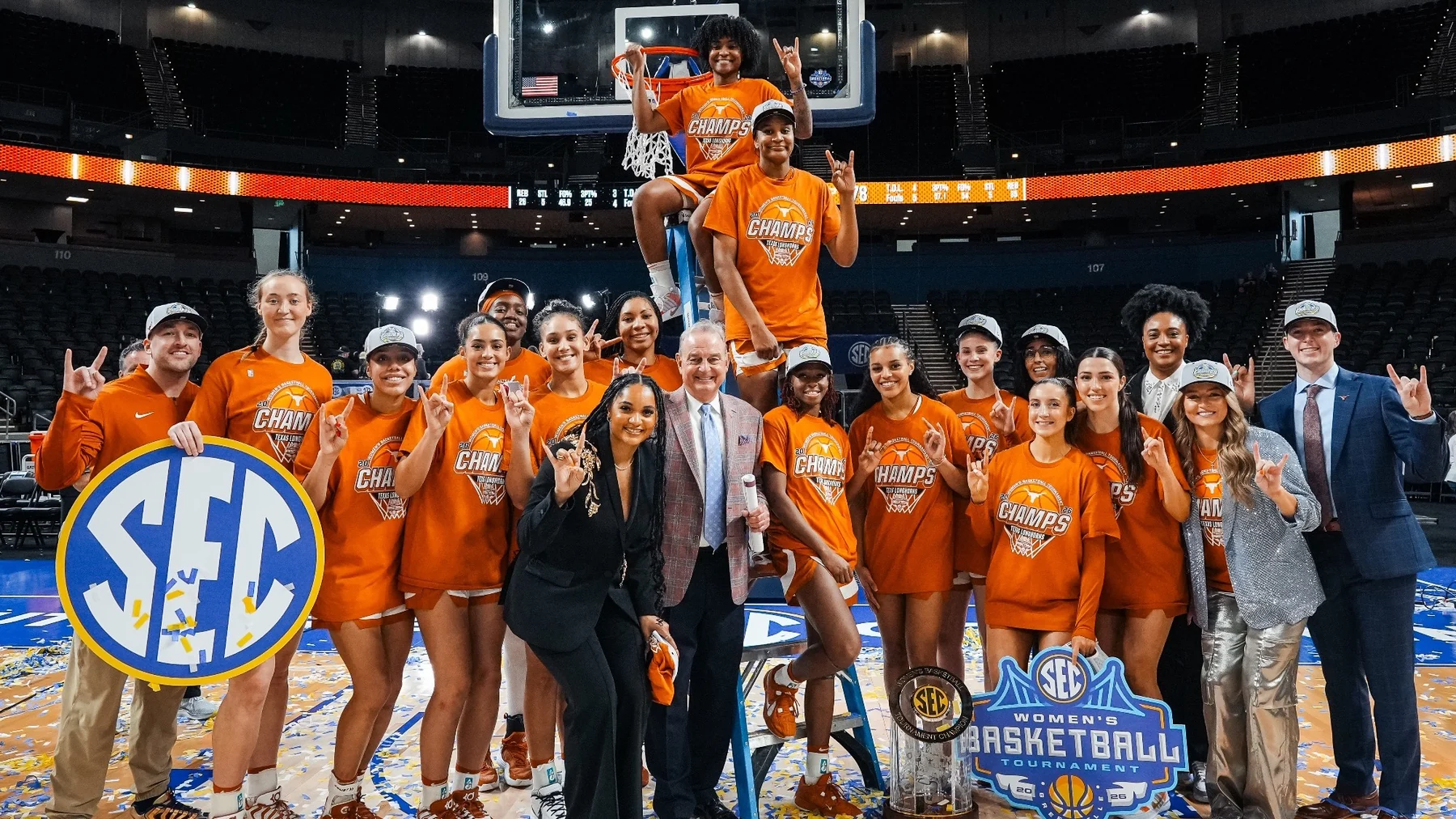
The most recent two years make the point especially clearly. Texas and South Carolina shared the 2025 regular-season title; South Carolina then won their tournament final, 64-45. In 2026, South Carolina was the regular-season champion, but Texas won the tournament final, 78-61. The Longhorns' 2026 victory was their first SEC Tournament championship. Winning that final changed the tournament record, not the already completed conference standings.
For a fan comparing programs, the best first step is to choose which accomplishment matters to the question. Repeated success across the conference schedule is one measure of a program's consistency. Repeated tournament wins describe its record in a different competitive setting. A useful comparison can discuss both, while acknowledging that a neutral-site final and a full league schedule expose teams to different tests.
Keep the scope of the table attached when sharing it. These are twelve completed seasons, not the entire history of SEC women's basketball. The list should not be used to imply that a school without a trophy in this interval has never won one. It also should not absorb a school's conference titles from before it joined the SEC. The heading identifies both the competition and the period being counted.
Shared titles and tournament seeds answer different questions
A co-championship stays a championship even when a tiebreaker assigns one team a higher seed. A bracket needs a single order of entrants. A historical record can recognize two teams for the same regular-season achievement. Treating those jobs as interchangeable is one of the easiest ways to produce an incorrect champions list.
Why every co-champion stays in the record
The 2016 men's row includes Texas A&M and Kentucky; the 2018 men's row includes Auburn and Tennessee. On the women's side, South Carolina and Tennessee share the 2015 entry, and South Carolina and Texas share 2025. Removing one school to make a table look cleaner changes what the conference record says.
Texas supplies a particularly direct example. Its official 2025 regular-season recap describes a co-championship with South Carolina and also identifies the Longhorns as the No. 2 tournament seed. Those statements belong together. The seed describes Texas's placement in the bracket; it does not turn a co-champion into a regular-season runner-up for historical title accounting.
When counting a school's titles, give each listed co-champion its own championship credit. When counting completed championship seasons in the league, a shared title still belongs to one season. These are different denominators. A graphic that adds school credits and labels the sum as a number of seasons will overstate the period covered. State whether you are counting school achievements, distinct seasons or seasons in which one team won both competitions.
What a tournament title adds to a season
A tournament win adds a separate achievement, not an instruction to rewrite the league race. The winner has successfully navigated the opponents and elimination conditions in its bracket. Its road may include different matchups from those faced by the regular-season champion. A short event also makes preparation, foul management, bench minutes and the ability to execute late possessions especially visible.
That does not mean every tournament result proves which team would win a longer series. It means the tournament answers its own question. A fan can admire a championship-game performance while still recognizing another school's season-long league record. Both forms of success deserve a label precise enough to preserve them.
For comparisons across the table, begin with two questions: did the school win or share the regular-season title, and did it win the tournament? Only then discuss the quality of its opponents, the games it played and its later NCAA run. This sequence keeps interpretation attached to evidence. It also prevents a memorable March weekend from swallowing the months of basketball that came before it.
Cancellations, missing tournaments and historical limits
A historical table needs to preserve the reason for an empty championship slot. A tournament that was canceled, a tournament that was never held and a title later marked vacated are not the same outcome. Replacing all three with a dash makes the display shorter but leaves the reader unable to tell what happened.
The 2020 exception was different for men and women
The SEC canceled the remainder of its 2020 men's tournament on March 12 because of the coronavirus situation. No men's tournament champion was crowned. Kentucky's completed regular-season championship remained a separate fact. The cancellation should not be converted into a tournament win for the No. 1 seed, the regular-season champion or a team that won an earlier round.
The women's tournament had already been completed. South Carolina beat Mississippi State 76-62 in the final and therefore belongs in the 2020 women's tournament column. Copying a men's cancellation label across both lists would remove a real women's championship. The date and the competition matter more than the fact that both events occurred in the same spring.
This is why a historical note should be checked against the actual event chronology. A general statement that college sports were disrupted in 2020 cannot settle the status of every completed competition. For a reader comparing seasons, the correct record preserves what had happened before the interruption and identifies what never reached a conclusion.
Why an older list needs its own cutoff
The men's tournament also has a long historical gap: it was not held from 1953 through 1978 before returning in 1979. The SEC's history of the tournament's return supplies that context. A regular-season title from the gap years is not evidence that the same school won a postseason tournament that did not exist.
Older records need attention to official recognition as well. The current men's record marks the 1987-88 titles as vacated. A historical guide should retain that designation instead of silently awarding the titles to another team or preserving an outdated count. Because this article's tables begin in 2015, that example is context rather than an additional row in the recent-period total.
Publication dates and data dates can also differ. An official history page first posted years ago may have received newer rows, while a separate tournament-results page may stop earlier. Check the table's actual last season, not only the date above the headline. For the 2024–2026 entries here, current conference records and school championship reports were checked together. That cross-check is especially valuable when an older page title continues to rank in search.
How to use the champions list when following the next season
Title history is a starting point for a new-season conversation, not a substitute for current evidence. A returning champion gives opponents a clear reference point, but the next roster may distribute minutes, shots and defensive responsibilities differently. Before using last year's trophy to explain this year's ranking, check which players and roles actually returned.
Use the men's SEC schedule and women's SEC schedule to put the next race in context. Look at where the difficult road dates fall and how much rest separates important games. A title defense unfolds through that schedule; it is not decided by the order of the schools in an old winners list.
For each team, choose a current basketball question to go with the historical label. Can the backcourt create a good late-clock shot? Does the frontcourt finish defensive possessions with a rebound? Can the bench sustain the team's style when a starter has two fouls? These are useful viewing questions for any contender, not unsupported claims that a particular current SEC team has those strengths or weaknesses.
Keep conference history separate from NCAA titles
Florida's 2025 season demonstrates why the competition label must remain attached. The Gators won the SEC Tournament and later beat Houston 65-63 for the NCAA national championship. Auburn was that season's SEC regular-season champion. A national title did not transfer Auburn's conference achievement to Florida, just as a conference tournament trophy was not itself the national championship.
For the wider history, use our separate men's NCAA champions guide and women's NCAA champions guide. Keep each list's date range and competition in view when comparing schools. A program can have an important national history and a very different pattern of conference titles, or a strong league record without converting every season into a deep NCAA run.
When the next SEC champions are crowned, the correct update is a new completed-season row supported by the official result. Until then, leave predictions in previews and live standings in the current-season discussion. The historical table remains useful precisely because it separates what has already been earned from what fans hope will happen next.
Sign in with Google to join the discussion.