The latest 10 NCAA men's basketball champions
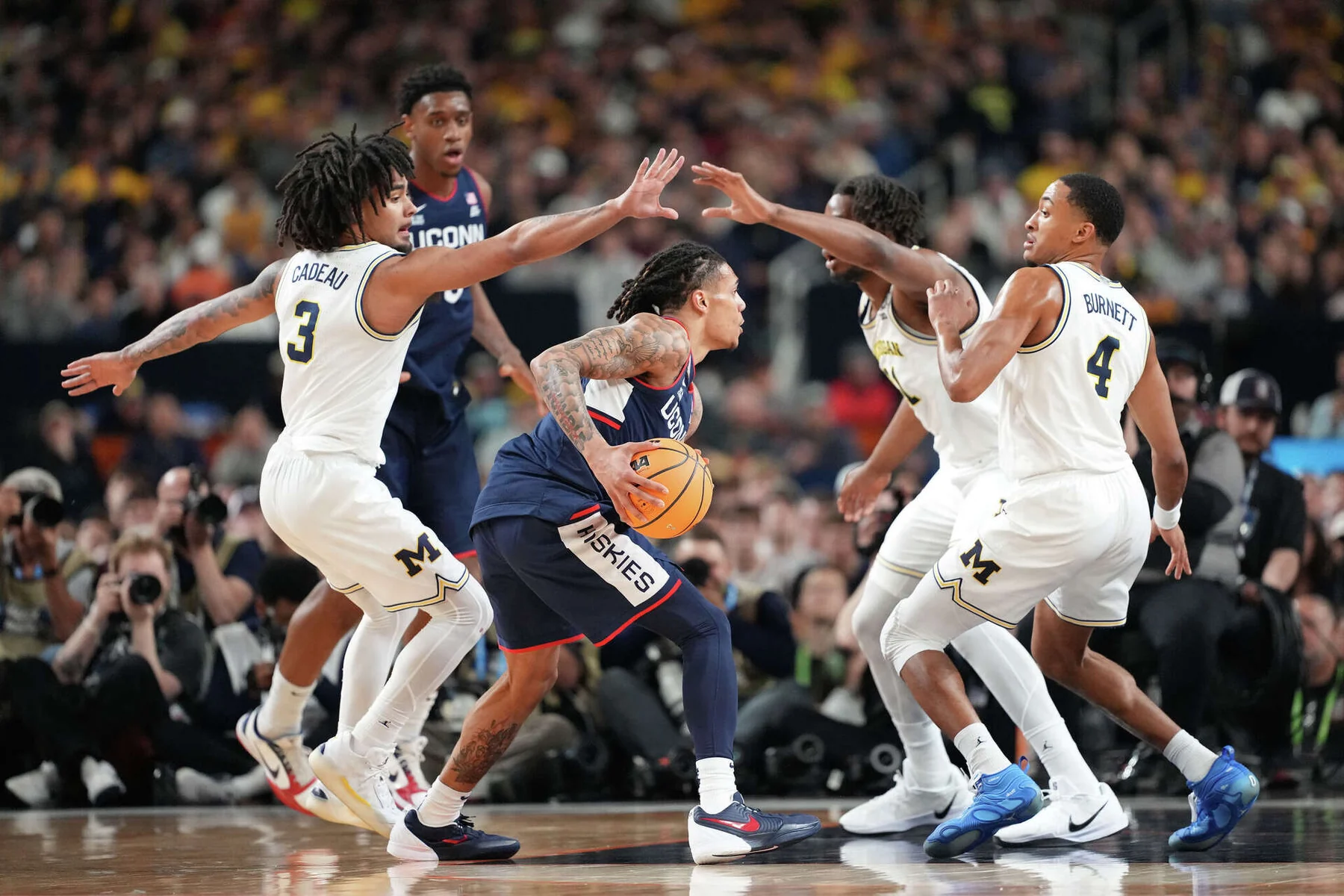
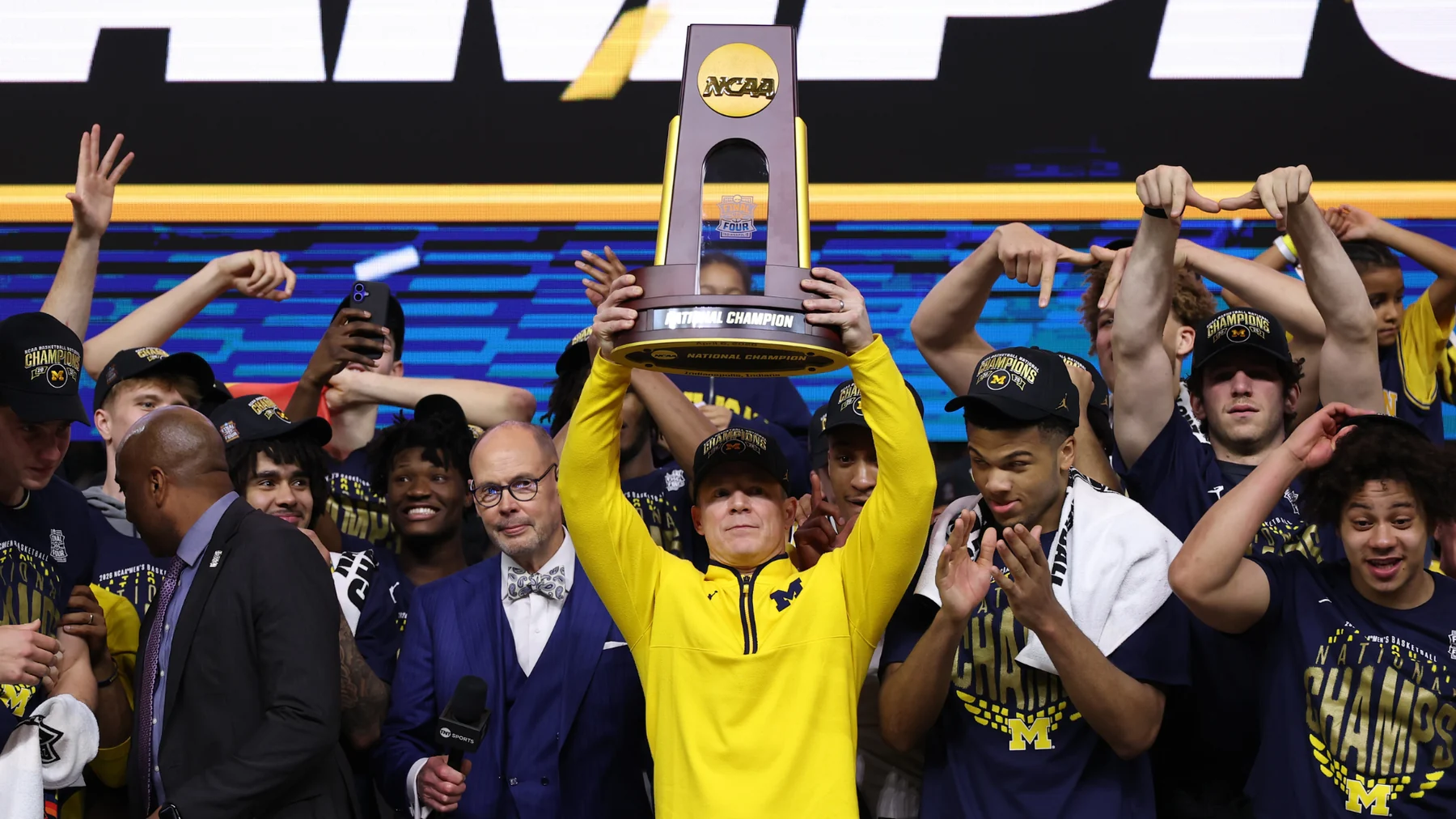
Michigan is the most recent NCAA Division I men's basketball champion. The Wolverines beat UConn 69-63 in the 2026 title game and secured the program's second championship, 37 years after its 1989 breakthrough.
| Championship | Champion | Season record |
|---|---|---|
| 2026 | Michigan | 37-3 |
| 2025 | Florida | 36-4 |
| 2024 | UConn | 37-3 |
| 2023 | UConn | 31-8 |
| 2022 | Kansas | 34-6 |
| 2021 | Baylor | 28-2 |
| 2019 | Virginia | 35-3 |
| 2018 | Villanova | 36-4 |
| 2017 | North Carolina | 33-7 |
| 2016 | Villanova | 35-5 |
The missing 2020 row is intentional: the NCAA tournament was canceled and no champion was named. Therefore, “last 10 champions” reaches back to 2016 rather than stopping at 2017. This is also why a calendar-year query can produce an apparently different count from a list of awarded championships.
UConn owns the only back-to-back run in this group, winning in 2023 and 2024. Villanova's 2016 and 2018 titles show a different kind of short-era command, with one tournament between its victories. The other six champions were distinct programs, a reminder that the modern bracket rewards depth but still exposes every favorite to one cold shooting night, foul trouble or a damaging turnover stretch.
For active matchups rather than the record book, use the men's college basketball schedule. This page records completed championships only.
The last 20 champions show a more distributed era
The most recent 20 officially recognized champions span 2005 through 2026 because 2020 produced no tournament and the 2013 title was vacated. Ten programs divide those 20 trophies. UConn leads this window with four; Florida and North Carolina have three each; Kansas, Duke and Villanova each have two.
| Years | Recognized champions |
|---|---|
| 2026-2021 | Michigan; Florida; UConn; UConn; Kansas; Baylor |
| 2019-2014 | Virginia; Villanova; North Carolina; Villanova; Duke; UConn |
| 2012-2008 | Kentucky; UConn; Duke; North Carolina; Kansas |
| 2007-2005 | Florida; Florida; North Carolina |
Two repeat runs frame the period. Florida won in 2006 and 2007, keeping the core of its rotation intact long enough to defend the title. UConn repeated in 2023 and 2024, becoming the next men's program to survive the roster, scouting and bracket pressures that make consecutive championships rare. Villanova won twice in three tournaments, while North Carolina spread three titles across 2005, 2009 and 2017.
The 2013 line needs exact language. Louisville won the championship game, but the NCAA later vacated the title; the record book does not transfer it to runner-up Michigan. Thus, a chronological table can show what happened on the court while a school-total table must not award Louisville a 2013 championship.
Twenty championships, 11 schools
That distribution supports a narrow conclusion: recent trophies are less concentrated than UCLA's seven-title streak. It does not prove every season had equal competitive balance or that a one-title program was consistently stronger than a frequent Final Four team.
Championships remain an unforgiving measure. A dominant regular season can end on one poor shooting night, while a veteran group that peaks in March can permanently enter this list. School infrastructure matters—coaching, recruiting, player development and lineup adaptability—but the bracket tests all of it in consecutive single-elimination games.
Champions from 1985 through 2005
The tournament expanded to 64 teams in 1985, creating the six-win bracket shape that defined March Madness for decades. Villanova won the first championship of that era, upsetting Georgetown in a final remembered for extraordinary shooting execution.
| Year | Champion | Year | Champion | Year | Champion |
|---|---|---|---|---|---|
| 2005 | North Carolina | 1998 | Kentucky | 1991 | Duke |
| 2004 | UConn | 1997 | Arizona | 1990 | UNLV |
| 2003 | Syracuse | 1996 | Kentucky | 1989 | Michigan |
| 2002 | Maryland | 1995 | UCLA | 1988 | Kansas |
| 2001 | Duke | 1994 | Arkansas | 1987 | Indiana |
| 2000 | Michigan State | 1993 | North Carolina | 1986 | Louisville |
| 1999 | UConn | 1992 | Duke | 1985 | Villanova |
Duke is the period's only back-to-back champion, winning in 1991 and 1992, then adding 2001. Kentucky's 1996 and 1998 titles bracket Arizona's 1997 run. UConn entered the championship record in 1999 and returned in 2004, establishing the first part of a title pattern that would continue across several coaching and roster eras.
The list also captures first championships for several programs in the NCAA era, including Villanova, Arizona and UConn, while established winners such as Indiana, Kansas, UCLA, Kentucky and North Carolina added to older totals. That mixture is the competitive identity of the expanded bracket: historic programs retained advantages, but a single-elimination path offered room for different roster constructions and tactical identities.
Do not rank these champions by final record alone. Kansas went 27-11 in 1988 and still won the games required in March; other champions arrived with far fewer losses. Schedule strength, tournament seeding and opponent quality change what a win-loss line means. The championship designation answers who survived the bracket, not which team would lead a cross-era efficiency model.
Champions from 1964 through 1984
No era shaped the championship leaderboard more than 1964-75. UCLA won 10 titles in 12 tournaments under John Wooden, including seven consecutive championships from 1967 through 1973. NC State's 1974 title ended that streak before UCLA returned for one more in 1975.
| Year | Champion | Year | Champion | Year | Champion |
|---|---|---|---|---|---|
| 1984 | Georgetown | 1977 | Marquette | 1970 | UCLA |
| 1983 | NC State | 1976 | Indiana | 1969 | UCLA |
| 1982 | North Carolina | 1975 | UCLA | 1968 | UCLA |
| 1981 | Indiana | 1974 | NC State | 1967 | UCLA |
| 1980 | Louisville | 1973 | UCLA | 1966 | UTEP |
| 1979 | Michigan State | 1972 | UCLA | 1965 | UCLA |
| 1978 | Kentucky | 1971 | UCLA | 1964 | UCLA |
The table is not only a UCLA story. UTEP's 1966 championship broke between Wooden's first two-title run and the seven-title streak. Indiana completed a 32-0 season in 1976, still the latest undefeated men's national champion. The next eight tournaments produced seven different winning programs, with Indiana and NC State the only repeat schools in that closing segment.
UCLA's achievement should be described with both admiration and context. Tournament fields were smaller, so a champion played fewer NCAA games than today's winner. Rosters also operated under different transfer, professional-entry and scholarship conditions. Yet a shorter bracket does not make seven straight titles automatic. Every run still required winning elimination games while carrying the pressure and scouting attention attached to the reigning champion.
The period explains why championship totals are not evenly distributed. Ten UCLA wins accumulated in a dozen years; many excellent programs have never reached ten Final Fours. Any school leaderboard is therefore partly a history of concentrated dynasties, not simply a ranking of current strength.
The first champions from 1939 through 1963
Oregon won the inaugural NCAA men's basketball tournament in 1939, beating Ohio State 46-33. The early event was much smaller than today's bracket and existed in a college-basketball landscape where other postseason competitions carried substantial prestige. This table tracks NCAA champions only.
| Year | Champion | Year | Champion | Year | Champion |
|---|---|---|---|---|---|
| 1963 | Loyola Chicago | 1954 | La Salle | 1945 | Oklahoma State |
| 1962 | Cincinnati | 1953 | Indiana | 1944 | Utah |
| 1961 | Cincinnati | 1952 | Kansas | 1943 | Wyoming |
| 1960 | Ohio State | 1951 | Kentucky | 1942 | Stanford |
| 1959 | California | 1950 | CCNY | 1941 | Wisconsin |
| 1958 | Kentucky | 1949 | Kentucky | 1940 | Indiana |
| 1957 | North Carolina | 1948 | Kentucky | 1939 | Oregon |
| 1956 | San Francisco | 1947 | Holy Cross | ||
| 1955 | San Francisco | 1946 | Oklahoma State |
For modern readability, the table uses Oklahoma State for the 1945 and 1946 champion now associated with that program; contemporary sources called the school Oklahoma A&M. Those consecutive titles join San Francisco's 1955-56 and Cincinnati's 1961-62 as the repeat runs of this block.
Kentucky created the first large title concentration, winning in 1948, 1949, 1951 and 1958. North Carolina's 32-0 champion in 1957 followed San Francisco's undefeated 1956 winner. Loyola Chicago closed the period in 1963, one year before UCLA began the run that would transform the leaderboard.
These early championships count fully in the NCAA record book, but context matters when comparing paths. Oregon's 1939 team did not navigate a 64- or 68-team field. Conversely, a modern champion cannot replicate the travel, rules and limited scouting environment of the early event. The year-by-year list answers who won; it should not pretend to settle which champion was best across nine decades.
Schools with the most NCAA men's basketball championships
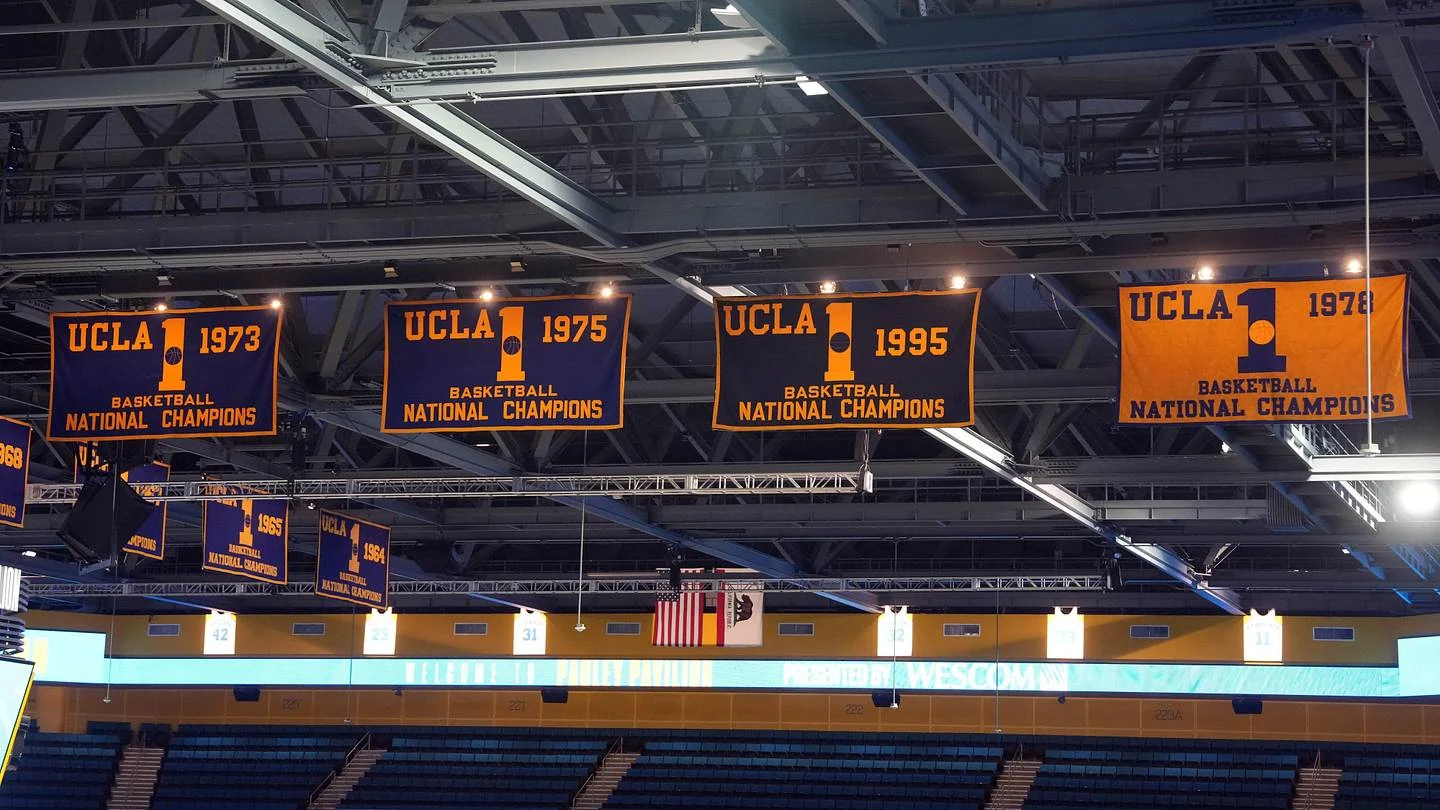
UCLA holds the men's NCAA record with 11 championships. Kentucky follows with eight. UConn and North Carolina have six apiece, while Duke and Indiana have five. No other program has reached five through the completed 2026 tournament.
| School | Titles | Championship years |
|---|---|---|
| UCLA | 11 | 1964, 1965, 1967-73, 1975, 1995 |
| Kentucky | 8 | 1948, 1949, 1951, 1958, 1978, 1996, 1998, 2012 |
| UConn | 6 | 1999, 2004, 2011, 2014, 2023, 2024 |
| North Carolina | 6 | 1957, 1982, 1993, 2005, 2009, 2017 |
| Duke | 5 | 1991, 1992, 2001, 2010, 2015 |
| Indiana | 5 | 1940, 1953, 1976, 1981, 1987 |
| Kansas | 4 | 1952, 1988, 2008, 2022 |
| Villanova | 3 | 1985, 2016, 2018 |
| Florida | 3 | 2006, 2007, 2025 |
Seven programs have two recognized championships: Cincinnati, Louisville, Michigan State, NC State, Oklahoma State, San Francisco and Michigan. Michigan joined that tier in 2026. Louisville remains at two because its 1980 and 1986 titles stand while the 2013 championship is vacated.
Twenty-one additional programs have one title, bringing the list to 37 schools with a recognized NCAA men's championship through 2026. A total is best understood with its timeline. UCLA's 11 are dominated by one extraordinary 12-season span; UConn's six are distributed across 1999-2024; Indiana's fifth and latest came in 1987. Equal numbers can therefore describe very different kinds of program history.
Championship count measures the most decisive achievement, not every dimension of excellence. It ignores runner-up finishes, Final Fours, tournament wins and sustained regular-season quality. Use it to answer “who won the most,” not to declare which roster is strongest today.
How to count 2020, Louisville's vacated 2013 title and pre-NCAA claims
A trustworthy championship list needs rules for the exceptions. This page follows the NCAA Division I men's tournament record from its 1939 beginning through 2026. It does not combine Helms or other retroactive selectors, NIT championships, conference titles, women's titles or lower-division championships.
2020: canceled, no champion
The NCAA canceled the tournament on March 12, 2020, because of the COVID-19 pandemic. No bracket was completed and no title was awarded. A “last 10 champions” list must skip 2020 rather than name the final No. 1 team in a poll.
2013: title vacated, not reassigned
Louisville won the championship game, but NCAA penalties later vacated affected tournament records. The official list marks the participation as vacated. Runner-up Michigan did not become champion, so 2013 contributes no recognized title to either school.
Before 1939: outside NCAA tournament scope
Oregon won the first NCAA tournament in 1939. Programs may claim earlier national recognition from other competitions or selectors, but adding those claims would answer a broader question than “NCAA men's basketball champions.”
The distinction between event history and record-book status is especially useful for 2013. Fans can accurately say Louisville defeated Michigan in the title game and also accurately say Louisville has no recognized 2013 NCAA championship. The first describes what happened on the court; the second describes the sanctioned record.
These rules also explain apparent disagreements between lists. One source may present every championship-game winner chronologically and attach an asterisk. Another may count only currently recognized school titles. Neither format is automatically misleading if its method is explicit, but silently giving Louisville three titles or inventing a 2020 champion is incorrect.
A simple audit can resolve most disagreements. First, state that the competition is the NCAA Division I men's tournament. Second, check every year against the NCAA championship-history table rather than adding numbers from a school's marketing page. Third, treat canceled and vacated entries as status fields, not ordinary champions. Finally, sum the school table and compare it with the number of recognized championship years. This catches common errors such as counting Louisville's 2013 result, treating 2020's final poll leader as champion or combining men's and women's trophies.
Names also require care. The program now called Oklahoma State won in 1945 and 1946 when the institution competed as Oklahoma A&M. A historical table can use the contemporary name or the current program name, but its school total should connect those championships to one lineage. By contrast, a runner-up does not inherit a vacated title. These are different record-management questions: one concerns a school's name across time, the other concerns whether the NCAA recognizes a championship at all.
This page will require one routine update after each completed tournament: add the new year to the chronological table, adjust the school totals and roll the last-10/20 windows. For today's results, use the college basketball schedule today; an official champion is added here only after the title game is complete.
Sign in with Google to join the discussion.