What the October 2026 attendance rule actually changes
The NCAA has approved a restriction on Division I men's basketball coaches and other team-specific staff attending games involving other teams. It covers preseason games, regular-season games and conference tournaments, with important exceptions. The decision was announced on October 7, 2026. It is therefore more specific than a blanket statement that college coaches can no longer watch college basketball.
The easiest way to understand the change is to start with the seat in the arena. A coach whose team is not playing cannot assume that buying a ticket makes attendance permissible. Conversely, seeing a familiar coach in the crowd does not establish a violation: the event, relationship and competition stage may supply an exception. The NCAA's approval announcement should take priority over abbreviated social posts.
The staff members and games covered
The language reaches beyond head coaches. An assistant or another employee assigned specifically to the team cannot treat the rule as something that only affects the person drawing up the final play. The announcement does not supply an exhaustive job-title directory, so an unusual staffing arrangement needs a compliance determination rather than a guess based on the person's social-media biography.
For a hypothetical example, imagine a Duke assistant has a free evening while two other Division I programs play a separate November game nearby. The game being useful preparation for a future opponent would not, by itself, be one of the permissions listed in the announcement. Nor would saying that the assistant only wanted to enjoy good basketball resolve the attendance question. This is an illustration of the rule's structure, not an allegation about Duke or any member of its staff.
Keep the sport boundary intact as well. The October announcement discusses football alongside men's basketball, but football's bowl and championship permissions have their own wording. It does not announce the same attendance change for women's basketball. Applying a men's rule to a women's coach simply because both teams represent the same school would be an unsupported extension.
For fans, the useful starting point is therefore narrow: identify the staff role, identify the game and then check the applicable exception. A conference tournament is explicitly included in the restriction even though it takes place after the regular season. Calling every March game “postseason” without checking that distinction can lead to the wrong answer.
The three permissions that short headlines leave out
Three questions prevent most of the confusion: is the staff member's team competing in the event, is a family member participating, or is this an NCAA championship or another postseason contest? Those are distinct routes through the announcement. They should not be compressed into a single claim that a coach can attend only when his own team is playing.
Sharing an event with another team
The shared-event exception protects an obvious part of tournament basketball: teams often need to prepare for another opponent while their own event is under way. Imagine staff watching the earlier semifinal of the same tournament before coaching the later semifinal. Seeing how the possible next opponent handles a switch, protects the rim or manages foul trouble is normal basketball preparation. The rule's exception recognizes that setting.
Players Era provides a current example of why the distinction matters, with multiple teams gathering for organized competition in Las Vegas. That example does not establish that every game elsewhere in Las Vegas is part of the same event. A common city, hotel or television network is not sufficient evidence of event membership. Check the actual competition structure before interpreting a staff sighting.
Watching a family member participate
The announcement also permits attendance when a family member is a participant. This addresses a different concern from scouting: staff members have family relationships that can overlap with college competition. It would be misleading to publish a photograph of an assistant watching a relative and omit that relationship from the explanation.
Do not silently widen this to every personal connection. The public announcement does not say that being an alumnus, knowing the opposing coach or having played with an athlete's parent creates an additional permission. Nor does the ability to attend resolve every separate question about recruiting conversations during the visit. An exception has a defined purpose; it is not a general exemption from the rest of the rulebook.
NCAA championships and other postseason games
For men's basketball, the NCAA separately preserves attendance at NCAA championship and other postseason contests. Its announcement does not attach an own-team-participation condition to that sentence. Some short accounts blur that distinction by explaining postseason attendance entirely through the shared-event exception. Reading the official wording avoids making the restriction broader than the NCAA announced.
The tricky boundary is the conference tournament. It is expressly named among covered games, so use the shared-event or family analysis there rather than assuming the calendar date supplies a universal postseason exemption. Also remember that permission under an NCAA attendance provision does not promise a credential, a courtside seat or access to a locker room. Ticketing and event access remain separate practical questions.
How to read a coach sighting without inventing a violation
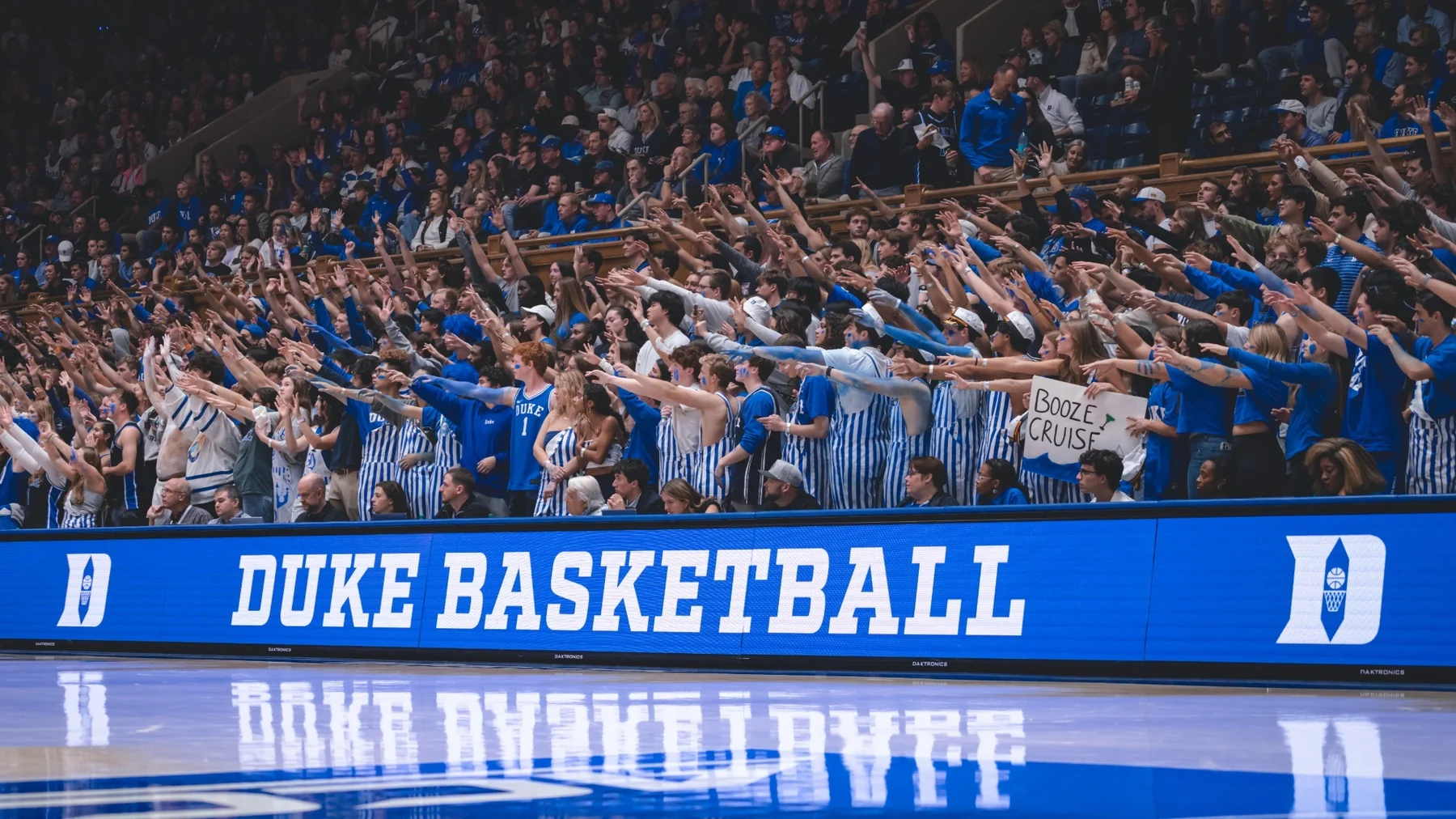
A crowd photograph can show that someone was in a building. It usually cannot show why that person was there, which team responsibilities he holds or whether a listed exception applies. That missing context is especially important in college basketball, where one arena can host several teams in a day and family networks cross school boundaries.
Consider a hypothetical conference-tournament afternoon. A staff member is visible during a game before his own school's session. The first question is whether his team is competing in that event, not whether his face appears on the broadcast. Contrast that with a separate regular-season game across town on an idle night. The visual evidence might look similar, but the event relationship is different. An accurate explanation needs the schedule and the reason for attendance.
Fans in the public discussion of the announcement raised precisely these kinds of questions. Their reactions help identify what needs explaining; they do not establish an enforcement record or a reliable list of offenders. A joke about a rival shopping for transfers is still a joke unless reporting supplies evidence.
A useful report should identify the date, game, event and relevant staff role, then seek the school's explanation before attaching a conclusion. If a family connection is the reason given, distinguish a confirmed relationship from a guess in a comment thread. If someone cites a postseason permission, identify the competition rather than relying on the word “March.”
This approach also protects the basketball conversation from being swallowed by unsupported allegations. A staff member may be watching a future opponent under a legitimate shared-event exception. That can matter tactically without being improper: coaches can notice which guard struggles against pressure or which reserve big changes the defensive coverage. Discussing that preparation is more useful than treating every close-up as evidence of a recruiting plot.
Finally, an attendance question is not a penalty announcement. The October news release does not provide a universal suspension, forfeiture or fine for every possible breach. Inventing an automatic consequence turns an incomplete observation into two unsupported claims. Wait for the relevant rule interpretation or an actual enforcement finding before discussing sanctions as fact.
Why the NCAA connected attendance to transfer recruiting
The NCAA says the purpose is to reduce in-person recruiting of potential transfers before those players enter the Transfer Portal. That is a stated policy aim, not a finding that every coach sitting in another arena has contacted an athlete. The distinction matters because the rule regulates an observable activity while the larger problem concerns recruiting conduct.
A recent enforcement example helps show the difference. In an October 23, 2026 negotiated resolution involving Ole Miss, the NCAA described impermissible communications by former assistant Wes Flanigan with an adviser to an athlete at another school before the athlete entered the portal. The agreement identified 16 calls and 10 text messages. The athlete eventually transferred elsewhere and did not receive an Ole Miss scholarship offer.
That case was about communications, not an established breach of the newly announced attendance rule. The NCAA also said Chris Beard was not personally involved, was unaware of the contact and received no penalty. Presenting the case as a coach being caught in the stands would misstate both its evidence and its relationship to the October policy.
What an attendance restriction can realistically address
As an editorial assessment, restricting staff presence removes one obvious route for approaching or visibly evaluating another program's players during its season. It can also make certain boundaries easier for schools to teach. “Check before attending” is a clearer instruction than trying to reconstruct every intention after a coach has already made the trip.
It does not follow that the restriction can solve every form of improper recruiting. The Ole Miss example itself demonstrates why: telephone and adviser communications can matter even without a ticket scan or a camera finding a coach in an arena. Success would have to be assessed against actual behavior and enforcement over time, not inferred from the announcement alone.
The stakes are especially understandable for programs trying to retain a productive guard or an improving center. A coach still has to establish roles, manage minutes and prepare for the next opponent while players consider their futures. Our transfer portal and mid-major basketball guide explains that roster-building pressure more broadly. The attendance provision addresses one piece of that environment; it does not guarantee roster continuity.
Fans can therefore support the stated aim while still questioning the design. Whether the restriction meaningfully deters improper approaches, creates unnecessary limits on ordinary attendance or achieves both effects is an evaluation to make with evidence. Announcing the policy and proving its effectiveness are different steps.
What changes for scouting and the game on the floor
The announcement restricts particular in-person attendance. It does not announce that teams must stop preparing for opponents or that watching a game on television has become the same activity as entering the arena. Those distinctions matter because a discussion about transfer recruiting can easily become an exaggerated claim that scouting itself has disappeared.
A tournament opponent is more than its box score
A score tells a staff who won. Preparation asks why possessions unfolded that way. Did the ball handler beat a trap with a pass through the middle, or escape by dribbling toward the sideline? Did a center recover after showing at the level of a screen? Which defender was responsible when a shooter became open in the opposite corner? These are basketball questions that remain relevant whatever attendance arrangements a team uses.
Take Arkansas' 76–72 exhibition win over Gonzaga on October 24 as a concrete example. Gonzaga's official report records Arkansas making 11 of 24 three-point attempts and Gonzaga making 6 of 28. Those numbers establish what happened in that game. They do not, alone, explain whether the difference reflected defensive choices, shot quality or ordinary shooting variation.
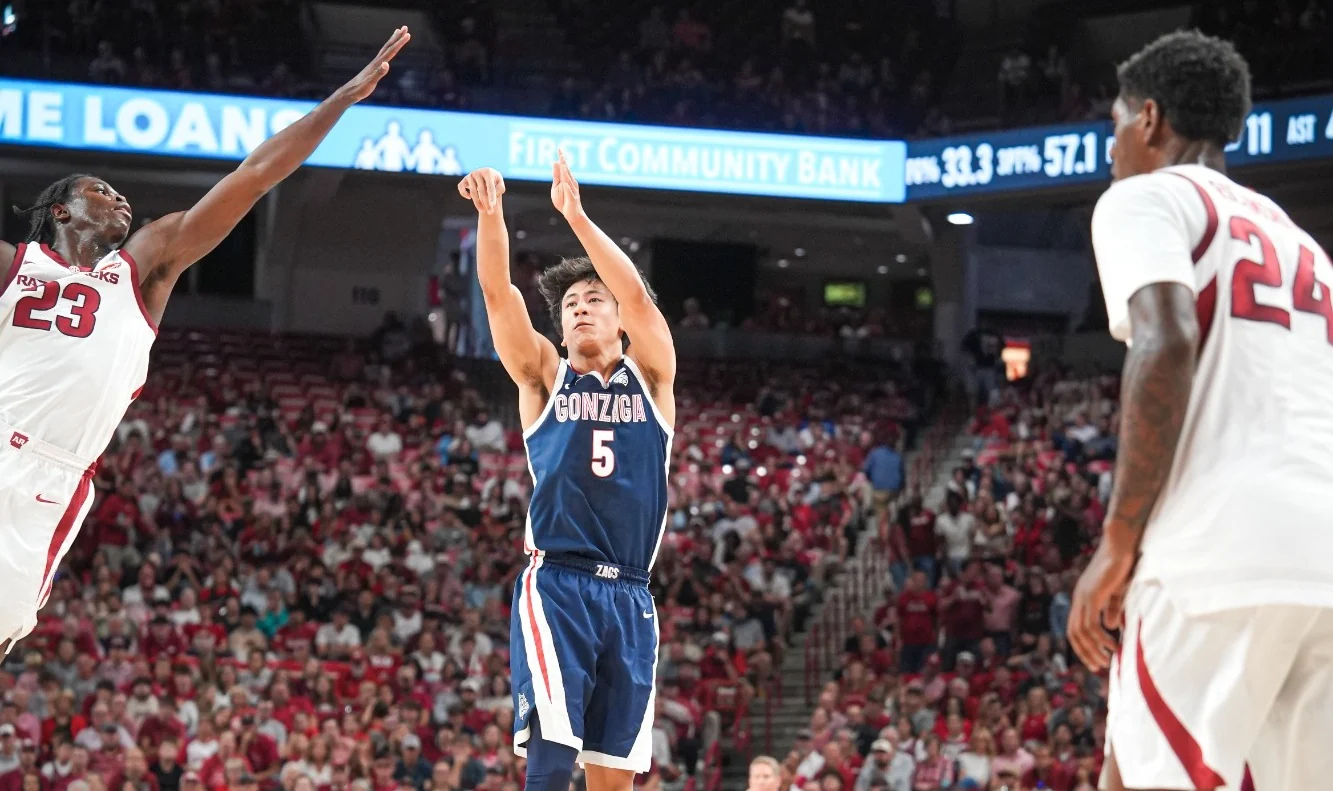
An analyst reviewing the game would want to examine the attempts themselves and the lineups on court. That is a recommended way to study the matchup, not a claim that a particular coach attended or that the new attendance rule affected the result. Keeping the example grounded prevents an administrative rule from becoming an invented tactical explanation.
Keep attendance, recruiting and eligibility separate
These are three different questions. Attendance asks whether a staff member may be physically present under the relevant provision. Recruiting asks whether a communication or other activity is permissible. Eligibility asks whether an athlete may compete. Getting a favorable answer to one does not automatically answer the other two.
A staff member attending under the family exception still needs to observe applicable recruiting restrictions. A player having a difficult night against pressure does not become a permissible recruiting target because the game was televised. And an opposing coach's permitted postseason visit does not establish that any player has decided to transfer.
For the viewer, the best basketball takeaway is to keep watching the possessions while using the rule to interpret staff activity accurately. The policy may change who is visibly present in some buildings. It does not change the importance of spacing, decision-making, rebounding or the quality of a team's preparation.
A practical checklist for the 2026-27 season
When this issue appears during the season, use a short sequence rather than reacting to the headline alone. Start by establishing whether the person is a Division I men's basketball coach or other team-specific staff member. Then identify the contest and the event to which it belongs. Only after that should you assess an exception.
- Check the competition stage. Preseason, regular-season and conference-tournament games are named in the restriction. NCAA championship and other postseason attendance has separate treatment.
- Check event participation. A team competing in the same event supplies a different context from a staff member making an unrelated trip.
- Check the family relationship. A participating family member can matter; an assumed friendship or alumni connection is not the stated exception.
- Separate presence from conduct. A permitted seat does not settle whether a particular recruiting conversation is allowed.
- Verify an actual finding before naming a violation. A clip, rumor or rival message board is a lead, not a completed enforcement case.
The two common basketball settings show why the sequence works. Staff watching the next potential opponent during their own tournament may fit the shared-event exception. Staff attending a completely separate January game simply because the team has a day off need a different basis. Those scenarios can involve the same arena, the same kind of ticket and the same television camera, yet the relevant facts differ.
Do not mix the attendance change with a portal-window calendar. The NCAA's October 7 headline covers several decisions, including a football transfer-window change. That does not turn the football dates into men's basketball transfer dates. Likewise, high-school evaluation periods and contact periods answer different questions from whether a staff member can attend another Division I team's contest. Consult the 2026-27 basketball recruiting calendar guide for that separate schedule.
This explainer reflects the official announcement and supporting material checked on October 30, 2026. An individual school's compliance staff may need more detail to resolve an unusual case, particularly where job responsibilities, event identity or access policies are unclear. The sensible response is to obtain that detail, not to invent an exception or a punishment.
For the season ahead, keep the main distinction clear: the policy targets certain in-person attendance in an effort to reduce improper transfer recruiting. It preserves meaningful event, family and postseason permissions. Understanding those boundaries makes it easier to follow the sport's roster debates while leaving room to enjoy the actual game.
Sign in with Google to join the discussion.