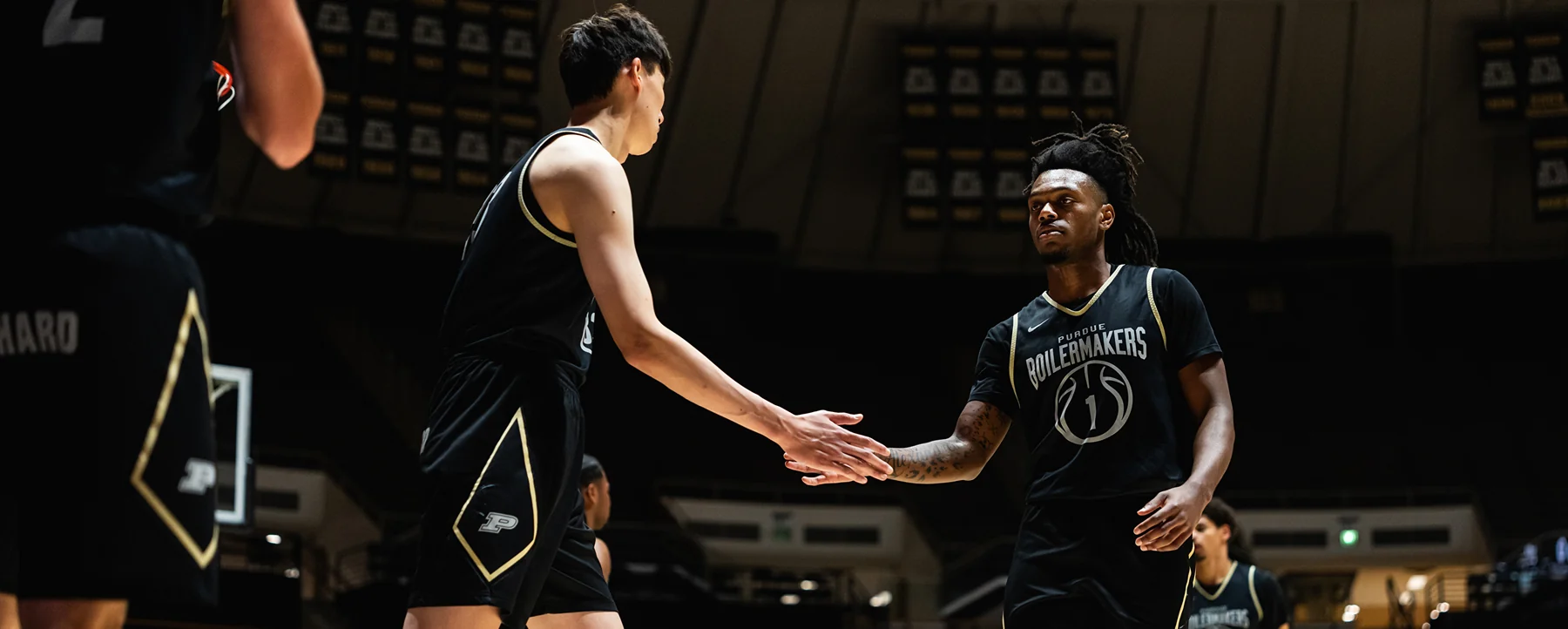
Which NCAA basketball recruiting calendar applies to you?
The NCAA publishes separate Division I men's and women's basketball recruiting calendars. A date that permits an activity in one does not automatically permit it in the other. Start with the sport, division, academic year and the prospect's category before deciding what a colored date on a calendar means. This guide covers the official 2026–27 Division I calendars, updated July 30, 2026 and checked October 19.
The difference is immediately visible in October. The men's calendar places October 19 within its academic-year recruiting period. The women's calendar places that date within a scholastic evaluation period. Both staffs can be working on future rosters, but their permitted off-campus activities differ. A family following both a son and a daughter cannot treat one screenshot as a shared instruction sheet.
The calendar regulates recruiting activity by authorized college staff. It does not establish whether a particular player has academic eligibility, whether an institution has admitted the player, or whether an athletics aid agreement is available. Rules tied to grade level, the type of communication and the prospect's circumstances still apply. A broad recruiting period is permission within the remaining rules, not an exemption from them.
Read the year carefully. A 2026–27 calendar crosses from fall 2026 into spring and summer 2027. January dates belong to the new calendar year. The men's sheet also displays August 2027, whereas the women's annual sheet finishes with July 2027. Searching only for “2026 live period” can surface the preceding cycle and produce a trip planned around the wrong weekend.
There are other calendars in the same basketball ecosystem. A team's practice calendar concerns its current athletes. Its game schedule determines when fans can watch. Signing periods concern written agreements, while transfer rules govern a different pathway with their own conditions. None should be substituted for a recruiting activity calendar simply because they all contain dates and basketball terminology.
For current-team timing, use our 2026–27 season opening and practice guide. For recruiting, keep the NCAA's men's and women's PDF files available alongside any summary. The footnotes can change the answer for seniors, two-year college prospects or the type of event involved. Confirm an individual plan with the institution's compliance staff before spending money on a visit or assuming that a coach can attend an event.
The men's Division I calendar from fall 2026 through summer 2027
The men's sheet uses “recruiting period” for the broad academic-year window that permits authorized in-person off-campus contacts and evaluations. Its base period runs from September 9, 2026 through April 30, 2027. Several narrower restrictions interrupt it, so a long green band should never be read without the red exceptions.
Academic-year recruiting has specific dead-period interruptions
August 1–19, 2026 is dead, followed by a quiet period from August 20 through September 8. The academic-year recruiting window then begins, with dead periods on November 9–12 and December 24–26, 2026, and April 1–8, 2027. A spring visit planned for April 6 therefore encounters a different rule from one planned after that interruption, even though both dates sit inside the broad September-to-April span.
The activity also has to qualify. The calendar's academic-year note limits live evaluations to specified scholastic activities and regularly scheduled international team practice or competition. A coach following a prospect through a normal high-school season is operating in a different setting from someone attending a privately organized showcase. A calendar date alone does not make every event eligible.
Summer evaluation windows are exceptions to the base period
May 1–June 30 is primarily quiet, with interruptions. Dead dates include May 9, May 26–June 6 and June 19–20. The May 14–16 evaluation window covers qualifying certified nonscholastic events and the specified international activities. For NCAA-certified events, the PDF gives a Friday 8 a.m. start and Sunday 4 p.m. finish. Do not extend that permission to a Thursday practice simply because a tournament begins nearby.
June 11–13 and June 25–27 are evaluation windows for approved scholastic events. The NBA G League Combine, NBA Draft Combine and NBPA Top 100 Camp appear as separate event-specific exceptions with dates marked TBD in the checked PDF. Their presence does not create a general open evaluation period, and a later event announcement should be checked against the applicable NCAA permission.
July starts from a dead-period baseline, with evaluation windows July 8–11 and July 15–18, followed by a quiet period July 19–25. The July evaluation periods begin Thursday at 8 a.m. and end Sunday at 6 p.m. for the qualifying activities described in the sheet. August 1–18, 2027 returns to dead, with August 19–31 quiet.
Keep the official men's calendar with your travel plan. A summer itinerary can cross from dead to evaluation to quiet within a few days. The useful planning unit is the exact date, time and event category together, not a month labeled broadly as “live.”
The women's calendar has different contact dates and shutdowns
The women's sheet distinguishes contact periods, evaluation periods, quiet periods, dead periods and recruiting shutdowns. Those distinctions change both where a coach can recruit and which kind of activity is allowed. The shutdown category is particularly important because its prohibition extends beyond face-to-face recruiting.
Fall and winter distinguish contact from evaluation
August 2026 is quiet except for the August 10–16 shutdown. September 1–30 is a contact period for seniors and two-year college prospective student-athletes. For other prospects, it is an evaluation period limited to scholastic activities. A September date can therefore produce different answers for two teammates in different prospect categories.
From October 1, 2026 through February 28, 2027, the base is evaluation for scholastic activities, interrupted by the December 24–26 dead period. March 1–31 returns to the category-specific contact structure: seniors and two-year college prospects have the contact period, while other prospects remain limited to scholastic evaluation. April 1–5 is dead.
For a family, the practical consequence is that being watched during the school season does not automatically permit an off-campus conversation afterward. The evaluator's presence and the right to make personal contact are different permissions. The distinction also helps fans understand why a staff can be visibly active at games without every appearance producing a reported home visit.
Spring and summer include complete recruiting shutdowns
April 6–July 31 is primarily quiet, with many exceptions. April 23–25 and May 14–16 provide evaluation windows for certified nonscholastic events. April 22 and 26 are dead for high-school and two-year college prospects. The calendar then specifies a May 3–9 recruiting shutdown, not merely an ordinary dead period. May 13 and 17 are additional dead dates surrounding the May evaluation weekend.
June's scholastic evaluation window runs from noon June 17 to 6 p.m. June 19 for the approved events described in the PDF. June 16 and June 20 are dead. The exact times matter when deciding which games a college coach can evaluate at a multi-day event; an event's overall operating hours are not the same thing as the NCAA window.
July's evaluation dates are July 9–12 and July 23–26. The adjacent dead dates are July 8, 13, 22 and 27. Other restrictions, including the July visit condition, still apply during an evaluation window. Do not substitute the men's July weekends or extend the second women's window to July 28.
The official women's calendar is the controlling date reference for this overview. Its prospect-specific notes and event exceptions explain why a month-long summary is insufficient. Check those notes before booking travel, and keep a school's compliance contact involved when the plan crosses different period types.
What a live evaluation period permits at a basketball event
“Live period” is common basketball shorthand, but the official permission is more precise. During an evaluation period, authorized staff can assess prospects' playing ability and academic qualifications through permitted off-campus activity. They cannot turn that permission into an in-person off-campus recruiting conversation with the prospect or family.
This matters in a gym where a college coach sits courtside for several games. The coach can be watching how a guard reads pressure, whether a wing defends away from the ball, or how a center reacts after a missed rotation. None of that presence guarantees an offer, and it does not mean the family can arrange an off-campus meeting during the same window. Observation and personal recruiting contact remain different activities.
Certification and event type matter as much as the date
A certified nonscholastic event, an approved scholastic event and a college-run camp are distinct categories. The calendar identifies which ones qualify in each window. A tournament advertising that it falls on a live weekend has supplied only part of the answer. Families should verify the event's status through the NCAA's basketball certification resources rather than relying entirely on promotional language.
The NCAA directs certification applications and team building through its Basketball Certification System. Its public resources include athlete, coach and operator tools. Those systems address event requirements; they do not certify that a specific college will attend, that a prospect has secured admission, or that participating will produce recruitment. A parent should be able to separate an event's approved status from a marketing promise about exposure.
Timing requires another check. An event may operate for several days while Division I staff attendance is limited to a narrower evaluation window. A Thursday session before a Friday opening is not automatically available to coaches. The same issue arises at the closing boundary: extending a tournament schedule does not extend the NCAA's permitted evaluation hours.
Basketball value also extends beyond scoring totals. A prospect's useful possessions can include a controlled outlet pass, disciplined closeout, screen that creates an advantage, or decision to move the ball after drawing help. These are examples of what a coach might study, not a published NCAA evaluation rubric. A short highlight clip and a complete game can show different parts of the player's contribution.
Before committing to an event, identify the sport, approved event category, precise evaluation dates and any prospect restrictions. Then ask the event operator and institutional compliance staff to resolve uncertainty. That process is more reliable than treating “NCAA certified” or “live” as a blanket promise that every coach, activity and conversation is allowed throughout the building.
Campus visits, communication and the meaning of a dead period
A dead period blocks in-person recruiting contact and evaluations on or off campus, as well as official and unofficial recruiting visits. A quiet period has a different boundary: recruiting contact can take place on the institution's campus, while off-campus contact and evaluation are restricted. Those basic definitions still sit alongside sport-specific visit and communication rules.
A quiet period can allow campus contact
The word “can” matters. A date marked quiet is not automatic approval for any prospect to visit any school. Grade-level conditions, the type of visit and additional calendar restrictions remain relevant. Before booking transportation, confirm the actual plan with the recruiting institution rather than assuming that an open campus tour and an athletics recruiting visit are the same activity.
Men's basketball has a specific July condition: a prospect cannot make an unofficial visit during the month unless he has signed the institution's written offer of admission and/or financial aid, or the institution has received a financial deposit responding to an admission offer. That applies even when July 19–25 is marked quiet. The quieter period does not erase the month-wide footnote.
The women's PDF applies a corresponding condition to official and unofficial visits during July evaluation periods. A family should identify the exact visit, prospect and institution involved instead of borrowing a general statement that campus meetings are always allowed during evaluation or quiet periods. A signed agreement or deposit also does not erase unrelated restrictions that still apply.
A shutdown is broader than a dead period
An ordinary dead period is defined around in-person recruiting and visits. It does not, by itself, mean that every otherwise permissible email or telephone conversation is forbidden. Communication still depends on the sport's separate rules and the prospect's circumstances. Avoid both extremes: “dead means no communication at all” and “dead means coaches can always call anyone.”
A women's recruiting shutdown is broader. The calendar prohibits recruiting in all forms, including correspondence and making or receiving telephone calls. That is why the August 10–16, 2026 and May 3–9, 2027 shutdowns deserve their own label. A family cannot treat them as routine dead periods and schedule a recruiting call instead of a visit.
Women's July evaluation periods add another important restriction: the current NCAA manual prohibits direct or indirect communication with the prospect, family, coach and basketball-associated individuals during those periods. A coach may be permitted to evaluate the basketball without being permitted to discuss recruitment afterward. That specific rule is another reason a generic “live weekend” checklist can mislead.
For any uncertain plan, ask the school's compliance staff a concrete question containing the date, visit type, prospect category and intended activity. That gives them something they can evaluate. Asking only whether a month is “open” leaves out the details that determine the answer.
How families and fans can use the calendar without misreading it
Build a plan around the intended activity rather than a generic recruiting season. Write down the sport, Division I scope, calendar year, prospect category, location and exact action: a coach evaluating a game, an off-campus conversation, a campus visit or a telephone call. Those details give the calendar's period labels practical meaning.
Then verify the event or visit separately. For an evaluation event, confirm the approved category and the permitted attendance window. For a campus trip, ask whether it is an official or unofficial recruiting visit and which prospect-specific conditions apply. Save the current NCAA PDF and the institution's confirmation with the itinerary so the explanation does not depend on a cropped social-media image.
Check again before travel. A PDF can be revised, an event can change its schedule, and a staff's plans can change without changing the NCAA calendar. A permitted evaluation window means coaches may attend qualifying activity; it does not establish that a particular college has assigned someone to that gym. Families should distinguish permission, intention and actual attendance.
Communication gaps also require restraint. A period restriction may explain why a conversation cannot happen on a proposed date, but it does not prove why a particular staff has been quiet. Recruiting priorities, roster needs and individual circumstances remain separate questions. Avoid turning either a quick response or a delayed reply into a guaranteed offer or rejection.
For basketball fit, look beyond the calendar. A guard can ask how a program creates ball-handling opportunities and develops decisions against pressure. A frontcourt player can study whether the team asks its centers to defend in space or operate mainly near the rim. Watching the current team supplies useful context, although future roster turnover means today's rotation is not a promised role for a recruit.
Fans can use the same separation when following recruiting news. A coach's presence at a qualified event is evidence of observation, not proof of a commitment. A commitment announcement does not identify the exact terms of an aid agreement or settle academic eligibility. Keep reported information attached to what the source actually confirms instead of inferring a complete roster transaction.
The men's college basketball schedule and women's college basketball schedule show the present teams in competition. The recruiting calendar explains when future-roster work can take particular forms. Using both carefully helps families plan and gives fans a clearer view of the season's overlapping work: preparing the current team while evaluating the players who might follow.
Sign in with Google to join the discussion.