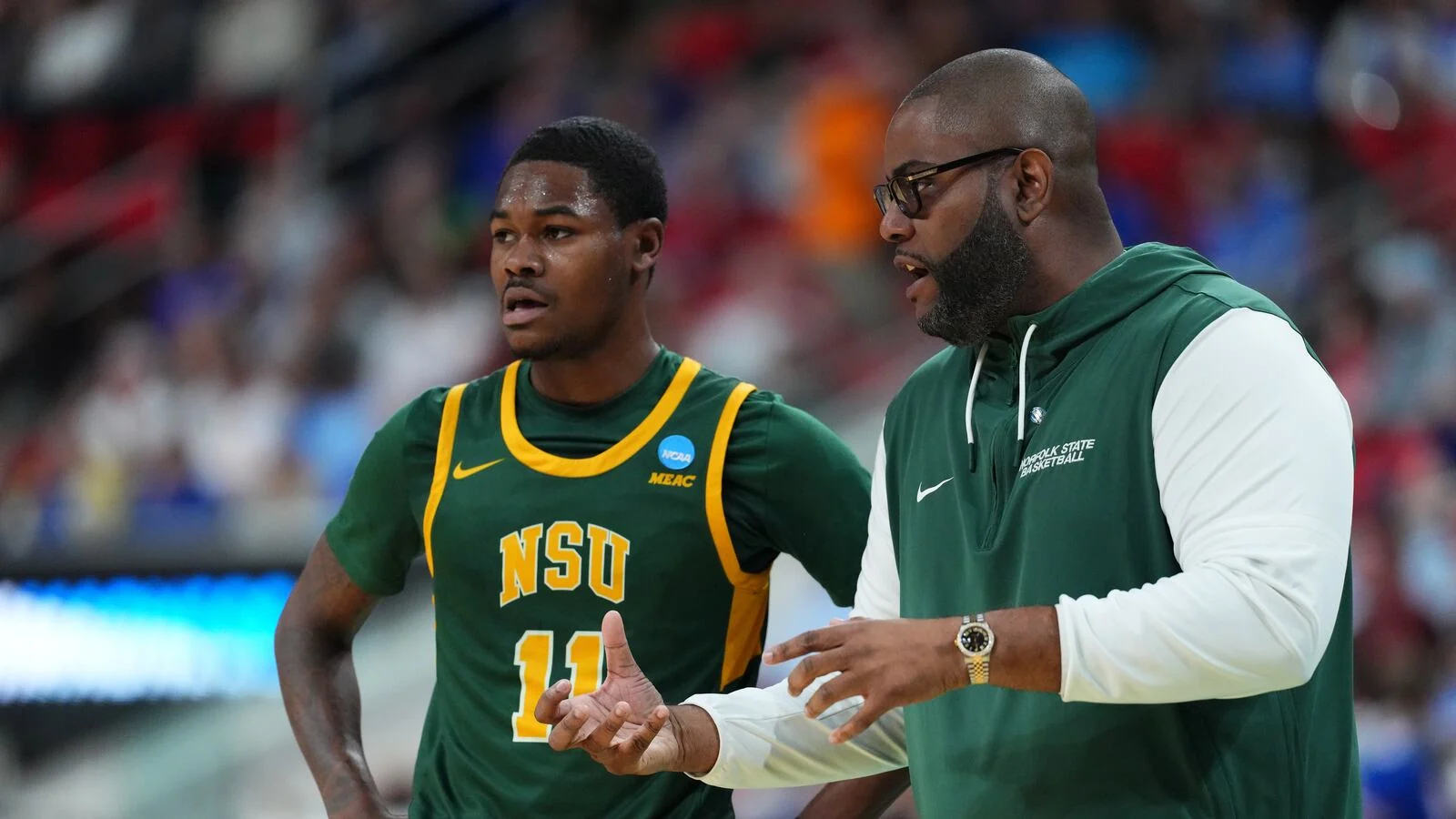
The short answer: mid-majors have a retention problem, not a talent problem
Yes, the transfer portal and the money attached to modern roster building are hurting many mid-major programs—but the precise damage matters. These schools have not forgotten how to find players. They still turn lightly recruited guards into reliable pick-and-roll operators, develop mobile bigs who can defend in space and give late bloomers the minutes needed to become efficient scorers. The problem is that successful development now advertises a player to every better-funded program in the country.
The evidence is visible near the top of the sport. ESPN noted that Mark Sears, Johni Broome and Walter Clayton Jr., three AP All-Americans in 2024-25, began their careers at mid-major programs. It also found that 60% of the first- and second-team AP selections who were then at high-major schools had started at the mid-major level. That is a compliment to player development. It is also the shape of the retention problem: the school that absorbs the freshman mistakes and expands a player's role may not receive his best season.
The market gives players rational reasons to move. Opendorse reported more than 2,500 Division I men's and women's basketball portal entrants in 2024, roughly one-quarter of players, and said athletes in its transaction data who moved from mid-major to high-major programs saw a fivefold earnings increase. Those figures describe Opendorse's dataset rather than every athlete, but the direction is clear. More exposure, deeper postseason expectations, direct institutional payments and outside NIL opportunities can arrive together.
That does not mean every transfer is chasing the largest check or every mid-major is doomed. Players also move for coaching changes, graduate programs, playing style, family and professional development. South Dakota State's women and Kent State's men have shown that local recruiting, identity and a credible development path can preserve continuity. Akron showed that transfers can help a mid-major replace departed production and win again.
So the fair answer is narrower than “the portal killed mid-majors.” The new system reduces the cost of leaving just as proven performance raises a player's value. Richer teams can recruit veterans who have already demonstrated they can handle college possessions, while the original program must rebuild roles and chemistry. Fans following the broader men's college basketball schedule will still find dangerous mid-majors. They are simply more likely to be dangerous in shorter cycles, with less certainty that the same core will return.
Why a proven mid-major player becomes a premium recruit
The portal did not create the idea of moving up a level. It made the transaction faster, more visible and less costly in lost playing time. At the same moment, college performance gives powerful programs better information than even the best high-school evaluation. That combination turns the best player in a one-bid league into one of the safest ways to finish a high-major roster.
Production is easier to buy than projection
A veteran's film answers questions that recruiting rankings cannot. Can a point guard reject a ball screen when the first action is taken away? Can a wing maintain his shooting mechanics after chasing an opponent through staggered screens? Can a center rebound outside his area, avoid cheap fouls and execute two coverages in the same possession? Thirty games of Division I basketball provide evidence across roles, travel, scouting adjustments and late-clock pressure.
That evidence has real value to a contender. Johni Broome spent two seasons at Morehead State before becoming a unanimous AP first-team All-American at Auburn. Mark Sears began at Ohio and Walter Clayton Jr. at Iona before reaching the same 2025 first team at Alabama and Florida. ESPN reported that 30 players who moved from mid-major to high-major programs were drafted into the NBA from 2016 through its August 2025 report. The original schools were not merely holding places on a résumé; they gave those players possessions, coaching and room to develop through mistakes.
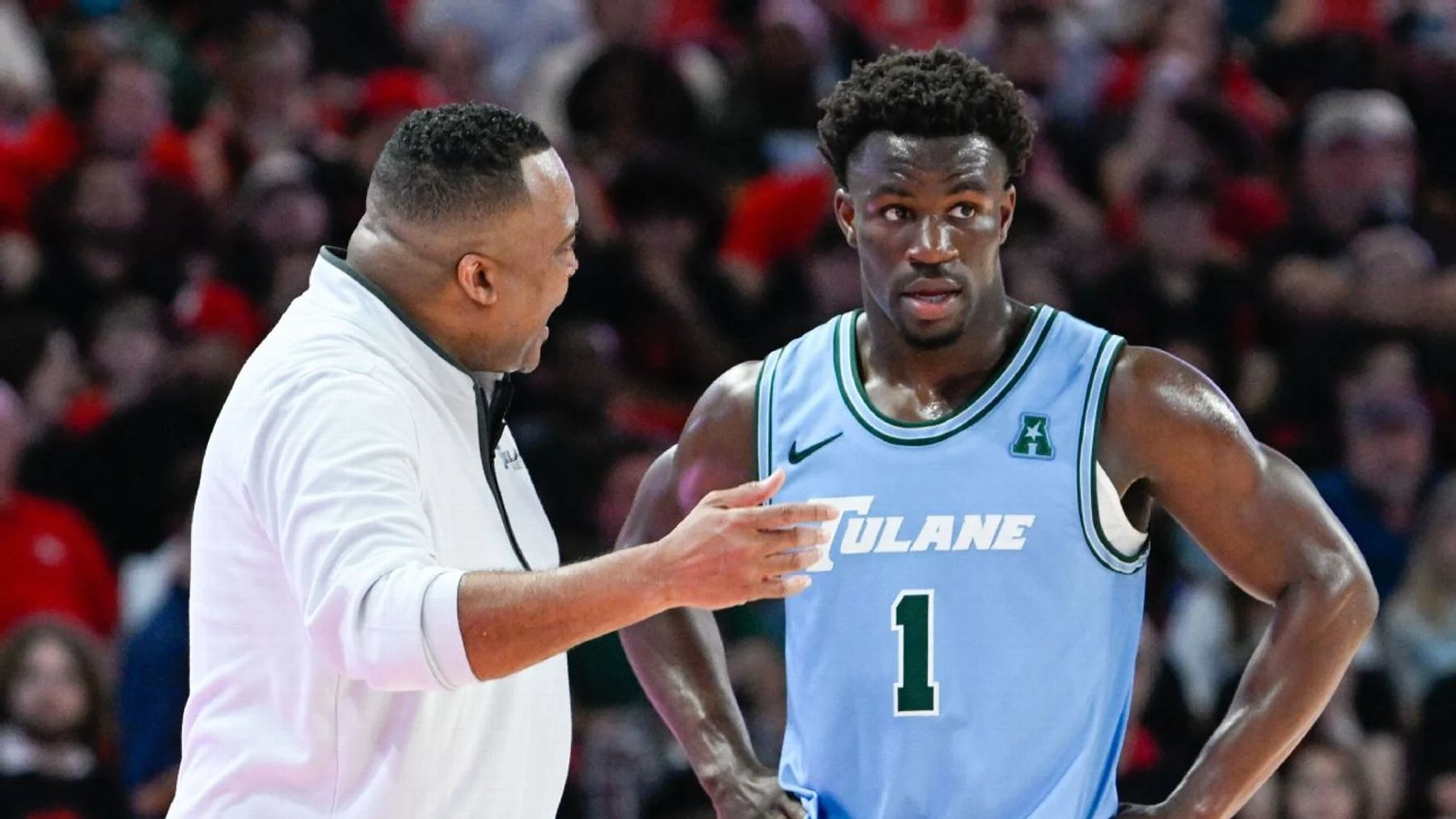
High-major staffs therefore shop for a different product than they once did. Instead of asking an 18-year-old to become a secondary creator in two seasons, a coach can recruit a 21-year-old who has already carried a 25% usage role, guarded the opponent's best wing or closed conference-tournament games. The player may accept fewer shots because the new team offers better spacing, more size around him and a national platform. The buyer receives a narrower range of outcomes. The mid-major loses both current production and the return on its patience.
NIL and direct payments widen the retention gap
Money intensifies that basketball logic, but the vocabulary needs care. Third-party name, image and likeness compensation is not the same thing as money paid directly by a school. After approval of the House settlement, Division I schools can provide direct financial benefits within a department-wide cap that was approximately $20.5 million in the first year. Schools decide how to allocate that pool across sports, while compliant outside NIL deals remain another channel. A football-heavy power school and a basketball-first mid-major can make different choices, yet the largest departments begin with more revenue and infrastructure.
Opendorse's 2026 basketball report found that players in its anonymized transaction data who moved from mid-major to high-major programs increased their earnings by roughly five times. ESPN, using Opendorse estimates for the prior season, reported average compensation for elite high-major men's players of $2.9 million for a guard, $2.8 million for a forward and $2.3 million for a center. Those are not universal salaries, guaranteed offers or audited values for a named player. They are signals of the gap a mid-major coach may confront in a retention meeting.
For the athlete, listening can be sensible. A proven scorer may receive better compensation, daily practice against more length and a clearer NBA evaluation stage. For the original program, matching only the basketball opportunity is no longer enough when another offer bundles money, exposure and a roster built for a deep March run. The harm is structural rather than moral: players exercise valuable mobility, while the schools that developed them repeatedly carry the cost of replacement.
What annual roster churn changes on the court
A transfer list measures bodies; coaches experience the losses as missing decisions. When a team replaces its lead guard, back-line defender and best rebounder at once, it is not simply trying to recover their combined points per game. It must rebuild the small agreements that make a possession function: who calls the coverage, when the weak-side wing tags the roller, where the center expects a pocket pass and which player takes the final shot after the first option is denied.
Recent research supports the basic continuity cost. A 2026 study by Joshua Pitts and Brent Evans examined Division I men's teams from 2021-22 through 2024-25. It measured turnover by the minutes and points lost from departed players and measured the next team's performance through average scoring margin. Higher turnover was associated with worse performance, and the authors did not find evidence that a small amount of turnover was harmless before the effect turned negative. That is an association, not proof that every departure caused a decline; schedule strength, coaching changes, injuries and the quality of arrivals matter. Still, “lost minutes” is a useful basketball lens because it captures experience that raw head count misses.
The first pressure point is role compression. An incoming point guard may have been productive elsewhere, yet he must learn which teammate wants the ball on the move and which needs a stationary catch. A new center may be individually talented but still arrive late to a switch because the team's terminology and help rules are unfamiliar. Offensively, early-season possessions can collapse into one-on-one play when the second and third reads have not become automatic. Defensively, a half-second of uncertainty can turn a contained drive into a corner three or an offensive rebound.
Depth becomes fragile too. ESPN reported that 15 players left UAB after a 24-win season and an appearance in the American tournament championship game. Wyoming lost Mountain West Newcomer of the Year Obi Agbim, who averaged 17.6 points, plus nearly a dozen other players. Even if a staff replaces the starting five on paper, it must also find practice competition, foul insurance and lineups that survive travel-heavy league weeks. One misjudged fit can force a sixth man into a closing role for which he was never recruited.
None of this makes continuity a magic formula. Akron lost its top five scorers after the 2024 MAC title, integrated younger players and transfers, and won the league tournament again in 2025. Isaiah Gray, one of those additions, nevertheless described bringing together roughly nine newcomers as difficult. That example is the right conclusion: roster churn creates extra basketball work and increases the number of uncertain connections, but good evaluation, clear roles and strong teaching can overcome it. Mid-majors are hurt because they must perform that difficult rebuild more often, not because rebuilding can never succeed.
The portal can also help a mid-major rebuild
Any diagnosis that treats the portal only as an exit ramp misses half the roster board. Mid-majors lose proven stars upward, but they can recruit players moving down for minutes, sideways for fit, up from Division II or junior college, or closer to home. The same mobility that threatens continuity can shorten a rebuild when a staff knows exactly what its system requires.
A bigger role can still beat a bigger brand
Minutes and responsibility remain currencies. A reserve at a power-conference school may prefer 30 minutes, on-ball reps and a featured defensive assignment to another season as the ninth player in a deep rotation. Bradley coach Brian Wardle described the mid-major pitch to ESPN in basketball terms: opportunity, on-floor leadership and being featured, combined with some financial support. That proposition can be stronger for development than a famous uniform and sporadic possessions.
A 2026 national study of Division I men's players adds useful nuance. It found that transferring was associated with improved points, minutes and starts for players who had underperformed relative to their teammates before moving, while prior overperformers saw worse performance after moving. The relationship appeared for transfers from both high-major and non-high-major conferences. The study does not tell us why a particular athlete moved, and its measures stop short of defense or team efficiency. It does reinforce a familiar coaching truth: a change of role can unlock a buried player, while moving “up” can shrink the opportunity that produced a star's numbers.
For a mid-major, that means recruiting conversations should be specific. A combo guard may hear that he will initiate the second side rather than merely “have the ball.” A 6-foot-8 forward may be offered minutes as a small-ball five, with film showing how the scheme creates pick-and-pop touches. A shooter may value a playbook built around screening actions more than a larger theoretical NIL figure attached to an uncertain role. Those are credible basketball advantages because the staff controls them.
Smart programs recruit for fit, not just replacements
The worst response to losing a 17-point scorer is to shop for another 17-point scorer without asking how those points were created. Was the departed player efficient because a veteran center screened and passed? Did transition inflate his production? Could the new guard reproduce his rim pressure against a set defense? Portal statistics travel with context, so a mid-major with limited money cannot afford to pay for surface resemblance.
Akron's 2025 MAC tournament title offers a better model. After losing the top five scorers from its 2024 championship team, the Zips combined younger returners with selected transfers and won the tournament again. Cornell graduate transfer Isaiah Gray earned All-MAC honorable mention, but the internal steps mattered too. The lesson is not that nine newcomers guarantee a repeat; Gray said integrating that many new players was difficult. It is that a roster can replace functions across several players instead of demanding one portal addition mimic the old star.
Planning now has to occur before the season ends. As of 2026, the men's and women's basketball notification windows run for 15 days beginning the day after their respective NCAA championship games, with separate provisions after a head-coaching change. Entry in the portal does not guarantee a destination, and a short window does not make evaluation simple. It rewards staffs that keep current film grades, academic-fit checks and role profiles ready.
This opportunity extends to women's basketball, where the same role logic applies even though each market has different spending patterns. South Dakota State coach Aaron Johnston has emphasized regional high-school recruiting and four-year development rather than copying richer programs, while still operating in a sport where players can move. Fans can follow that landscape through the women's college basketball schedule. The portal is most useful to a mid-major when it supplements a clear identity. Used as an annual substitute for one, it simply makes churn faster.
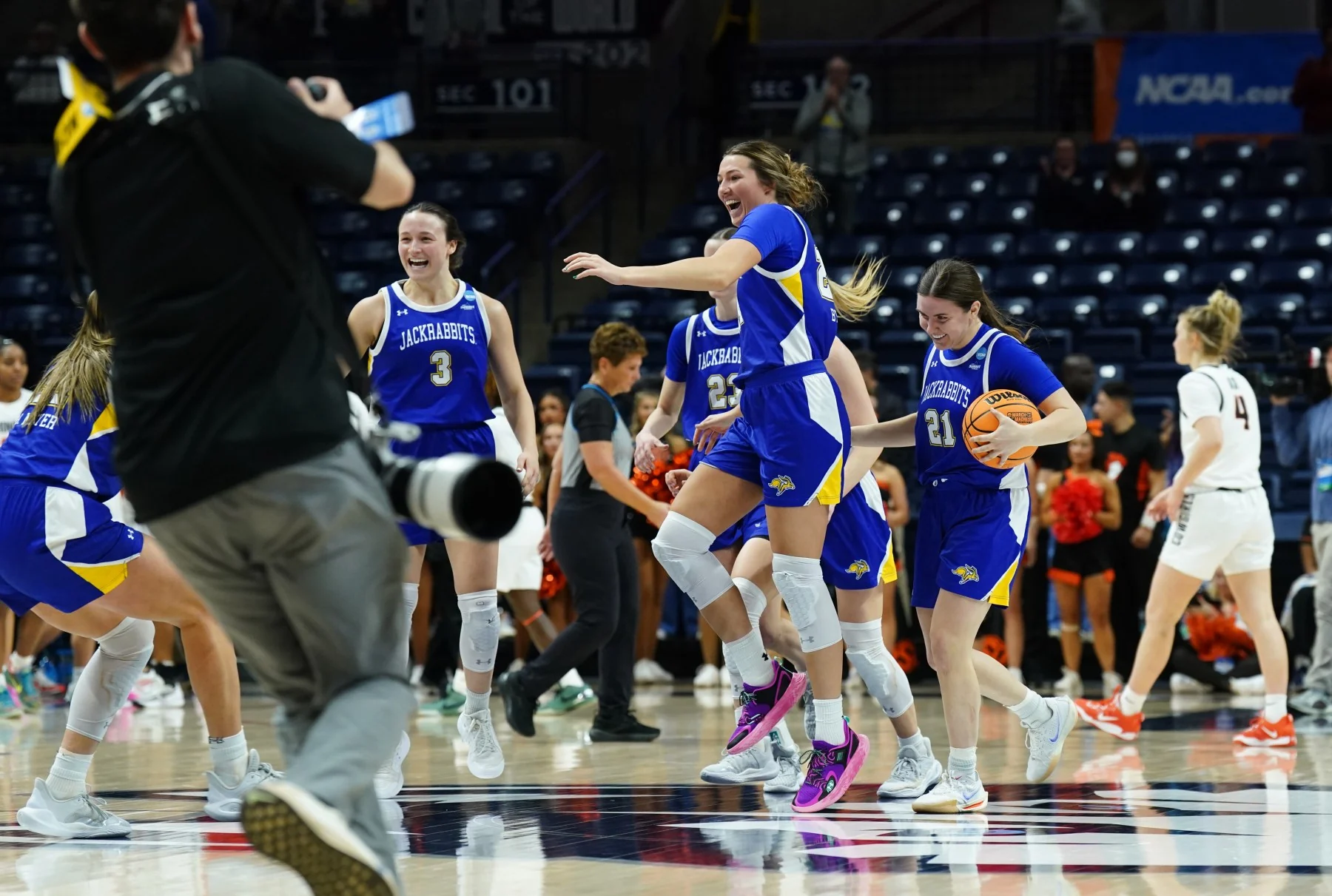
Why March success can make the next season harder
For a mid-major, the best three weeks in program history can double as a national scouting reel. A guard who solves a high-major switch, a center who survives in drop coverage and a wing who makes six pressured threes have demonstrated that their skills translate beyond league play. The television exposure that grows a fan base also makes every remaining season of eligibility more valuable.
That creates a cruel cycle. The team earns attention because its roles fit and its veterans trust one another; then the attention raises the market value of the players who made that cohesion possible. Coaches must celebrate the run while fundraising for retention, re-recruiting their own roster and evaluating possible replacements. ESPN reported that Loyola Chicago coach Drew Valentine said players were receiving messages from high-major coaches while his team was still chasing an Atlantic 10 title. That is his reported account, not a finding that every transfer recruitment involves a rules violation. It does illustrate how the next roster can intrude on the current season.
Florida Atlantic shows the cycle is not automatic. After the Owls reached the 2023 Final Four, every player except one graduate returned. Sports Business Journal reported that the run energized donors and helped create an NIL collective. Success generated the resources needed to preserve the core. But that response requires fast organization and willing supporters; a banner alone does not produce a competitive retention pool.
Recent men's tournaments have sharpened the concern about competitive balance. In 2025, all 16 Sweet 16 teams came from power conferences for the first time since the field expanded to 64. In 2026, AP reported that the top four seeds in every region won their opening game and that the first-round average margin reached a record 17.4 points in the 64/68-team era. Those results are worth watching, not declaring final. McNeese and a Drake lineup featuring four Division II transfers still won first-round games in 2025, and High Point supplied a 12-seed upset in 2026. Two brackets cannot isolate NIL and the portal from seeding, matchups, older eligibility cohorts or ordinary variance.
Nonconference scheduling compounds the roster problem
The rebuild becomes harder when November offers neither patience nor useful tests. A mid-major that returns one starter needs live possessions to establish its closing lineup and defensive language. Yet power-conference teams have little incentive to schedule a dangerous road game. A loss damages their résumé; a win may be treated as expected. Purdue coach Matt Painter told AP that true road or neutral opportunities are more likely to be reserved for other power opponents, while High Point coach Flynn Clayman argued that fans deserve to see strong mid-majors in those games.
That leaves an awkward choice. Take guarantee games on a power team's home floor before the new rotation is settled, or fill the schedule with opponents that may not reveal whether the rebuilt defense can handle NCAA Tournament size. Fewer résumé-building chances also make an at-large bid harder, increasing the importance of winning a single-elimination conference tournament.
The portal does not directly write the schedule. The interaction is the problem: roster loss creates a need for developmental games, while the scheduling market can deny both favorable venues and high-value opportunities. By March, a high-major may have purchased experienced production and tested it through a deep league. The mid-major may be asking a new group to win three games in three days just to enter the same bracket.
What mid-major programs can still control
Mid-majors cannot impose a national salary structure or restore the old transfer penalty on their own. They can decide where scarce dollars go, what basketball experience they promise and how prepared they are when a player leaves. The strongest response is not denial. It is a roster operation built around the program's actual advantages.
Fund retention before shopping for replacements
A dollar spent keeping the right returner can be worth more than a dollar spent acquiring a statistically similar transfer. The returner already understands terminology, academic routines, strength standards and teammates' tendencies. For a lead guard, defensive anchor or elite spacer, that institutional knowledge reduces the risk hidden inside a replacement's box score.
This does not mean paying every returning player equally or stretching beyond sustainable resources. It means identifying which roles are hardest to reproduce. If the offense depends on one player who creates paint touches late in the clock, retaining him protects the shots of four teammates. If the defense depends on a center who communicates every coverage, his value exceeds blocks per game. A staff should price the connected possessions it preserves, not just the points it keeps.
Florida Atlantic's response to the 2023 Final Four is the optimistic example: donor energy rose, a collective formed and all but one graduate returned. Other programs have pursued basketball-specific allocations. Sports Business Journal reported in 2025 that College of Charleston targeted $2 million to $3 million for revenue sharing, while Toledo aimed to operate near the top of its peer group. Those numbers are not a universal benchmark. They show that a school must make an explicit choice about basketball rather than hope general fundraising eventually reaches the roster.
Sell role, development and community honestly
The nonfinancial pitch works only when it is concrete and true. South Dakota State women's coach Aaron Johnston described recruiting largely within a five-hour radius and attracting players who value graduation and a strong basketball experience. Kent State men's coach Rob Senderoff pointed to a staff populated by former Golden Flashes and to local players who completed careers while winning. Familiarity, education and belonging will not beat every offer, but they can separate two opportunities once the money is within a credible range.
Basketball specificity makes that pitch believable. Show a guard the sets he will run, the reads he must master and how former players improved their assist-to-turnover decisions. Show a forward whether he will defend fives, handle in delay action or receive designed elbow touches. Be honest about travel, facilities, likely usage and the possibility of a future move. A promise of “freedom” without film or a role plan will not survive the first difficult month.
The same honesty should govern retention. A coach should not frame every portal entry as betrayal, just as a player should not receive a guaranteed role that the film cannot support. The player may have a sound academic, family, financial or professional reason to leave. The program's task is to make staying a coherent option, not to shame someone into it.
Build a repeatable roster pipeline
Every staff needs a live depth chart for the next season before the current one ends. That is not permission to recruit athletes who have not entered the portal. NCAA rules adopted in April 2026 impose automatic penalties when a Division I program signs, adds or plays a transfer before portal entry, including a head-coach suspension for half a season and a fine tied to the sport budget. Compliance belongs inside roster strategy, not after it.
A repeatable pipeline begins with roles. Track high-school prospects who can develop for two years, junior-college players ready for immediate physical minutes, Division II standouts whose skills translate and current Division I reserves seeking a larger job. Maintain academic and character evaluation alongside film. When the starting center leaves, the staff should know whether it needs rim protection, short-roll passing or defensive rebounding most; “best available big” is not a plan.
Some coaches have discussed more formal relationships between programs. Wyoming's Sundance Wicks imagined cohorts in which mid-major and high-major staffs acknowledge that some players will advance after development. College basketball has no official transfer-fee or farm system, so that remains a concept, not a current remedy. The useful principle is predictability: recruit players who fit the next role, maintain respectful coaching networks and never allow one departure to erase the scouting board.
The goal is not perfect continuity. It is fewer emergency decisions. A mid-major that protects its two most interconnected returners, recruits to a visible identity and keeps a compliant pipeline can absorb movement without rebuilding every possession from zero.
A fair verdict on whether the system is hurting mid-majors
The evidence supports a qualified yes. Easier movement and unequal access to basketball money make it harder for many mid-majors to retain the players they identify and develop. That matters because turnover is not just an offseason inconvenience. A 2026 study of men's Division I linked lost minutes and points to worse team scoring margins, while reporting across the sport shows accomplished mid-major players repeatedly becoming high-major stars. The richest programs can now add age and proven production instead of relying only on freshmen to mature.
But three stronger claims do not follow. It is not true that every transfer is driven by money. It is not true that every portal addition hurts a team. And it is too early to declare the end of the Cinderella. The 2025 men's Sweet 16 was entirely power-conference and the 2026 first round produced record margins, yet recent brackets still included wins by McNeese, Drake and High Point. Matchups, coaching, shooting variance and one-possession execution do not disappear because roster markets changed.
Mobility also has legitimate value for athletes. A blocked reserve can find a starting role. A graduate can choose a different academic program. A star can test himself against stronger competition and receive compensation closer to his market value. Any reform that treats player freedom as the problem while ignoring large resource gaps would solve the wrong issue.
For fans, the most useful preseason question is therefore not “How many transfers did my team sign?” Ask how much connected production returned. Is the primary creator back? Who calls the ball-screen coverage? Where will rim pressure and defensive rebounding come from? Do the newcomers fill those functions, or merely arrive with impressive scoring averages from different roles? Shared minutes and complementary skills tell more than a portal ranking.
Mid-major basketball is not becoming talentless. It is becoming less patient. Programs must develop players while preparing for their departure, fund retention while leaving room to recruit, and teach a new rotation on a compressed calendar. The best will still win league races and scare protected seeds. What has changed is how often they must reconstruct the conditions that make those moments possible—and how quickly a richer program can buy the finished version of their work.
Sign in with Google to join the discussion.