Which final AP poll belongs to the 2025–26 season?
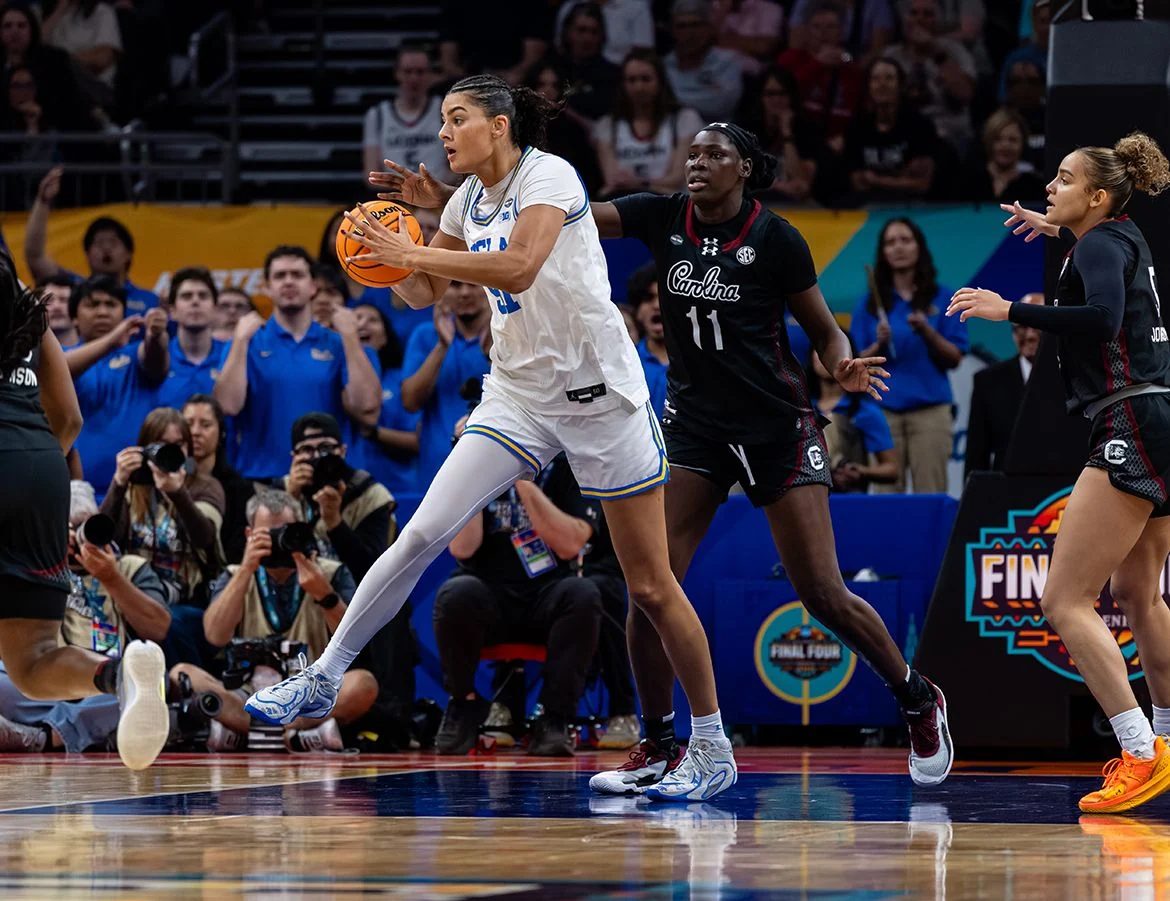
The final postseason Associated Press basketball polls for 2025–26 were released on April 7, 2026 for the men and April 6, 2026 for the women. Michigan finished first in the men's poll, and UCLA finished first in the women's poll. These are the rankings after the NCAA tournaments, with the championship results included.
There is a reason another search can produce Duke or UConn at the top. March 16 was the last regular-season poll before March Madness. Duke led the men at that cutoff; UConn led the women. Calling that edition the final regular-season poll is accurate. Calling it the final postseason poll would leave out the tournament that followed.
The distinction was explicit before the games began. The AP's March 16 women's announcement said another poll would follow on April 6. Its postseason men's report compares the final standings with March 16. Readers are looking at two different dates in the same season, rather than two conflicting answers to one dated question.
The season label matters too. College basketball's 2025–26 season began in one calendar year and finished in the next. An April 2026 final ranking belongs to that completed season. A 2026–27 preseason ranking evaluates a different campaign and potentially different rosters. The two should never be spliced into a single table simply because both pages mention 2026.
Also separate publication date from the last game covered. The men's championship was played April 6, with the poll following April 7. The women's championship was April 5, with the poll following April 6. A ranking page's “through games” label can therefore show a date one day earlier than the poll's release without indicating an error.
This reference keeps those boundaries fixed. The two tables below contain the post-tournament AP order and final records for the completed season, followed by examples of how tournament runs changed the March snapshot. Use them for a season review, a historical comparison or a check of where a team finished. For a discussion of who was favored before the bracket began, return to the March 16 edition instead.
Men's final AP Top 25: April 7, 2026
The men's postseason order below is the AP poll, with each team's final overall record alongside it. The NCAA's AP ranking table lists games through April 6; the poll was released the following day. Rank is a voting result, so the table is not sorted by wins, losses or winning percentage.
| Rank | Team | Final record |
|---|---|---|
| 1 | Michigan | 37-3 |
| 2 | UConn | 34-6 |
| 3 | Arizona | 36-3 |
| 4 | Duke | 35-3 |
| 5 | Illinois | 28-9 |
| 6 | Purdue | 30-9 |
| 7 | Houston | 30-7 |
| 8 | Iowa State | 29-8 |
| 9 | Florida | 27-8 |
| 10 | St. John's | 30-7 |
| 11 | Michigan State | 27-8 |
| 12 | Tennessee | 25-12 |
| 13 | Arkansas | 28-9 |
| 14 | Nebraska | 28-7 |
| 15 | Iowa | 24-13 |
| 16 | Alabama | 25-10 |
| 17 | Virginia | 30-6 |
| 18 | Gonzaga | 31-4 |
| 19 | Vanderbilt | 27-9 |
| 20 | Kansas | 24-11 |
| 21 | Texas Tech | 23-11 |
| 22 | Texas | 21-15 |
| 23 | Louisville | 24-11 |
| 24 | Miami (Fla.) | 26-9 |
| 25 | Wisconsin | 24-11 |
Michigan's championship and UConn's runner-up finish
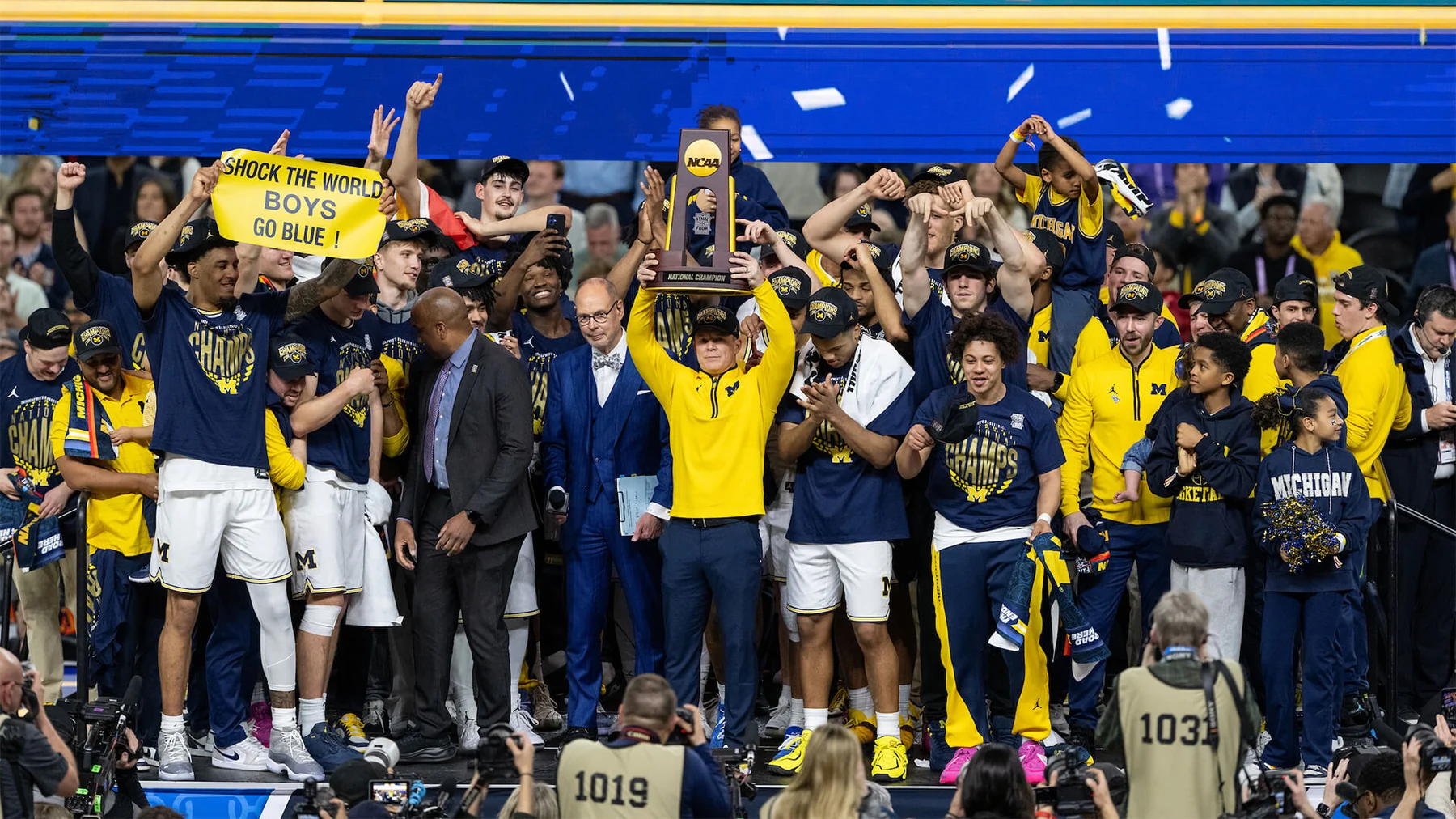
Michigan's victory over UConn settled the national championship before the final ballots were counted. The Wolverines' official championship report records a 69–63 win on April 6 at Lucas Oil Stadium. Michigan finished with thirty-seven wins and three losses, and UConn ended with thirty-four wins and six losses.
For the poll, that outcome produced a clear first choice: all fifty-seven first-place votes went to Michigan. UConn finished second, with Arizona third and Duke fourth. The order is a useful reminder that a final poll weighs more than the raw loss column. Arizona had fewer losses than UConn, but that did not force the Wildcats above the championship runner-up.
Read the middle of the table with the same care. Purdue occupies sixth and Houston seventh in this AP edition. On ESPN's rankings page, the Coaches Poll appears underneath the AP list and reverses those two positions. Copying the first few AP rows and then continuing from the Coaches section would create an unofficial hybrid even though both lists describe the same completed season.
The school names also need their full context. The twenty-fourth-ranked Miami here is Miami of Florida. Miami of Ohio received votes outside the Top Twenty-Five, which is a separate status. Michigan and Michigan State are separate entries, as are Iowa and Iowa State. Keeping those labels explicit prevents errors when building a historical spreadsheet or comparing a team's finish with a schedule archive.
A final ranking can summarize the season's standing without retelling every tournament game. Readers who want the bracket path, scores and championship context can use our men's tournament recap. This table answers the narrower historical question of where each ranked program finished in the AP vote after that competition was complete.
Women's final AP Top 25: April 6, 2026
This is the women's postseason AP order, not the men's table or the women's Coaches Poll. The NCAA's published AP standings identify games through April 5, with the final vote released April 6. Records describe the entire completed campaign, including the NCAA tournament.
| Rank | Team | Final record |
|---|---|---|
| 1 | UCLA | 37-1 |
| 2 | South Carolina | 36-4 |
| 3 | UConn | 38-1 |
| 4 | Texas | 35-4 |
| 5 | Duke | 27-9 |
| 6 | TCU | 32-6 |
| 7 | Michigan | 28-7 |
| 8 | LSU | 29-6 |
| 9 | Notre Dame | 25-11 |
| 10 | Vanderbilt | 29-5 |
| 11 | Louisville | 29-8 |
| 12 | Oklahoma | 26-8 |
| 13 | North Carolina | 28-8 |
| 14 | Kentucky | 25-11 |
| 15 | Minnesota | 24-9 |
| 16 | Iowa | 27-7 |
| 17 | Ohio State | 27-8 |
| 18 | West Virginia | 28-7 |
| 19 | Virginia | 22-12 |
| 20 | Maryland | 24-9 |
| 21 | Ole Miss | 24-12 |
| 22 | Michigan State | 23-9 |
| 23 | Baylor | 25-9 |
| 24 | Alabama | 24-11 |
| 25 | Washington | 22-11 |
UCLA finishes first after the NCAA championship
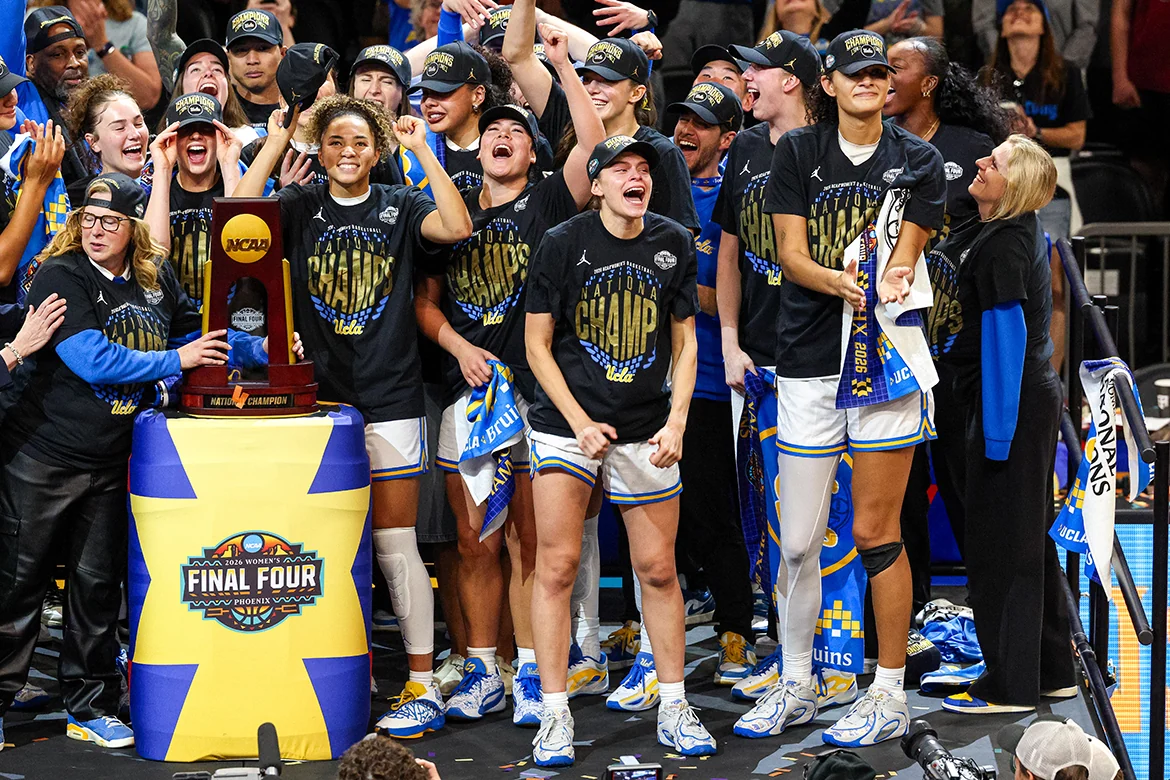
UCLA's first NCAA championship supplied the decisive ending to its season. The university's championship account records a 79–51 victory over South Carolina in Phoenix on April 5. The Bruins ended with thirty-seven wins and one loss after also winning the Big Ten regular-season and conference tournament titles.
The AP panel placed UCLA first on every ballot. South Carolina finished second, UConn third and Texas fourth. UConn's record included just one defeat, but ranking teams by fewest losses would not reproduce this vote. The post-tournament table accounts for a season whose most important games had now been played, rather than simply preserving the order before the national bracket began.
For a fan reviewing UCLA's achievement, keep the wording “first NCAA title” precise. It identifies the championship organization and era. It should not be expanded into a claim that the program had never won any form of national championship before. The poll records a specific season's media ranking; the program's longer history requires its own dated context.
Read the women's standings separately from the men's
Several university names appear in both tables, but they represent different teams. Michigan finished seventh among the women and first among the men. Iowa was sixteenth in the women's vote and fifteenth in the men's. Those placements cannot be combined into a single university basketball ranking: each competition has its own schedules, opponents, ballots and championship.
The women's AP and Coaches lists also differ. Notre Dame finished ninth in this AP table but fourteenth in the final Coaches Poll shown on ESPN. A search result saying the Irish finished in the top ten can therefore be correct even when another accurately labeled poll places them outside it. The missing information is often the poll's name.
Use the ranked field as a reference, not as a complete directory of programs. A school outside these twenty-five places can still have received votes or appeared in the tournament. To revisit the games behind this final picture, our women's tournament recap follows the completed bracket and championship result.
What changed between March 16 and the postseason polls?
The final tables can be compared with the NCAA ranking pages' previous-poll column. Among the men, Michigan moved from third to first, UConn from seventh to second and Illinois from thirteenth to fifth. Tennessee climbed from twenty-third to twelfth. Among the women, UCLA moved from second to first, while South Carolina rose from fourth to second.
Those movements describe new information entering the evaluation. The March edition could assess the games already played, but it could not include a tournament run that had not happened. The April edition could. A later vote changing after a successful run is therefore different from a weekly poll changing without any intervening basketball.
Iowa's men's run and Notre Dame's women's rise
Iowa offers a particularly clear men's example. The Hawkeyes' official April 7 announcement says they were neither ranked nor receiving AP votes going into March Madness. They then beat Clemson, defending champion Florida and Nebraska to reach the Elite Eight. Iowa finished fifteenth in the final poll after ending the campaign with twenty-four victories.
The ranking captures a run that an early bracket preview could not assume. Iowa beat three higher-seeded opponents, including a top seed, according to the school's account. For a fan looking back at that season, the final rank gives a different kind of information from the team's unranked status when the tournament began. Both belong in a complete description, provided their dates stay attached.
Notre Dame supplies a women's comparison. The Irish moved from twenty-second to ninth after reaching the Elite Eight. Their route included a 67–64 Sweet Sixteen victory over Vanderbilt. The Commodores' official game report identifies Notre Dame as a sixth seed and Vanderbilt as a second seed. The tournament result and the later poll movement are separately verifiable facts; no speculation about an individual voter's private reasoning is needed.
Be careful when calculating how far an unranked team climbed. “NR” means outside the published Top Twenty-Five. It does not automatically mean twenty-sixth, and a team receiving no votes has no precise national place assigned by the table. Iowa's move is correctly described as entering at fifteenth. Turning NR into an invented starting rank creates a false measure of movement.
Even for ranked teams, movement is ordinal rather than a measurement of playing strength. An eight-place rise says where a school moved in the ordered vote. It does not mean the team became eight points better per game, doubled its title probability or improved by the same amount as another team rising eight places in a different season.
What final AP rankings measure, and what they do not
A final AP poll is a combined judgment from a media voting panel about the completed season. It is valuable precisely because its date and method are identifiable. It is not an official NCAA bracket, an efficiency leaderboard, a recruiting ranking or a forecast of how a changed roster will perform next November.
Poll position, tournament seed and computer rating
Tournament seeds are assigned before the tournament and organize teams within the bracket. Final AP positions are national places assigned after the tournament. Notre Dame's women's team could enter a region as a sixth seed and finish ninth nationally in the AP poll without any inconsistency. The numbers describe different structures at different times.
Computer systems answer different questions again. The NCAA's explanation of selection criteria describes NET as a sorting tool and BPI as an estimate of men's team strength. A media poll combines ballots; those metrics calculate ratings using their own inputs. Their orders can differ without one being a transcription error.
That distinction matters when reading an old game preview. A school might have been an AP underdog in the public ranking while a predictive model preferred it in a particular matchup. The final April poll cannot be substituted for the information available before that game. Doing so changes the question from a prediction made at the time to a judgment made after the outcome.
First-place votes and total points are different columns
The AP's published description of its ballot system assigns twenty-five points to a first-place selection, twenty-four to second and progressively fewer down to one for twenty-fifth. Adding ballot points determines the order. The first-place-vote number reports only how many voters placed a team at the top.
The two champions make the arithmetic easy to check. Michigan's fifty-seven first-place votes produced 1,425 points; UCLA's thirty-one produced 775. Those are separate panels with different sizes. Comparing the champions' raw point totals would therefore say more about the number of available ballots than about the relative quality of the men's and women's teams.
A team can finish second without receiving any first-place votes because lower ballot positions still earn points. A points gap also is not a projected scoring margin on the court. For the broader distinctions between human polls, NET and other systems, see our college basketball rankings explainer.
How to find and use the right historical poll
Start with the season, then choose the final edition, then confirm the poll name. On ESPN's men's or women's rankings page, the season selector and the “Final Rankings” option distinguish the completed campaign from preseason and weekly editions. After making that selection, check that the section heading says AP Top Twenty-Five. The Coaches Poll on the same page is a separate list.
A dated AP announcement provides a second check. The men's postseason report and women's postseason report identify the champions leading the completed 2025–26 season. Match that context with the release date and the table's game cutoff. A current hub can eventually move to a new campaign while the historical article remains about April.
Older seasons require an additional check because the timing of the final poll changed. The AP's March 2024 announcement introduced a post-tournament final poll for both competitions. Before that change, the last poll followed the conference tournaments and Selection Sunday, with NCAA tournament performances still to come.
This affects comparisons across eras. A program's final AP finish in a season before the change can describe its position entering March Madness. The final 2025–26 standing describes its position after March Madness. A historical chart that labels both merely “final” hides an important difference in the available evidence. Add the cutoff or a timing note before drawing conclusions about which team was more highly regarded at the same stage.
For a personal archive, record five fields together: competition, season, poll, release date and ranking. Include the team's final record if the comparison concerns the completed campaign. If the project tracks movement, retain the actual previous-rank field and preserve NR as unranked. Those details allow someone else to reproduce the comparison without guessing which page or edition supplied the number.
When returning to live basketball, switch to the relevant new season deliberately. An old final rank can be useful background for a matchup, but transfers, graduation, coaching changes and new results can alter the team being evaluated. Use our college basketball schedule today for current games, and keep this April reference attached to the historical season it documents.
Sign in with Google to join the discussion.