The SEC basketball dates that matter in 2026-27
The 2026-27 SEC basketball calendar has two different conference opening dates. Men's league play runs January 2-March 6, 2027; women's league play runs December 31, 2026-February 28, 2027. Both belong to the season that began in fall 2026. A search for the "SEC basketball schedule 2027" should therefore lead you to the second half of 2026-27, rather than an assumed complete schedule for 2027-28.
| Calendar marker | Men | Women |
|---|---|---|
| Conference opener | January 2, 2027 | December 31, 2026 |
| Final conference regular-season date | March 6, 2027 | February 28, 2027 |
| League games per school | 18 | 16 |
| SEC Tournament | March 10-14, Nashville | March 3-7, Greenville |
These are the useful anchors for planning a season. They do not mean that November and December are idle months: member schools play nonconference opponents, holiday events and showcase games before league results begin shaping SEC tournament seeding. Nor does the final regular-season date mean every school plays its last home game that day. An individual team's home finale depends on its own itinerary.
Start with the correct competition on the SEC men's schedule or SEC women's schedule. Those boards include games involving SEC members, which can include nonconference opponents. A game against another league's school is part of the team's season without becoming an SEC standings result.
This guide was checked on November 12, 2026. The conference dates and tournament locations have been announced, but a date on a season grid and a finalized television appointment are separate pieces of information. For a trip, confirm the opponent, home or neutral venue, local start time and current game listing together. For viewing, confirm the channel or stream assigned to that particular game. The sections below explain what the league's schedule structure changes for those decisions.
How the men's 18-game conference schedule works
The men's SEC schedule contains 144 conference games. Each of the 16 schools plays 18 league games; counting both participants in each matchup explains why 16 multiplied by 18 is twice the number of actual contests. A team faces every other member at least once, then plays three opponents a second time. That is a broad conference test, but it is not a home-and-away round robin against everyone.
Repeated opponents create different paths
Of the three opponents a men's team plays twice, two are permanent and one changes annually. Those return games matter when comparing teams with similar records. A contender's second meeting with another strong side can be a tougher assignment than a single home game, while two schools tied in the standings may have played different combinations of repeat opponents.
Home court also changes the reading of an isolated result. If Texas and Florida split their two meetings, inspect where each game took place and how each was played before treating the split as a contradiction. The released slate sends Florida to Austin on January 2 and Texas to Gainesville on February 6. It provides two tests in different environments, rather than two interchangeable entries on a spreadsheet.
Read a stretch of games, not just one matchup
Texas illustrates why the sequence deserves attention. After its league opener at home against Florida, the Longhorns have consecutive road assignments at Georgia and Ole Miss, followed by home games against Auburn and Oklahoma. The July release showed some midweek contests in a Tuesday/Wednesday window; use the current listing for the final day. The basketball point is the order: an opening home performance is followed immediately by the challenge of reproducing execution away from Austin.
When assessing a two-week stretch, look for consecutive road trips, the time between games and whether an opponent's style changes the demands on a rotation. A fast game that produces foul trouble can leave a different recovery problem from a slower game with the same final margin. These are questions to investigate as the season develops, rather than reasons to assign wins before a ball is tipped.

Use the men's SEC game board to inspect the run around a marquee matchup. The board answers who, where and when; the sequence helps explain which questions that game can answer about a team.
The women's schedule starts earlier and has a different rhythm
The women's SEC slate opens on New Year's Eve and contains 16 conference games per team: eight at home and eight away. Fourteen opponents are played once, with the remaining opponent faced twice, home and away. That repeated opponent rotates annually. For Tennessee in 2026-27 it is Kentucky, so the Lady Vols' calendar contains two direct tests against the Wildcats rather than the men's pattern of three repeated opponents.
The shorter league schedule makes the placement of a difficult assignment especially visible. A single home meeting offers no guarantee of a return visit later in the season. Ole Miss, for example, is scheduled to host South Carolina on February 14 and Texas on February 28. Those are useful appointments for a fan choosing which home dates to attend, while the games around them remain part of the team's preparation and recovery problem.
Likewise, Vanderbilt's early February home sequence puts South Carolina on February 4 and Tennessee on February 7. Watching both games can reveal how the same roster handles two opponents over a short interval. That is an analytical opportunity, not a claim that either outcome is predetermined. Travel, foul trouble and the ability to sustain offensive execution become clearer when viewed across the pair.
A shared February bye changes contingency planning
The league has set aside February 18 as a common bye date for weather-related rescheduling. Treat it as a contingency window. It should not be sold as an unconditional break for every roster, because a disrupted game could be moved into it. If you plan a late-February road trip, check again after any weather postponement before assuming a gap on an old printout still represents a free evening.
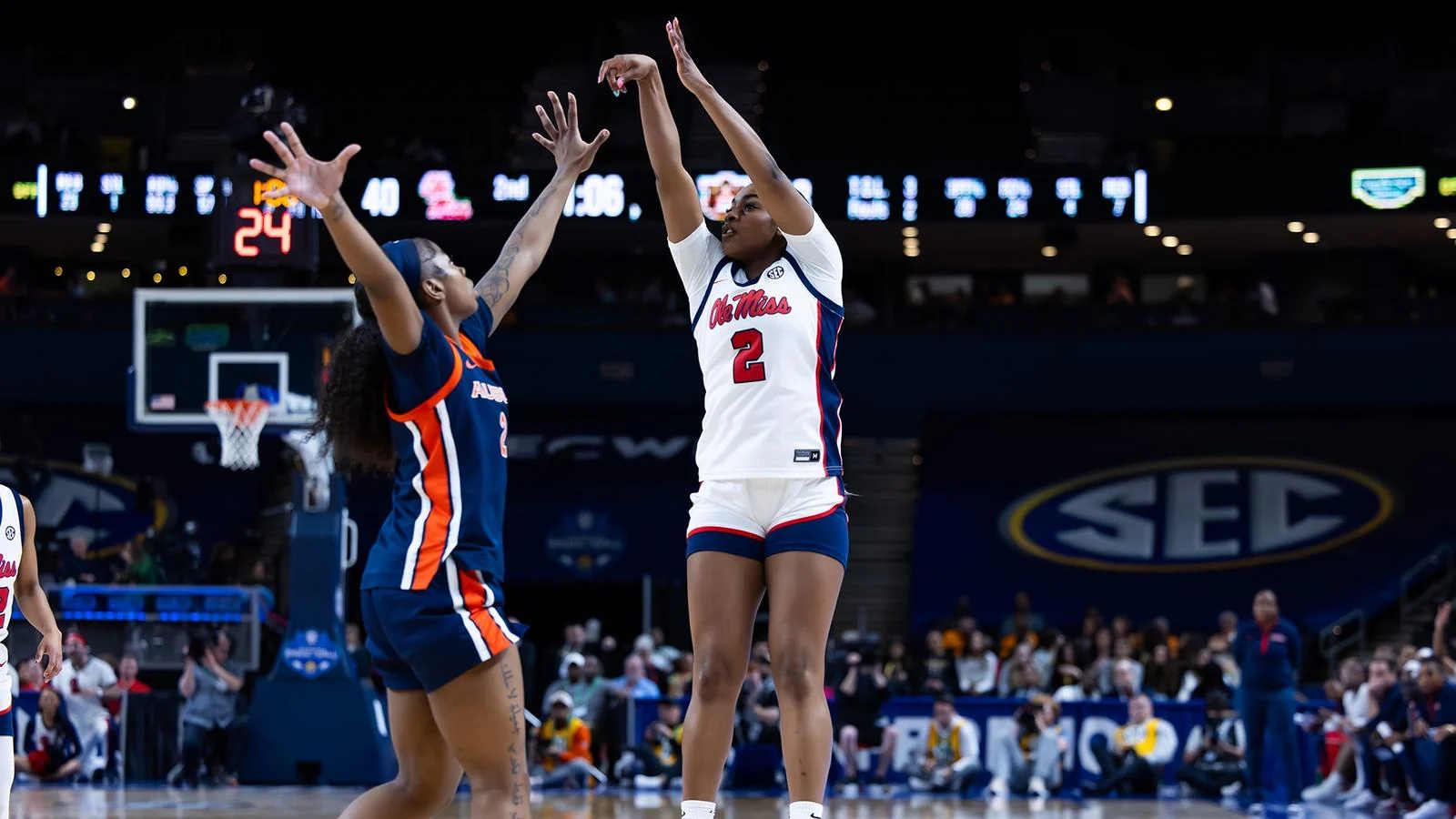
The women's conference board is the appropriate starting point for these dates. Keep its calendar separate from the men's board if you follow both programs at the same university. The different start, finish and tournament weeks create opportunities to watch both, but they also make a shared spreadsheet without competition labels easy to misread.
Where to find the confirmed TV channel and stream
For the U.S. men's season, ESPN's October 7 announcement assigned more than 230 games across ABC, ESPN, ESPN2, SEC Network, ESPNU and the ESPN App. That total includes nonconference basketball; it does not mean the 144-game league slate has expanded. The practical starting point is a specific game on the college basketball TV board, followed by the listed network's current viewing information.
SEC Network and SEC Network+ are different listings
SEC Network is the television network. SEC Network+ is its complementary digital service for additional events. A listing marked SECN+ should prompt you to locate the event in the appropriate app rather than wait for it to appear on the linear SEC Network channel. Installing the ESPN App is only the first step: your account must have access to the programming you select.
If you authenticate through a television provider, check that the package actually includes the relevant network. Fubo's current help page, for example, ties SEC+ access to eligible services that include SEC Network and directs basketball viewers to ESPN's app rather than assuming every SEC+ event appears in Fubo's own guide. The provider's event search and the network app can therefore be different routes to the same entitlement.
Avoid deciding from the plus sign alone. SEC Network+ and ESPN+ are different labels, and an offer mentioning one does not establish access to every event carrying the other. Read the event page and the current package terms before subscribing. This is also why a years-old FAQ's monthly price is a poor budgeting reference for a November 2026 purchase.
Use the latest game listing rather than a summer announcement
The July men's release established dates while some midweek choices and broadcasts were still pending. October's television release supplied later information. A summer sentence saying "TV to be announced" should not override a newer game listing; equally, a missing channel on one board does not prove the game will be unavailable everywhere.
Check the competition, opponent and venue first, then the start time and its timezone, and finally the channel or streaming designation. Apply that process separately to women's games: the men's announcement is not evidence for a women's broadcast. When information conflicts, compare the school, conference and broadcaster's latest event pages. Save the final choice shortly before tipoff, especially after a postponement or a schedule change. That small check is more useful than a long list of services that may not carry your particular game.
Why November and December still shape the SEC season
January opens the league race, but it does not start the work of learning what a team can do. Nonconference games put new combinations through different problems before opponents have months of league film to study. A rotation that looks comfortable in an early home game may face a different test against a visiting team with the size to contest the rim or the guards to pressure an initial action.
One upcoming example at this guide's November 12 cutoff is Tennessee's November 17 home game against Michigan State. Fans can use that sort of appointment to watch how a team generates shots when its first option is disrupted. The useful questions are specific: can it enter an offensive set without a live-ball turnover, finish a defensive possession with a rebound and find a second creator when the primary handler is pressured?
The 2026 SEC/ACC Challenge adds another set of reference points. The men's games fall December 1-2 and the women's games December 2-3. These are meetings between conferences, so they do not award SEC regular-season standings wins. They can still provide meaningful evidence about a roster and become part of a team's wider season record.
For a viewer, the advantage of the Challenge is the variety of tests over a concentrated window. Rather than concluding that a conference is good or bad from one televised margin, follow several teams and ask which basketball strengths carry across opponents. Watch the quality of a shot before the result, the ability to defend without fouling and whether a team can sustain its plan after substitutions. Those observations make later SEC meetings more interesting.
For a traveler, the nonconference label also means checking the actual building. A showcase can be played on a neutral floor, while another game involving the same school is on campus. Do not infer the venue from a team's name appearing first in a promotional graphic. The this-week schedule is a convenient starting list, with the school or event page supplying the final travel details. Keep exhibitions separate from regular-season fixtures when building your own record of what happened.
Two conference tournaments lead into March Madness
The final league weekend is a handoff to tournament basketball, with the women moving first. After their February 28 regular-season finish, the 16 SEC women's teams are scheduled to gather March 3-7 at Bon Secours Wellness Arena in Greenville, South Carolina. The men complete league play on March 6, then have their own event March 10-14 at Bridgestone Arena in Nashville, Tennessee.
Keep those cities and weeks attached to the competition name when planning travel. Someone following both programs at the same university is choosing between separate events, rather than buying interchangeable access to one SEC festival. Check the actual tournament, arena and session before comparing tickets. A pass covering several sessions can be a different product from one seat for one session, even when both listings use the same tournament artwork.
Separate the league title race from the tournament bracket
The regular-season schedule supplies a long test and determines seed positions. The elimination tournament presents a different challenge and crowns a separate champion. Finishing above an opponent in the league table does not guarantee beating it in March; winning a tournament meeting does not remove the other games from the season record. Those distinctions help make sense of a team that has a strong February but a brief tournament stay.
The SEC's current men's tournament notes describe a 15-game event and award its winner the conference's automatic NCAA Tournament berth. In November, the actual seed order has still to be earned. A bracket with seed numbers is a format, while a bracket filled with predicted team names is a projection. Neither is evidence that a particular school has already secured a particular March session.
For viewers, follow the transition from repeated league preparation to the shorter turnaround of elimination basketball. Watch which teams can defend and rebound reliably when their shooting fluctuates. For calendar planning, then turn to the national March Madness schedule as a separate stage. SEC tournament dates and NCAA tournament dates belong beside each other on a planner, with clear labels for the different competitions.
Build a useful printable schedule or calendar
A good SEC planner makes the next decision easy. Begin with the competition and team you actually follow, then choose a manageable period rather than print an entire national season. The printable college basketball schedule keeps opponents, home or away markers, tip times, TV information and venues together. Check the team, month and displayed timezone before printing or saving the view as a PDF.
Keep the publication date on your saved copy. A printout is a snapshot, so it cannot tell you that a start time has changed since you printed it. A simple personal note such as "checked November 12" is more useful than an unlabeled page that looks final forever. Leave yourself room to add a revised time or channel beside an appointment rather than continue relying on a superseded entry.
For a digital option, the college basketball calendar distinguishes a subscription from a one-time ICS download. A subscribed calendar gives your app a feed to check again; importing a downloaded file creates a fixed copy. The app controls refresh timing, so even a subscription should not be treated as an instantaneous alert system for a late venue or tip-time change.
Label men's and women's calendars clearly if you follow both. Use local arena time for a travel note and your own timezone for a viewing reminder, with the timezone written out when sharing an appointment with friends. A Tennessee women's game and a Tennessee men's game are different events even when both reminders use the same university name. Attaching the opponent and venue prevents that avoidable confusion.
Finally, revisit the this-week board at the start of each week and the school's current game page before departure or tipoff. Recheck especially after weather disruption and around the February women's contingency date. The purpose of the planner is to preserve attention for the basketball: which opponents are coming, how the home and road sequence changes the test, and which appointments deserve an evening on your calendar.
Sign in with Google to join the discussion.