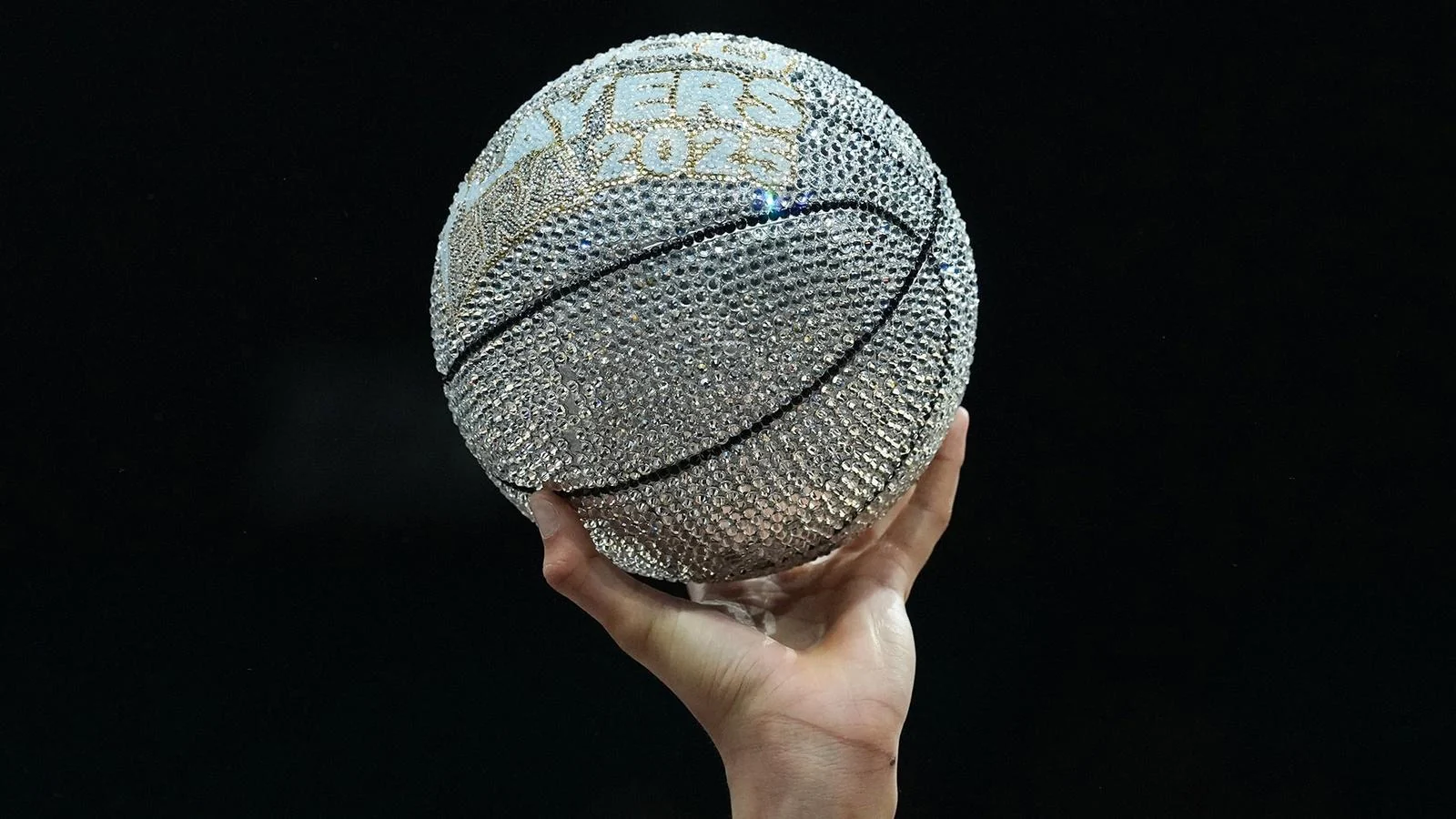
The current plan is 24 teams in two separate events
The 2026 Players Era men's schedule contains 24 teams split between two tournaments: Players Era 8 on November 17–19 and Players Era 16 on November 24–28. Each has its own championship. There is no scheduled game sending the winner of the eight-team event against the winner of the sixteen-team event for a combined title.
| Event | Dates | Basic structure | Arenas |
|---|---|---|---|
| Players Era 8 | November 17–19 | Eight-team bracket with consolation games | Michelob ULTRA Arena |
| Players Era 16 | November 24–28 | Two eight-team brackets; winners meet for the title | T-Mobile Arena and Michelob ULTRA Arena |
This guide follows the current Players Era 8 and Players Era 16 event descriptions, cross-checked with school and broadcaster announcements on October 30. A 32-team description from an earlier planning discussion is not the operating bracket for these November tournaments. Likewise, a recollection of the previous year's format should not determine how you read the new draw.
The easiest way to understand the event is to find your team's tournament first. A Houston supporter is following the November 17–19 field. A Tennessee supporter is following the Thanksgiving-week field. Those teams do not share a path simply because both appear in a Players Era search result. The distinction affects which dates to reserve, which opponents can emerge next and which ticket session is relevant.
Keep the men's and women's events separate as well. This article covers the two men's championships listed above. A women's showcase carrying the same organizer's name has its own field and calendar; its television listing cannot be substituted for a men's game.
The format also separates two kinds of uncertainty. The opening opponents are known. Later opponents depend on results. A schedule entry reading “TBD” during tournament week can therefore be a normal part of bracket play rather than a missing promise or a cancellation. The useful information is the route into that slot, including whether a team is still pursuing the title or playing for a placing.
Once those basics are clear, the field becomes easier to follow without memorizing every promotional announcement. Start with eight or sixteen, then follow the wins and losses within that particular bracket.
Players Era 8: three days and a conventional title path
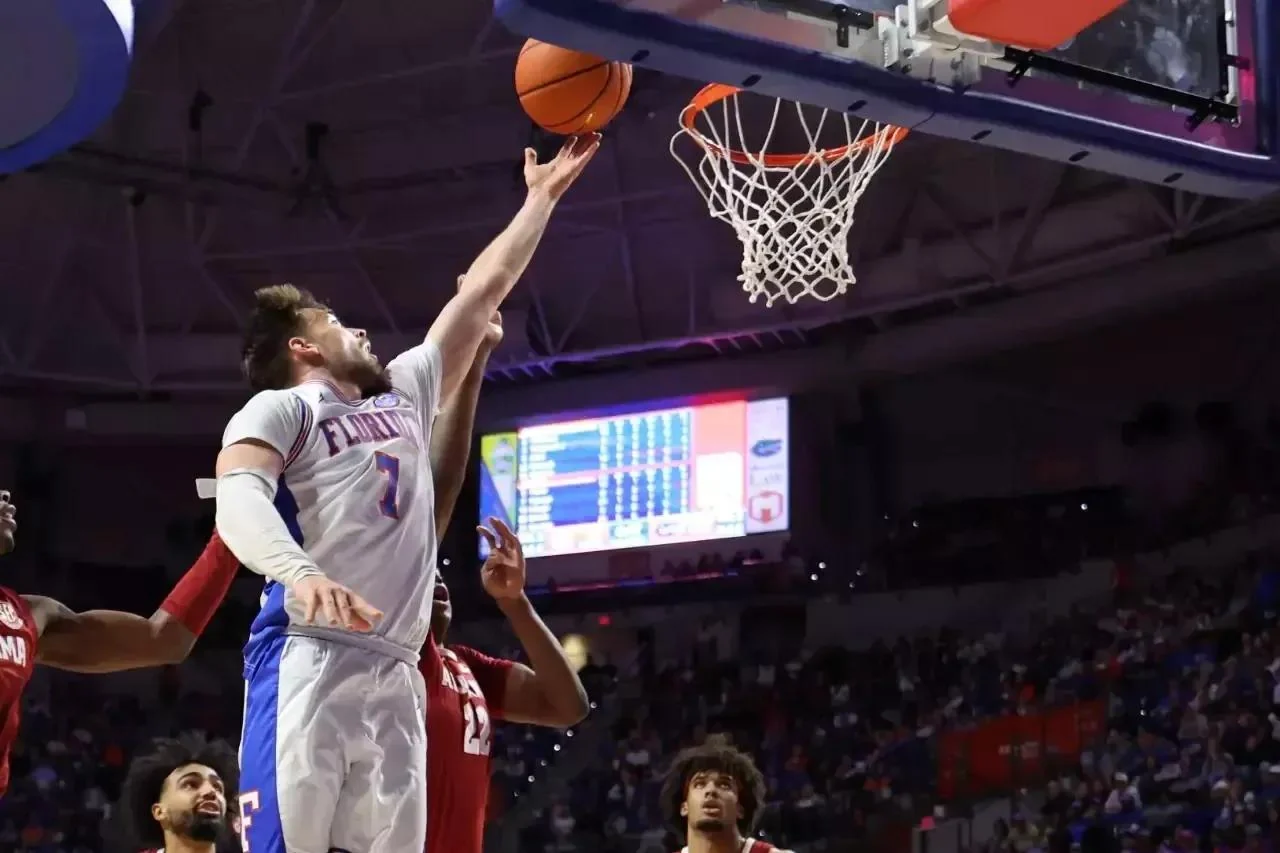
The eight-team tournament begins Tuesday, November 17, at Michelob ULTRA Arena. Houston opens against Rutgers, Florida against Notre Dame, West Virginia against Auburn, and Kansas against UNLV. The first two pairings share one half of the draw; the latter two share the other. A team reaches the November 19 championship by winning its opener and then its November 18 semifinal.
For example, Florida's school announcement places Houston or Rutgers on the next step after Notre Dame. That is a conditional opponent, not a confirmed Florida–Houston semifinal. Both teams would have to reach the same winners' game for that matchup to happen. The same logic applies to a possible Auburn–Kansas meeting on the other side.
An opening loss changes the target, not the entire trip
The event includes consolation games and a third-place game. An opening defeat ends a team's route to the championship, but does not mean it immediately packs for home. The scheduled placing games are part of why a bracket with eight teams produces more basketball than just seven winner-advances contests.
That distinction helps fans interpret a later schedule entry. A Wednesday game can remain meaningful even when it is no longer a semifinal. The opponent still presents a competitive test, the result still belongs to the season and the staff still has a chance to learn whether a problem from Tuesday can be corrected quickly.
Three games on three dates also make lineup decisions more revealing. A coach cannot approach every possession as if no game follows the next day. Watch whether the team can preserve its offensive organization when the primary creator rests, and whether foul trouble forces a different defensive arrangement. Those are questions raised by the schedule; they are not a claim that any particular player will be limited.
For a viewer choosing only one early game, follow the side of the draw involving the team you want to track. Florida–Notre Dame can tell you what the potential semifinal opponent must prepare for, while West Virginia–Auburn serves a different half. If you plan to attend Thursday, check which session contains the placing or championship game you actually want, rather than assuming a final-day ticket guarantees the title game.
The compact format is easy to explain without predicting the winners: win three consecutive games for the title; after a loss, follow the assigned placing path. The actual next opponent should be updated only once the preceding results have been confirmed.
Players Era 16: win your bracket, then win one more game
Thanksgiving week's tournament has a different final step. Sixteen teams begin in two eight-team brackets. Each branch produces a winner, and those two teams meet on Saturday, November 28, for the Players Era 16 championship. Winning the eight-team branch is therefore necessary to reach the overall final, not the end of the tournament.
The November 24 opening matchups
The first branch contains Tennessee–Maryland, San Diego State–Iowa State, St. John's–Oregon and Louisville–Texas Tech. The other contains Gonzaga–Kansas State, Baylor–Alabama, Michigan–Creighton and TCU–Miami. Those are the scheduled first-round opponents. Later pairings depend on which teams win or lose, so a list of possible opponents should not be displayed as a confirmed sequence.
Tennessee's next game comes from the San Diego State–Iowa State pairing. Texas Tech's comes from St. John's–Oregon. On the other side, Michigan and Creighton connect with TCU and Miami. Follow those adjacent pairings before looking ahead to an attractive matchup elsewhere in the field: teams can share a tournament without being able to meet until the final.
Wednesday, November 25, is an off day on the Las Vegas local tournament calendar. Play resumes on Thanksgiving Day, November 26, followed by bracket deciding and placing games on November 27. The extra day between the opener and the second game creates a different preparation rhythm from Players Era 8's three consecutive dates.
Why the fourth game belongs only to the finalists
The clearest school-level explanation comes from Texas Tech's July schedule update. It lists Louisville first, Oregon or St. John's second, and a third game on November 27. A 3–0 record earns the opportunity for a fourth game in the November 28 championship. That conditional fourth game should not become a promise that every team plays four times.
An opening loss therefore changes more than the identity of the next opponent. It removes the route to Saturday's title game, while the team continues through its scheduled placing path. A team that wins twice and loses its branch decider also stops short of the overall final. Merely being in the sixteen-team field does not reserve a Saturday appearance.
For supporters traveling with one program, that distinction affects the last night of the trip. A Saturday ticket offers the overall final; it does not guarantee seeing your team. For a neutral viewer, the same distinction gives the final a clear competitive meaning: both participants have won three games within their branch before meeting each other.
Some listings describe rounds from the perspective of the overall sixteen-team field, while others describe the separate eight-team branches. Follow dates, opponents and advancement rather than getting trapped by a “semifinal” label without context. The decisive question is whether the winner advances within a branch or into the standalone overall championship.
Television, championship times and the two Las Vegas arenas
ESPN's new agreement makes its family of networks the exclusive home of all 37 games across the two men's tournaments. That identifies the broadcaster, but does not mean every game is on the main ESPN channel. Check the individual matchup and round in the current television listing before choosing a service or setting a recording.
The title-game times are Eastern, not Las Vegas local time
| Championship | Date | Eastern | Las Vegas, Pacific | Network and venue |
|---|---|---|---|---|
| Players Era 8 | Thursday, November 19 | 11 p.m. | 8 p.m. | ESPN, Michelob ULTRA Arena |
| Players Era 16 | Saturday, November 28 | 10:30 p.m. | 7:30 p.m. | ESPN, Michelob ULTRA Arena |
Those title-game assignments come from the current organizer pages. Earlier announcements left times undecided, so a May article saying “TBD” should not override a later confirmed event listing. Recheck near the game because the venue still describes tip times as approximate and subject to change.
A late Las Vegas game can cross midnight on the East Coast. The T-Mobile Arena listing, for example, puts Gonzaga–Kansas State at 9:30 p.m. Pacific on November 24. That is 12:30 a.m. Eastern on November 25. It belongs to the venue's Tuesday session even though an Eastern viewer's calendar has moved into Wednesday.
Keep that distinction when reading a television grid that groups late games under an event day. Use the actual local date and time for attendance, and the converted calendar date for a reminder at home. A vague “midnight Tuesday” entry can point to the wrong night.
A tournament ticket needs a date, venue and session
Players Era 8 stays at Michelob ULTRA Arena. Players Era 16 uses that building and T-Mobile Arena before bringing its overall final to Michelob ULTRA Arena. A T-Mobile ticket therefore should not be assumed to include Saturday's championship at the other venue.
The venue and ticket listings distinguish sessions. Before buying, match the product to the date, arena and games you intend to see; check whether later opponents are conditional. A package name alone does not establish access to both buildings, every day or a particular team's final game. Check current entry, bag and reentry instructions with the operator as well.
For home viewing, “ESPN family” also does not prove that an ESPN+ subscription alone unlocks a linear ESPN or ESPN2 broadcast. The season streaming guide explains the broader map. This event's practical requirement is access to the network assigned to the actual game, including any later-round channel update.
What the new format clarifies about winning
The argument over the old Players Era format often came down to a simple frustration: winning the games assigned to a team did not necessarily make its championship route obvious. Reporting from the 2025 event described multiple unbeaten teams and point-margin criteria used to select finalists. That is historical context for the redesign, not a description of the November 2026 rules.
The current brackets answer the central sporting question more directly. A team wins its game and moves along the winners' path. In Players Era 16, it must win its branch and then the overall final. Viewers do not need to calculate a margin against unrelated opponents to discover which undefeated team gets the championship slot.
That changes what a late possession means. With a bracket game on the line, winning advances the team; a large margin is not a separate race for a finalist position against teams it has not played. Coaches still have basketball reasons to value a good final possession, but fans should not import a previous year's point-differential chase into the new event.
A clearer advancement rule does not make every path equally difficult. One branch may present a more demanding sequence of opponents, and a team can have a difficult matchup even against an opponent with a less familiar name. Bracket placement, shooting variation and a short stretch of foul trouble remain part of tournament basketball. The improvement is clarity about advancement, not the elimination of uncertainty.
Money also needs a separate explanation from the scoreboard. The organizer markets player opportunities within the NIL landscape, but a promotional reference is not a complete contract or a payment schedule. This guide does not turn reported tournament incentives into an automatic individual payout, or assume that a team award is divided equally among players. Those claims require specific current evidence.
The site's NIL and roster-building discussion provides wider context. For following this event, keep the competitive question distinct: which game has to be won next? A fan can understand that route even while the commercial terms remain outside the bracket.
The same discipline helps with online complaints. Questions about the old tiebreakers or a fourth game are useful prompts to check the current format. They are not evidence that the new bracket still uses the old rules or that every criticism represents the views of the entire fan base.
The basketball questions that matter once the bracket starts
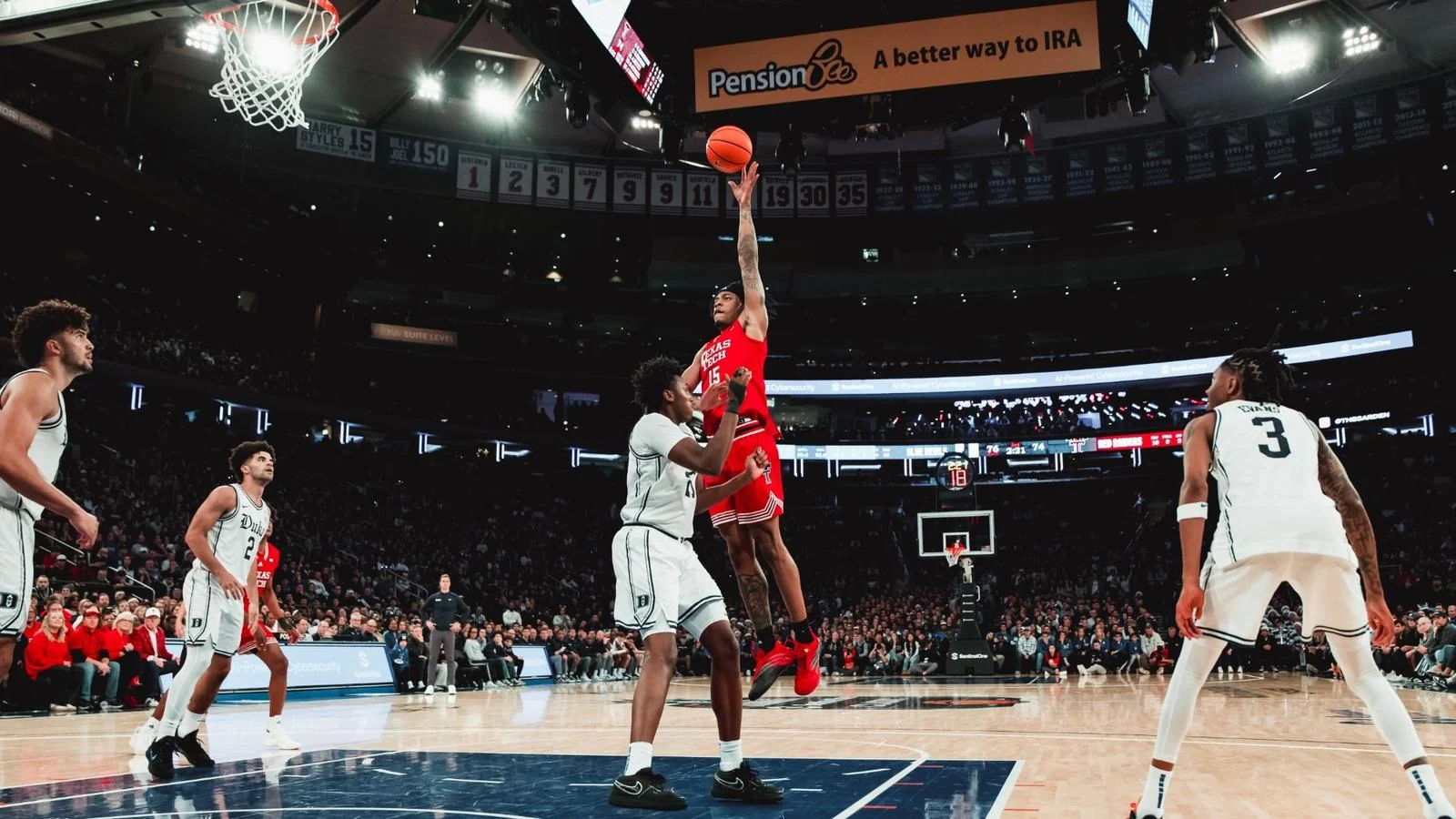
A November tournament is useful because it gives teams several different problems in a short period. Florida begins with Notre Dame before meeting Houston or Rutgers. Texas Tech begins with Louisville before seeing St. John's or Oregon. Those known branches let you follow how a team adapts, without pretending the later opponent or final score has already been decided.
Start with the difference between creating a shot and making it. Does the first ball screen force two defenders to the ball? Is there a useful pass available when the defense keeps its shape? Does the receiver have time and balance, or merely an open catch far from an effective scoring spot? Those details help explain an offense beyond one hot shooting stretch.
Use successive opponents to test what is repeatable
Keep a short note from the opening game and test it in the next one. If Texas Tech repeatedly reaches the lane against Louisville, watch whether the same entry creates an advantage against its next opponent. A defensive adjustment may close that route and force a different answer. That is useful evidence even if the team happens to shoot a better percentage in the harder game.
Distinguish turnover types, too. An offensive foul, an intercepted pass and a ball lost out of bounds all count as empty possessions, but they create different consequences. A live-ball mistake can lead directly to an unsettled defense. A dead-ball mistake can allow a team to organize. Repeatedly giving away transition opportunities is a different problem from failing to convert a difficult late-clock attempt.
Rebounding provides another comparison across opponents. Watch whether a defense ends the possession after forcing the shot it wanted, and whether sending players to the offensive glass compromises its retreat. The raw total can be misleading if the teams have very different numbers of missed shots available. Look at the opportunities and responsibilities before treating a single number as a complete explanation.
The sequence also tests bench combinations. With little preparation between later rounds, a staff needs groups that can communicate without a lengthy reset. Watch which player initiates the offense when the first handler rests, and whether a smaller or larger lineup changes the help required near the basket. Those choices are often more revealing than an assumption that every substitution was made solely to save energy.
The rankings guide helps distinguish an event finish from a season assessment. Winning this tournament establishes a real achievement; it does not make a November ordering permanent. Likewise, losing a bracket game does not erase a team's ability to improve before conference play.
Follow the correct tournament, confirm the next opponent after each result and keep the time zone attached to the viewing plan. The clearer 2026 structure makes the title route easier to see, leaving more attention for what the teams actually do with their possessions.
Sign in with Google to join the discussion.