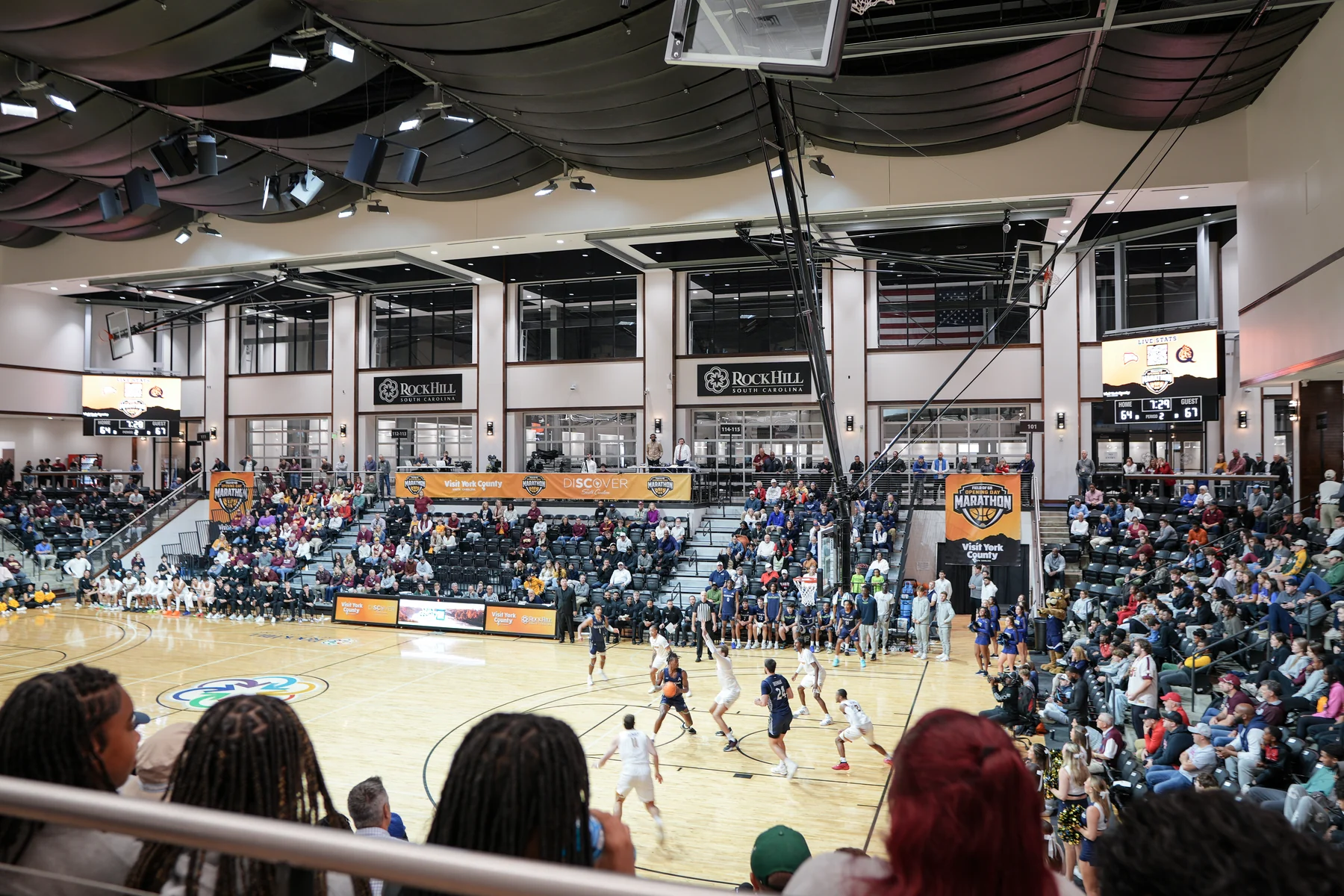
The eight-game schedule for Monday, November 2
The Field of 68 Opening Day Marathon starts at 12:01 a.m. Eastern on Monday, November 2, 2026, with High Point against Liberty. Eight men's games are split between Rock Hill, South Carolina, and Sioux Falls, South Dakota. The final scheduled tip is 8 p.m. Eastern. Treat “24-hour marathon” as the event's name and broad programming concept, rather than a promise that a basketball will be in play for every minute of an uninterrupted day.
The following times were checked against the current Rock Hill host listing and Sanford event page on October 30. Eastern Time is the common reference; Central Time is included so a Sioux Falls ticket holder does not arrive an hour late.
| Tip, ET | Tip, CT | Matchup | Site |
|---|---|---|---|
| 12:01 a.m. | 11:01 p.m., November 1 | High Point vs. Liberty | Rock Hill |
| 3 a.m. | 2 a.m. | Grambling vs. Northern Illinois | Rock Hill |
| 6 a.m. | 5 a.m. | Appalachian State vs. Merrimack | Rock Hill |
| 9 a.m. | 8 a.m. | Winthrop vs. Queens | Rock Hill |
| 11:30 a.m. | 10:30 a.m. | Murray State vs. Tennessee State | Sioux Falls |
| 2 p.m. | 1 p.m. | UTEP vs. Northern Kentucky | Sioux Falls |
| 5:30 p.m. | 4:30 p.m. | UAB vs. McNeese | Rock Hill |
| 8 p.m. | 7 p.m. | Furman vs. Bethune-Cookman | Rock Hill |
Rock Hill opens the night and closes the evening
Six games belong to the Rock Hill Sports & Event Center. The early sequence runs through Winthrop–Queens, then the broadcast schedule moves to South Dakota before returning to South Carolina. That distinction matters if you are choosing an in-person session: a Rock Hill ticket does not place Murray State or UTEP in the same building. The order of team names in the national listing also should not be interpreted as a campus home game.
The first tip crosses a date boundary that can easily produce a missed game. On the East Coast, stay up Sunday night for a game that officially begins Monday. A Central Time viewer starts at 11:01 p.m. Sunday. Set a reminder with an explicit date rather than entering “Monday midnight” into a calendar and hoping the application interprets it correctly.
Sioux Falls supplies the midday doubleheader
The Sanford Pentagon hosts exactly two marathon games. Its local listing uses 10:30 a.m. and 1 p.m. Central, corresponding to the two Eastern slots in the table. A broader event-hours banner is not an additional tip time. The gap between the second Sioux Falls game and the evening return to Rock Hill provides a sensible break for viewers, although overtime and production decisions can affect the actual flow.
This is one opening-day showcase within a larger season launch. The 2026–27 season-start guide covers the separate Rome games and helps keep those international dates apart from this November 2 slate.
How to watch the marathon on YouTube and X
The announced live outlets are The Field of 68's YouTube channel and its official X account. Those are the useful starting points for this event. Do not assume that a participating school's usual conference package, or the television channel carrying another opening-night game, necessarily carries its marathon appearance.
The distinction between a game broadcast and a discussion show is particularly relevant here. The network produces college basketball conversation throughout the season, and the venue partner's announcement separately lists an After Dark show following the final contest. A thumbnail featuring familiar analysts can be a postgame discussion rather than the live High Point–Liberty feed. Check the matchup and scheduled start in the stream title before settling in.
Open the official channel before the first game and locate its live or upcoming broadcasts. If the organizer uses multiple event entries, keep the channel page available instead of assuming one bookmarked video will follow the entire slate. That is a viewing precaution, not a claim that a particular stream arrangement has been announced. The same approach helps when the production switches from Rock Hill to Sioux Falls and back.
For a television, test the YouTube application or your casting setup during the evening rather than discovering a sign-in or audio issue at 12:01. For a phone or laptop, save the official account and make sure the stream is live rather than playing an earlier segment. Live chat and social replies are useful for spotting a widespread technical problem, but the organizer's own update should decide which replacement link to use.
Neither the date on a promotional graphic nor a broad “watch online” label establishes worldwide availability, replay retention or an ad-free presentation. This guide does not promise those features. Viewers outside the United States should check the actual official player when it becomes available, and anyone planning to watch later should confirm a replay exists before ignoring a live game they especially want to see.
The full-season viewing guide is useful after opening day, when television and streaming assignments spread across different packages. For these eight games, begin with the event organizer's own distribution rather than purchasing a service based solely on the team's conference affiliation.
Why 12:01 a.m. creates a different kind of opener
An opener normally asks whether a team is ready for a new opponent. The overnight segment adds another question: how does that preparation fit a clock that the program rarely encounters? Grambling–Northern Illinois is scheduled for an hour when most home arenas would be empty. Appalachian State–Merrimack follows near sunrise. Those windows make the games memorable, but also make the preparation more interesting than the novelty alone suggests.
Northern Illinois identifies the Grambling matchup as the first regular-season game of Matt Majkrzak's tenure. That makes it a genuine competitive beginning as well as a broadcast experiment. A new staff wants to establish its spacing, substitution habits and defensive communication; the scoreboard still matters even when the tip time attracts most of the attention.
A showcase window comes with a demanding clock
In October 29 interviews with Mid-Major Madness, coaches described different solutions rather than a universal overnight preparation model. NIU planned a limited adjustment after reaching South Carolina instead of moving an entire week's work into the night. Merrimack faced an early wake-up and altered pregame meal routine for its 6 a.m. game. Those reported plans illustrate the practical work hidden behind the schedule graphic.
That context should change how a viewer describes a slow opening stretch. A missed jumper is not evidence that an athlete has failed to adapt to the hour. A turnover might reflect unfamiliar spacing, a good defensive rotation or ordinary first-game uncertainty. The unusual time is part of the setting; it is not a measured explanation for every mistake.
The attraction for programs is easier to understand when comparing the available attention. During a crowded evening, an attractive mid-major matchup can disappear beneath several major-conference broadcasts. In an isolated overnight window, it can become the game that committed viewers discuss. That is an editorial reading of the schedule, not a guarantee of audience size or a claim that every participating coach valued the same tradeoff.
Fans can reasonably enjoy the return of overnight basketball while questioning what it asks of students, staff and traveling supporters. Public discussion contains both reactions. Neither enthusiasm in a basketball forum nor a handful of complaints establishes a majority opinion. The useful question is specific: does the opportunity justify this particular trip and tip time for this program?
Watch how settled the teams look after the opening substitutions, when the first burst of energy has passed. Bench communication, defensive assignments after a timeout and the quality of a second-side action may tell you more about preparation than whether the first three-pointer goes in. Those observations also remain useful when the same teams return to ordinary evening starts.
Two arenas, two separate attendance plans
Watching all eight games is a broadcast choice. Attending all eight is a different proposition, because the event uses two distant venues. Choose the city and matchup first, then inspect the relevant ticket product. Neither the event's national name nor a schedule containing all sixteen teams tells you which games an individual admission covers.
Rock Hill Sports & Event Center
The local host lists doors opening at 11 p.m. Sunday, November 1, ahead of the Monday opener. That is the useful arrival anchor for the midnight crowd. A generic resale site's usual door-opening rule should not override this event-specific instruction. Before leaving home, check the operator's current entry instructions and keep the ticket available in a form that does not depend on perfect mobile reception.
The long gap between the morning and evening Rock Hill games creates practical questions about sessions and reentry. Confirm those with the ticket operator; do not assume that stepping outside preserves access to every later matchup. If you are traveling primarily for UAB–McNeese or Furman–Bethune-Cookman, the evening listing matters more than the headline promise of all-day basketball.
For a local supporter, this neutral event also offers a different experience from a familiar campus game. Winthrop–Queens is an appealing regional pairing, but the host building and event ticketing still deserve their own check. Neutral-site designation does not tell you exactly which fan group will be louder, and proximity alone does not establish an official home-court assignment.
Sanford Pentagon
The Sioux Falls doubleheader belongs to the Sanford Pentagon's Heritage Court setting. Its official event listing identifies Murray State–Tennessee State followed by UTEP–Northern Kentucky. Keep your calendar in Central Time while attending; the 11:30 a.m. Eastern national listing is a 10:30 local start.
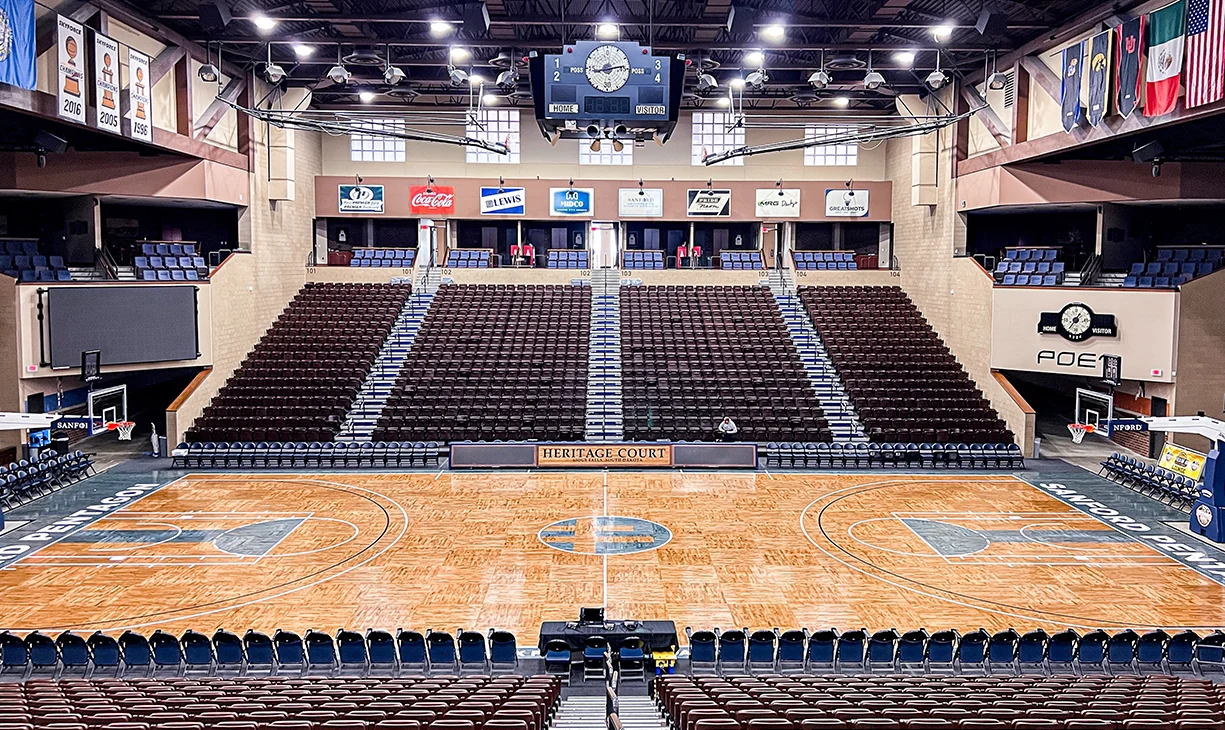
A compact basketball setting can make defensive talk, bench reactions and the physical work away from the ball easier to follow. If you are choosing seats, think about whether you prefer seeing off-ball spacing from a sideline angle or the depth of drives from an end. Those are basketball viewing preferences, not assurances about a particular seat's unobstructed view.
For either city, allow time for entry and check the current bag, parking and access instructions through the linked venue. A game schedule is not a parking reservation. Verify the specific ticket's date and session before paying, especially when a seller's page converts an overnight Eastern tip into a Sunday date in another time zone.
What to watch beyond the unusual start times
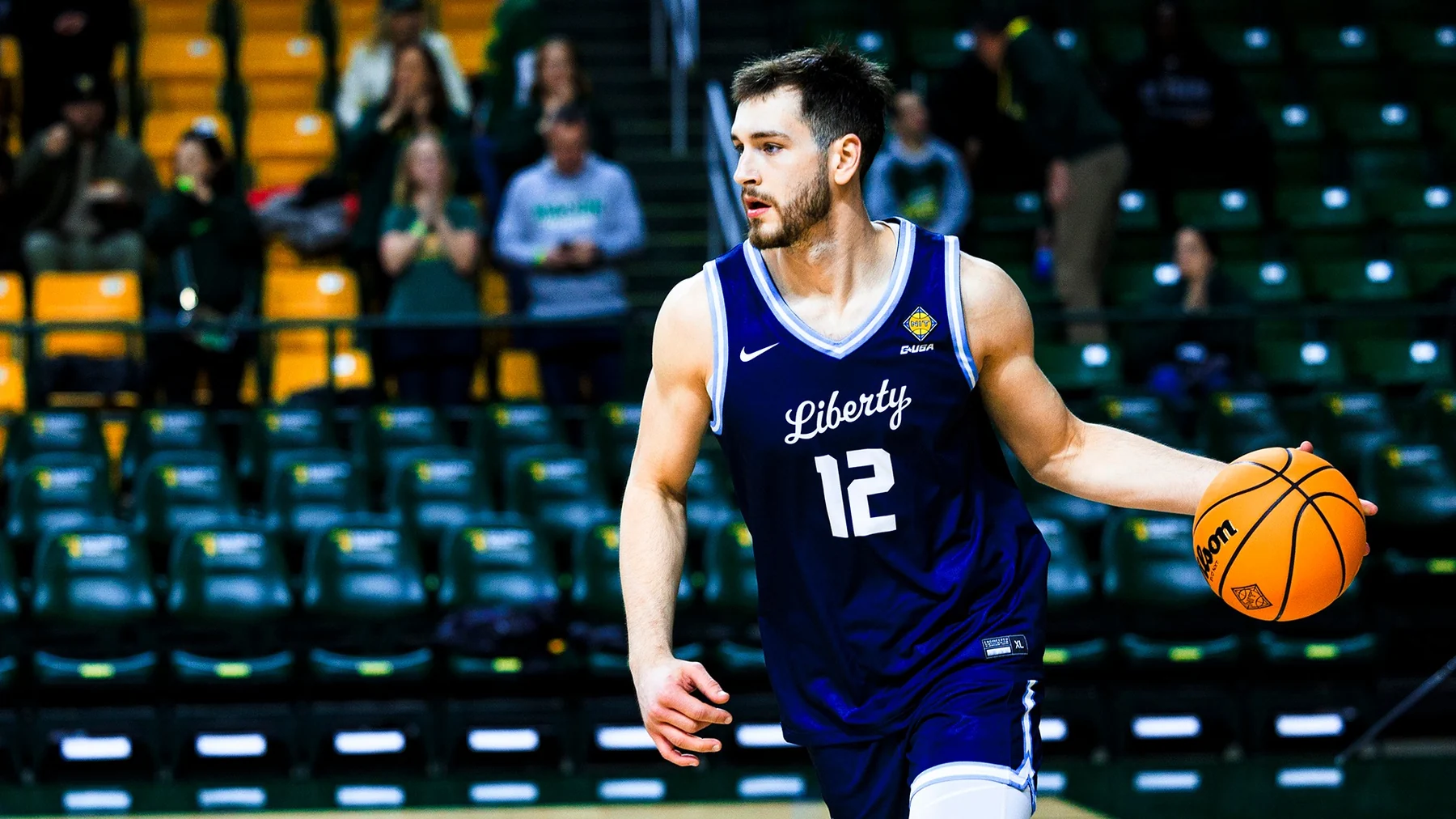
The best reason to watch the marathon is that it offers actual basketball comparisons, not merely a test of how long a fan can remain awake. Start with the opening matchup and ask how High Point and Liberty create a good possession after their first option disappears. A clean first action is useful; a reliable second action matters when an opponent has scouted the opening set and forces the ball somewhere less comfortable.
Rather than assigning a team a permanent style after five minutes, follow a few repeatable questions. Does the ball reach the paint through a drive, a roll or a post touch? When help comes, is the kickout delivered early enough for a balanced shot? Does a missed three lead to a coordinated floor balance, or leave an easy transition chance the other way? Those are observations you can test across later games.
Grambling–NIU brings the additional interest of a new head coach's first regular-season game at Northern Illinois. Watch which combinations Majkrzak trusts when the initial rotation changes. Two lineups can produce similar scores while solving possessions differently: one may create a paint touch without much dribbling, another may depend on a difficult individual finish. Opening-day shooting percentages can obscure that distinction.
In the evening, UAB–McNeese carries a confirmed personal connection. McNeese's announcement notes that coach Bill Armstrong graduated from UAB in 2001 and began coaching there as a graduate assistant. The reunion is a useful storyline, but the game should be assessed through possessions rather than assuming familiarity guarantees an advantage.
Look at defensive rebounding in that matchup and throughout the slate. A good first defensive action loses value if no one finishes the possession. Count how often a perimeter defender finds a body when a shot goes up, and whether an offensive rebound produces an organized reset or a rushed attempt. This makes a useful comparison between teams without inventing an early-season efficiency ranking from almost no data.
For each game, write down one strength and one question before looking at the final margin. “Created open corner shots after help” is more informative than “looked good.” “Allowed repeated uncontested second chances” is more useful than “wanted it less.” The rankings explainer can then help separate that personal evaluation from polls and later numerical measures.
Build a viewing plan that survives opening day
Pick your essential game before deciding how much of the marathon to watch. An overnight fan might choose High Point–Liberty and part of the next game. An early riser can start with Appalachian State–Merrimack and continue into Winthrop–Queens. A lunchtime viewer has the Sioux Falls pair, while the Rock Hill evening return offers two more opportunities without requiring an all-night commitment.
These are suggested viewing blocks, not official admission sessions. They are also more useful than treating the event as an endurance contest. You will learn more from watching a complete competitive stretch attentively than from leaving eight games running while repeatedly losing track of which lineup is on the court.
Before Sunday night, save the schedule, open the official channel and check its latest live listing. Some school pages use slightly different midnight notation for the opener; the table follows the current Rock Hill host's 12:01 a.m. listing. Arrive at the stream before midnight rather than waiting until the last advertised minute. Recheck later games on Monday as well, because a scheduled tip and an actual opening jump need not coincide exactly.
Judge the basketball without treating one game as a season
The appeal of an opening-day showcase is the first meaningful evidence it gives you. The limitation is the same: it is the first evidence. A team that shoots unusually well from three has won an actual game, but has not automatically established a sustainable offensive level. A team that misses open shots may have executed better than the final percentage suggests.
Separate three questions in your postgame notes. Who won? What repeatedly created or prevented good chances? Which personnel combinations looked workable? The first has an official answer. The other two require observation and will become more reliable when checked against different opponents. Do not erase the importance of a result, but do not ask it to answer every future question about a roster.
Foul trouble is another reason to keep the circumstances attached to an impression. A center's early fouls can change rebounding assignments and the kinds of ball-screen coverage a coach is willing to use. A guard sitting through a long stretch can make a team appear less organized than its preferred lineup. Describe what you saw and who was available before turning that stretch into a permanent assessment.
When the final game ends, the most valuable takeaway may be a short list of teams worth following again. Check whether the spacing you liked survives scouting, whether the defensive rebounding improves and whether a new rotation settles. The marathon gives sixteen programs a visible beginning; their seasons will be defined by how the basketball develops after the novelty of opening day has passed.
Sign in with Google to join the discussion.