Who leads college basketball in career assists?
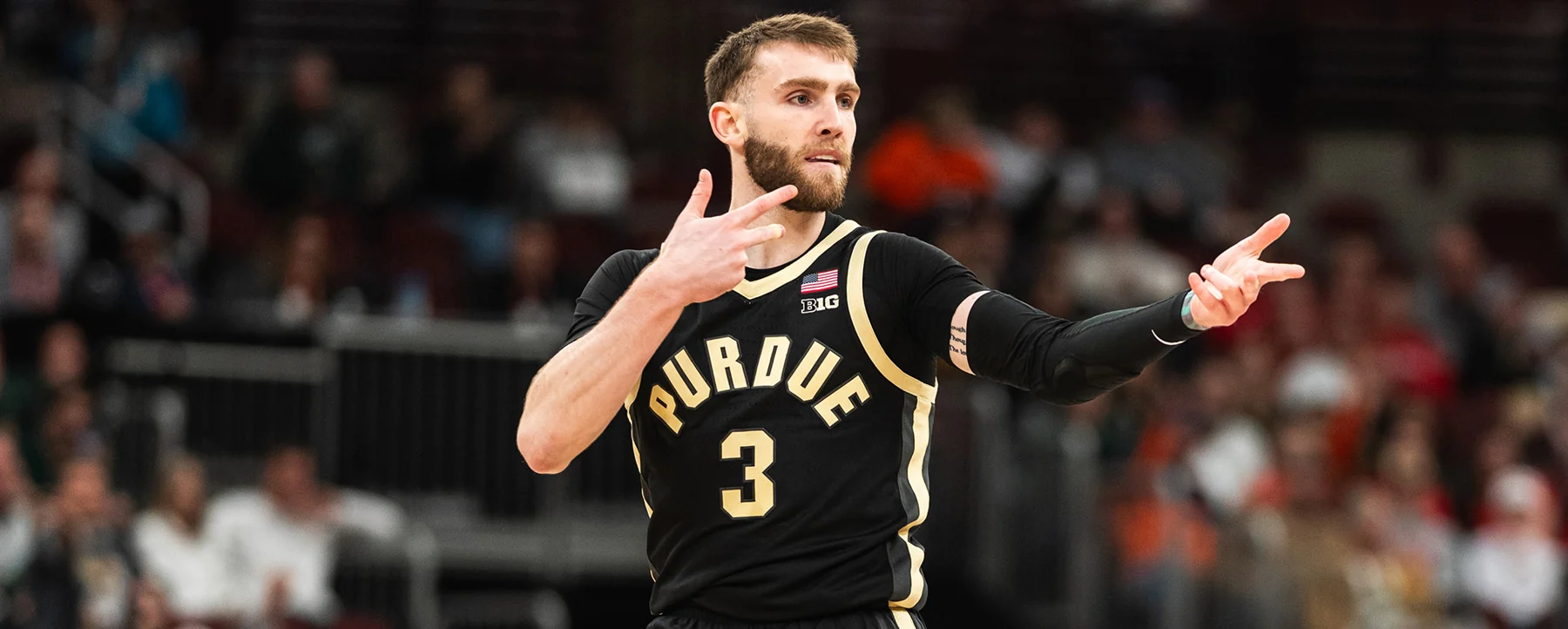
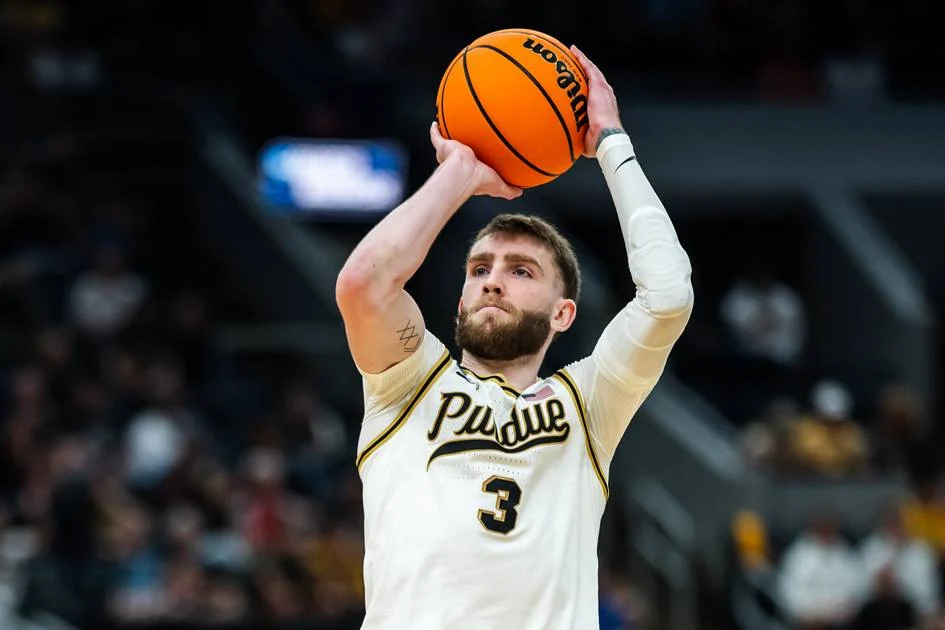
Braden Smith finished his Purdue career in 2026 with 1,103 assists, the NCAA Division I men's career record. Suzie McConnell holds the women's Division I record with 1,307 assists for Penn State. Keep those two competitions separate. Calling Smith the unqualified leader across men's and women's college basketball would leave out McConnell's larger total.
Smith's final number matters because many articles were published on the day he passed Bobby Hurley. The record-breaking pass established a new leader; it did not end Smith's career. Purdue's March 28, 2026 season-ending report records the completed total. A headline written during the first round of the NCAA tournament can therefore be accurate for that night while carrying an interim number.
The figures here concern NCAA Division I career assists. They are not NCAA tournament-only totals, professional statistics or a combined table of every NCAA division and college association. The word career describes the eligible college games in the relevant record category. A player's NBA or WNBA passing totals do not get added when updating the college list.
An assist is also a team-dependent outcome. A passer can create an excellent shot, but the teammate must make a field goal for the play to produce a recorded assist. A career total captures thousands of possessions in which a player turned a pass into a made basket. It does not capture every useful pass or identify the best passer in every possible context.
That is why this guide pairs the leaders with definitions and comparison questions. You can recognize Smith's record without assuming that a larger cumulative total settles every argument about Hurley's prime, Chris Corchiani's assist rate or a women's guard's broader offensive responsibility. Each comparison needs the right denominator and competition scope.
The official men's and women's NCAA record resources separate these categories. We checked the completed-career lists through 2025–26 on October 14, 2026. That cutoff prevents a new season's roster or a live passing milestone from being confused with a finished career.
For watching a current game, the historical benchmark is a useful starting point: pay attention to how a guard creates the shot, not just whether the scoreboard adds an assist. The subsequent sections explain what the table records and what still needs to be seen on the floor.
The men's Division I career assist leaderboard
The completed-career table now has five players above 1,000 assists. The NCAA's 2026 record book puts Smith first, followed by Hurley, Corchiani, Ed Cota and Jason Brickman. The last-season column below is an ending year, not a recruiting class or the beginning of the player's college career.
| Rank | Player | College | Last season | Games | Assists |
|---|---|---|---|---|---|
| 1 | Braden Smith | Purdue | 2026 | 149 | 1,103 |
| 2 | Bobby Hurley | Duke | 1993 | 140 | 1,076 |
| 3 | Chris Corchiani | NC State | 1991 | 124 | 1,038 |
| 4 | Ed Cota | North Carolina | 2000 | 138 | 1,030 |
| 5 | Jason Brickman | LIU | 2014 | 130 | 1,009 |
Braden Smith's record needs his final career total
Smith passed Hurley's record during Purdue's March 20, 2026 NCAA tournament game against Queens. The final career figure became 1,103 after Purdue's season ended against Arizona on March 28. Those are two different reporting moments: one identifies when the record changed hands, while the other gives the number a future challenger must surpass.
His 149-game career also illustrates why a total needs context. Reaching the postseason supplies additional opportunities, and remaining healthy enough to play gives a guard more possessions to accumulate assists. That does not diminish the record. Availability and sustained responsibility are part of what a career achievement measures. It simply means that readers should not treat 1,103 as if it were a rate achieved in a single game.
When checking a current article, look for its publication date and whether the author reports a completed season. A record tracker can stop at the pass that moved Smith into first place. A season recap or the updated official career table is a better source for his finished college total. Purdue's final-game report supplies that distinction directly.
The other players above 1,000 assists
Hurley's 1,076 came in 140 Duke games. Duke's historical profile also records two national championships during his career. Its description of him as the NCAA assists leader was correct when the profile was published; it should now be read as a historical statement. Smith's arrival at the top does not erase the length or significance of Hurley's previous hold on the mark.
Corchiani reached 1,038 in 124 games, fewer appearances than the other members of this group. Cota finished with 1,030 in 138 games, and Brickman recorded 1,009 in 130. Their different totals and schedules make the five-player threshold more informative than a bare ranking. It shows that a guard can approach the top through a higher rate, a longer schedule, or both.
There is also no reason to restrict a passing conversation to the best-known national brands. Brickman's place represents LIU alongside Purdue, Duke, NC State and North Carolina. The table is an NCAA statistical achievement, not a ranking of recruiting reputations. Use the official career assists table when deciding who belongs, rather than substituting a list of famous NBA point guards.
The women's Division I career assist leaders
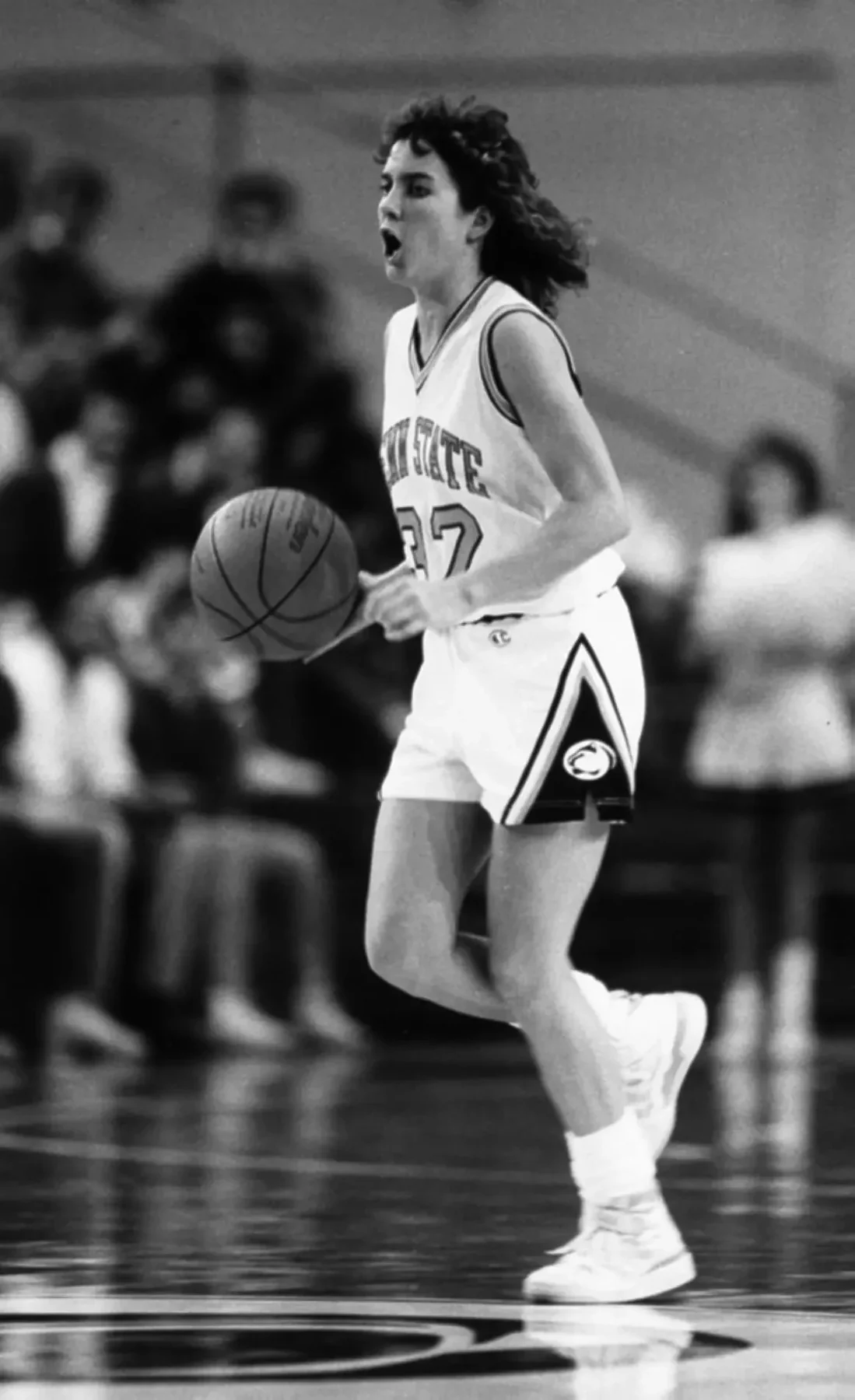
The women's list deserves its own table and its own historical context. McConnell's 1,307 remains the NCAA Division I career mark in the updated record book. Six players have exceeded 1,000 assists, with careers stretching from the 1980s to the 2020s. The names below follow the official table, including McConnell's playing name rather than her later coaching surname, McConnell-Serio.
| Rank | Player | College | Season-ending years | Games | Assists |
|---|---|---|---|---|---|
| 1 | Suzie McConnell | Penn State | 1985–88 | 128 | 1,307 |
| 2 | Andrea Nagy | FIU | 1992–95 | 125 | 1,165 |
| 3 | Caitlin Clark | Iowa | 2021–24 | 139 | 1,144 |
| 4 | Courtney Vandersloot | Gonzaga | 2008–11 | 136 | 1,118 |
| 5 | Sabrina Ionescu | Oregon | 2017–20 | 142 | 1,091 |
| 6 | Tine Freil | Pacific | 1990–93 | 111 | 1,088 |
Suzie McConnell's total and the modern challengers
McConnell reached her total in 128 Penn State games, more than ten assists per appearance across the whole career. That sustained output makes the record different from a memorable twenty-assist night. A challenger needs repeated production across multiple seasons, along with enough games and made shots by teammates to move within reach.
Clark's 1,144 illustrates why one familiar record cannot stand in for another. Her extraordinary scoring career also included a place near the top of the assist list, but she did not pass McConnell in assists. A fan arriving from a search for Clark's NCAA scoring record should therefore check the category before assuming she leads every offensive statistic. Our women's career scoring guide addresses that separate achievement.
Vandersloot and Ionescu likewise belong here because of their college production at Gonzaga and Oregon. Their later professional careers do not increase these college totals. A WNBA broadcast may describe their passing excellence using professional milestones, while a college record table uses the games they played before leaving their university programs. Keeping that boundary prevents a plausible-looking but incorrect combined total.
Freil's 1,088 in 111 games is another useful reminder to inspect appearances. Her career total is below Ionescu's, yet it was assembled in substantially fewer games. Nagy's 1,165 in 125 also belongs in any serious historical comparison. A list built only around currently prominent professionals would miss important earlier college point guards.
For a player chasing this record, track the remaining gap using the correct career ledger rather than adding a postseason-only figure to the total twice. NCAA career statistics already include eligible postseason appearances. The table's games column helps you test whether an apparent update is sensible: both games and assists should advance together when a new counted game is added.
The current women's Division I record book is the reference for the ranking. Penn State's historical coverage supplies the school context around McConnell's career, but an older profile cannot by itself certify that no subsequent player has passed her. Using both sources preserves the original achievement while checking its current standing.
What counts as an assist in a college box score?
The AST column records a statistical decision about the pass that contributed to a made field goal. It does not count every pass before a basket, and a possession can produce only one credited assist. The NCAA's basketball statisticians' manual is the appropriate reference, because a broadcast commentator's casual description of a good pass does not determine the official entry.
The central question is whether the pass created or found the scoring advantage. A receiver who has to beat a set defender through an independent move presents a different case from a receiver who catches with an opening already supplied by the pass. There is judgment involved. A last pass before a shot is not automatically an assist merely because it appears immediately before the basket in a video clip.
Do not apply a universal one-dribble cutoff. NCAA guidance does not set a fixed maximum number of dribbles for the receiver. The relationship between the pass and the scoring opportunity matters more than a mechanical count. When watching a disputed play, follow the defender as well as the ball: was the recipient already able to attack an advantage, or did the recipient have to create a new one?
A pass followed only by shooting free throws does not produce an NCAA assist. An awarded two- or three-point basket, such as a score credited after defensive goaltending, can be treated differently because there is a credited basket. This boundary matters when comparing college numbers with international statistics; importing another competition's conventions can change the meaning of an apparently identical label.
The distinction also leaves useful offensive work outside the assist column. A screen can free the scorer without giving the screener an assist. An earlier pass can shift the defense before another teammate delivers the decisive ball. A well-timed pass can produce a clean miss. None of those outcomes makes the original decision worthless simply because the box score lacks a credited assist.
For evaluating a guard, pair the recorded totals with a few full possessions. Watch the spacing before the pass, the receiver's position and the defense's response. A highlights package tends to preserve successful outcomes and omit comparable chances that teammates missed. The career ledger tells you how often the statistical result occurred; game film helps explain how the player made it possible.
Career totals and assist averages answer different questions
A career total asks how many credited assists the player accumulated. An average asks how often the result occurred per appearance. Neither replaces the other. The NCAA publishes separate categories because a shorter career with exceptional production can lead one list without having enough games to lead the cumulative table.
Games played and the point guard's role
Avery Johnson's Southern University record is the clearest men's example: 732 assists in 61 games yields the official career average of 12.0, under a category requiring at least 550 assists. Smith leads the total with 1,103, while his career rate is 7.40. Johnson's qualifying Southern record covers two seasons. The NCAA also identifies a four-year average mark, held by Corchiani, rather than pretending that the two samples have the same duration.
The women's categories provide a parallel distinction. Neacole Hall's 869 in 84 games produces the qualifying average record of 10.35, with a minimum of 500 assists. McConnell's larger 1,307 total averages 10.21 across 128 games. Those published minimums belong with the figures; a brief stretch of exceptional play cannot be promoted into a qualified career record simply because its arithmetic average is higher.
Within a game, minutes and role supply another layer. A starting point guard who organizes nearly every possession has more passing opportunities than a reserve sharing ball-handling duties. Teams also differ in tempo and in how often the offense ends in an assisted shot. Without reliable possession data, it would be misleading to present these historical totals as a pace-adjusted ranking.
For a fair comparison, begin with career total, games and assists per game. Then ask whether the player handled the ball in similar minutes and a similar offensive role. Treat any imagined projection to another player's schedule as a thought experiment, not a new NCAA record. Multiplication can suggest the effect of opportunity; it cannot supply games a player actually played.
Turnovers and teammates belong in the comparison
Assist-to-turnover ratio adds a useful second view. Smith's official career ledger records 1,103 assists and 395 turnovers, producing a ratio of 2.79. This connects playmaking output with lost possessions. It is not a count of good passes divided by bad passes: turnovers can arise from handling, violations and other events, so the denominator is broader than passing errors.
A safer ball-handler can protect possessions while a more aggressive creator attempts passes that produce greater openings. The ratio alone does not tell you which risk was justified. Watch whether turnovers came from trying to manufacture a needed scoring chance or from an avoidable mistake against routine pressure. The opponent, clock and game situation all matter to that judgment.
Teammates affect the numerator too. A pass creating an open jumper becomes an assist only when the shot goes in. Compare the opportunity created before assigning all credit or blame to the passer. Pairing the assist ledger with shooting context and game film makes the discussion more precise without inventing a statistical adjustment that the historical record does not provide.
Reading the record across divisions and eras
The phrase all-time needs a statistical boundary. NCAA men's national statistics kept individual assists in 1950–51 and 1951–52, then permanently added the category in 1983–84. That history does not mean guards in the intervening years never assisted a basket. It means national statistical coverage and the surviving historical record are not identical to the full history of basketball.
A school archive may preserve passing numbers from an earlier era. Read those figures on their stated terms rather than assuming that a school record and a qualified NCAA national category cover the same games. The absence of a player from a modern assist table is not proof of zero assists. Equally, a recollection that an earlier guard was a wonderful passer does not supply a verified cumulative total.
This is particularly useful when approaching older offensive stars through their scoring records. A men's career scoring comparison and a career assist comparison can have different historical coverage. The scoring list's completeness cannot be transferred to another statistic. Check each category's introductory notes before turning a famous name into an assumed statistical leader.
Division matters independently of era. The NCAA maintains Division II and Division III books alongside Division I resources. A record attached to another division deserves recognition in that division's category. A school's current classification does not automatically move a former player's historical achievements into today's Division I table. The relevant book and its inclusion notes decide the record's scope.
Association matters as well. An NAIA record is a college basketball achievement, but it is not made into an NCAA Division I achievement by dropping the association label. A broad comparison is possible only when every entry preserves its competition, period and reporting basis. This article's tables deliberately answer the men's and women's Division I questions instead of presenting an undocumented combined census.
Finally, separate career totals from NCAA tournament records. A broadcast graphic tied to March Madness may count only championship games, while the career ledger includes eligible games from the whole season. Conference tournament and regular-season assists do not disappear from a career simply because the player reached the NCAA tournament. The NCAA's record hub places championship resources separately, making it possible to choose the correct ledger.
When a future milestone appears, ask three practical questions: which competition is being counted, which games are included, and whether the number is final or still growing. Those checks preserve the excitement of the achievement while keeping the comparison accurate. For the completed 2025–26 Division I career tables checked here, the benchmarks remain Smith's 1,103 for men and McConnell's 1,307 for women.
Sign in with Google to join the discussion.