2029 Final Four locations and dates at a glance
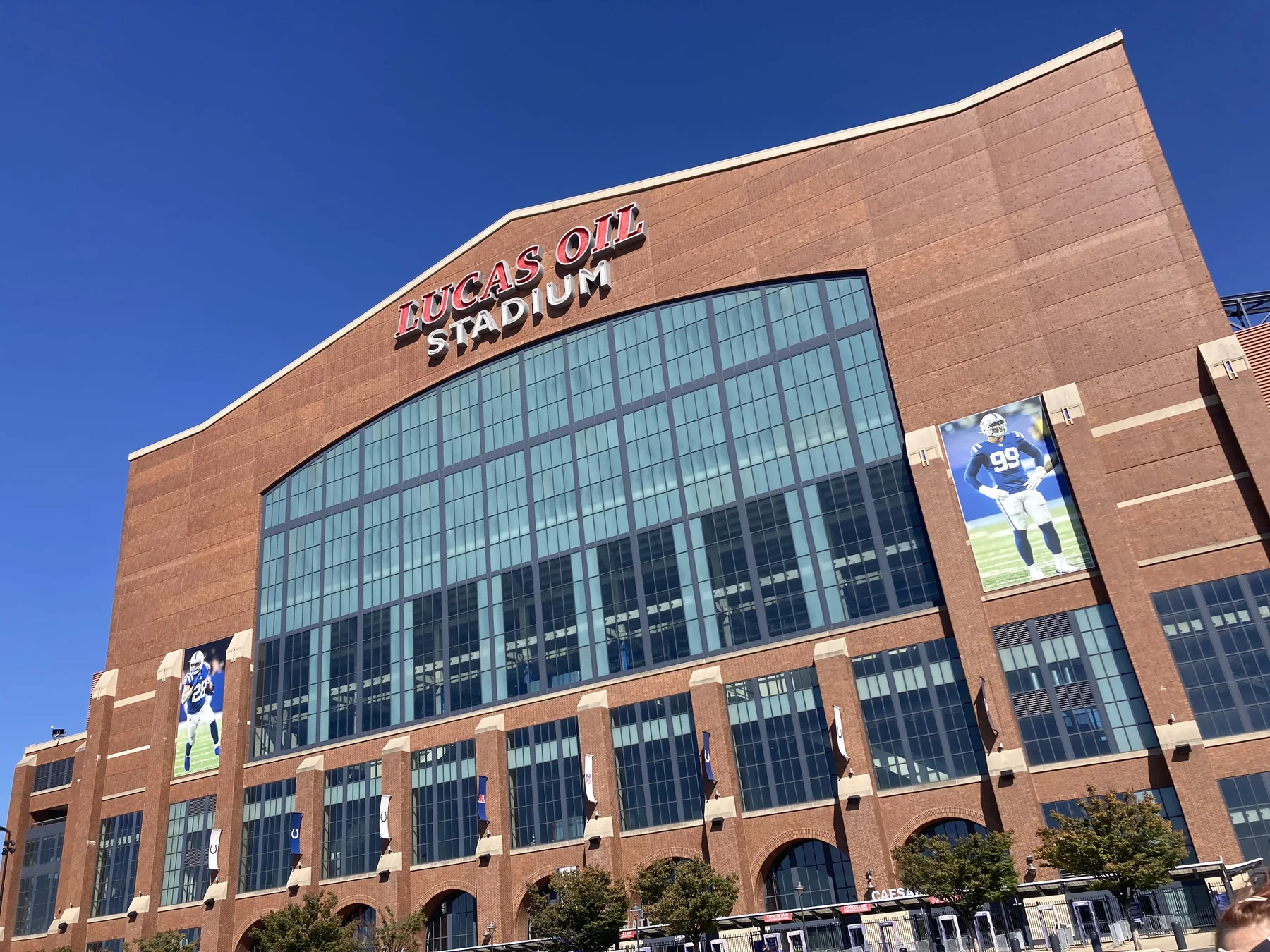
The phrase “2029 Final Four” refers to two NCAA Division I championships in different cities. The women play March 30 and April 1 at the Alamodome in San Antonio. The men play March 31 and April 2 at Lucas Oil Stadium in Indianapolis. A reservation or ticket for one does not apply to the other.
| Championship | Semifinals | Title game | City | Venue |
|---|---|---|---|---|
| Women's | Friday, March 30 | Sunday, April 1 | San Antonio, Texas | Alamodome |
| Men's | Saturday, March 31 | Monday, April 2 | Indianapolis, Indiana | Lucas Oil Stadium |
The women's semifinal session is Friday and the championship is Sunday, leaving Saturday for recovery, film and preparation. UTSA, the University of the Incarnate Word and San Antonio Sports are the announced hosts. The men's semifinal session starts the next day, with Sunday as its recovery day and Monday as the title game. Horizon League and IU Indianapolis are listed as hosts, with Indiana Sports Corp involved locally.
Each opening session contains two national semifinals. Each title game is a separate session. This distinction affects both length of stay and ticket scope: a women's all-session trip naturally covers Friday through Sunday in San Antonio, while the equivalent men's trip extends Saturday through Monday in Indianapolis.
The fastest booking check
Match championship, city, venue and dates on the same listing. “Final Four 2029” alone is not enough information to buy a ticket or reserve a hotel.
Exact tip times, broadcast assignments, participants and public ticket terms remain unannounced. Save each game day as an event block rather than attaching travel to an assumed start. The current NCAA future-sites pages were rechecked September 12, 2026 and treated as controlling over older copied venue tables. They support San Antonio/Alamodome for the women and Indianapolis/Lucas Oil Stadium for the men.
For an example of how the separate men's and women's calendars operate in the 76-team era, see the 2027 March Madness schedule and sites guide. The 2029 fields will follow their own season and bracket; no team is already assigned to either destination.
Lucas Oil Stadium and the men's championship setting
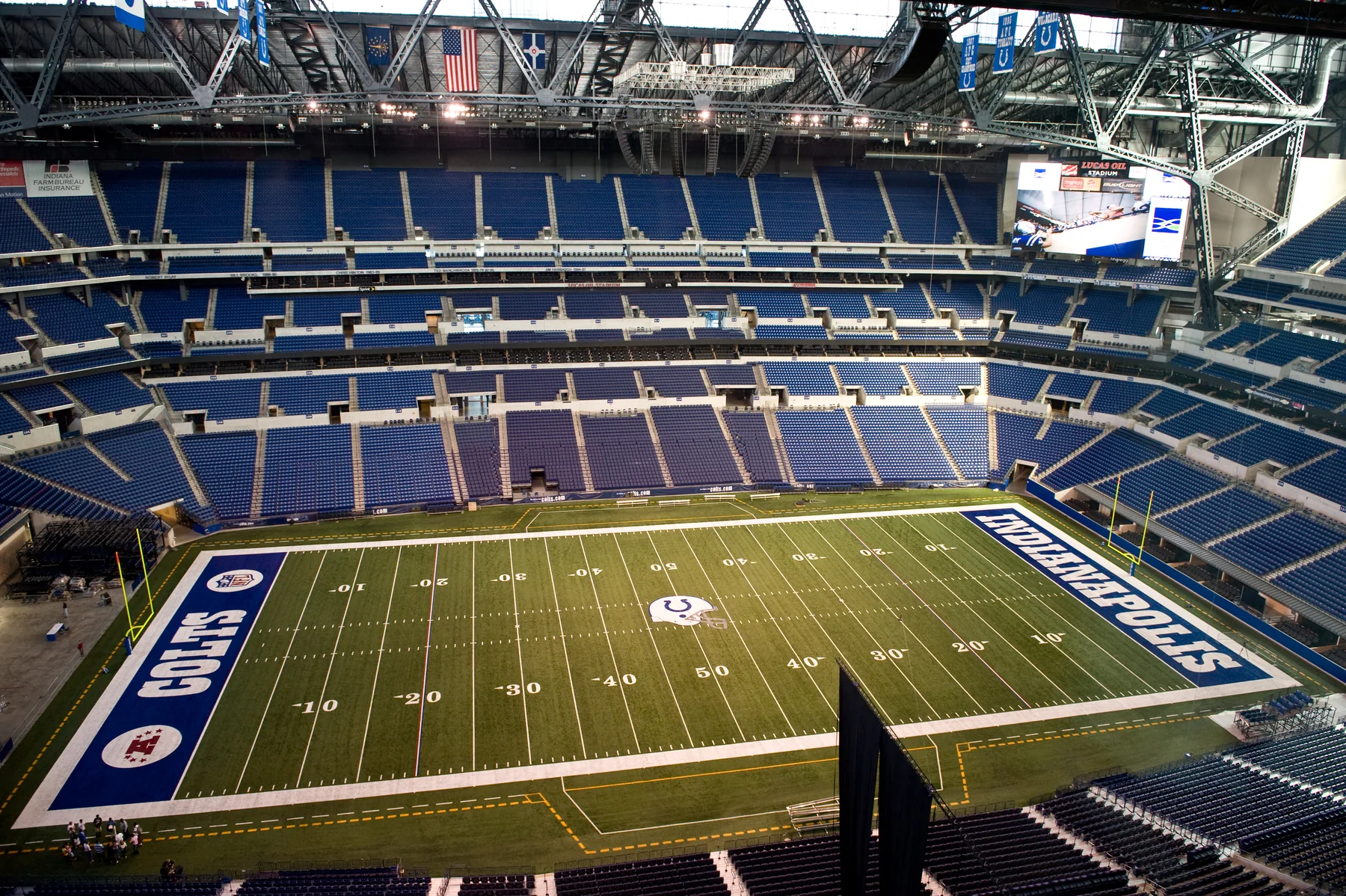
Lucas Oil Stadium is a 1.8-million-square-foot football venue adapted for championship basketball. It opened in 2008 and can change its lower seating and event floor for large productions. That flexibility is why a football capacity or generic stadium chart cannot tell a 2029 buyer how many seats will be sold or where the hardwood will sit.
Read the 2029 basketball map before choosing a seat
The event-specific map should answer four questions: where the court is positioned, which direction a section faces, how high the row sits and whether production structures affect the view. “Lower level” alone can hide a long horizontal distance in a stadium. A borrowed 2026 map can illustrate the concept, but it cannot establish the 2029 floor or inventory.
Seat value depends on how a fan watches basketball. A raised sideline or corner view makes ball-screen coverage, weak-side tags and transition spacing easier to read. A lower end seat can create stronger player-level atmosphere around one basket while compressing action at the other. Saturday's two-semifinal session also rewards comfort, aisle access and a clear video-board view over several hours.
Why Indianapolis is a repeat Final Four host
The 2029 event will be Indianapolis's tenth Men's Final Four and the fifth at Lucas Oil Stadium, after 2010, 2015, 2021 and 2026. Earlier city editions used Market Square Arena in 1980 and the RCA Dome in 1991, 1997, 2000 and 2006. Indiana Sports Corp will work with Horizon League and IU Indianapolis as NCAA host institutions.
That history supports confidence in local championship experience, not a promise that past operations repeat. The 2021 tournament was an exceptional pandemic arrangement spread across six Indiana venues. Its logistics, attendance and city footprint are not a normal model for 2029.
Repeat hosting means the stadium and local organizations have handled NCAA basketball, accessibility, security and large downtown crowds. It does not settle the fan festival location, road plan, door times, clear-bag enforcement or team allocations. Those remain event-specific. Plan around the confirmed building now; choose the precise seat only after the official map appears.
The Alamodome and the women's championship setting
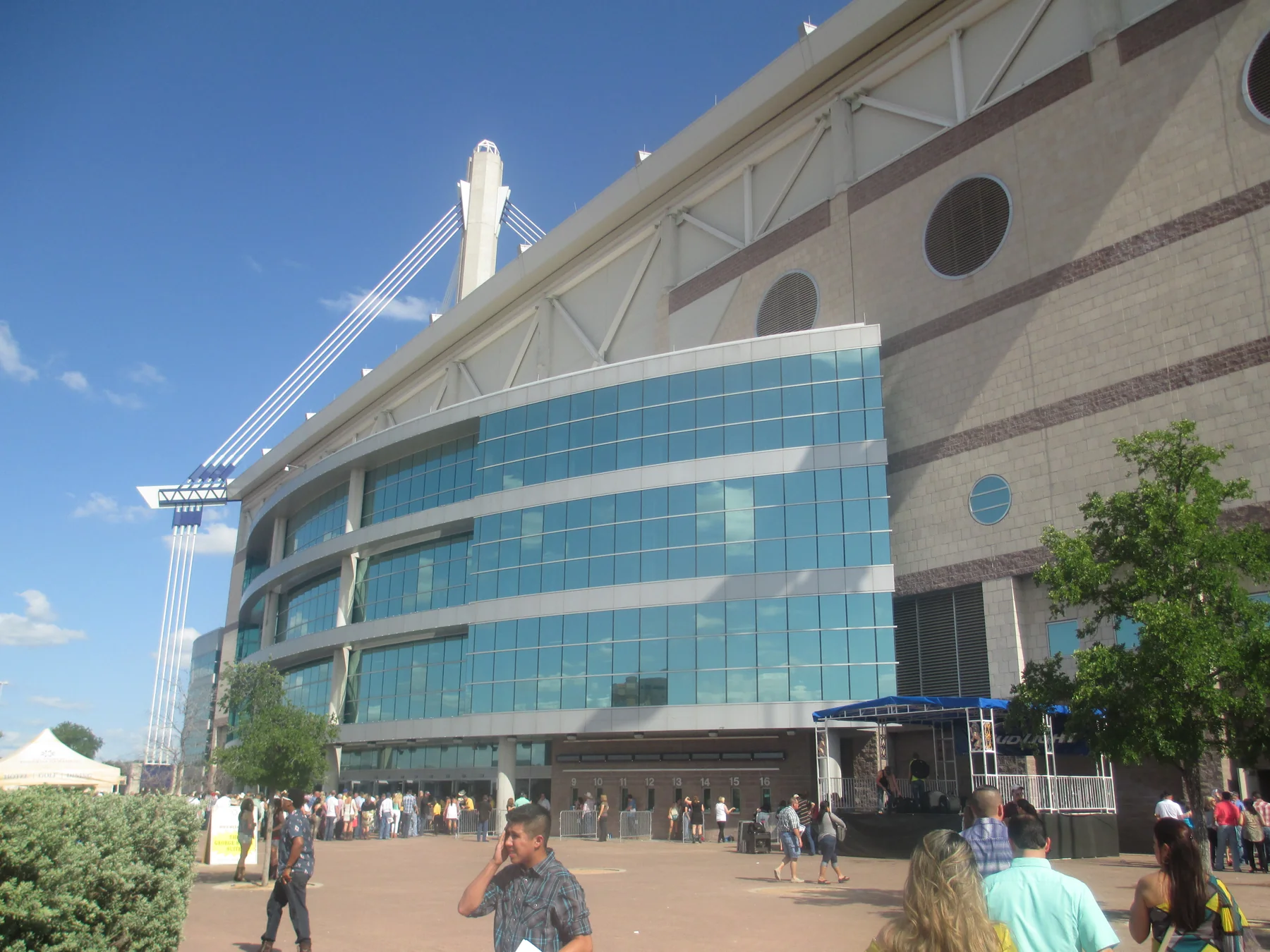
The Alamodome is a large multiuse venue, and the 2029 Women's Final Four will use an event-specific basketball setup. Its current seating page separates basketball from football and other configurations, which is the essential buying lesson: wait for the chart attached to the actual championship inventory.
Compare court position, section orientation, row elevation and any limited-view notice together. A raised sideline or corner angle can reveal spacing, help rotations and transition lanes at both ends. A low baseline seat may feel closer to players and one rim while making action at the opposite basket harder to read. Friday's two-game session also increases the value of comfort, aisle access and an unobstructed video board.
Do not turn a generic basketball diagram into a view guarantee. NCAA allocations, the championship court, benches, media areas, hospitality and production structures can change sellable inventory. The confirmed fact is the building; the seat judgment waits for the 2029 product map.
What San Antonio's earlier Women's Final Fours can teach us
San Antonio previously hosted in 2002, 2010 and 2021, making 2029 its fourth Women's Final Four. In 2002, San Antonio Sports reports 29,619 at the championship game as undefeated Connecticut completed a 39-0 season. UConn returned in 2010 and again finished unbeaten. Those results demonstrate that the Alamodome has staged the sport's championship at major scale; they do not predict the 2029 teams or ticket demand.
The 2021 edition is evidence of host capability but a poor model for an ordinary fan trip. San Antonio and the region staged the entire women's tournament in a controlled pandemic environment, and the Alamodome title game used limited attendance. Crowd flow, inventory and fan events from that season should not be projected onto 2029.
The useful conclusion is narrow. UTSA, the University of the Incarnate Word and San Antonio Sports bring prior hosting experience, and the venue has a real women's championship record. Exact prices, capacity, entry rules and city programming still require new 2029 releases.
Why the two 2029 weekends overlap
The two championships create one alternating four-day calendar, but not one traveling event. San Antonio keeps both women's sessions; Indianapolis keeps both men's sessions. The dates overlap because each finalist receives an off day between its semifinal and title game.
| Day | Championship action | What the other finalists are doing |
|---|---|---|
| Friday, March 30 | Women's semifinals in San Antonio | Men's teams have not begun Final Four play |
| Saturday, March 31 | Men's semifinals in Indianapolis | Women's winners recover and prepare |
| Sunday, April 1 | Women's championship in San Antonio | Men's winners recover and prepare |
| Monday, April 2 | Men's championship in Indianapolis | Women's event is complete |
The off day is active basketball time. Players receive treatment and recovery work; staffs review the opposite semifinal; each winner reduces a new opponent into one practice and walk-through plan. The team emerging from the later semifinal can have a shorter recovery window. That same cadence gives fans one non-game day inside their chosen city.
A women's all-session trip should treat Friday through Sunday as one San Antonio block. Saturday can hold fan programming, sightseeing or rest, but a flight to Indianapolis adds disruption risk before Sunday's championship. The men's version stretches Saturday through Monday, so a weekend-only hotel reservation may end before the title game. Budget Monday night or a late departure with enough time for the presentation and stadium exit.
Attending every session in both cities is not realistic. A traveler could eventually combine one women's and one men's session, but only after exact tip times and flight schedules are known. That plan sacrifices the off-day cushion and exposes the second ticket to airline disruption.
Choose continuity or variety deliberately
One city and both sessions offers the dependable championship experience. A split-city plan is a separate travel project, not a shortcut created by alternating dates.
Label every calendar item “men's” or “women's.” March 31 is not the women's title date, and April 1 is not the men's championship. That small distinction prevents a ticket, hotel or flight from being attached to the wrong city.
Ticket strategy for two different championships
No verified 2029 onsale date or public price schedule exists yet. Join the gender-specific NCAA notification path, then evaluate the live product when the NCAA or its linked provider releases inventory. The purchase has three separate decisions: correct event, correct session scope and acceptable team uncertainty.
Verify the championship before entering checkout
Start at NCAA Championship Tickets or the men's or women's Final Four hub, then follow its linked seller or approved exchange. A search advertisement is not proof of authorization. Match championship, city, venue and date before considering the seat.
Women's event identity
San Antonio · Alamodome · March 30 and/or April 1
Men's event identity
Indianapolis · Lucas Oil Stadium · March 31 and/or April 2
Signing up for men's alerts does not reserve women's tickets. A Lucas Oil Stadium listing cannot admit someone to the Alamodome. Keep separate saved searches and label calendar items by championship.
Compare the sessions included in each product
Current NCAA ticket guidance distinguishes all-session and single-session access. Structurally, a Final Four opening session contains two semifinals, while the title game is another session. An all-session product is intended to cover both event days; a single-session product covers only the named session. The actual 2029 description controls.
Record section, row, quantity, included dates, delivery, fees and final total. Divide cost by both seats and sessions. A less expensive semifinal listing may not be comparable with a package that also includes the championship. Add lodging for Friday/Sunday in San Antonio or Saturday/Monday in Indianapolis before deciding which offer costs less overall.
Decide how much team certainty you need
Buying early means buying the championship before participants are known. It can improve choice and lock in the full weekend, but it offers no school guarantee. Waiting until regional results identifies the four teams, yet inventory can tighten when a nearby or nationally followed program qualifies.
Event-first fans can buy when an acceptable official product appears. School-first fans may value bracket certainty more than early choice. Set a full-trip ceiling before the regional finals, then refuse listings outside it even when a favored team advances.
Terms still require a 2029 check
Do not import application rules, hospitality benefits, transfer terms, child policies, exchanges or mobile-delivery instructions from an earlier Final Four. Past pages explain vocabulary; the live 2029 listing creates the agreement.
What will remain unknown until 2029
Host cities, venues and four game dates are confirmed, but they are not complete schedules. The 2028-29 season must determine participants. NCAA, broadcaster and host releases must determine tip times, seating inventory and event operations. Treat those two uncertainty tracks differently.
The current format, effective from 2027, gives each Division I tournament 76 teams: 32 automatic qualifiers, 44 at-large selections and a 12-game Opening Round. Committees evaluate teams throughout the season using results, observation and multiple metrics; no single number establishes a bid. This is official policy as of September 12, 2026, not a guarantee that no rule can change before 2029.
No school is already assigned to Indianapolis or San Antonio. Conference tournaments establish automatic bids, selection committees fill and seed the fields, and tournament results reduce each bracket to four regional champions. A famous program, preseason favorite or high early ranking still has to qualify and advance.
Operational unknowns are separate. The future-sites pages do not list exact tips or channels. Final court maps, sellable seats, team blocks, mobile-ticket rules, entry and bag policies, accessibility processes, fan-event hours and transportation plans are also pending. A policy visible on a stadium site today can be replaced by championship-specific instructions.
How the remaining facts become official
| Milestone | New certainty |
|---|---|
| 2028-29 season | Schedules, results and résumé evidence |
| Selection Sunday | Fields, seeds and bracket paths |
| Regional finals | Four participants in each Final Four |
| Official event releases | Tip times, TV, maps, policies and local operations |
Once the season begins, follow the men's schedule and women's schedule rather than projecting a field from reputation. After selection, the bracket supplies possible routes; only regional results create actual travelers.
Broad travel can use confirmed cities and dates now if reservations remain flexible. Flights, transfers or meals tied to an assumed tip should wait. Qualification facts come from the season and bracket; logistics facts come from event authorities. Neither belongs in the article until its source exists.
A realistic planning timeline
The useful parts of a 2029 Final Four plan do not all become knowable at once. Build the trip in stages: lock in only what the NCAA or host has confirmed, then add tickets, teams and event operations when those facts acquire official sources. That keeps an early plan practical without turning placeholders into promises.
Now: identify one championship
Write down San Antonio and the women's weekend, or Indianapolis and the men's weekend. Follow the matching NCAA future-information route and compare refundable lodging. Do not reserve around an assumed tip time, and do not treat the two events as interchangeable simply because both carry the Final Four name.
When official sales open
Start again from the NCAA ticket page or a link reached through the official championship site. Read which sessions the product includes, inspect the basketball configuration rather than a generic venue chart, confirm the delivery method and compare the displayed total after fees. A seat decision belongs here, not in today's planning.
From Selection Sunday through the regional finals
Selection Sunday reveals the field and each team's route, but it does not put that team in the Final Four. Use the bracket to watch travel risk shrink round by round. The regional championship is the decisive milestone: its winner becomes one of the four teams headed to the relevant host city.
During event week
Open the current event guide instead of relying on an old screenshot. Verify mobile-ticket access, gate and bag rules, accessibility procedures, fan-event hours, local transit and the weather forecast. Load the ticket into the supported wallet before leaving reliable service, but retain access to the official account in case the barcode refreshes.
Exact broadcast windows will eventually make the college basketball TV guide useful for coordinating games with travel. Until those windows are official, keep the entire session day open. A placeholder time is not a safe basis for a flight, dinner reservation or cross-city transfer.
The least fragile itinerary is one championship in one city. The women's event occupies its San Antonio weekend; the men's event occupies its Indianapolis weekend. Anyone still considering both should wait for exact tip times and understand that schedule overlap, airport transfers and disruptions can erase a theoretical connection. Buying both events does not make the route between them workable.
Keep the NCAA future-site pages, the NCAA ticket hub and the applicable venue page bookmarked, then revisit them at each stage. The confirmed city, venue and dates are the foundation. Ticket products, participating teams, session times and operating rules are later layers. Treating those layers differently is what turns a distant championship announcement into a realistic plan.
Sign in with Google to join the discussion.