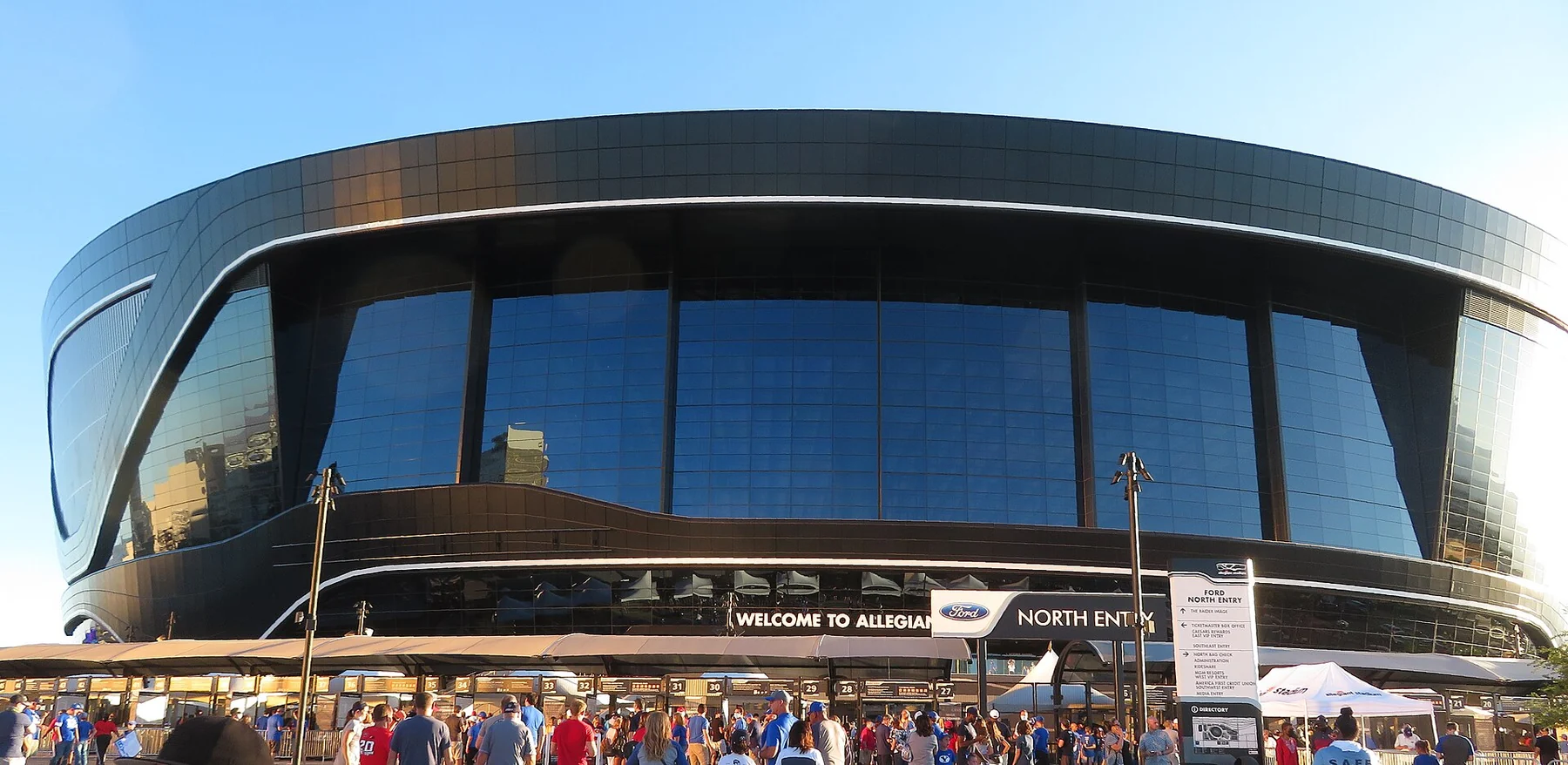
Two 2028 Final Fours, two different destinations
“The 2028 Final Four” has two correct location answers because the NCAA Division I men's and women's championships are separate tournaments. The men play at Allegiant Stadium in Las Vegas on Saturday, April 1, and Monday, April 3. The women play at Lucas Oil Stadium in Indianapolis on Friday, March 31, and Sunday, April 2.
The first date in each pair is the national-semifinal date: four regional champions play two games. The second is the national championship game between the semifinal winners. These are not two sites within one bracket. A men's ticket in Las Vegas provides no access in Indianapolis, and the Women's Final Four does not share the men's dates or host.
| Tournament | City and venue | Semifinals | Championship | Host information |
|---|---|---|---|---|
| NCAA Division I men's | Las Vegas — Allegiant Stadium | April 1 | April 3 | UNLV |
| NCAA Division I women's | Indianapolis — Lucas Oil Stadium | March 31 | April 2 | Horizon League, IU Indianapolis and Indiana Sports Corp |
Older search results may identify Gainbridge Fieldhouse for the women. The NCAA changed the 2028 Women's Final Four to Lucas Oil Stadium in September 2025, so Lucas Oil is the current controlling venue. The move adds approximately 13,000 seats. Allegiant Stadium, meanwhile, marks the men's event's first trip to Las Vegas.
The weekends overlap from Friday through Monday. Fans choosing an event should therefore begin with tournament scope, not the generic phrase “Final Four.” Follow the men's college basketball schedule for the Las Vegas tournament path and the women's college basketball schedule for the Indianapolis path.
These venue and date facts were rechecked September 12, 2026. Teams, semifinal matchups, event-specific court maps, final ticket inventories and precise tip times remain later announcements. A host institution or local organizing group administers the championship; it does not receive an automatic place in the four-team field.
Why Las Vegas is a milestone for the men's championship
The 2028 award brings the NCAA Division I men's championship weekend to Las Vegas for the first time. That is the precise milestone. Las Vegas and UNLV have hosted other NCAA championship activity, including men's regional basketball, but Allegiant Stadium has not previously staged the two national semifinals and title game.
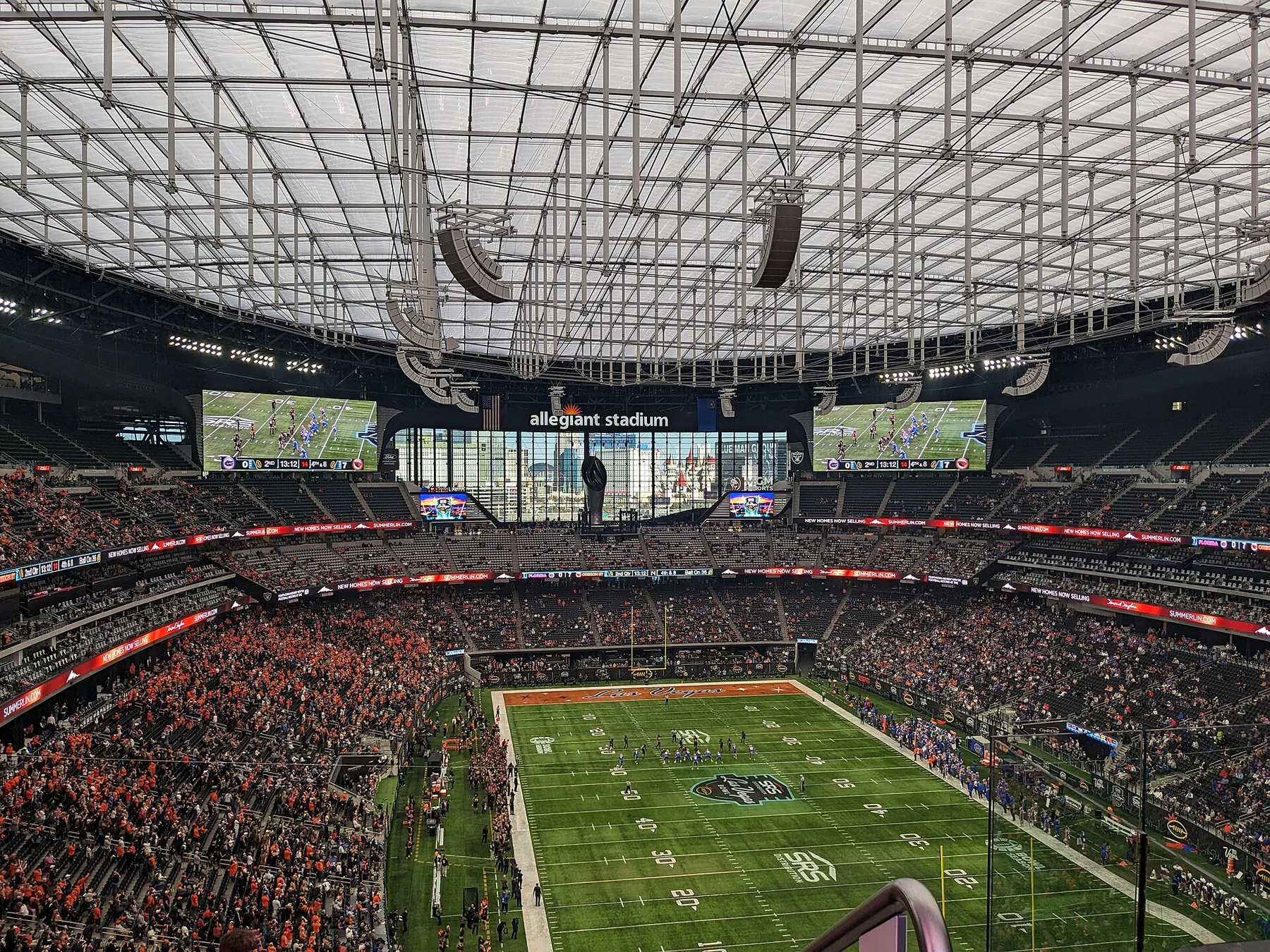
Allegiant Stadium hosts April 1 and 3
The NCAA future-site table assigns Allegiant Stadium the national semifinals on Saturday, April 1, and the championship on Monday, April 3. The 2028 regional finals are scheduled for March 25 and 26 in Raleigh, San Francisco, Detroit and Dallas. Their four winners become the Las Vegas field, receiving roughly six or seven days before the semifinal date.
That interval is longer than the one-day reset between the Sweet 16 and Elite Eight, but it is not idle time. Teams travel, meet expanded media obligations and prepare for an opponent from another regional bracket. A switching defense, a dominant offensive-rebounding team or an unusual tempo may demand a different plan from the one that won the regional. Fans gain the same short window to convert a possible trip into a confirmed one.
Allegiant is a football stadium, so its 2028 basketball configuration matters more than a Raiders section label. The temporary court, floor seating, team areas and media platforms will define actual viewing distance. Reserve travel around the confirmed dates if useful; wait for the NCAA event map before assigning value to a seat.
UNLV hosts; it does not receive a tournament place
The NCAA lists UNLV as the host. In championship terminology, hosting covers institutional and local operational responsibilities. It does not place the Runnin' Rebels in the bracket, award them a favorable seed or give them a direct route to Allegiant Stadium. UNLV must be selected or qualify under the same tournament system and then win its region.
This distinction prevents a common location-guide error. “Hosted by UNLV” describes administration, not a home game. Even if UNLV reached the Final Four, the event would remain an NCAA neutral-site championship with standardized operations and allocations.
The award reflects Las Vegas' capacity to stage a major national event, not a forecast about the four teams or the basketball they will play. Exact tip times, matchups, ticket products, fan-event sites and entry policies remain future announcements. Recheck the NCAA and Allegiant Stadium once event-specific 2028 information replaces the generic venue material.
Why the women's event moved to Lucas Oil Stadium
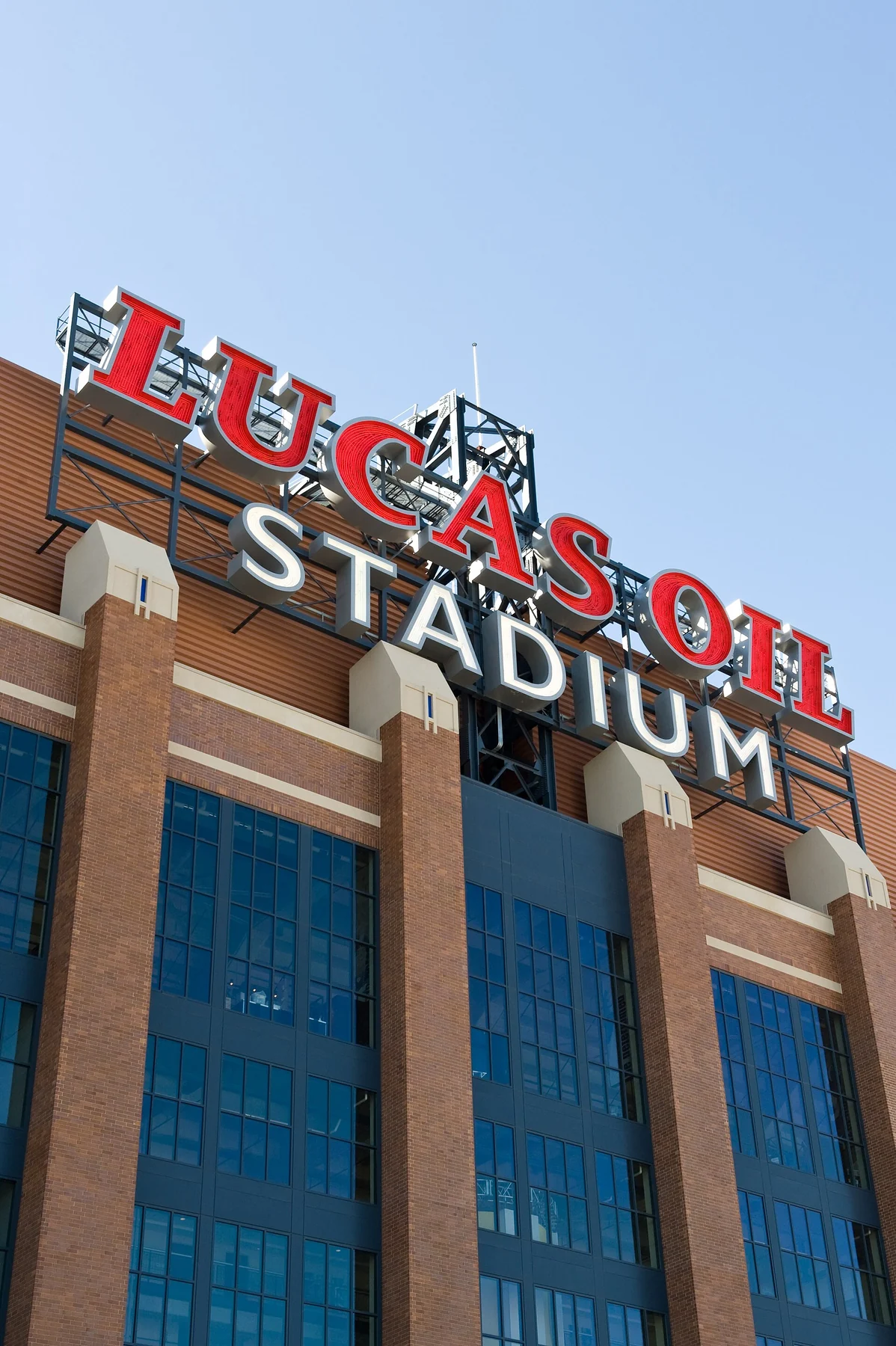
The NCAA moved the 2028 Women's Final Four from Gainbridge Fieldhouse to Lucas Oil Stadium because demand had outgrown the previously planned arena footprint. The Division I Women's Basketball Committee approved the change in September 2025. Its announcement cited continued sellouts and steadily rising public demand, and estimated that the stadium configuration would add approximately 13,000 seats.
That decision resolves an apparent contradiction in search results. Indianapolis remained the host city; the building changed. A page naming Gainbridge may preserve an earlier plan, but it is not a second 2028 venue. The NCAA's current future-site table and venue-change release both identify Lucas Oil Stadium for March 31 and April 2.
The move is part of a broader attendance story. The NCAA reported that the three tournaments preceding its announcement produced the three highest first- and second-round attendance totals in championship history. It also said the then-current two-site regional model had drawn 84,754 in the prior championship, 14.6% more than the best four-site regional total it cited. Those figures do not predict the 2028 gate, but they explain why the committee saw a larger final-site stage as a response to demonstrated interest rather than a speculative expansion.
Importantly, the preliminary-round format did not move with the Final Four. The committee kept top seeds hosting early rounds at campus sites through 2031 and retained the two-site regional structure. The four teams in Indianapolis will therefore still be regional champions, not teams selected to fill a larger stadium.
For fans, 13,000 additional seats describe potential access, not guaranteed inventory or lower prices. The NCAA can still divide capacity among participating schools, public sales, hospitality, media and operational needs. A football stadium also requires a temporary court and event-specific seating plan. The right conclusion is that more people may be able to attend; it is not that every section will offer an arena-like view.
Lucas Oil also makes a symbolic return: the NCAA called it the Women's Final Four's first appearance in an active NFL stadium in more than two decades. That scale reflects the sport's growth while leaving the basketball format intact—two Friday semifinals, one Sunday championship, and four teams that earned their places through the bracket.
What a stadium Final Four changes for spectators
Both 2028 Division I events put a basketball court inside an NFL stadium. That expands the championship stage, but it also makes ordinary arena shorthand less reliable. “Lower level” and “50-yard line” do not explain the distance, height or angle to a temporary court.
Read the temporary basketball map
Start with the event-specific map, not a football chart. The NCAA's floor plan will determine court orientation, floor seating, team benches, media positions and which portions of the bowl are sold. A section centered for football can become offset from midcourt; a familiar end-zone label can sit far beyond a basket once production space is installed.
Use the map to locate the court first, then compare section, row and elevation. A centered elevated view usually makes it easier to read transition lanes, weak-side rotations and the spacing around a ball screen. A lower behind-basket view can intensify rim action and offensive-rebounding battles at the near end while compressing the far half court.
Do this separately for Las Vegas and Indianapolis. Allegiant and Lucas Oil have different bowls, and the men's and women's organizers can choose different layouts. Even a previous Final Four plan in one stadium is a reference, not a guarantee for 2028.
More capacity does not make every seat equivalent
The NCAA expects approximately 13,000 additional seats from moving the women to Lucas Oil. That creates a better chance of broader access, but it does not make all new seats interchangeable. Some may be farther from the court or require greater reliance on video boards. Prices, allocations and released inventory can also differ by tier.
Decide what the viewer values. Fans who want to diagnose how a defense tags a roller or how a team creates a corner three may prefer centered elevation. Fans prioritizing bench energy, band atmosphere or near-basket physicality may accept a less complete tactical view. For a group, adjacent seats can matter more than moving a few rows.
Accessibility is configuration-specific too. Lucas Oil advises buyers to notify the ticket seller at purchase and notes that accessible locations may vary with the event plan. Apply the same discipline in Las Vegas: use designated inventory and the current event contact rather than assume an ordinary aisle seat solves a mobility need. Capacity describes how many people a building may hold; the 2028 basketball map describes what each person can actually see.
Indianapolis becomes a multi-division women's basketball hub
Indianapolis is preparing for more than one title game in 2028. The NCAA's venue-change announcement says Women's Final Four weekend will also include the Division II and Division III women's basketball championships. That creates a rare chance to see three levels of NCAA women's basketball in one host city, but it does not turn them into one tournament or one ticket.
Division I follows the Friday-Sunday rhythm
The Division I Women's Final Four semifinals are scheduled for Friday, March 31, at Lucas Oil Stadium. Four regional champions play two elimination games. The winners have Saturday to recover and prepare, then meet for the national championship Sunday, April 2.
That one-day turn affects the basketball. A finalist may need to change from defending a high ball-screen attack Friday to managing post touches or transition pressure Sunday. Bench minutes and foul management in the semifinal can shape the title-game rotation. Fans who want the entire Division I story should verify that a package includes both Friday and Sunday; a semifinal credential should not be assumed to include the final.
The Horizon League, IU Indianapolis and Indiana Sports Corp are named as hosts. Their roles support the event. They do not place a local school in the bracket, and the larger venue does not change the requirement that four teams win regional titles.
Division II and III titles add separate events
The DII and DIII announcements widen the weekend's appeal. Those championships represent different fields, selection paths, scholarship contexts and competitive seasons. They deserve to be promoted by their real division names, not treated as undercard games belonging to the Division I ticket.
As of September 12, 2026, the NCAA release confirms their presence in Indianapolis but does not supply enough event-specific detail to promise exact venues, tip times, ticket bundles or transfer windows. Those fields should remain TBA until the NCAA championship schedule and local organizer publish them. A fan building a multi-game itinerary should leave travel time between venues rather than assume every game is on the Lucas Oil floor.
Registering for updates at the local organizer can help, but each purchase still needs its own tournament, date, venue and admission terms. The opportunity is substantial: fans can compare how championship basketball looks across divisions while respecting that every title is independently earned.
Plan one trip, not an impossible two-city weekend
The official dates make the central travel decision simple: choose the men's event in Las Vegas or the women's event in Indianapolis. The women play Friday, March 31, and Sunday, April 2. The men play Saturday, April 1, and Monday, April 3. Trying to attend all four Division I event dates would require crossing multiple time zones between every stage and gambling on unknown end times, airport transfers and delays.
A fan could theoretically sample one city and miss part of the other event, but that is not an honest “both Final Fours” plan. The women's championship occurs during the gap between the men's semifinal and final. Missing Sunday in Indianapolis means missing the women's title game; leaving Las Vegas after Saturday means abandoning the men's championship portion. Build one complete championship trip instead of turning the weekend into an airline connection exercise.
Neutral fans can commit earlier because the teams do not determine whether the event is worthwhile. Use the confirmed dates to hold refundable lodging and arrive before the first event day. Do not schedule arrival or departure around a recycled tip time; exact 2028 game windows are not yet confirmed.
Team-first travelers face a different tradeoff. A school must win its regional to reach the Final Four, so participant certainty arrives only days before the destination weekend. A cancellable room and changeable flight can be more valuable than a lower nonrefundable rate. The regional result that triggers ticket demand also triggers thousands of travel decisions from the winning fan base.
Keep every reservation labeled by tournament. In Las Vegas: men's, Allegiant Stadium, April 1 and 3. In Indianapolis: women's, Lucas Oil Stadium, March 31 and April 2. Match tickets to the same four fields. A generic “Final Four” confirmation is not specific enough.
Leave local details flexible. Championship security perimeters, street closures, floor entrances, fan-event locations and gate times can differ from an ordinary Raiders or Colts game. The Indianapolis organizer says updates are still forthcoming; Las Vegas will publish its own event plan. Recheck official materials before locking transport between hotel, stadium and airport. The best early itinerary is deliberately incomplete: correct city, correct dates, refundable terms and room for the event schedule that has not yet been released.
Recheck the facts that can still change
Use the venue and date pairs as the stable core: men's Final Four, Allegiant Stadium in Las Vegas, April 1 and 3; Women's Final Four, Lucas Oil Stadium in Indianapolis, March 31 and April 2. Then treat the rest of the trip as a sequence of updates rather than filling gaps with previous years' information.
First, check the official championship pages when sales or applications open. Confirm the tournament gender, sessions included, mobile-delivery method, event-specific seating map and refund or transfer terms. Older women's pages that still say Gainbridge Fieldhouse have been superseded by the NCAA's Lucas Oil announcement. A generic Las Vegas listing should identify Allegiant Stadium before it is used for the men's trip.
Next, return when the 2028 brackets are released. The bracket supplies schools, seeds and regional paths, not Final Four participants. Each team still must win its region. For the men, the NCAA already lists regional sites in Raleigh, San Francisco, Detroit and Dallas, but their winners will not be known until tournament play. Do not label a preseason favorite a Las Vegas team.
Recheck immediately after the regional finals. That is when the four participants in each Division I Final Four, their semifinal assignments and the relevant fan bases become real. Team-specific ticket and travel demand may change rapidly. The 2027 March Madness schedule guide illustrates the round-to-round timing, but its dates and sites must not be copied into 2028.
During event week, verify precise local and Eastern tip times, television and streaming assignments, gates, bag rules, transportation notices, fan events and mobile credentials. Those details can be published or adjusted closer to the championship. The men's and women's channels may announce them separately, so one event's schedule is not evidence for the other.
The same caution applies to the additional DII and DIII women's title games. Indianapolis is confirmed as part of the multi-division weekend, but their exact 2028 venues, dates and admissions need official event listings before an itinerary can promise them.
This article was rechecked September 12, 2026. That date makes the uncertainty auditable: confirmed future-site records support the destinations and dates; teams, pairings, tip times, maps and detailed operations are still TBA. Precision means preserving that line until the NCAA moves it.
Sign in with Google to join the discussion.