
2027 Final Four tickets: the confirmed facts
The 2027 NCAA Division I men's Final Four is scheduled for Saturday, April 3, and Monday, April 5, at Ford Field in Detroit. Saturday is one semifinal event containing two games. Four regional champions enter the building and two advance. Monday is a separate championship event with one game. Ticketmaster currently labels the available product families All-Session, Semifinals and Championship, so “Final Four ticket” alone is not a complete description of what a buyer receives.
An all-session product should cover both event dates and all three games; the offer details and delivered credentials remain controlling. A semifinals ticket is for Saturday's two-game event. A championship ticket is for Monday only. Before paying, match the listing to the date, product name, quantity, section and included sessions. A high price does not prove that Monday is included.
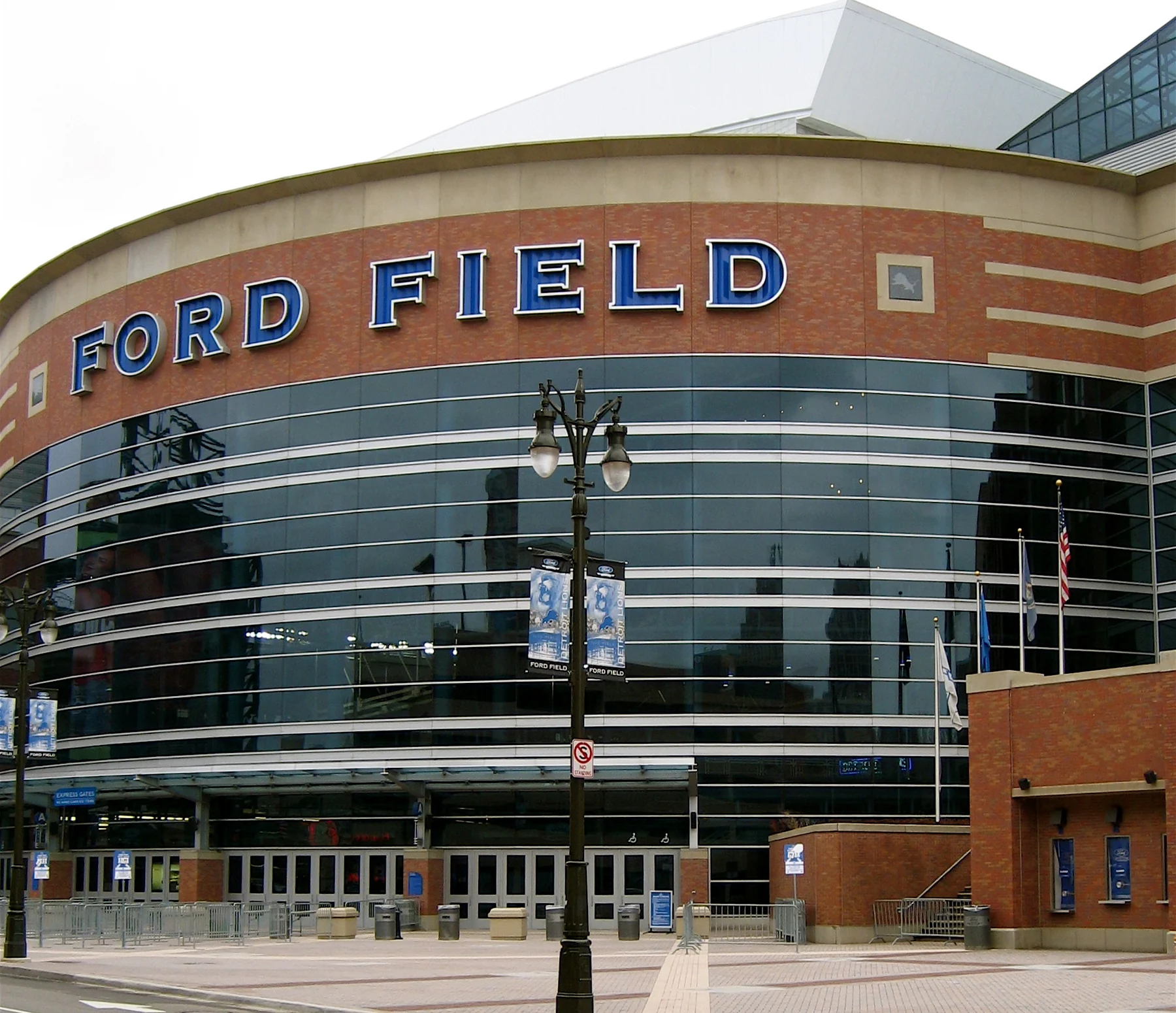
Ford Field is a football stadium configured temporarily for basketball. The NCAA lists Michigan State as host, but hosting is an administrative role and does not place the Spartans in the field. Participants will emerge from the four regional brackets. The broader 2027 March Madness schedule shows the rounds that must be won before Detroit.
As of September 12, 2026, the stable facts are the men's event, building and dates. Treat teams, semifinal pairings, a complete public face-value chart, event-specific seating configuration and final entry instructions as later updates. Resale asking prices are individual offers, not an NCAA price announcement. Older or generic pages may also mix in the separate Women's Final Four in Columbus; a valid men's listing should identify Ford Field and April 3 or April 5.
That boundary lets a fan plan without pretending uncertainty has disappeared. Hold the travel dates now, decide which games matter, and use NCAA-controlled links for every new ticket phase. Do not build a nonrefundable itinerary around an aggregator's unverified event time or assume every seat shown months early is primary inventory.
Choose the games you actually want to attend
All-session access for the complete weekend
All-session access is for the fan who wants Detroit regardless of which programs survive. It should cover Saturday's two semifinals and Monday's championship, but verify both event dates in the offer and count the credentials after delivery. The value is certainty: if a preferred team advances Saturday, Monday is already secured. The cost is commitment before that result exists.
Saturday semifinals for maximum live basketball
Saturday is the strongest basketball-volume choice. One semifinal event presents four regional champions and two games, often with contrasting problems: one matchup may turn on transition defense, while the other is decided by half-court spacing or the offensive glass. A fan following one qualified school knows it will play Saturday. A neutral fan sees every team in the Final Four at least once.
Confirm that the listing says Semifinals and April 3. Early-round sites sell several sessions, so a vague session number copied into a resale title can confuse buyers. Ford Field cannot clear and refill for two separately ticketed national semifinals in the way a small pod might; the official product label treats Saturday as the semifinal event.
Monday championship for one decisive game
Monday-only access concentrates the spend on the national title. It suits a local fan, someone arriving after the weekend, or a buyer willing to wait until the finalists are known. The risk is matchup-driven demand. A nearby program or two large national fan bases can create competition just as supporters of Saturday's losing teams release seats.
Do not compare these products by headline price alone. Record price after fees, number of seats, section, row, date and games included. Dividing an all-session total by three can describe entertainment cost, but it undervalues Monday's championship stakes. The right choice follows intent: all weekend, the widest set of teams, or the trophy game only.
Follow the official path from registration to checkout
Registration, application and public inventory are different stages
Start at NCAA.com or NCAATickets.com and follow the linked application, presale or authorized seller. The NCAA hub currently offers both event updates and an Apply Now route for Detroit. Those are not identical promises. Joining an email list means receiving information; submitting an application means requesting access under stated terms; receiving an allocation or completing checkout creates the order.
The NCAA also separates tickets and hospitality. A premium package may combine a seat with experiences or amenities, so compare its entire inclusion list with an ordinary ticket. Do not describe every difference as a seat markup, and do not mistake a hospitality inquiry for standard public inventory.
Preserve the source chain. Reach any official exchange from the NCAA ticket hub, not an advertisement imitating its name. Save the confirmation email and note which account owns the order. A presale code is not proof that an unknown seller possesses seats.
Prepare one purchase plan before inventory moves
Set up the authorized account, verify email and phone, store a valid payment method, and agree on quantity and maximum all-in spend before the sale. The plan should be concrete: “two adjacent seats, centered upper or lower end, no more than the group ceiling after fees.” That prevents the queue from becoming a debate about every section.
Name one purchaser. Multiple competing account sessions can trigger queue problems or duplicate orders. Read the purchase limit and avoid uncontrolled refreshing. At checkout, verify product, date, section, row, quantity, fees and delivery method. Save the receipt without sharing a live barcode.
The basketball decision belongs in the plan. A team-first buyer accepts that even a No. 1 seed must win four games before Detroit. A neutral weekend buyer can act earlier because participant identity matters less. Neither should buy a Monday-only ticket believing it guarantees a preferred school: Saturday determines the finalists.
After purchase, confirm the credentials inside the correct mobile account. If an all-session order arrives as separate event tickets, count both dates. The official account—not a screenshot, forwarded email or seller message—is the operational record to carry into Final Four week.
Set a budget without inventing a 2027 average price
There is no defensible single “average 2027 Final Four ticket price” while official inventory, sections and resale offers continue to change. The authorized page confirms product types, not a permanent face-value grid for every Ford Field seat. A resale page displaying a four-figure ask reports one seller's offer at one moment; it is neither NCAA face value nor proof of a completed sale.
Compare the checkout total. Record product, date, seats included, quantity, section, row, subtotal, service fees, taxes and delivery terms. Divide by seats and then identify games included. A $900 headline that becomes $1,120 after fees is not cheaper than a $1,050 all-in offer. An all-session package cannot be compared directly with a Monday-only ticket simply because each displays one number.
Keep hospitality in a separate row. Premium products may include experiences or amenities beyond admission. Value those additions only if the group would otherwise buy them; do not call the entire difference a ticket premium without reading inclusions.
Then add the trip. Price refundable lodging, transport to Detroit, parking or local transit, meals and the extra nights required for Monday. Use three buckets: required, likely and optional. Tickets and a place to sleep are required; local transport is likely; merchandise and premium events are optional. A cheaper seat purchased late can lose its advantage when hotel rates rise.
Create event-first and team-first scenarios. Neutral fans know they will attend regardless of participants and can value early certainty. Team fans do not know whether travel is needed until the Elite Eight; refundable reservations may be worth more than a small room-rate discount. After each regional final, newly qualified supporters enter the market while eliminated fan bases may release inventory. Those forces do not guarantee a price drop.
Set a walk-away all-in ceiling before browsing and change it only when the actual experience changes—not because a countdown clock appears. The goal is a complete budget for the games desired, not a misleading claim that every fan should expect one average price.
Read a Ford Field basketball seat map, not a football label
Ford Field lists an overall capacity of 65,000, but that football number does not tell a Final Four buyer how far a temporary basketball court will be from a particular row. The court, media platforms, team areas and floor seating change the geometry. Wait for the event-specific 2027 map, locate the court on it, and only then translate a section and row into a viewing experience.
Centered elevation helps reveal spacing
A raised seat near midcourt generally provides the clearest tactical view. It is easier to see a defense tag a roller, a weak-side shooter lift from the corner, or a guard reject a ball screen when the whole half court stays in frame. In a stadium, moderate elevation can be more useful than simply being lower because shallow floor sightlines may put spectators, equipment or media positions between the viewer and the far end.
The upper bowl is not one product. Compare lateral position, row height and court orientation. A centered upper seat can show both transition lanes and half-court spacing more consistently than a lower seat deep beyond a basket. Ford Field says its design lowers the upper level by omitting a traditional suite layer on one side, but the actual Final Four map—not a generic football claim—must determine the choice.
Low and behind-basket seats carry different tradeoffs
Lower seats create proximity, sound and a stronger view of action at the near basket. They can also flatten the angle to the far basket. Behind-basket locations highlight rim protection, rebounding leverage and baseline sets nearby, while making spacing at the opposite end harder to read. A corner can split those differences, but distance varies sharply within a large stadium.
Ask what the group wants to watch. A fan studying how four regional champions execute may prioritize centered elevation. A supporter seeking atmosphere may accept an end view closer to a team entrance or bench-side area, once the official map identifies those features. Never infer bench location from a Lions chart.
Group adjacency and accessibility come before a small upgrade
Confirm that every seat number is consecutive before checkout. Two apparently similar listings can place a four-person group in different rows or require an unspecified split. If anyone needs an accessible location or companion seat, use the event's designated inventory and contact the authorized seller or Ford Field rather than assuming an ordinary aisle seat can be converted. The stadium lists elevators and accessible ramps, but the 2027 event plan will control routes and seating.
Finally, save the map version used to purchase. If the configuration changes, the order record and official seller are the right places to resolve it. A slightly less glamorous section that keeps the group together and meets access needs is a better basketball purchase than a nominal upgrade that fails either condition.
Treat resale as a transfer-and-protection decision
Resale is not only a price decision. It is a decision about whether the listing identifies the correct event, whether the platform protects the transaction, and whether a valid mobile credential can reach the buyer's own account. The NCAA ticket hub provides a link to its Ticket Exchange; use that controlled route or another seller whose guarantee and refund terms you have actually read. A search ad containing “official” is not enough.
Match six fields before paying: Ford Field, April 3 or April 5, All-Session/Semifinals/Championship, section, row and quantity. Then capture the all-in total and promised delivery timing. A Monday listing can become available after Saturday, but it still must say Championship; a generic “Final Four” label is inadequate. Do not assume a low price means the seller omitted only an amenity rather than an entire session.
The delivery mechanism matters. Ticketmaster says an accepted transfer issues the recipient a new barcode and invalidates the sender's barcode. That is materially safer than receiving a screenshot of a code the seller could keep. Ford Field's digital-ticket guidance tells guests to log into the app used for purchase, display the secure ticket and have it ready approaching security. Screenshots, PDFs and forwarded images should not be treated as substitutes for an accepted transfer in the proper account.
If buying for a group, transfer individual credentials only after the order is confirmed and the event organizer enables that function. Make sure every recipient accepts the transfer before travel day. Retain the order confirmation, listing and support channel. Never post a barcode online, even when asking whether a ticket looks real.
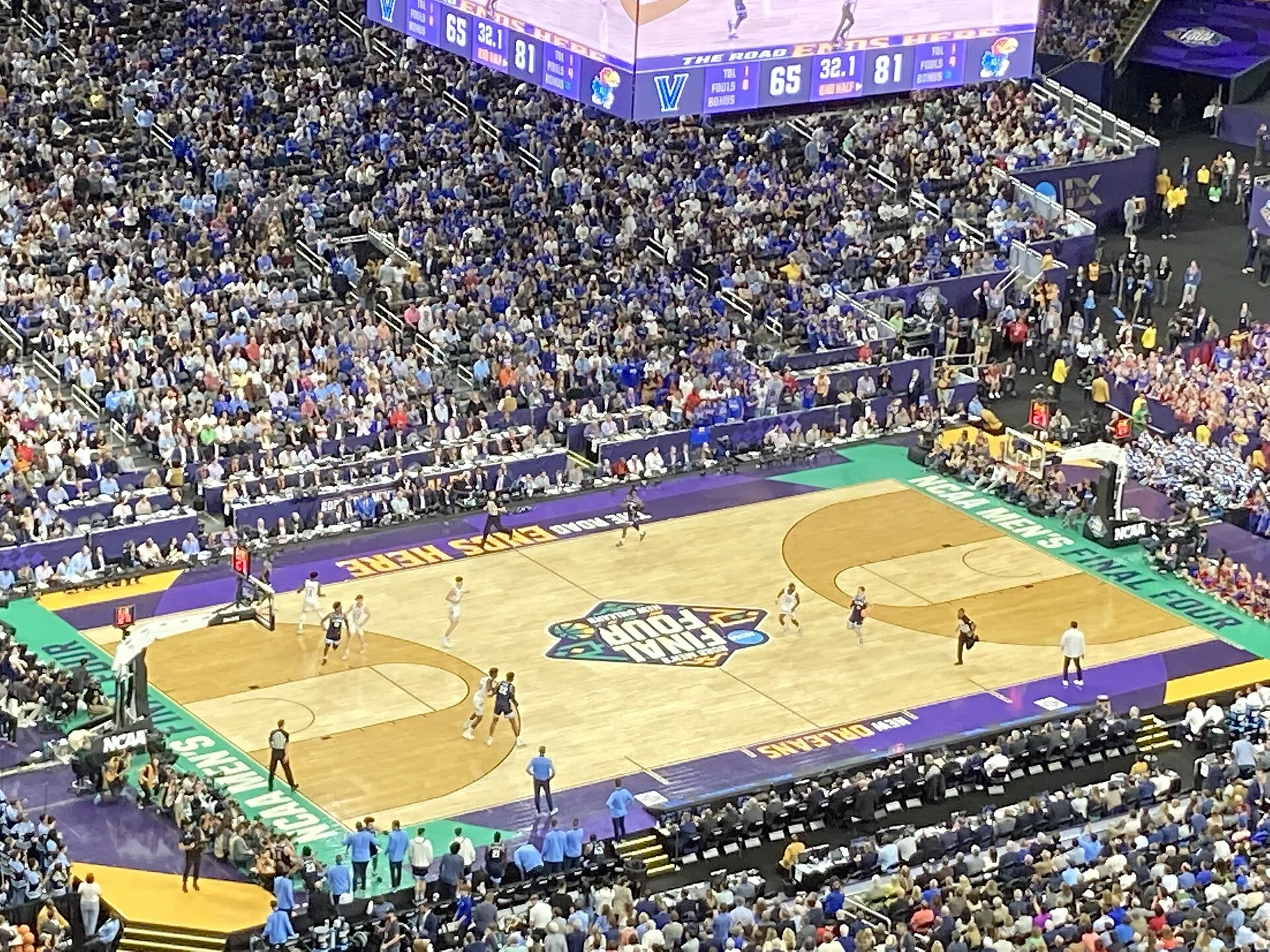
Market timing adds basketball risk, not certainty. When two teams lose Saturday, some of their supporters may list Monday seats. At the same time, the two winning fan bases learn that their team is one victory from a title and may buy immediately. Geography, alumni scale, seat supply and the matchup can pull in opposite directions. “Prices always fall after the semifinals” is not a safe rule.
Use resale when the exact experience is worth the quoted all-in cost and the transfer protections are clear. If the listing is vague, delivery is outside a recognized account, or the seller pressures payment off-platform, walk away. The cheapest unusable ticket has an infinite cost per game.
Make the purchase at the right tournament milestone
There is no universal best day to buy. The useful question is how much team certainty a buyer needs, because the 2027 bracket supplies that certainty in stages. Earlier purchases trade participant knowledge for planning time; later purchases trade planning time for a known matchup. Neither path guarantees a lower price.
Before Selection Sunday
Before the bracket is revealed on March 14, only Detroit, Ford Field and the April 3/5 dates are known. This is the cleanest window for neutral fans and groups treating the Final Four as the destination. They can compare all-session products, reserve refundable lodging and choose seats without requiring a particular team.
It is the weakest window for a team-only buyer. Even an elite program has not secured a bid, seed or route. A season-long No. 1 ranking would still not guarantee four tournament wins. If team participation is non-negotiable, early access should come with a clear resale or transfer plan rather than wishful thinking.
From the bracket reveal through the Elite Eight
Selection Sunday establishes each team's route and regional site, but it does not name Detroit's participants. The first weekend then removes most of the field. The Sweet 16 and Elite Eight on March 25–28 settle the regional champions. This period gives buyers more basketball evidence—health, rotation stability, matchup path—while preserving some time to arrange travel.
A supporter can act when the preferred risk level is reached. Buying after a team reaches the Sweet 16 means it still must win twice. Buying after it reaches the Elite Eight means one regional final remains. The deeper the team advances, the more credible the trip becomes, but other supporters reach the same conclusion. That can affect both inventory and lodging.
Final Four week and the Saturday-to-Monday turn
After the final Elite Eight game on March 28, all four Detroit teams are known. This is the first moment a team-first buyer can purchase with participant certainty. It is also a compressed window for flights, rooms and adjacent seats. Compare the total trip, not just a ticket movement that may be offset elsewhere.
Saturday creates one last decision point. The semifinal winners advance to Monday; losing-team supporters may offer seats while winning-team supporters begin shopping. Supply and demand move together, so waiting is a basketball bet as much as a price bet. A fan who must see a specific team in the title game gains certainty only after that semifinal, but accepts the shortest buying window.
Use the full 2027 tournament schedule to place reminders after Selection Sunday, the Sweet 16 and each regional final. At every checkpoint, refresh the official listing, event map and delivery terms. Choose the milestone that matches the group's purpose and risk tolerance, then judge the all-in offer available—not a prediction about what the market “always” does.
Sign in with Google to join the discussion.