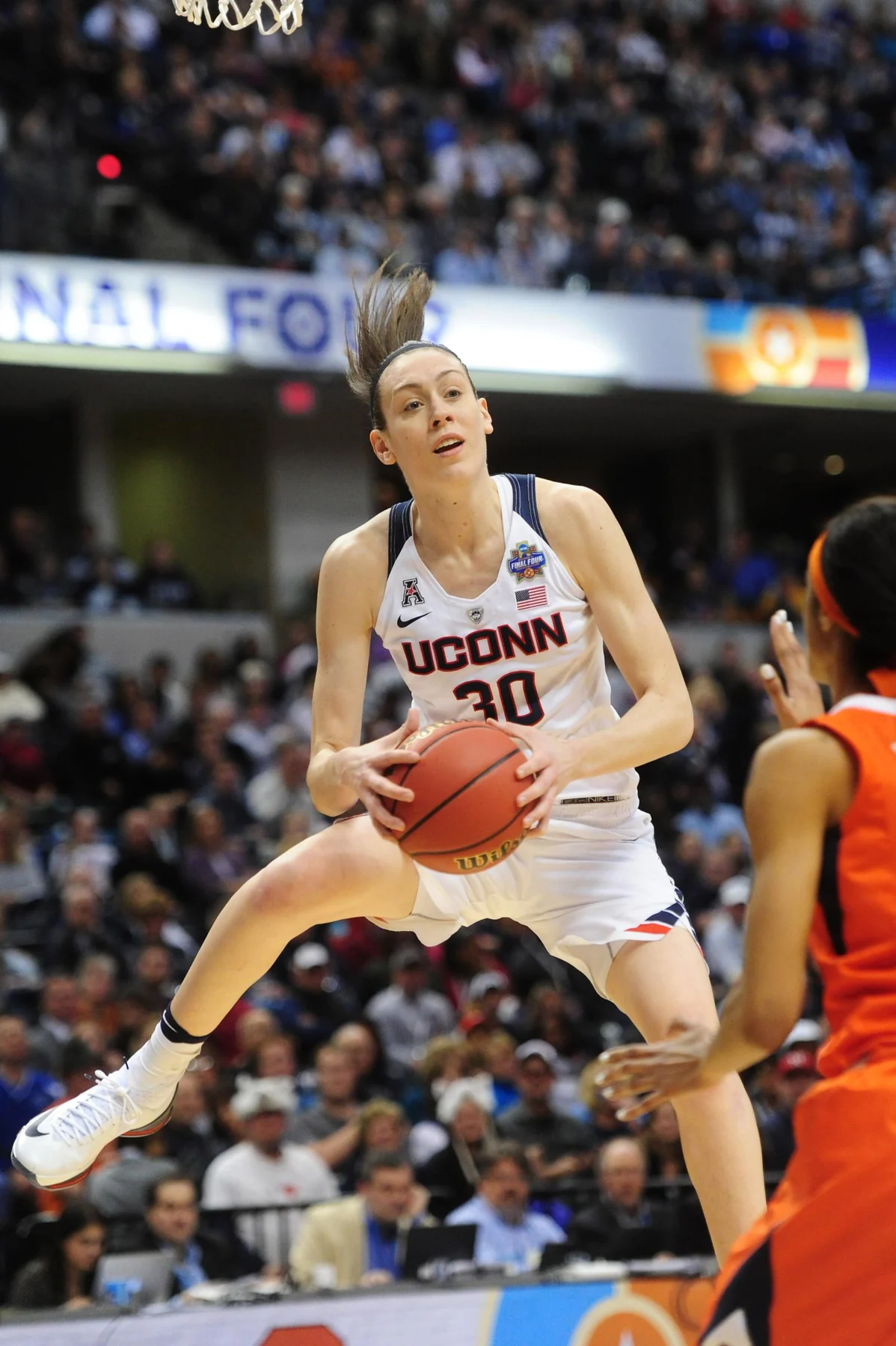
The criteria behind this subjective top 10
This is an editorial ranking, not an official NCAA list. The NCAA publishes records and championship results; it does not declare one combined greatest player across men's and women's basketball. Our ballot considers college performance only. Kareem Abdul-Jabbar's NBA career, Breanna Stewart's WNBA titles, and every Olympic or professional achievement are excluded.
30%
Peer dominance
Production, efficiency, awards, and how far a player stood above the era.
25%
Team and March impact
Titles, deep runs, pressure performance, and centrality to winning.
20%
Sustained excellence
Multiple elite seasons matter more than one brilliant month.
15%
Complete value
Defense, rebounding, passing, versatility, and off-ball influence.
10%
Historical weight
Records, tactical influence, and importance to the college game.
Championships carry only one quarter of the score because basketball remains a team sport. Caitlin Clark does not lose every argument because Iowa fell in two finals, and a reserve with four rings does not outrank a transformative star. Still, winning under tournament pressure is meaningful evidence when the player drives it—as Stewart did across four title runs or Christian Laettner did across four Final Fours.
A combined list cannot pretend men's and women's box scores are interchangeable. The competitions have separate records, histories, rules development, and opportunity structures. The purpose is to compare greatness within each player's environment, then build one balanced editorial ballot. Five men and five women make the final 10; gender balance is a declared construction choice, not a claim that an equation can normalize every era.
Peak-only ballots would elevate one-season forces such as Anthony Davis. Scoring-only ballots would push Pete Maravich higher. Ring-only ballots would favor dynasty anchors. Our weights reward players who connect several forms of greatness. Readers who value a different quality can change the weights and should expect a different order.
The history remains active even though every selected career is complete. Use the men's schedule and women's schedule to watch the next candidates build their cases rather than projecting unfinished careers into this list.
Equal representation also prevents the default use of men's history as the entire definition of college basketball. It does not guarantee that the fifth-ranked man and fifth-ranked woman received identical numerical grades. It guarantees that the ballot seriously tests greatness in both games, with the construction rule disclosed before readers see the order.
Nos. 10-7: Taurasi, Robertson, Laettner and Moore
10. Diana Taurasi, UConn
Taurasi's case is about tournament control more than a record-book volume total. UConn won three consecutive championships during her career, and she earned Final Four Most Outstanding Player in 2003 and 2004. She could organize offense, punish help with passing, create late-clock shots, and play with the tactical freedom of a guard who understood when a game needed patience or aggression.
Why only tenth? Her college résumé is extraordinary, but the higher women's selections combine comparable winning with larger statistical or two-way peaks. Professional longevity is irrelevant here. On college evidence alone, back-to-back MOPs and the burden she carried in the final two title runs keep her inside the 10.
9. Oscar Robertson, Cincinnati
Robertson scored 2,973 points in 88 varsity games, a 33.8 average, while driving Cincinnati to two Final Fours. He was a huge guard with scoring, rebounding, and playmaking responsibilities that anticipated the modern heliocentric creator. His efficiency and complete box-score influence sit behind the raw average; opponents had to account for him as both finisher and initiator.
The missing championship lowers his team-impact score, not his individual standing to ordinary levels. Cincinnati's official record shows a three-year production profile that few players in any era approached. A ring-only ranking would underrate how decisively Robertson controlled college games.
8. Christian Laettner, Duke
Laettner owns the men's NCAA Tournament career records for 407 points and 23 games. Duke reached four straight Final Fours and won the 1991 and 1992 championships. He was not merely present for the run: his shooting touch, post skill, rebounding, free throws, and late-game execution made him the pressure point of a team built to survive bracket games.
His all-career numbers—2,460 points and 1,149 rebounds—support rather than replace the March résumé. The tournament weighting puts him above more explosive regular-season scorers, but not above the seven players whose dominance or complete value was stronger across the whole schedule.
7. Maya Moore, UConn
Moore paired individual production with almost unmatched sustained winning: UConn went 150-4 in her four seasons, reached every Final Four, and won two championships. Her 3,036 points came with rebounding, passing-lane defense, shooting efficiency, and the ability to score without monopolizing the ball. She fit dynasty structure while still setting the performance ceiling.
That distinction matters. Great teammates created advantages, yet Moore's versatility made those lineups harder to solve. She could punish a switch, run the floor, finish through length, or make the extra play. Two titles rather than four keep her below Stewart, but four seasons of elite two-way output place her ahead of the lower trio on this ballot.
The lower four are especially sensitive to weighting because each lacks one category the others maximize. Robertson lacks a title, Taurasi lacks their volume totals, Laettner's strongest separation is tournament-specific, and Moore played inside a dynasty. Their placement is a judgment about how those strengths combine, not an attempt to hide the tradeoffs.
Nos. 6-4: Russell, Clark and Miller
6. Bill Russell, San Francisco
Russell's college greatness begins on defense, where surviving statistics cannot fully capture his influence. Shot blocking was not an official NCAA category, so precise retrospective block totals are unreliable. The team evidence is not: San Francisco won the 1955 and 1956 championships and completed Russell's run on a 55-game winning streak.
He changed the geometry around the rim. A blocked shot could become transition rather than merely an out-of-bounds stop; rebounding ended possessions; his mobility allowed pressure away from the basket. This ballot rewards that defensive architecture and the titles it supported. Limited standardized defensive data prevents a clean comparison, but uncertainty should not default to valuing only the offense that old box scores preserved.
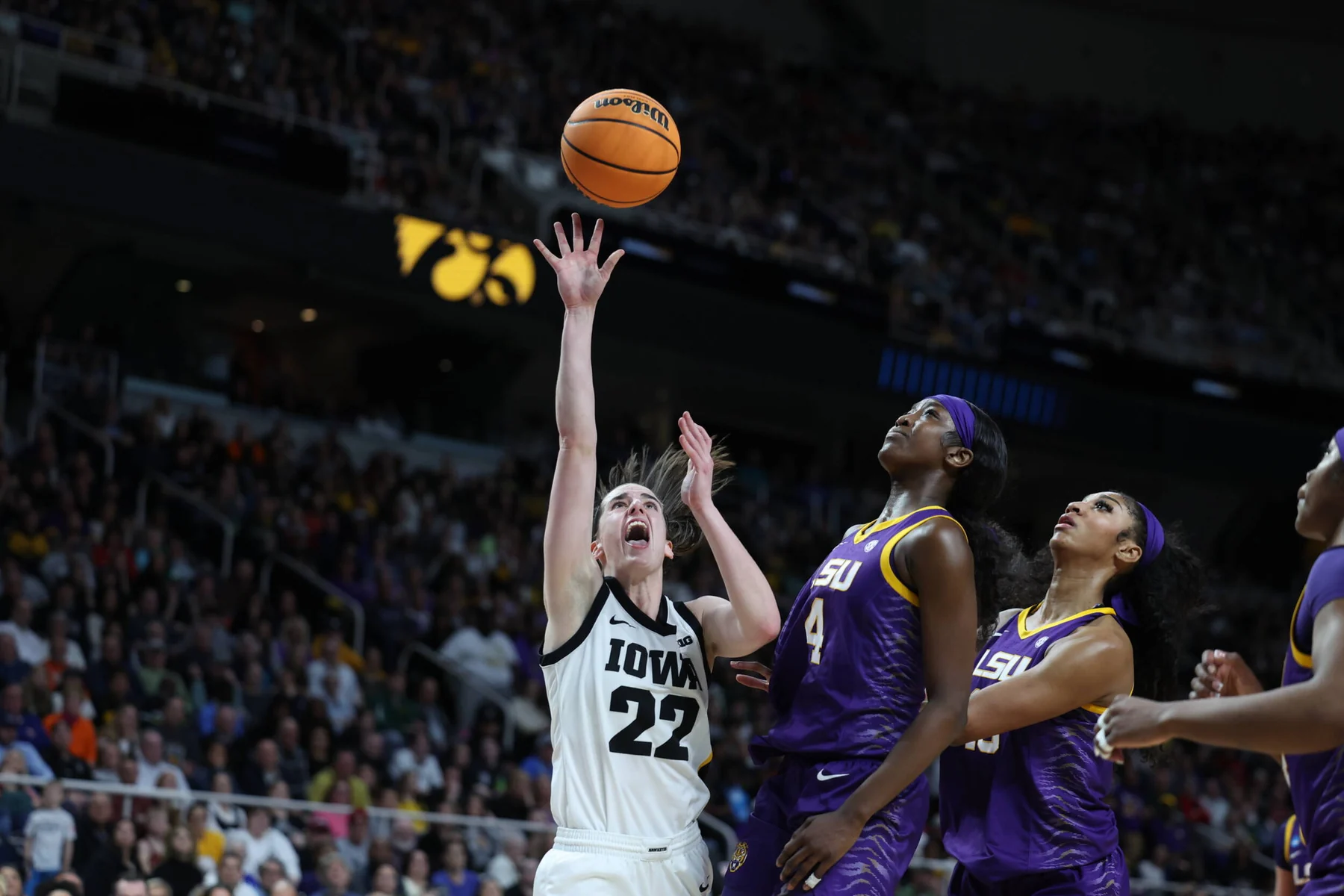
5. Caitlin Clark, Iowa
Clark finished with 3,951 points, the highest NCAA Division I career total across the men's and women's record books, and 492 NCAA Tournament points. Her deep pull-up range stretched the first line of defense, while her passing punished traps and created a high-tempo Iowa offense. Consecutive trips to the 2023 and 2024 championship games prove the production traveled into March.
She did not win a national title, which costs points under the published method. It does not erase the difficulty of carrying a non-dynasty to two finals while every opponent centered its plan on the ball in her hands. Peak scoring, elite playmaking, tournament records, and historical impact put her fifth rather than outside the list.
4. Cheryl Miller, USC
Miller assembled the ballot's most complete wing résumé: 3,018 points, 1,534 rebounds, four All-America seasons, three Naismith awards, two championships, and three Final Fours. USC's record book lists 128 games and a 23.7 scoring average, achieved before a women's three-point line. She could rebound above her position, create in the open floor, defend, and carry half-court scoring volume.
The absence of a three-point bonus matters as context, not as permission to invent an adjusted total. Miller's actual production already establishes dominance. Her title teams included other elite players, but her ability to supply scoring, rebounding, steals, and transition force made her the central matchup problem. She edges Clark on this ballot because the two-way and championship categories overcome Clark's advantage in scoring and creation records.
These three also demonstrate why “carrying a team” cannot be the only standard. Russell and Miller played with excellent teammates, while Clark carried more concentrated on-ball creation. Greatness can mean lifting a thinner roster or becoming the most important piece of an elite system. The ballot awards both, provided the player's individual leverage is supported by evidence.
Nos. 3-1: Walton, Stewart and Abdul-Jabbar
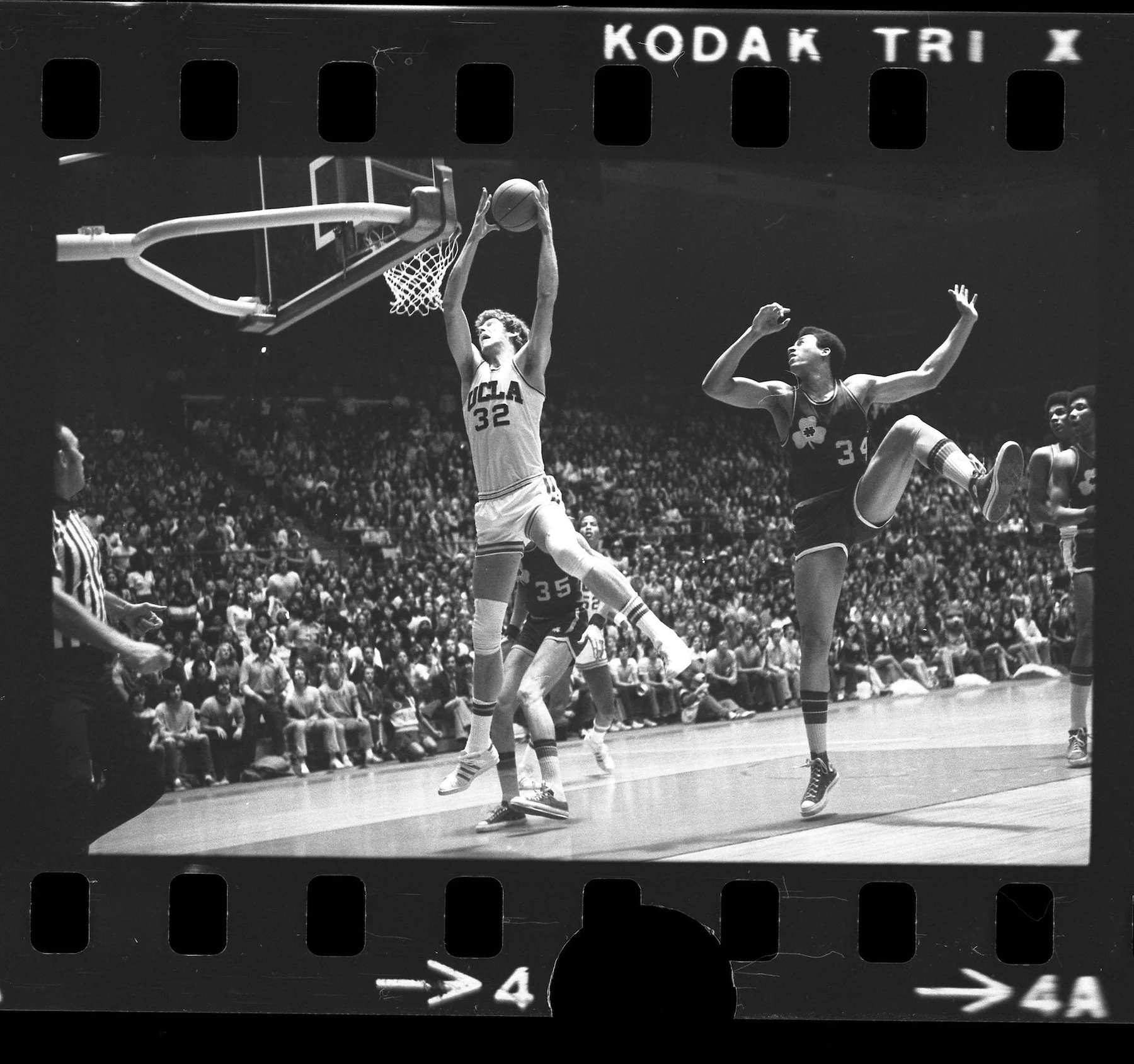
3. Bill Walton, UCLA
Walton's UCLA varsity teams went 86-4, won the 1972 and 1973 championships, and featured a center who could dominate without reducing offense to static post-ups. He screened, passed, ran the floor, rebounded, protected the rim, and finished at extraordinary efficiency. Three national player-of-the-year awards establish sustained peer dominance even though UCLA's 1974 season ended without a third title.
The signature evidence is not mythology: Walton scored 44 points on 21-of-22 shooting against Memphis State in the 1973 championship game. That performance combines volume, efficiency, and maximum stakes. He ranks third because the top two pair comparable team success with either an unmatched four-year tournament sweep or a three-year record of total competitive control.
2. Breanna Stewart, UConn
Stewart won four NCAA championships and became the only player named Women's Final Four Most Outstanding Player four times. The sequence matters: she was not merely an upperclass leader collecting titles after a developmental bench role. From her freshman tournament through her senior farewell, she repeatedly became the defining player at the season's highest-leverage stage.
Her length allowed UConn to switch actions, protect the rim, and start transition, while her shooting and face-up skill stretched bigger defenders. She could be a half-court scoring hub without giving back value on defense. Great teammates increased UConn's margin, but four MOP awards are strong evidence that Stewart was the central postseason differentiator. She ranks above Walton through the extra season of title-level continuity and below Abdul-Jabbar by a narrow dominance margin.
1. Kareem Abdul-Jabbar, UCLA
Known as Lew Alcindor during his UCLA career, Abdul-Jabbar won three consecutive NCAA championships, three national player-of-the-year awards, and three Final Four MOPs. The NCAA identifies him as the only man to win MOP three times. Every eligible varsity season ended with both the team title and the tournament's top individual honor.
His case is not just trophies. The size, touch, rebounding, and rim protection that centered UCLA forced opponents to alter both shot selection and defensive coverage. Crowding him opened space; single coverage conceded efficient interior offense; attacking the rim at the other end meant meeting his length. That is two-way tactical dominance rather than a scoring résumé alone.
The ballot gives Abdul-Jabbar the smallest possible edge over Stewart. Both converted every college season into a championship and individual Final Four recognition. His peer separation and impact on how the game was played take first; Stewart's four-for-four postseason record makes any claim that No. 1 is obvious too strong.
Dynasty context is a feature and a complication. Dominant teammates can improve spacing and reduce defensive attention, but they also reduce individual usage and make internal competition for touches harder. Walton, Stewart, and Abdul-Jabbar remained the central matchup problem on loaded teams. Their postseason honors are evidence that voters at the time saw the same hierarchy.
The hardest omissions and how another ballot could differ
A top 10 creates an artificial cliff. The player ranked tenth is not meaningfully separated from every honorable mention, and changing one published weight can move several names. These are the omissions that most directly challenge our method.
| Player | Strongest case | Why just outside |
|---|---|---|
| Pete Maravich | 3,667 points and 44.2 per game in 83 varsity games, before a three-point line. | The 25% team/postseason weight favors candidates with defining NCAA Tournament résumés. |
| Candace Parker | Two titles, two MOPs, 2,137 points and 972 rebounds in three playing seasons. | Miller's four-season production and Stewart's four-year tournament sweep win close comparisons. |
| Lusia Harris | 25.9 points, 14.5 rebounds, and three straight AIAW titles for Delta State. | Uneven pre-NCAA statistical archives make standardized comparison harder; this is the ballot's most important historical limitation. |
| Anthony Davis | Transformative one-season defense and a championship at Kentucky. | The 20% sustained-excellence category rewards multi-season college résumés. |
| Chamique Holdsclaw | Three Tennessee titles and two tournament MOPs. | She is a ring-weighted ballot's easiest addition, but loses narrow peer-dominance comparisons here. |
A peak-first voter could move Maravich into the five and Anthony Davis into the 10. A tournament-first voter might place Laettner higher and add Holdsclaw. An all-around-versatility voter could select Parker over Taurasi. A historian emphasizing the pre-NCAA women's game could make Harris an automatic inclusion and criticize this list for relying too heavily on statistics that became standardized only after her career.
Era adjustment should remain contextual. Giving Maravich an invented three-point total assumes old shot locations would survive modern spacing and defense. Removing games from a modern career assumes production develops evenly. We instead preserve actual results and explain rule, schedule, and data differences.
The useful conclusion is not that debate has been solved. It is that the terms are visible. This ballot selects Abdul-Jabbar, Stewart, Walton, Miller, Clark, Russell, Moore, Laettner, Robertson, and Taurasi under the stated weights. Change the values and publish the consequences. To evaluate the next generation with live evidence, start from the college basketball schedule today, then wait for careers to finish before placing them above completed legends.
Other credible names include David Thompson, Elvin Hayes, Nancy Lieberman, Anne Meyers Drysdale, Dawn Staley, Tamika Catchings, and A'ja Wilson. Listing them is not a substitute for researching another ballot; it is a warning that ten spots cannot represent every era, position, and form of influence without contentious exclusions.
Sign in with Google to join the discussion.