The verified 2026–27 South Carolina women's basketball roster
South Carolina's official 2026–27 women's basketball roster lists 15 players as of September 29, 2026. The school identifies eight forwards and seven guards, with Dawn Staley as head coach. This is a roster snapshot, not an announced depth chart. It answers who is on the team today while leaving starters, health and playing time to actual team decisions and games.
Listed players and positions
| No. | Player | Position | Class |
|---|---|---|---|
| 0 | Oliviyah Edwards | Forward | Freshman |
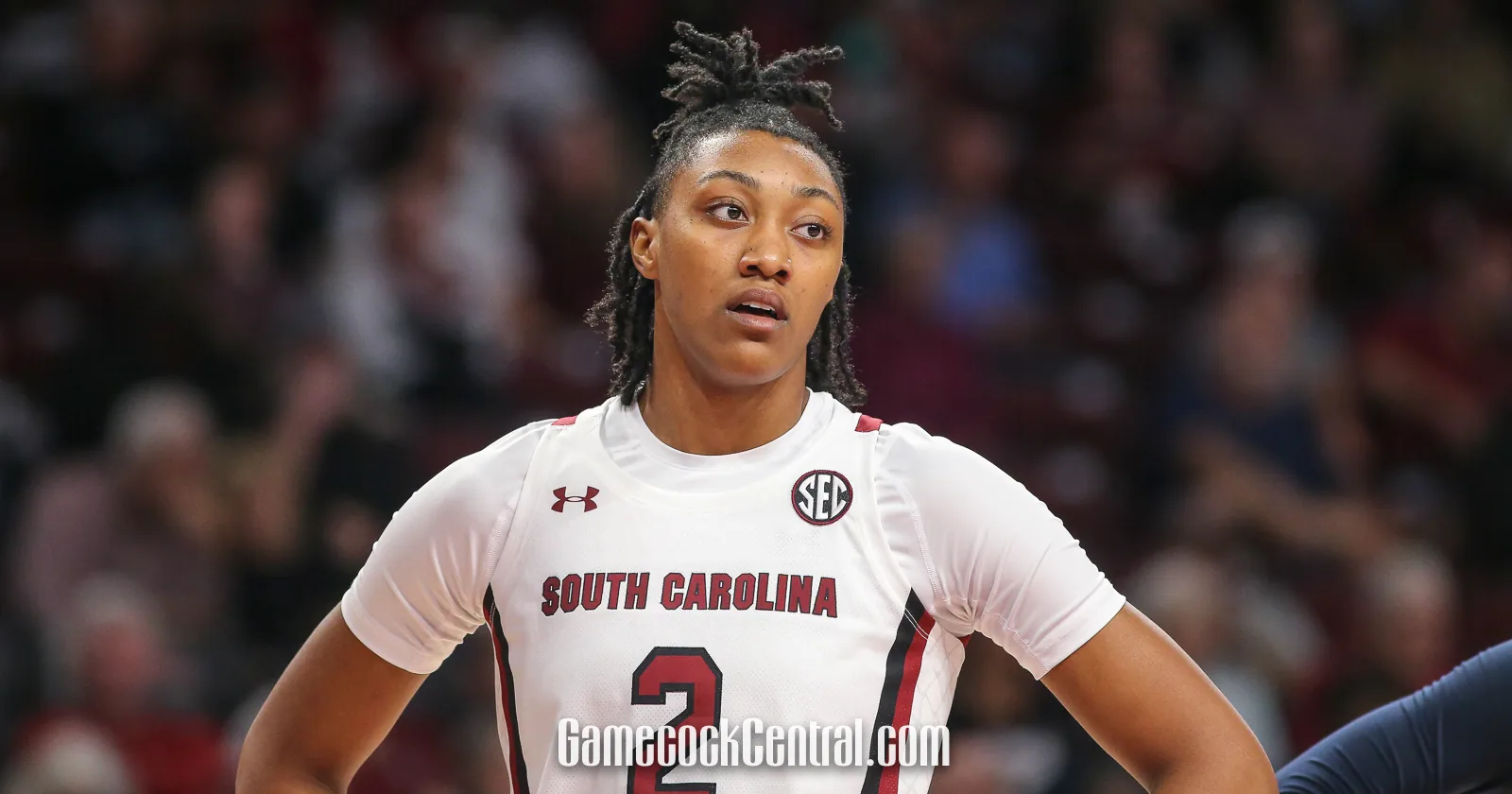
| 2 | Ashlyn Watkins | Forward | Fifth year |
| 3 | Kaeli Wynn | Forward | Freshman |
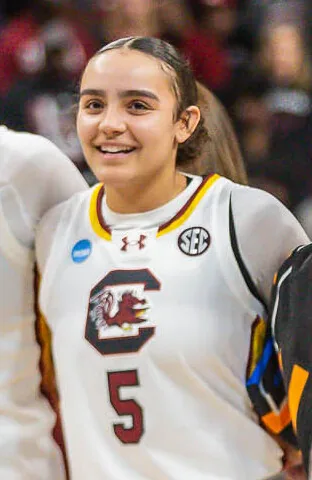
| 5 | Tessa Johnson | Guard | Senior |
| 6 | Brooke Quarles-Daniels | Guard | Fifth year |
| 7 | Jordan Lee | Guard | Junior |
| 8 | Joyce Edwards | Forward | Junior |
| 9 | Jerzy Robinson | Guard | Freshman |
| 15 | Adhel Tac | Forward | Junior |
| 21 | Chloe Kitts | Forward | Fifth year |
| 23 | Kelsi Andrews | Forward | Freshman |
| 24 | Ayla McDowell | Guard | Sophomore |
| 31 | Alicia Tournebize | Forward | Sophomore |
| 32 | Justine Loubens | Guard | Freshman |
| 44 | Agot Makeer | Guard | Sophomore |
Every name, number, class and position above comes from the school's current roster page. One detail worth catching is the distinction between Joyce Edwards, a returning junior forward, and Oliviyah Edwards, a freshman forward. They are separate players. Similarly, the official list gives Ashlyn Watkins and Chloe Kitts fifth-year labels; it would be misleading to reuse an older roster that lists them in a prior class or leaves them out.
Positions provide a first sketch of the team, but Staley can use multi-forward groups, perimeter-heavy units or a big lineup depending on opponent and availability. The official page does not declare who will start. For dates and opponents, use the confirmed South Carolina women's team schedule and check the school roster again near the game. The table here should change if the school changes its list, with a fresh verification date attached.
Returning frontcourt gives Dawn Staley several shapes
Eight listed forwards give South Carolina a range of theoretical frontcourt combinations, but their résumés are not interchangeable. Joyce Edwards produced at an All-America level in 2025–26. Chloe Kitts and Ashlyn Watkins have played major roles in earlier seasons, yet both were away from the court in 2025–26 after knee injuries. Adhel Tac also missed the closing stretch of that season. The useful roster question is therefore not merely how many forwards appear on the page. It is which combinations can defend, rebound and score together once the season begins.
Joyce Edwards, Chloe Kitts and Ashlyn Watkins
Joyce Edwards is the most recent production anchor. Her official South Carolina bio credits her with 19.2 points, 6.8 rebounds, 1.8 steals and 1.1 blocks per game in 2025–26, plus a school-record 768 points and 40 starts. Those numbers show why opponents will start their preparation with her. She can finish inside, earn extra chances on the offensive glass and make a defense account for her before the ball reaches the rim. Her scoring average is a prior-season fact, however, not a promise that the same usage or efficiency will carry into 2026–27.
Kitts brings a different reference point. In 2024–25 she averaged 10.2 points and 7.71 rebounds, started 38 games and helped South Carolina reach the national title game. The school says she missed the entire 2025–26 season after surgery to repair a torn right ACL. That history makes her return a significant basketball story, but a roster listing alone cannot establish how many minutes she will play, whether her role will match 2024–25 or what her medical progression looks like in September 2026. A healthy, effective Kitts could connect Edwards to another interior finisher and rebounder; that is an on-court possibility to watch, not an announced lineup.
Watkins also has a proven defensive past. Her 91 blocks in 2023–24 rank third in the school's single-season record book, according to her official bio. She tore an ACL in January 2025 and sat out 2025–26 to focus on physical and mental recovery. Her listed fifth-year presence raises the ceiling for rim protection and second-chance possessions if she returns effectively. It would be premature to turn that possibility into a starter designation. The first actual games will show whether she is used next to Edwards, as a central interior defender or in shorter bursts while the staff builds the rotation.

Size behind the core
Adhel Tac is listed at 6 feet 5 inches and Alicia Tournebize at 6 feet 7 inches, the tallest player on the school roster. Tac appeared in 23 games with three starts in 2025–26 before missing the final 15 with a lower-leg injury. Tournebize joined in January, played 20 games and averaged 12.5 minutes. Those are tangible samples of college minutes, though neither guarantees a larger role this year. Their size gives Staley options against taller opponents and when foul trouble changes the plan. It does not automatically settle who plays the five or how South Carolina spaces the floor.
Freshmen Oliviyah Edwards, Kaeli Wynn and Kelsi Andrews complete the listed forward group. Their heights range from 6 feet 2 inches to 6 feet 3 inches on the official page. They offer competition and depth, but college roles must be earned against faster decisions, stronger box-outs and tougher defensive assignments. The most informative early possessions will be the ones in which the Gamecocks must protect the rim without giving up open perimeter shots, then secure a defensive rebound before running. Watch who closes a competitive first half, who can play beside Joyce Edwards and how the staff handles foul trouble. Those observations will reveal much more than a preseason guess at a fixed depth chart.
The guard rotation has proven shooting and new decisions
Seven guards appear on the 2026–27 South Carolina roster, but only some have already played for this team. Tessa Johnson, Agot Makeer and Ayla McDowell offer recent evidence in Gamecock uniforms. Brooke Quarles-Daniels and Jordan Lee arrive from Michigan and Texas, respectively, while Jerzy Robinson and Justine Loubens are freshmen. Their eventual roles will depend on how Staley balances ball handling, spacing and point-of-attack defense against strong opponents, not simply on class labels.
Tessa Johnson and the returning perimeter
Johnson is the clearest known shooting piece. South Carolina's official bio says she made 90 three-pointers at 44.8 percent in 2025–26, averaged 12.8 points and 2.5 assists, and earned second-team All-SEC honors. Ninety makes ranked third in the school's single-season record book. That volume matters more than an isolated hot tournament game: opponents have to respect her when she is spaced on the weak side or relocating around a drive. Defenses that overhelp toward Edwards may hand her cleaner perimeter looks. The inverse matters too. If teams stay attached to Johnson, Edwards has more room to attack a single defender or draw a foul.
Johnson's numbers do not, by themselves, answer who brings the ball up every possession. Her ability to pass and shoot can work with several kinds of partner guards. A second handler could let her sprint into catch-and-shoot space, while a larger defensive guard could let her conserve energy for offense. The exact pairing will be a coaching decision. The school has listed her as a guard, not published a permanent point guard assignment or a fixed starting five.
Makeer showed a different set of possibilities as a freshman. She played 32 games and made six starts in SEC play. Her official bio credits her with 14.0 points per game across the 2026 NCAA tournament and 13 steals during that run. A tournament burst does not make a full-season average, but it shows that Staley trusted her in high-pressure games and that she could make plays at both ends. Watch whether her length and activity allow South Carolina to pressure a ball handler while keeping Johnson's shooting on the floor.
McDowell played 36 games and averaged 13.9 minutes in her first season, according to her school bio. She scored 16 points with four threes in her first start against Mississippi State. That one game offers a glimpse of her offensive upside, not a typical stat line. She also supplies a 6-foot-1 guard body that could help with rebounding and defensive switches. Whether she grows into a regular closing role will depend on defensive consistency and decision-making as much as whether an early three falls.

Transfers and freshmen are options, not guaranteed starters
The school roster identifies Quarles-Daniels as a fifth-year transfer from Michigan and Lee as a junior transfer from Texas. It provides neither a South Carolina game log nor an announced role for either player. Their presence is meaningful: two players with prior college programs add experience and competition to a perimeter group that already has returning minutes. Still, moving between teams changes teammates, offensive language, defensive assignments and shot distribution. The right question for October is how quickly each fits South Carolina's actions, not which one a preseason mock lineup has placed at point guard.
Robinson, a 6-foot freshman from Sierra Canyon, and Loubens, a 6-foot-2 freshman whose previous school is listed as La Roche Vendée in France, add a separate learning curve. A freshman can contribute early, especially if she defends without fouling and makes quick passing reads. She can also need months before the game slows down. The official roster confirms their places and backgrounds; it cannot tell us which assignments the staff will trust in a one-possession SEC game. In early games, look for who initiates offense after a made basket, who handles full-court pressure and who guards the opponent's best perimeter creator. Those answers will map the real guard rotation far better than a guessed opening-night depth chart.
Three on-court questions that will decide the rotation
The official roster tells us who is eligible to compete for a role. The first stretch of games will tell us how the group actually works. Three questions are especially useful because each joins a known roster fact to a measurable basketball outcome.
- 1. How do Kitts and Watkins re-enter the frontcourt? Both are on the current roster, and both missed the 2025–26 season in the wake of knee injuries. Their earlier success is real; so is the uncertainty about game conditioning and minutes. Observe whether they play with Joyce Edwards or spell her, how South Carolina handles defensive rebounds when two bigs share the floor, and whether either can defend repeated pick-and-roll actions without forcing help from a shooter. These are game observations, not medical predictions.
- 2. Who organizes the offense when Johnson plays off the ball? Johnson's 90 threes at 44.8 percent in 2025–26 make her a valuable spacing piece. That value grows when a teammate can start an action, draw a second defender and deliver the pass on time. Makeer and McDowell have already played meaningful South Carolina minutes; transfers Lee and Quarles-Daniels add other options. Look for a guard who keeps turnovers low under pressure, gets Edwards the ball in an advantageous spot and can still defend the opponent's first action. A single assist total will not answer all of that.
- 3. Can South Carolina use its size without shrinking the driving lanes? Tac is listed at 6 feet 5 inches and Tournebize at 6 feet 7 inches, while several other forwards stand at least 6 feet 2 inches. More height can protect the glass and deter shots, but two interior players are most valuable when their spacing and passing let the ball move. Notice whether Edwards can catch near the rim without crowding, whether a big can screen and roll decisively, and whether the defense can still recover to shooters after a paint touch. A taller lineup is a tool, not a permanent answer to every matchup.
Context matters when judging those answers. An opening blowout can give a freshman 20 minutes without proving she will close an SEC game; a foul-heavy night can push an unusual lineup onto the court. Use a sample of competitive possessions, not one box score. Watch who shares the floor late in a close half, which units win defensive rebounds and who can create a good shot after the first action is stopped. South Carolina has enough listed talent for several plausible combinations. The purpose of these questions is to see which combinations Staley actually trusts and why.
How to follow roster changes and the 2026–27 schedule
A roster article is most useful when its date is clear. This one reflects the school's 15-player list on September 29, 2026. Check the official team roster again before assuming that a player remains active, and use school game notes or a pregame availability report for any injury-related update. The team's roster page establishes names and classes; a season box score will eventually show who actually played. Those are different questions, and both matter if you are planning to watch a particular player.
The school has already placed meaningful checkpoints on its 2026–27 women's schedule. South Carolina's September 27 exhibition against College of Charleston finished 91–60. A Benedict exhibition is listed for October 23. The regular-season slate begins with Maryland on November 2 in Paris, followed by North Carolina in Charlotte on November 8. UConn is listed for November 24 in Uncasville, and Duke appears on the December 3 road schedule. These opponents and locations are as shown on the school page at this check; times, broadcast details and even the slate can change.
Each game answers a slightly different roster question. An exhibition can show who is available and what combinations the staff is willing to try, but its minutes may reflect experimentation. Maryland will be a more useful first test of how new guards handle full-speed possessions and whether South Carolina's frontcourt groups can protect the glass. The North Carolina and UConn dates should expose how the rotation responds to stronger defensive pressure, while the Duke trip adds a road setting. One poor shooting night does not erase Johnson's 2025–26 body of work, and one good early game does not make a freshman a permanent starter.
For a quick team view, bookmark our South Carolina women's basketball schedule. For the league-wide picture, use the women's college basketball schedule. Then return to the school's roster for the most current player listing. Once the regular season starts, compare the official box score with the previous game: look at starters, substitutions in competitive minutes, defensive rebounds, turnovers and three-point attempts. That sequence gives a grounded explanation of why a rotation is changing.
There is no need to force a final prediction in September. South Carolina has a proven scorer in Joyce Edwards, an established high-volume shooter in Tessa Johnson, returning frontcourt veterans with important health histories, and a mix of transfers and freshmen. The school roster verifies those pieces. The November and December games will tell us how they fit together. This page should be revisited whenever the official list or a player's status changes, with the verification date updated alongside any edit.
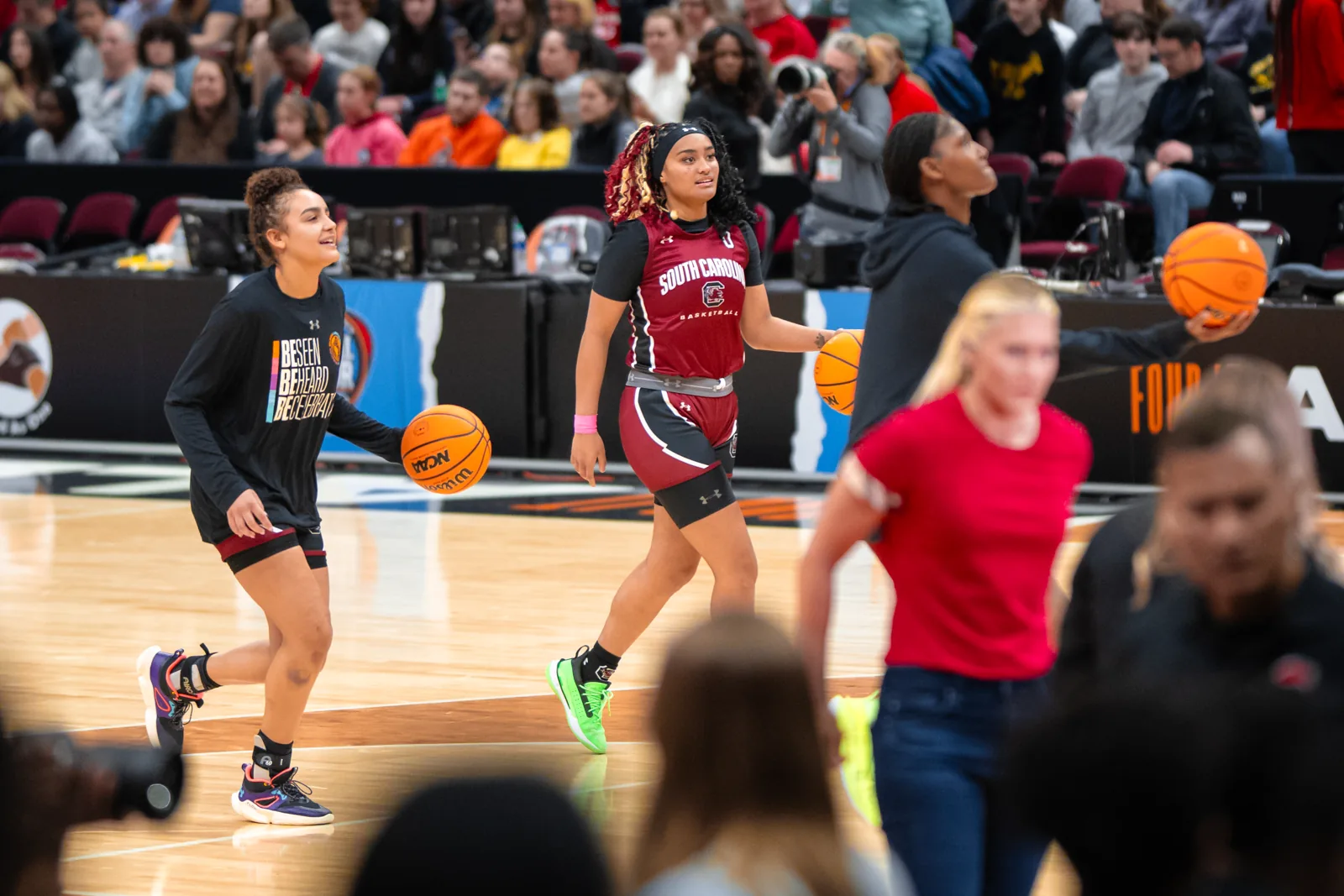
Cover photo: South Carolina players warming up before the 2024 championship game. Erik Drost, CC BY 2.0 via Wikimedia Commons; converted to WebP. This historical scene is not a 2026–27 team portrait.

Sign in with Google to join the discussion.