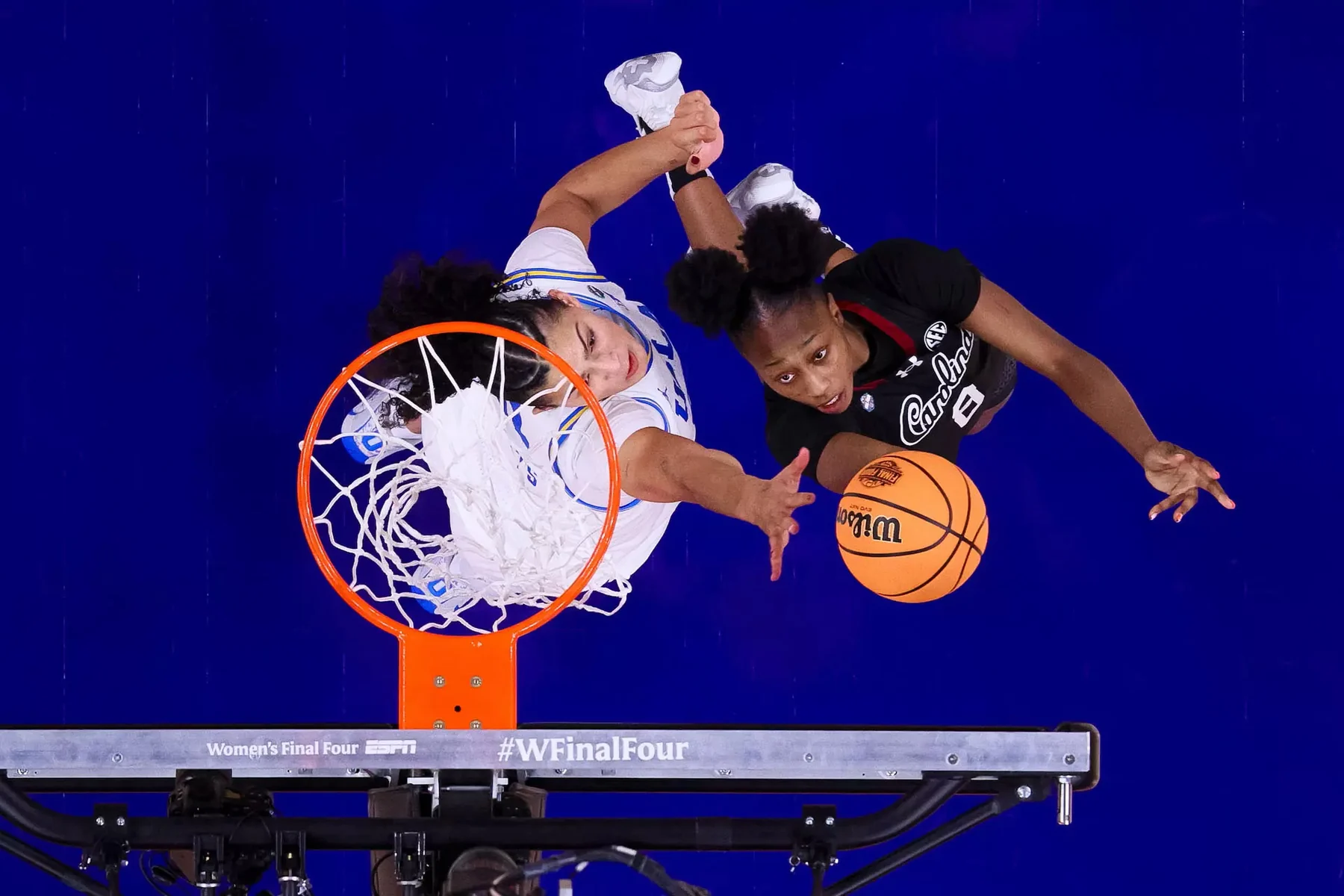
What basketball does the NCAA tournament use?
The Wilson EVO NXT is the current official March Madness game basketball. That answers the tournament question. It does not establish that every NCAA school uses the same ball in every practice, exhibition or regular-season home game. The distinction matters when you are trying to identify a ball on television or buy one for your own court.
Wilson identifies the EVO NXT as its championship model on the official product page. There is also independent operational evidence: the NCAA’s 2025-26 Division III men’s championship manual requires it for 2026 tournament games, while the corresponding women’s host manual specifies the same model. These are event requirements, rather than a retailer’s interpretation of an NCAA logo.
For a viewer, the useful question is therefore “Which competition am I watching?” A campus game in November and a national championship game in March can operate under the same basketball playing rules while having different equipment arrangements. Treat the tournament designation as evidence about that championship, then identify the regular-season ball separately if that is the game you mean.
For a player, the tournament label tells you which model to investigate when your goal is championship-ball familiarity. It does not guarantee that a ball purchased online will feel exactly like an arena ball. Inflation, cleanliness, handling and wear are part of the comparison. Testing a clean ball at an appropriate pressure is more informative than squeezing two differently inflated balls in a shop and deciding that one model is automatically better.
For a collector, “official game basketball” describes a product’s role and specification. “Game-used” describes a particular object’s history. A new EVO NXT can be the official model without having appeared in an NCAA tournament. Championship branding, a commemorative inscription and a seller’s photograph do not by themselves establish game use.
This guide was checked on October 14, 2026. The cited NCAA manuals describe the completed 2026 championship; a future tournament’s operations document should be checked before treating its equipment arrangement as confirmed. Use the college basketball schedule to identify the actual game first, then match the ball question to its competition, gender and date. That small amount of context prevents most mistakes in searches for an “NCAA official basketball.”
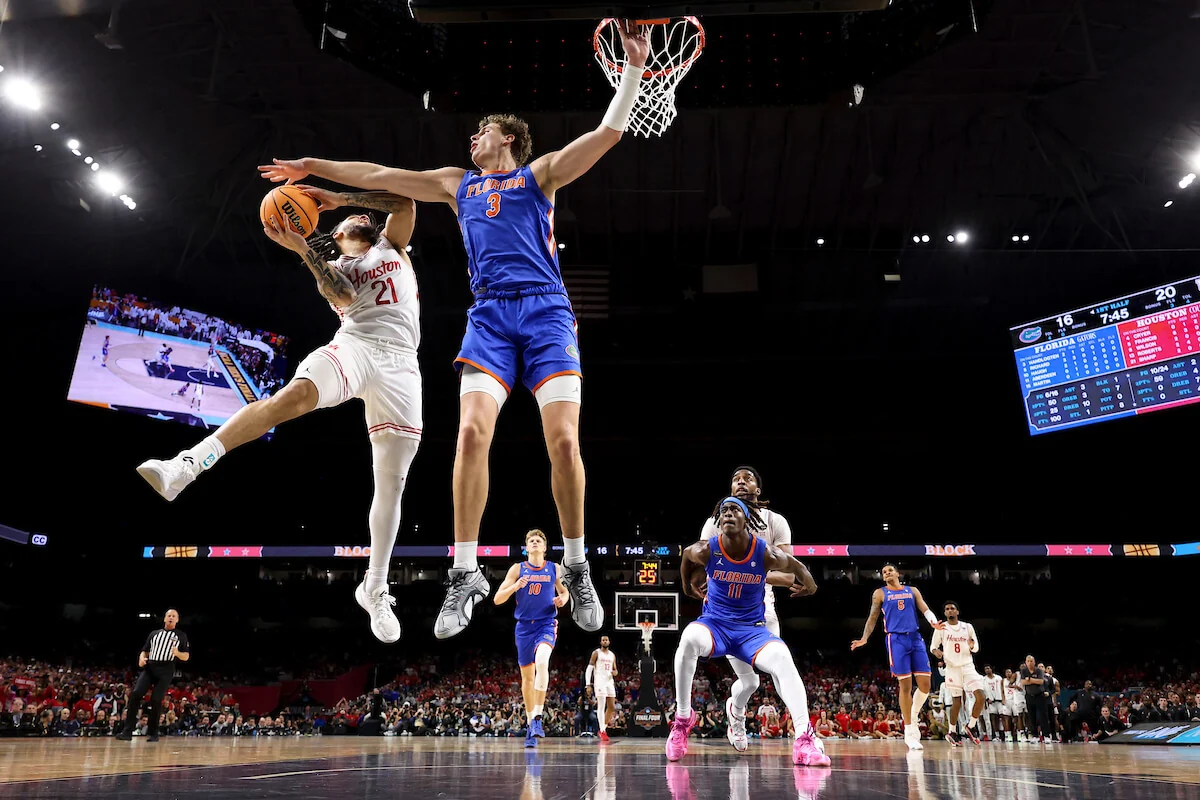
Why the regular-season game ball can be different
Championship supply and host-school selection
A national tournament’s equipment contract and a home program’s regular-season arrangements answer different questions. The championship organizer can supply a specified model across its event. A campus game still needs a ball that meets the applicable playing specifications, but an NCAA tournament announcement does not identify the ball sitting on that campus scorer’s table.
The SEC provides a useful concrete example of the practical concern. Its 2025-26 men’s basketball regulations require compliant basketballs and require the home team to give visitors warmup balls matching the game ball. The point for a fan is consistency within the actual matchup. That requirement does not say every NCAA game must use one national brand.
Imagine a visiting guard preparing for a road game. The useful preparation is handling the model that will actually be used that evening: dribbling under pressure, receiving passes and releasing shots. Practicing only with a ball carrying a familiar association logo does not establish that match. This is an equipment-familiarity argument, not evidence that a brand change will determine the result or explain every missed three.
A school’s shoe or uniform sponsor is also an unreliable shortcut. Sponsorship categories can differ, and an old photograph only confirms what was visible when that photograph was taken. To identify a specific regular-season ball, use a current school statement, event operations information or a clear image from that game. If those are unavailable, keep the model unconfirmed rather than guessing from jersey branding.
An NCAA logo is not a model name
Wilson sells several NCAA-associated products. Its NCAA Replica, for example, is a separate indoor/outdoor model. It can be a legitimate licensed ball without being the tournament EVO NXT. Replica is a product category here; it does not automatically mean counterfeit.
Read the full model name, intended surface and size together. A listing headed only “Wilson NCAA basketball” leaves too much unspecified. Tournament-style colors, an NCAA mark and promotional language can appear on balls built for different uses. A parent buying for driveway practice and a college player seeking a specific indoor model should not make the same purchase merely because the front of the packaging looks similar.
That distinction also improves television identification. You may recognize Wilson without being able to read the model lettering. Describe only what the evidence supports. Brand, model, size and competition are separate details, and being precise about one does not require pretending to know all four.
Choose the right size before comparing models
A model name alone does not complete the purchase. EVO NXT is offered in different sizes, and the listing’s “unisex” category does not mean men’s and women’s college basketball use interchangeable balls. Choose the competition size first. Only then compare cover feel, channels, surface suitability and price.
Men’s and women’s specifications
The familiar retail labels are size 7, nominally 29.5 inches in circumference, for men’s college basketball, and size 6, nominally 28.5 inches, for women’s college basketball. These are circumference measurements: the distance around the ball, rather than its width from one side to the other. Wilson explains those retail categories in its basketball selection guide.
A retail label is shorthand, while the playing rules specify permitted ranges and additional tests. The 2025-26 and 2026-27 NCAA women’s rulebook, for example, allows circumference from 28.5 to 29 inches and weight from 18 to 20 ounces. Its equipment section also covers the ball’s construction, air-pressure marking and required rebound. An official-size description on a sales page is therefore only part of a competition-compliance question.
That matters when comparing two samples. A size 6 EVO NXT and size 7 Evolution are not a fair test of how the models differ: you have changed the ball category as well as the construction. A player who prefers the smaller sample may be reacting to how it fits the hands, rather than discovering something about the cover. Compare the same intended size on the same court, with suitable inflation and similar condition.
For a school or organized league, check its applicable rules rather than borrowing an age chart from a retailer. Youth recommendations help a family select a practice ball, but they do not replace the competition’s equipment policy. A college women’s player seeking game-like practice should select the women’s competition size even if a store’s age-based filter would show other options.
Before ordering, inspect both the selected option and the final basket. Product photographs may remain unchanged when a size menu is switched, and a generic model heading may not repeat the chosen variant. Ask a team buyer to write the size into the order specification, rather than relying on a photo of a tournament-colored ball.
Finally, keep inflation separate from size. Overfilling a ball to make it feel firmer is not a way to convert a smaller ball into the correct category. Follow the ball’s markings and the relevant game standards; let the official determine competition legality. Your own practice comparison should control those conditions rather than adding another variable.
What EVO NXT changes, and what the claims cannot prove
Wilson describes EVO NXT through its textured composite cover, pebbled channels and internal construction. Its comparison with Evolution explains the manufacturer’s design choices. These descriptions help you identify the intended feel and use of the product. They should not be turned into a promise that buying a particular ball will add points to your shooting percentage.
The practical comparison is about repeatable handling. A guard needs to receive a pass and move into a shot without an unnecessary adjustment. A post player needs control through contact and on a rebound. A passer needs the ball to behave consistently during a quick exchange. Those are useful tasks to include when trying a ball because they resemble basketball possessions better than an isolated inspection of the cover.
Start with the same size and appropriate inflation. Then compare catch-and-shoot attempts, a dribble into a pull-up, free throws and passing. Keep the court and sample condition similar. This is an editorial testing suggestion, not a manufacturer certification method. Its purpose is to make your preference understandable: you should be able to say which action felt better rather than concluding that a higher-priced model improves every skill.
Wilson’s range-related technology language is a design claim. It is not an independently established forecast for a player’s three-point accuracy. There is no defensible conversion here from a feature name to “two extra makes per game,” and no basis to assume that an entire team will shoot better solely because the ball changes. Form, balance, shot selection, fatigue and defensive pressure remain part of the attempt.
The same caution applies when watching March Madness. A poor shooting night does not diagnose an equipment problem. Before attributing misses to the ball, look at whether attempts were contested, whether the offense produced rhythm catches and whether the team was forced into late-clock shots. An anecdote about a different feel can be relevant without proving the cause of a box-score result.
For a college player preparing for an event with a specified model, familiarity is still a reasonable goal. Practice can reduce the number of unfamiliar variables, even when there is no evidence for a guaranteed performance benefit. Use the actual model when possible, match the competition size and keep your normal preparation routine. That is a clearer reason to choose EVO NXT than treating championship branding as a shooting lesson.
For most recreational buyers, comfort, correct size and the playing surface are the decisions you can assess directly. A technology label is supporting information. Your ability to control the ball through the actions you actually perform is the more useful final test.
EVO NXT, Evolution and outdoor balls serve different jobs
Practice on the surface you actually use
EVO NXT and Evolution are different Wilson models. The Evolution product page identifies an indoor game ball, while the NCAA Replica page identifies indoor/outdoor use. Choose according to your court and purpose instead of treating the model names as different spellings of the same product.
If your aim is to rehearse with the NCAA tournament model on an indoor court, EVO NXT is the relevant option. If you prefer another indoor ball and your league permits it, tournament association is not a reason you must abandon that preference. If most of your sessions are on a driveway or outdoor public court, the intended surface should lead the purchase decision.
Think about the ordinary week rather than the most exciting label. A player with one indoor team session and several outdoor shooting sessions may benefit from keeping an indoor game ball for the gym and a surface-appropriate practice ball for the other work. That is a use-based recommendation, not a claim that two balls are required to improve. The question is which item will be used where.
Before carrying a ball between courts, ask what matters to the next session: the right competition size, a usable clean surface and appropriate inflation. A ball that has been exposed to a different environment is not automatically a fair sample for comparing construction. Protecting an indoor ball’s intended use also makes your future feel comparisons more meaningful.
A game ball is not a game-used collectible
The NCAA’s official equipment supplier list identifies Wilson and EVO NXT for basketball. That designation tells you about championship equipment. It cannot authenticate a seller’s claim that a specific ball was used in a particular Final Four game.
For a collectible, seek documentation identifying the actual object and event, rather than assuming a logo provides its history. A commemorative ball, a retail championship model and an authenticated game-used ball can all be legitimate items with different meanings. Decide which one you are paying for before comparing prices; otherwise a seemingly cheap purchase may simply belong to another category.
A player buying secondhand needs a different inspection. Ask for clear photos of the model text and stated size, inspect the cover and seams, and confirm whether the ball holds air. A seller’s “official” wording does not answer those condition questions. An object can have an interesting history while being a poor practice purchase, just as a new retail ball can be useful without any collectible history.
Keep the basketball decision and the memorabilia decision separate. Intended surface and playing condition guide the first; specific provenance guides the second. Neither can be replaced by the association mark alone.
A practical buying and game-night checklist
Use five questions to turn a broad search for an NCAA basketball into a specific decision. First, are you identifying championship equipment, selecting a practice ball or buying a collectible? The tournament model is a useful answer to the first question; it does not automatically settle the other two.
Second, which competition size do you need? Write down size 7 or size 6, confirm the selected option and inspect the order summary. For a team purchase, communicate the actual requirement to the seller rather than asking for “the college one.” A correct model in the wrong size is still the wrong training purchase.
Third, where will the ball be used most often? An indoor gym, a school court and an outdoor driveway are different purchase contexts. Match the stated playing surface to the intended use. The manufacturer’s EVO NXT listing is the reference for that product’s specification; a retailer’s broad “basketball” filter is not a substitute for reading the model details.
Fourth, what can you verify about the item and the seller? Check the exact model text, size, condition, return terms and final delivered price. Product variants can look similar in a thumbnail. For a used ball, condition deserves its own questions; for a collectible, provenance deserves separate documentation. Avoid converting the word “official” into a claim the listing has not actually supported.
Fifth, does the purchase serve your basketball routine? A player preparing for a competition that specifies EVO NXT has a clear familiarity reason. A recreational player may care more about surface suitability and preferred feel. A fan buying a display item may care primarily about the exact commemorative design. There is no universal best purchase across those aims.
On game night, identify the event and then read the equipment evidence at that scope. NCAA championship supplier information establishes the tournament model. A regular-season matchup needs its own confirmation if you want to name the ball. Check the college basketball TV guide for coverage, and leave equipment claims unconfirmed when the broadcast does not provide a clear view.
When you do compare feel, keep the size, inflation and conditions comparable and use real basketball actions. The result is your informed preference, rather than a forecast for every shooter. Championship status, competition legality and personal comfort can all matter, but they answer different questions.
The practical answer remains precise: Wilson EVO NXT is the current official March Madness model; women’s and men’s ball categories differ; and NCAA-branded retail products are not automatically the same ball. Use those distinctions to choose the item you actually need.
Sign in with Google to join the discussion.