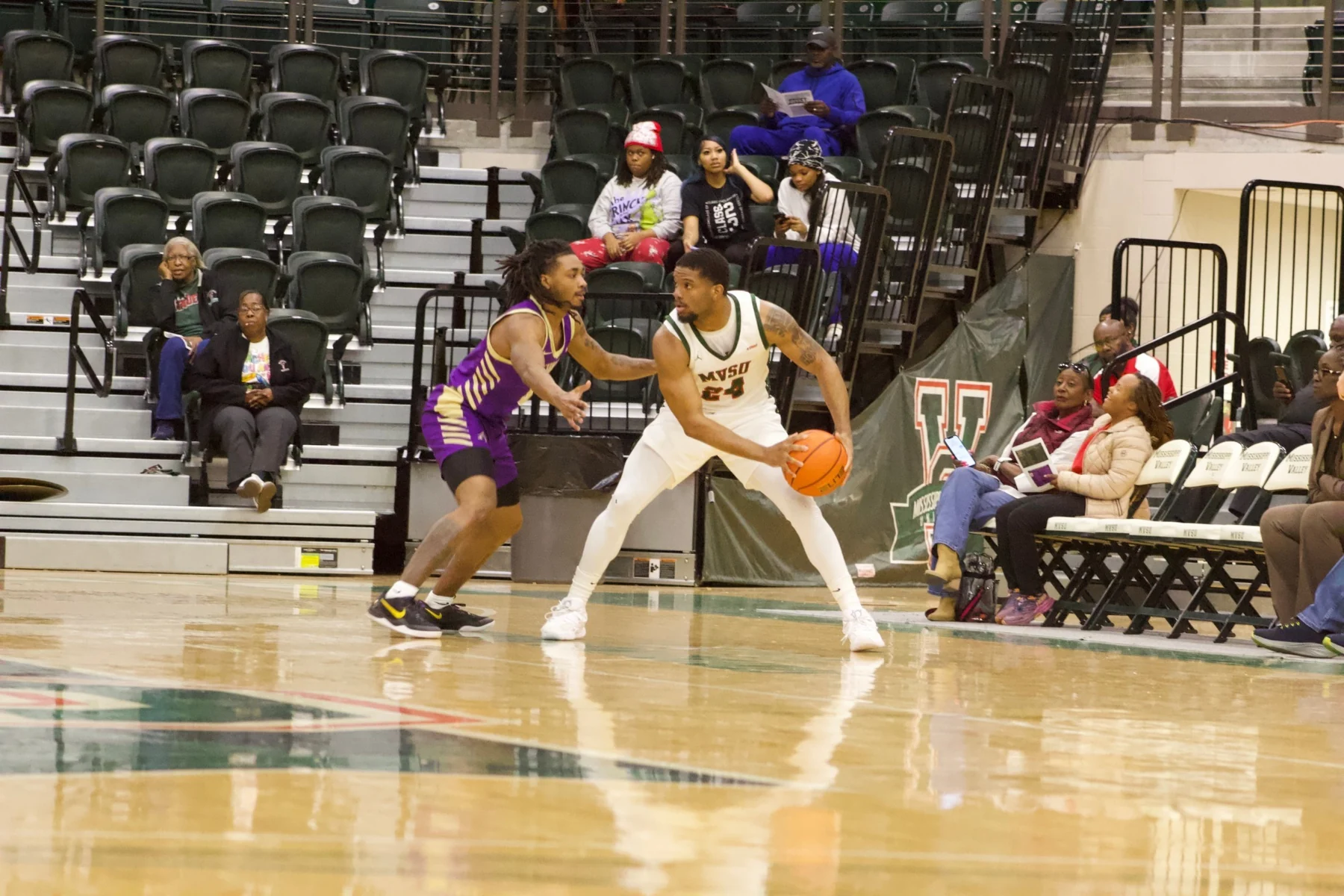
Why the road streak is 16 games, not 14
Mississippi Valley State's official 2026–27 men's schedule, checked September 29, lists 16 consecutive away games before the Delta Devils play at home. The run starts November 6 at Oklahoma and ends January 4 at Alabama A&M. The first home date is Saturday, January 9, 2027, against Prairie View A&M in Itta Bena, Mississippi. Those dates give fans a concrete answer to the viral “no home games for two months” headline: it is an official schedule sequence, but the count needs one qualification.
The qualification is that 14 games are nonconference trips and two are SWAC road games. Some headlines say 14 because they stop at the end of nonconference play on December 29. Others say 16 because they count the entire season-opening road streak through the first week of January. Both numbers can be correct when labeled. Calling all 16 “guarantee games,” however, would be wrong: the final two are conference contests at Alabama State and Alabama A&M. That distinction matters to fans evaluating both the athletic burden and the financial explanation for the schedule.
Fourteen nonconference trips open the season
The official list begins with Oklahoma, Washington, Oregon and Oregon State, then continues to Arkansas and New Mexico in November. December includes Michigan, North Texas, UConn, Mississippi State, Tulane, Ohio State, Texas Tech and Baylor. Count those entries and the nonconference total is 14 away, zero home. CBS Sports' September 24 breakdown uses the same 14-game frame. It is not a 14-game entire road streak. Nor is every opponent from the same conference tier; the schedule mixes nationally prominent programs with other nonconference visits.
The final nonconference date is December 29 at Baylor. Fans seeing a graphic that ends there may expect the team to return home for its SWAC opener, but the school's September announcement says otherwise. The gap from November 6 to December 29 is already a demanding stretch of travel and mismatched venues; the conference calendar adds another road weekend before the Delta Devils get the usual home-court routine.
Two SWAC road games extend the run
SWAC play begins Saturday, January 2, at Alabama State in Montgomery and continues Monday, January 4, at Alabama A&M in Huntsville. These are games 15 and 16 in the opening away sequence. They also count in the conference standings, so the new league campaign begins before Mike Davis's team has hosted a game. The trip from Alabama State to Alabama A&M is much shorter than a cross-country nonconference swing, but the competition has a different stake: results against SWAC opponents can shape the league race and later tournament seeding.
The conference dates are why the headline should be “16 straight away games before a home opener,” with “14 nonconference” as the explanatory subcount. Neither number alone tells the full story. The men's college basketball schedule can help readers place these games in the wider season, while MVSU's own page is the source to recheck for any date changes.
January 9 is the first home date
MVSU's first home opponent is Prairie View A&M on January 9 at the R.W. Harrison HPER Complex in Itta Bena, the facility the athletics department identifies as its primary basketball home. Texas Southern follows on Monday, January 11, creating a two-game home stand after the long road run. The official schedule still marked start times as TBA at the September 29 check; fans should not treat an old tipoff graphic as final.
The first home date is more than a novelty. It is the first time this roster and coaching staff can play a 2026–27 game in their usual building before their own students and local supporters. It also changes the travel cycle: the team can prepare, recover and hold its game-day routine at home for the first time after 16 trips. We cannot measure in advance how many points that is worth, and a home game does not guarantee a win. It does mark a real competitive and community milestone on this particular schedule.
Where the Delta Devils travel and when rest is tight
Sixteen away games do not mean the team will stay in hotels without a break from November through January. Mississippi Valley State has not published a day-by-day travel itinerary, and there are gaps between some dates. What the official schedule does show is a route with several short turnarounds and shifts between regions. Those calendar facts are enough to explain why fans are concerned about preparation and recovery without inventing miles traveled, bus rides or player complaints.
The season starts in Norman, Oklahoma, swings to Seattle, Washington, then moves to Eugene and Corvallis, Oregon. Later trips take the Delta Devils to Fayetteville, Arkansas; Albuquerque, New Mexico; Ann Arbor, Michigan; Denton, Texas; Storrs, Connecticut; Starkville, Mississippi; New Orleans; Columbus, Ohio; Lubbock and Waco, Texas. The list shows the reach of the schedule, but its competitive challenge comes from the combination of venue changes, high-profile opponents and occasional tight game spacing. The school does not say whether the team returns to Itta Bena between those dates, so a precise travel-distance total would be speculation.
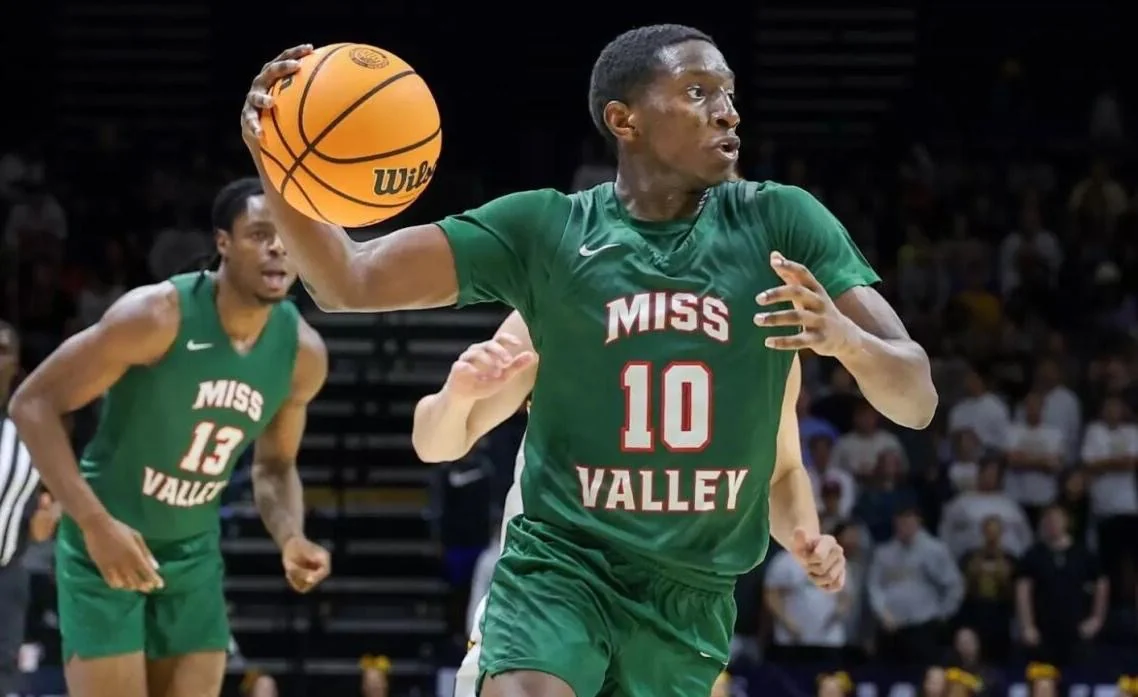
Oklahoma and the Pacific Northwest in eight days
MVSU opens Friday, November 6, at Oklahoma. Three days later, on Monday, November 9, it plays Washington in Seattle. The next games are Wednesday, November 11, at Oregon in Eugene and Friday, November 13, at Oregon State in Corvallis. The school's release itself describes the first four as a three-state opening swing in eight days and the Northwest portion as three games in five days. That is a more useful description than a vague claim that the team crosses the country all season.
Why does this matter on the court? A coaching staff can scout and prepare regardless of location, but two-day gaps between Washington, Oregon and Oregon State leave limited time for normal full practice cycles. A team may use film, walkthroughs and recovery instead of a hard practice; we do not know Davis's exact plan. New arenas also mean new sightlines and game-day routines. Those factors do not predetermine shooting percentages, but they are real context when Mike Davis's team tries to settle its half-court offense and defensive communication. If MVSU improves its turnover rate across the trip or competes deeper into second halves, that will be worth more to evaluate than the overall win-loss record alone.
A late-December Texas back-to-back
The other conspicuous squeeze comes after the Ohio State game on December 22. The Delta Devils are scheduled at Texas Tech on Monday, December 28, then at Baylor on Tuesday, December 29. Lubbock and Waco are different campuses and arenas, and the games appear on consecutive days. Tip times were still listed as TBA at the September 29 check. A late finish, early start or travel arrangement could change how much recovery time the team actually has; without announced times or an itinerary, those details remain unknown.
This pair is an especially clear test of lineup depth and discipline. With only a day between games, foul trouble or a heavy minutes load at Texas Tech could influence how Davis manages the Baylor game. That is a conditional basketball inference, not a forecast that a specific player will be exhausted. Fans can watch whether the same guards carry nearly every possession, whether the team secures defensive rebounds after missed shots, and whether transition defense holds up on the second night. The schedule creates the question; the games will provide the evidence.
Why a program would accept this schedule
An away-only nonconference slate naturally raises a question from Delta Devils fans: Why agree to it? College basketball has a familiar arrangement in which a larger host program pays a visiting team to play a nonconference game. The host gains a home date, often with a perceived competitive edge, while the visitor receives a contract payment and a chance to test itself against a bigger-name opponent. CBS Sports reports that this model is central to Mississippi Valley State's 2026–27 slate. The official MVSU schedule establishes the games and locations; it does not publish the underlying contracts or financial totals.
The economics help explain why an athletics department might consider a trip worth making even if the on-court matchup looks unfavorable. A game fee can support a budget that must cover more than one men's basketball result. A nationally visible opponent can also offer recruiting exposure and a measuring stick. Those are general possible benefits of the model, not a statement from MVSU that it chose each of these 14 games for a particular revenue target. The price is clear on the calendar: no nonconference home date for players, students or the local community, plus a difficult run of opponents and travel. Fans can reasonably question that trade without assuming the school has shared its full accounting.
Guarantee-game revenue and what has not been disclosed
CBS estimated that Mississippi Valley State could receive close to $1 million in aggregate from its nonconference buy-game slate. That figure is a reporter's estimate, not a published MVSU budget line or a sum of contracts we could verify. It should not be repeated as cash already received, net profit after travel, a player-payment total or a confirmed amount per game. The school has not released a game-by-game fee table in the sources reviewed here. The NCAA financial database explains that member athletics departments report revenue and expenses annually, but an annual reporting framework does not reveal the terms of this particular autumn's contracts.
There is another important accounting boundary. The January 2 and January 4 games are SWAC road contests, extending the season-opening away streak from 14 to 16; they are not part of the 14-game nonconference buy-game discussion. If a fan multiplies a guessed six-figure payment by all 16 dates, the result combines unlike games and will look precise while being unsupported. Even among the 14, the mix includes different hosts and agreements that have not been published here. The most defensible public description is that guarantee-game revenue is a plausible, reported reason for the unusual nonconference structure, while its exact value and use remain unconfirmed.
Basketball considerations can exist alongside the financial ones. MVSU hired Mike Davis in April 2026, making this his first Delta Devils season; he previously coached in the SWAC at Texas Southern. Facing Oklahoma, Michigan, UConn and other prominent programs might reveal whether his team can handle pressure, rebound against size and execute a defensive plan before conference play. That is a potential coaching use of the games, not a quote from Davis saying he designed the schedule for that purpose. What matters to fans is how the group responds across the trips, then whether the lessons translate when SWAC opponents and a home court finally arrive.
What the schedule can reveal about Mike Davis's team
The easiest reaction to a slate that includes Oklahoma, Michigan, UConn, Ohio State, Texas Tech and Baylor is to predict losses. That gives fans very little to learn from. The 2026–27 season is Mike Davis's first as Mississippi Valley State head coach, and the team has not played these games. The more useful question is whether a difficult schedule can show measurable progress in the possessions that matter when SWAC play begins. That means tracking how the Delta Devils protect the ball, finish defensive stops, create efficient shots and cope with foul trouble, not treating a September forecast as a result.
The school's final 2025–26 statistics provide a starting reference with strict limits. That team went 3–30 overall and 2–16 in SWAC play, scored 64.2 points per game and allowed 83.0, averaged 30.5 rebounds to opponents' 36.8, and committed 15.4 turnovers per game. These are the previous season's numbers under a different coaching setup. They do not tell us what Davis's 2026–27 roster will score or whether the same players have the same roles. They do identify categories worth checking when actual box scores become available.
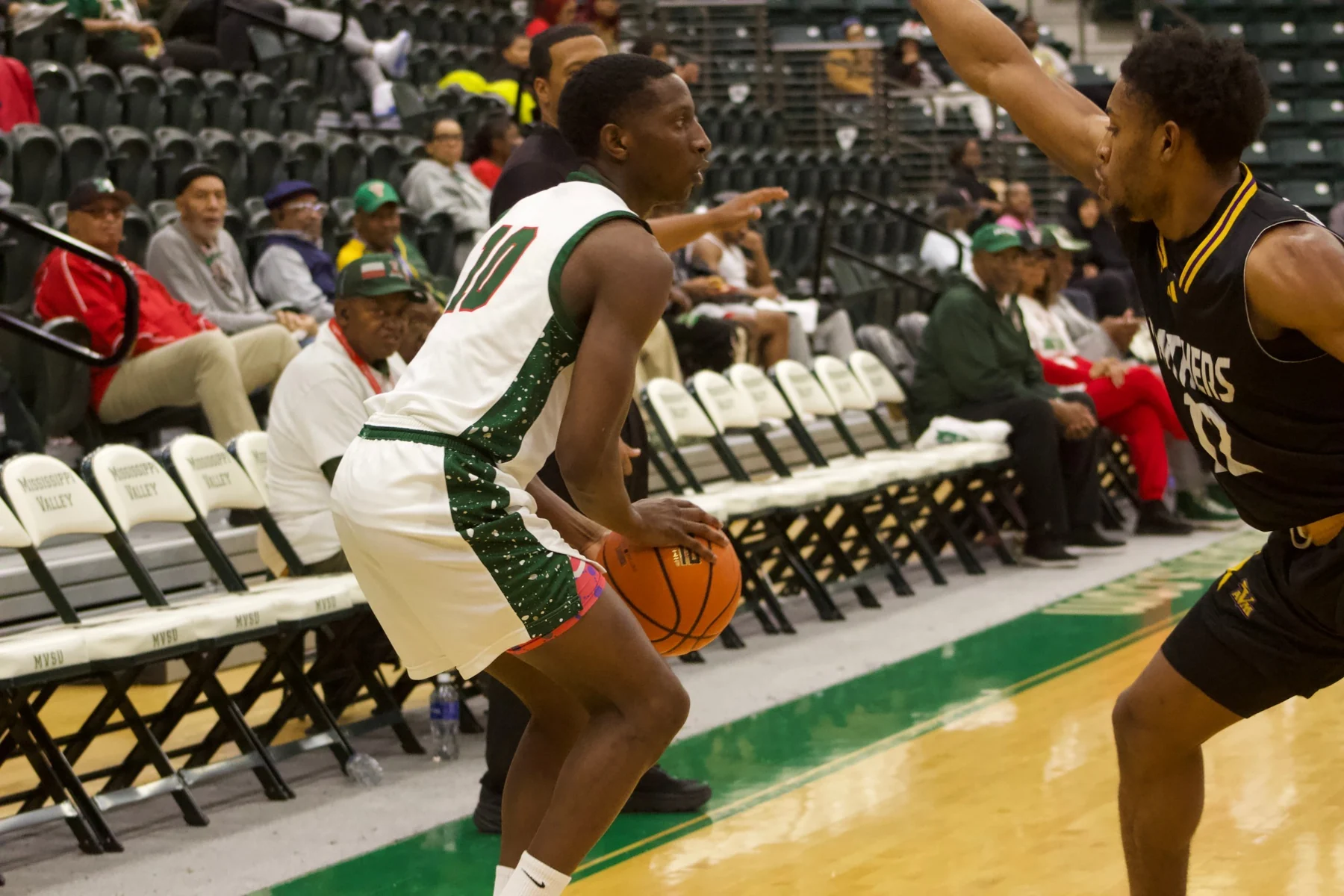
Consider a game at Washington or Oregon. If MVSU repeatedly gives the ball away before setting its offense, the opponent can score without facing a set defense; one can count those turnovers and watch whether they come from pressure, poor spacing or rushed decisions. If the Delta Devils force a missed shot but fail to secure the defensive rebound, that possession continues and the defense faces a second challenge. The prior-season rebounding gap does not prove this year's frontcourt will struggle, but it makes one-shot defensive possessions an understandable benchmark. Against bigger programs, keeping a rebound contest near even for a half would be information, even if the final score is lopsided.
The same approach applies on offense. A total point margin can hide whether the team created open looks, reached the foul line and found secondary scoring once the first action was stopped. With the short Northwest turnarounds and the Texas Tech–Baylor back-to-back, watch whether bench players can hold defensive assignments and whether starters' minutes stay manageable. We do not know the travel itinerary, roster health or Davis's substitution plan; a later-game drop in shooting would not by itself prove fatigue. A box score can show a trend, while film and coaching context are needed to explain it.
The first two SWAC trips at Alabama State and Alabama A&M are a better competitive bridge than assuming results against national brands forecast the league table. Then the Prairie View A&M and Texas Southern home games let fans see the same team with a familiar court and crowd. The comparison will not be perfectly controlled—opponents differ—but it can show whether ball security, rebounding and defensive communication hold when the environment changes. A schedule this severe should invite careful observation, not automatic dismissal of an entire season before it starts.
How fans can follow the trip and the homecoming
For a season this unusual, a fan guide needs two layers: the confirmed opponent and date, then the game-day details that can change. The first layer is already available from MVSU's official 2026–27 schedule. The second layer includes tip times, TV or streaming, live stats and ticket information. As of September 29, the school's schedule grid showed TBA for every game time and blank TV cells. Blank cells are not proof that a game will never be televised; they mean a reader cannot yet give a reliable channel or start time from that page.
Tip times and broadcasts still need checking
MVSU's September 22 announcement explicitly said tipoff times would be announced later. Fans planning to follow the Oklahoma opener on November 6, the Washington–Oregon–Oregon State swing on November 9, 11 and 13, or the Texas Tech–Baylor pair on December 28 and 29 should verify the time again near each game. An away opponent's official game page can be useful for venue and broadcast details, while MVSU's schedule and social updates can confirm any school-side change. A third-party schedule that fills blanks early may be helpful for planning, but it should not outrank the host and visiting schools when their pages disagree.
For each matchup, check four items together: date, opponent, local venue, and confirmed watch or radio option. If the game's schedule entry later adds a “Watch” button, open it to see whether it points to a live event for that game rather than a general channel page. The same goes for live stats. MVSU's page already shows Watch and Live Stats links by the January home dates, but the existence of a link months early is not a promise about final production, price or access. The site's today schedule can serve as a convenient daily cross-check once the season starts, with the official game listing used for any close decision.
The January 9 and 11 home stand
The immediate destination for local fans is Saturday, January 9, vs Prairie View A&M and Monday, January 11, vs Texas Southern in Itta Bena. Both are SWAC games, so the first home crowd will see conference stakes rather than exhibitions. The R.W. Harrison HPER Complex is MVSU's primary basketball venue according to the school's facility page. The official schedule identifies the city but does not yet provide a 2027 tip time, and the sources reviewed do not establish a ticket on-sale date or price. Before making a trip, use the athletics schedule and its official ticket link to confirm those details.
The two games are a useful basketball checkpoint as well as a homecoming. Davis's team will have played 16 straight away dates, including two SWAC opponents, before its first familiar-court test. Watch whether defensive rebounding, ball security and lineup depth look different at home, while remembering Prairie View and Texas Southern are different opponents from the Alabama teams. After January 11, MVSU goes back on the road to Bethune-Cookman on January 16 and Florida A&M on January 18. The opening home stand ends the unprecedented wait to host, not the normal travel demands of a conference season.
Sign in with Google to join the discussion.