
Start with the right season and the right field
A basketball fan can recognize the knockout bracket immediately and still misread the College Football Playoff. The important differences begin before the first elimination game: how a school gets admitted, what its ranking earns and how much of the route it must play. Treat those as separate questions, and the comparison becomes much easier to follow.
For this guide, the football reference is the 2026 season and its 2026-27 playoff. The basketball reference is the 2027 NCAA tournament, primarily the men's competition. The CFP's official announcement retains a 12-team field for that football season, with the championship scheduled for January 25, 2027. The year on the final is not a reason to confuse it with the following fall's football season.
Basketball has changed. The NCAA's expansion guide confirms that both the men's and women's fields grow from 68 to 76 teams in 2027. The expanded Opening Round reduces each field to the familiar 64-team layout. That means a bracket labeled 68 teams can still be a useful historical reference, but it is not the current starting point for planning March 2027.
Keep entry into the tournament separate from entry into a particular round. A basketball team assigned an Opening Round game has made the championship field; it has an additional game to survive before reaching the 64-team stage. The early assignment does not make its bid imaginary. UCLA's 2021 run from the First Four to the Final Four, recalled in the NCAA guide, is a useful reminder that starting earlier and lacking a path to the title are different propositions.
This also changes how to read expansion headlines. A larger field tells you how many schools receive a chance. It does not, by itself, tell you which schools qualify automatically, which must convince a committee, or which face the longest route. A fan evaluating a basketball bracket needs all three answers. The same is true when moving to football: identify the season first, then read the admission rules, the actual seed and the next opponent.
An automatic bid means something different in each sport
In basketball, the current NCAA selection overview divides the 76 places into 32 automatic qualifiers and 44 at-large selections. Conference-tournament winners receive the automatic places. The committee fills the at-large portion. Those are two routes into the same national tournament, and neither label tells you everything about how dangerous a team will be once play begins.
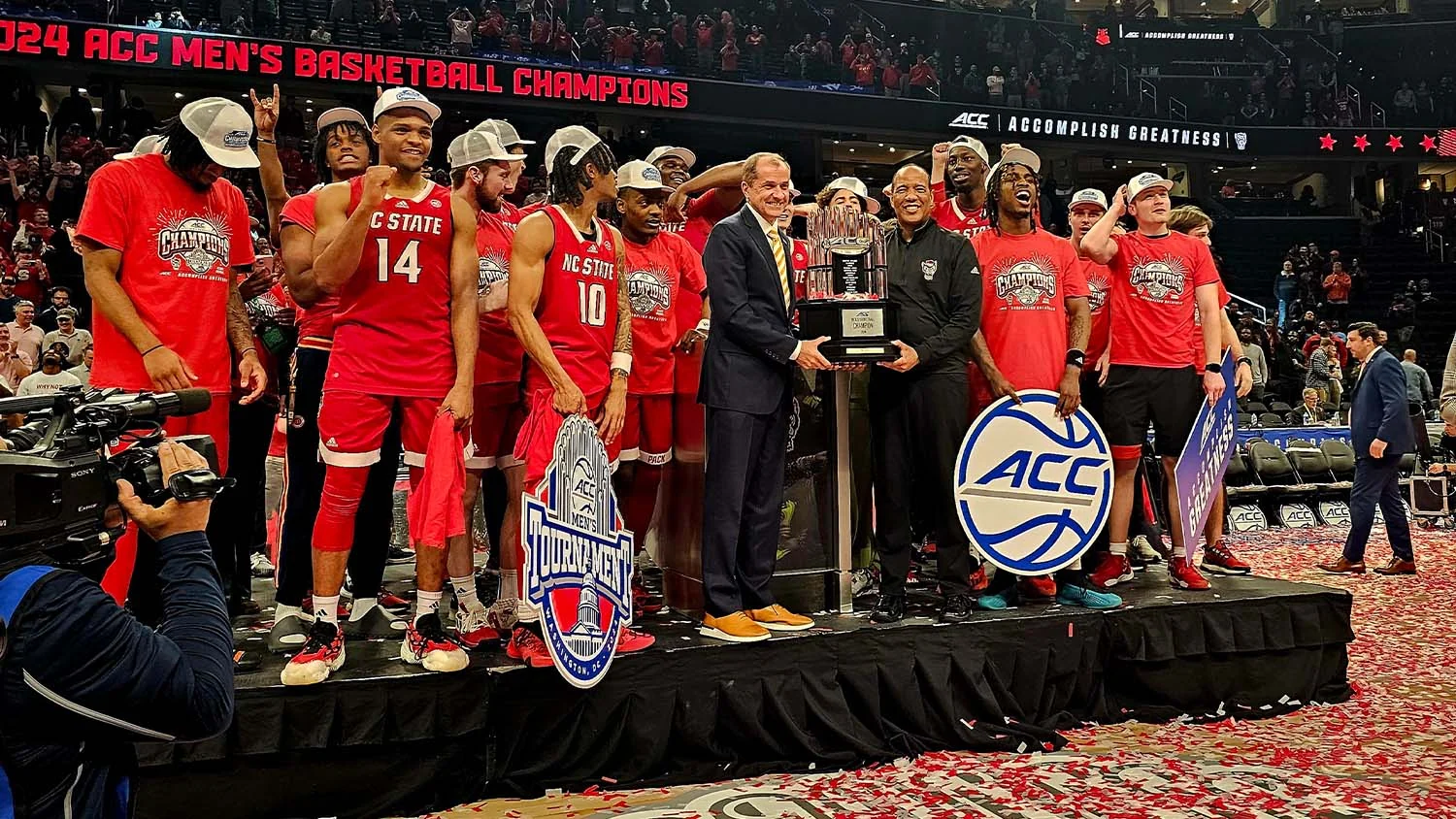
NC State provided a vivid example in 2024. Its school's account of the ACC championship run records five successive tournament victories, capped by an 84-76 win over North Carolina, and the automatic NCAA berth that followed. The Wolfpack settled its admission question on the court. That is why a conference final can command a basketball fan's attention even when neither the television ranking nor the regular-season table tells the whole story.
For the 2026-27 CFP, the official format guarantees places to the ACC, Big Ten, Big 12 and SEC champions. Another goes to the highest-ranked team from the American, Conference USA, MAC, Mountain West, Pac-12 or Sun Belt. That team need not be its league's champion. Seven places normally remain for at-large teams; if Notre Dame finishes in the CFP top 12 on Selection Day, it receives an automatic place and the at-large allocation becomes six.
The practical consequence is that a football conference title must be interpreted within its particular qualification route. You cannot apply basketball's one-conference-tournament-winner route indiscriminately to every FBS league. Nor should you assume that the highest-ranked team in a group and the highest-ranked champion in that group mean the same thing. One word changes which result matters.
When watching a basketball conference final, ask whether the winner needs the automatic route or also has a plausible at-large case. Then keep the eventual seed question open. A team can secure entry while its placement remains undecided. When watching football, identify the applicable automatic rule before describing a team as safe. This makes selection discussion more precise: a debate about which team deserves a place is not always a debate about which team the published rules require the field to include.
Rankings help build a field; seeds organize its path
A ranking is evidence or an evaluation; a seed is a place in a tournament structure. Basketball fans already encounter several lists that answer different questions. The NCAA's selection explanation says no single metric determines selection or seeding. Results, opponent quality, road performance and player availability are among the considerations. Reading one NET position as an automatic bid calculator skips the actual evaluation.
The men's championship procedures separate selecting the at-large teams, seeding the field and placing teams into the bracket. The national seed list orders the teams, but the displayed bracket uses 16 seed lines in each of four regions. Consequently, a No. 4 beside a basketball team is not a statement that it ranks fourth nationally. Its regional position must be read alongside the rest of the draw.
In football, the CFP committee protocol produces a top 25 and then applies the field and placement rules. It considers schedule strength, head-to-head competition, common opponents and other relevant circumstances; it also rejects reliance on one single metric. The four highest-ranked teams receive first-round byes. Seeds five through eight host the first round. The bracket does not reseed after each round.
That creates a sharp difference between adjacent football seeds. In a hypothetical comparison, No. 4 begins in the quarterfinals while No. 5 must first win a home game. The extra game is a concrete consequence of placement, whatever you think about the committee's assessment of those two teams. Automatic qualification answers whether a team is included; it does not independently award that team a bye.
For basketball analysis, look beyond the number once the route is known. A lower-seeded opponent might pose an awkward rebounding or ball-handling test for the favorite. That is a matchup question, separate from whether the committee judged the season's overall work correctly. You can respect the seed ordering while still identifying a specific way an underdog could make the game uncomfortable.
Our guide to basketball rankings helps keep the different lists straight. Start with the label on a ranking, then ask what decision it actually controls. This habit prevents a poll graphic, a projected bracket and a final championship seed from becoming interchangeable in your discussion.
The venue advantage changes with the tournament
A high seed does not buy the same kind of setting in the two competitions. In men's March Madness, the next question is which tournament site receives the team. In the CFP first round, placement can determine whether a school hosts the game at its own stadium. That distinction affects both the sporting occasion and the fan's travel decision.
Consider the start of the 2027 men's basketball tournament. The NCAA selected Wichita and Dayton for the Opening Round, with INTRUST Bank Arena joining UD Arena. Those venues are known before the participating teams. Wichita State's role as a host institution, confirmed in the arena announcement, is an organizational role; it does not automatically put Wichita State's team in the field.
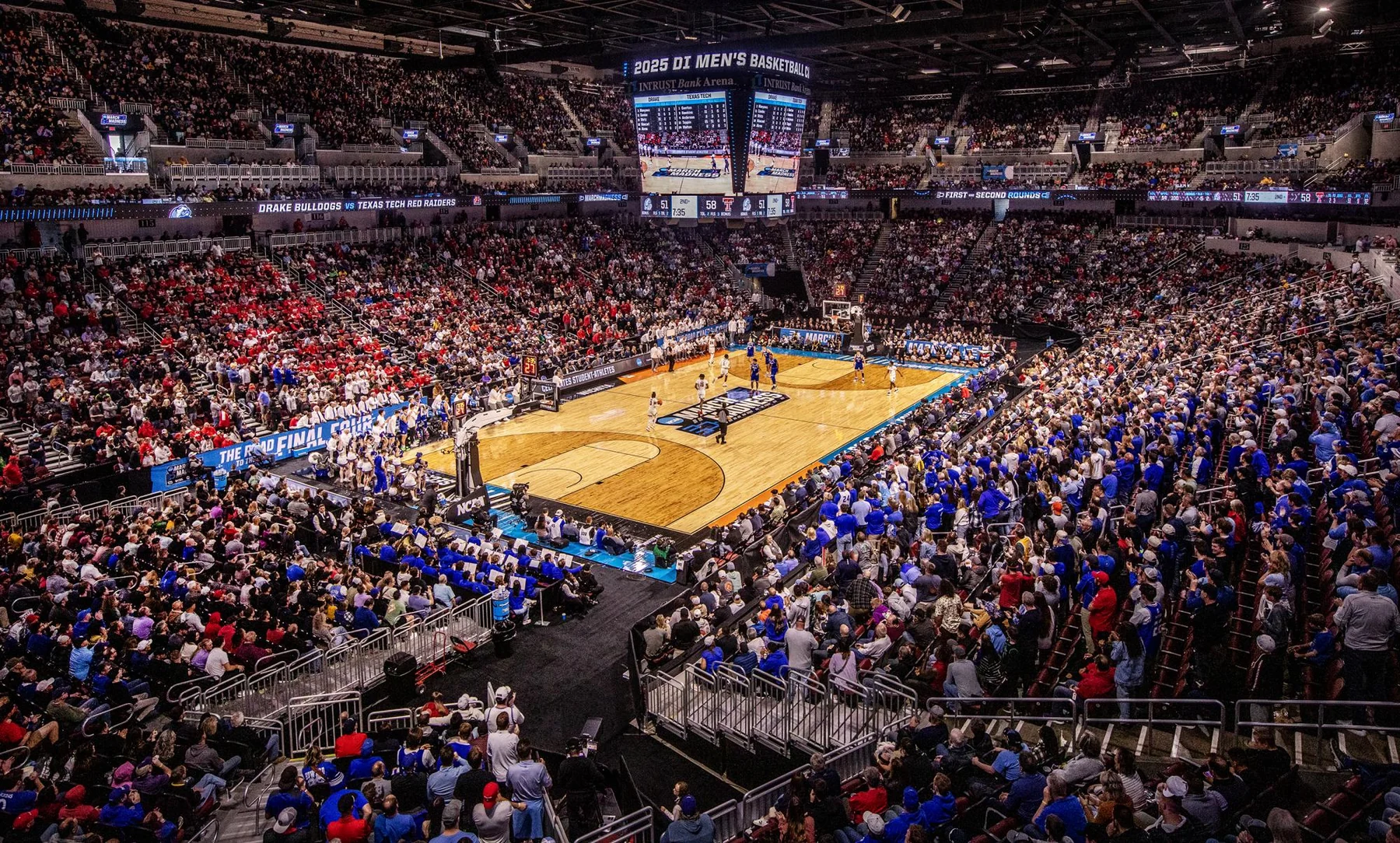
The distinction matters especially when reading a hosting restriction. The NCAA removed the rule barring a school from playing at a site where it serves as tournament host. That change does not mean every highly seeded basketball team now receives a home game. Read the assigned arena and the applicable championship procedures before drawing conclusions from the word host.
A neutral tournament site also does not promise an identical experience for both fan bases. Travel distance, ticket availability and the number of supporters who can attend are practical questions to investigate. Do not infer a measured scoring advantage from the arena's location alone. The useful basketball question is whether the players face an unfamiliar floor and how the setting fits the team's preparation, rather than whether a bracket number guarantees a comfortable crowd.
The CFP's season announcement sets out a different progression: campus first-round games, bowl quarterfinals and semifinals, then the championship in Las Vegas. A football supporter may therefore move from a familiar campus routine to a separate destination event if the team advances. The next-round venue needs its own ticket and travel check.
For either sport, begin with the specific game rather than the school's usual home address. Confirm the round, building, session and entry conditions before booking. If you also follow women's basketball, open that championship's site assignments separately. This section describes the men's basketball comparison; sharing March Madness branding is not evidence that every hosting detail is identical.
Winning twice in a weekend is a different assignment
Basketball's tournament rhythm rewards your attention to what changes between games. A team can finish one assignment on Friday and face an entirely different problem on Sunday. For a viewer, the weekend is more interesting when the second game is treated as a new matchup rather than a replay of the first.
NC State's 2024 regional weekend offers a concrete illustration. In the 67-58 Sweet 16 win over Marquette on March 29, DJ Burns scored four points and supplied seven assists, while DJ Horne scored 19. In the 76-64 win over Duke on March 31, Burns scored 29. The same central player helped the team advance through quite different statistical contributions.
Those two games do not prove a universal theory about momentum or tired legs. They do show why watching only the leading scorer can miss part of the basketball. Against the next opponent, ask how the ball reaches the post, where help defenders come from and which teammates become available when the defense commits. A productive passing game and a high-scoring game can both be valuable, even though the headline numbers look very different.
The 2027 men's calendar preserves the sequence of first and second rounds on March 18-21, regionals on March 25-28, and the Final Four on April 3 and 5. Think in rounds and weekends, then check the exact team assignment. Do not assume that every team begins on the same day or that an Opening Round participant has the same first-week workload as a team entering later.
The football event runs on a different calendar: the official CFP schedule places the first round on December 18-19, 2026, and the final on January 25, 2027. That longer span calls for separate viewing appointments rather than one extended basketball weekend. It also means that a remembered date from an earlier playoff season is a poor substitute for the current round schedule.
For your own watch list, record the next possible game as conditional until the team advances. After a basketball win, revisit the opponent and start time promptly. After a football win, check the next venue as well as the date. These are modest planning habits, but they let you follow the actual tournament story instead of losing track of it between rounds.
Read the bracket before building your watch list
Once the terminology is clear, a useful watch list begins with three questions: is the field official, which round is next, and what must happen for the team to reach the following game? Answering those first prevents a speculative matchup from becoming a calendar appointment that looks confirmed.
For basketball, use the bracket to identify the actual opponent, then open our college basketball TV and streaming schedule for game-level viewing details. The page includes a timezone control and named providers where confirmed. A missing provider or TBA entry means you still have a detail to verify; it is not evidence that a particular subscription will show the game.
To follow the football season that leads into the playoff, CollegeFootballSchedule.net's college football schedule lets you narrow games by week, team, conference and TV network. It is a related tool from the same project as this site. Use it to find the relevant matchup and its listed time, then confirm late changes with the school, event organizer or broadcaster. Its football listings label times as Eastern, so compare that with your basketball display before deciding that two events overlap.
The related CFP bracket view is useful for following a possible route through the rounds, with an essential distinction: the edition reviewed for this article is explicitly an editorial projection. Read its edition date and status. A projected team, seed or bowl assignment should remain conditional until the official field and assignments are released.
Try a compact note for each game you care about: opponent, round, venue, start time with timezone, and viewing provider. Add a separate line for the next possible round. If your basketball team wins, update that second line into a confirmed matchup; if it loses, remove the conditional reminder. The same method works for football without pretending the two tournament calendars run alike.
The reward is a clearer way to follow both competitions. You can appreciate a basketball conference champion's route into March, recognize why a football seed changes its first assignment, and still judge the next game on its own matchup. The bracket tells you where the opportunity lies; the games decide who makes use of it.
Sign in with Google to join the discussion.