What LSU's four-name roster actually shows
LSU's official 2026–27 men's basketball roster displayed four player profiles when checked on September 29, 2026. That is a real, surprising public-page fact. It is not proof that coach Will Wade has only four men in the gym. Wade told reporters his team had 15 enrolled players practicing, while eligibility work continued for three or four of them. LSU has not provided a complete public practice list for independent comparison. The accurate answer to “Why are there only four?” is therefore about publication and verification: four names are currently visible on the university page, and the coach says a larger group is present but not yet posted. Those statements can both be true.
The distinction matters because a four-player game roster would be incapable of fielding a normal starting five, creating a far more serious basketball problem than a four-profile web page. Some social posts and screenshots have blurred that line. A fan can be skeptical of the unusual presentation without asserting that LSU intends to tip off with four players or that everyone missing from the page has been ruled ineligible. As of this check, the public has a partial list, a coach's account and a set of unresolved eligibility questions; it does not have a final 15-man playing roster.
The four players on the official page
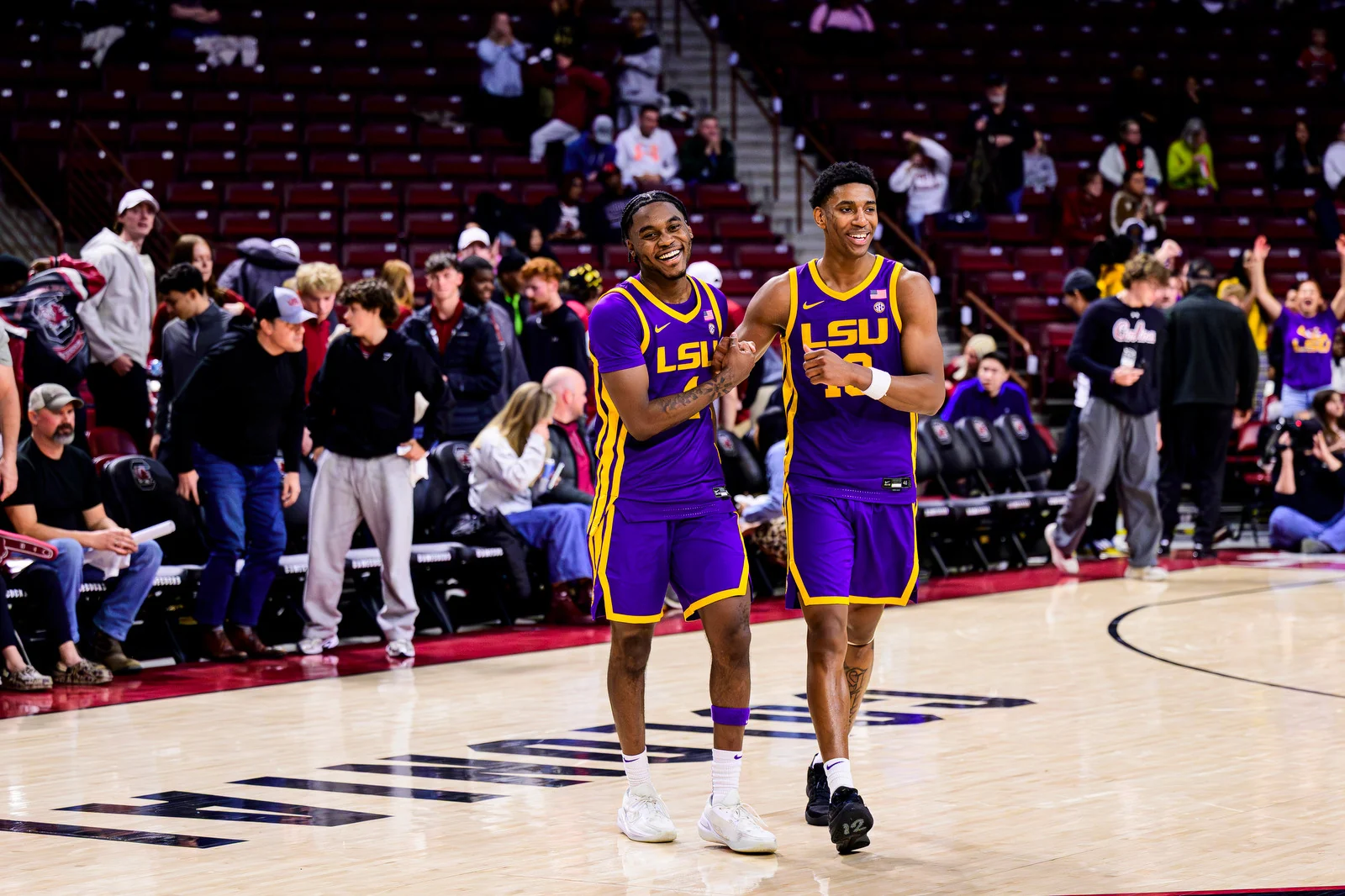
LSU listed Divine Ugochukwu, a 6-foot-3 junior guard; Abdi Bashir Jr., a 6-foot-5 senior guard; Austin Nunez, a 6-foot-2 senior guard; and Mouhamed Dioubate, a 6-foot-8 senior forward. These are positions, heights and classes from the official page as retrieved on September 29, not a forecast of who will start on November 3. The three-guard, one-forward mix is another reason the visible page should not be read as a deliberate five-man rotation plan. It lacks a fifth player, a center listing and any way to represent Wade's claimed practice group.
The public list is nevertheless useful. It tells fans which names LSU itself has chosen to display and gives a reliable starting point for a current roster check. LSU also previously announced Dioubate's signing and arrival on campus, identifying him as an SEC-experienced forward. None of that turns the four published bios into a full depth chart. A page may be an administrative or communications snapshot; a player can be present at practice yet await a public listing, and a public listing does not by itself verify all requirements for a game.
Wade says 15 players are practicing
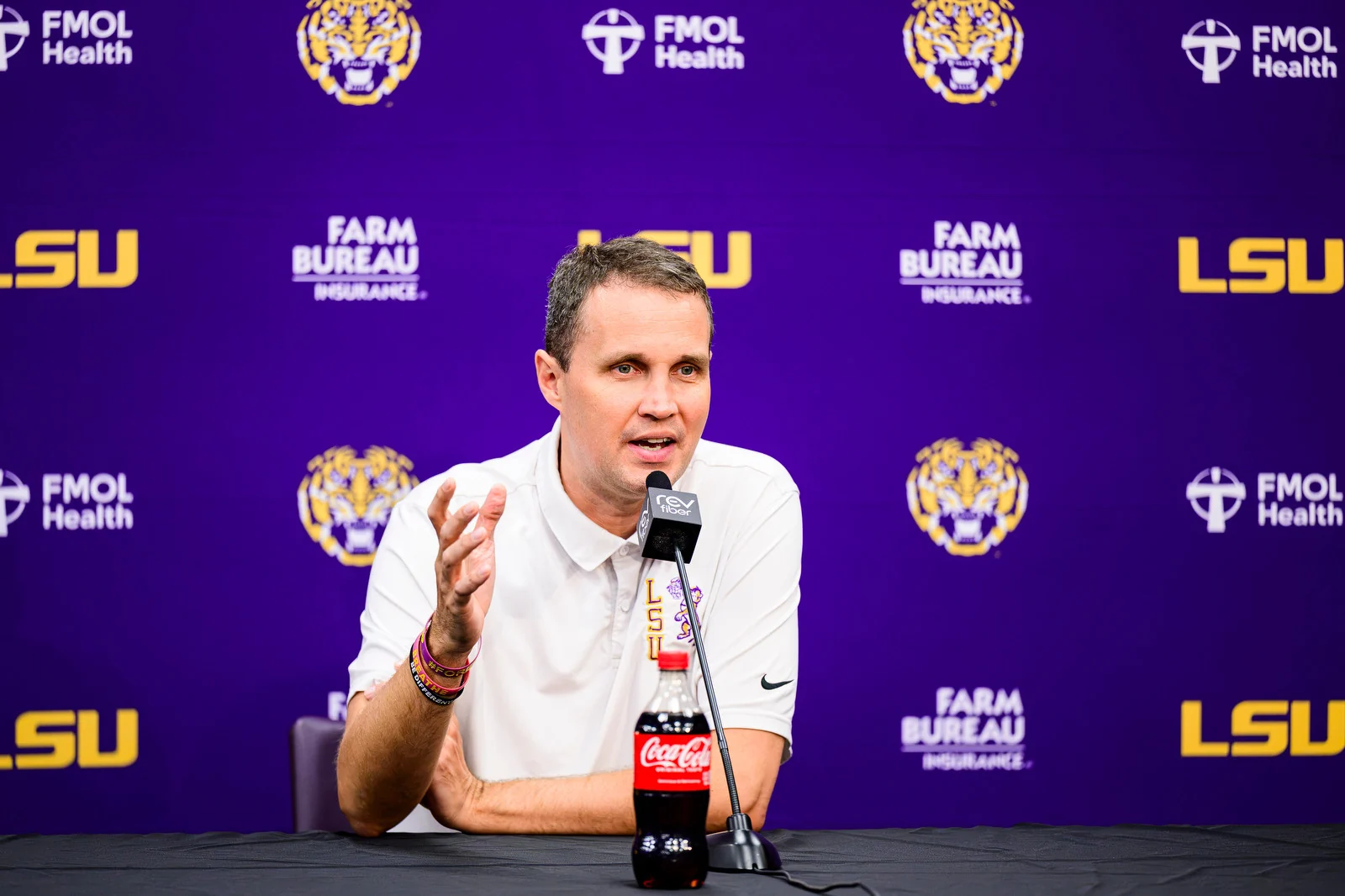
In a reported transcript of Wade's media session, he said 15 men had been practicing since after Labor Day, were in school and were signed. He also said LSU was working through eligibility for three or four players and that the roster page would be updated when the program believed doing so was in their interests. This is Wade's description of his team and his reason for withholding detail, not a certification that all 15 can play a sanctioned game today.
Front Office Sports asked LSU athletics for the complete practice list; a spokesperson declined to provide it. The outlet reconstructed 13 names from Wade's comments, social media and recruiting reports, but that mixed-source count is not an official roster either. The difference between four, 13 and 15 comes from different evidence sets, not necessarily three different teams. Fans should keep the source attached to each number. Four is what the university web page showed. Fifteen is what the coach said was in practice. Thirteen was a reporter's partial independent reconstruction. None is yet the final game-day active list.
Who else Wade has publicly discussed
The university's four-name roster is not the only evidence of who LSU is preparing to use. In his September media session, Wade spoke about several men absent from that web page. Naming someone in a coach's answer is stronger than an anonymous transfer rumor, but weaker than a complete official game roster or a confirmed eligibility decision. The useful roster question is not simply “Who was mentioned?” It is “What does the source establish about this player's presence, role and right to play?” Fans should read the following names with those three questions separated.
Donovan Dent and Skyy Clark in the backcourt
Asked directly about Donovan Dent and Skyy Clark, Wade described Clark as a three-point shooter and a leader who has command of the team's work, while praising Dent's ability to attack the paint and create for others. Front Office Sports likewise identifies both former UCLA players as men Wade discussed. Their mention helps explain why the posted page's three guards cannot be read as the full perimeter group. It does not mean either has a guaranteed starting spot, a fixed minutes allotment or an unchallenged eligibility status. The coach's assessment is about what he sees in practice; sanctioned game availability is a separate matter.
If both are eventually available, a plausible on-court fit is Dent as a paint-touch creator and Clark as an outside shooting option who can punish help. That is an inference from Wade's descriptions, not a playbook leak. Ugochukwu, one of the four officially listed guards, would then have different lineup combinations around him than the web page alone suggests. Wade said Ugochukwu had been coming back from an injury, which also argues against freezing a September depth chart into an opening-night rotation. Without a published full roster and game participation, the role discussion stays conditional.
International frontcourt additions
Wade also responded to a question naming Michael Ruzic, Saliou Niang and Brice Dessert. His description was distinct: Ruzic as the more skilled option, Dessert closer to the basket, and Niang as a more physical, versatile presence. He said the three would add height and physicality. Those are the coach's scouting judgments, not independently measured 2026–27 college production. They matter because the four-name official page has only one forward, Dioubate. A group with Ruzic, Niang and Dessert would have a very different ability to defend size, finish around the rim and distribute frontcourt minutes than a literal reading of that page.
Front Office Sports' September 25 account independently records Wade discussing those three and notes their international backgrounds. It also reports Wade said Marcio Santos was no longer on the team. That point is easy to miss in older recruiting lists: an early commitment or offseason report is not a current roster. We have therefore not included Santos among the men Wade says he currently practices with. Nor should readers assume that prior professional play abroad automatically determines Ruzic's, Niang's or Dessert's NCAA status. The university has not placed them on its publicly visible four-name roster as of September 29, and individual determinations still matter.
RJ Luis Jr. and an unresolved SEC question
One name Wade deliberately avoided discussing at length was RJ Luis Jr., the former St. John's standout identified by CBS Sports and Front Office Sports as a central professional-history case. Wade said LSU would go through the process and abide by what the SEC told it. CBS reported Luis had signed NBA deals after the 2025 draft process and had not played a regular-season NBA or G League game. The contract history, not just a box-score search, is relevant to the conference question. His separate court order concerning NCAA eligibility does not erase the need to resolve the SEC issue.
The restrained roster description is that Luis has been reported in LSU's plans but was not on the official four-name page at this check, and his conference participation was still being handled through a process Wade would not pre-empt. A projected lineup that labels him certain overstates the evidence. His potential scoring and wing creation could matter a great deal if available, but assigning him a guaranteed role before a school or SEC update would turn an unresolved question into a false fact. That is exactly the distinction this roster story needs to preserve.
Which eligibility questions remain open
Wade's account of 15 men in practice raises a natural question: if they are on campus and working out, why are they not all on the public roster? One reason the numbers cannot be equated is that college basketball has several separate checkpoints. A player may be enrolled, signed to a school, permitted to practice, listed on a website, certified under NCAA rules, allowed under an SEC policy and placed on the formal game roster at different times. Each event carries different evidence. The web page tells us what LSU has published. It does not reveal each player's compliance file, and the coach's description of practice does not replace that file.
The NCAA age-based model and individual court orders
The NCAA's June 2026 Division I eligibility announcement changed how the period of competition is measured. For students first enrolling in fall 2026 and current athletes who still had eligibility after 2025–26, the published transition compares the prior four-seasons-in-five-years approach with the new age-based model and applies the more favorable one. The same NCAA table says a player who exhausted a final season in 2025–26 does not automatically gain a new season. That alone explains why a national rule headline cannot certify an individual transfer: enrollment dates, used seasons and any court order must be examined.
Front Office Sports reported that Donovan Dent and Skyy Clark had won injunctions related to a fifth-year dispute. Those are reported, player-specific legal developments. They do not mean every LSU recruit has won the same relief or that the orders are permanent, and they do not settle a separate conference policy. An injunction may allow a player to proceed while litigation continues, but it is not a blanket amendment to the roster of every NCAA school. Our guide to the NCAA five-year eligibility change covers the national framework in more detail; LSU still has to apply it to actual individuals.
The difference between practice and competition is also real. An NCAA legislative bylaw describes a limited 45-day period in which a qualifying student whose status is not yet certified may practice but not compete, provided other requirements are met. We cannot infer that this provision explains each unnamed LSU player, because we do not have their files. It does show why “I saw him at practice” is not a reliable answer to “Will he play McNeese or New Orleans?” Front Office Sports also reported a formal roster deadline before the first regular-season game. That submitted list, when available, is more relevant to competition than a September social post.
Conference rules and roster certification are different steps
LSU belongs to the SEC, which has its own policy involving athletes who have entered professional drafts, signed certain professional contracts or joined covered professional rosters. The league has acknowledged its new standards publicly. The details and court challenges are a moving story, so this article does not label a specific Tiger eligible or ineligible under that policy. RJ Luis Jr. is the visible test case: media accounts report a past NBA contract and a preliminary court order concerning NCAA eligibility, while Wade said he would follow the SEC process. A national order and a conference participation question should not be folded into one green checkmark.
For fans, the useful sequence is to ask whether the person has a valid NCAA period or applicable order, whether the specific SEC rule applies, whether LSU has certified and submitted the athlete for basketball competition, and finally whether the athlete appears in official game notes and the box score. These checks explain the apparent contradiction without requiring a legal prediction. They also protect the basketball analysis: Dent's possible creation, Clark's shooting or Dessert's size can be discussed as conditional options, but LSU's actual ball-handling and interior depth remain unsettled until the relevant participation decisions and games arrive.
Why the uncertainty matters on the court
A roster puzzle is more than a paperwork story when it changes which basketball problems LSU can solve. The four currently published players include three guards and one forward. That group does not even make a five-man lineup, so using it to project starters, defensive matchups or a win total would be meaningless. Wade says a much larger group is practicing, but the program has not supplied the public with a fully certified game list. Between those two views sits the actual question: which ball handlers and frontcourt pieces can LSU use when competition begins? Until that is answered, every imagined rotation has a large uncertainty range.
Wade's own September assessment gives the issue a basketball shape. He wants his team to play with pace and attack in transition, yet he singled out defensive rebounding and turnovers as concerns in early work. A faster team still needs to secure the defensive board before it can run; extra live-ball giveaways hand opponents transition chances instead. These are preseason observations from the coach, not measured 2026–27 game trends. They are useful because they point to what fans can watch once LSU plays someone else, regardless of whether the final roster resembles the September website.
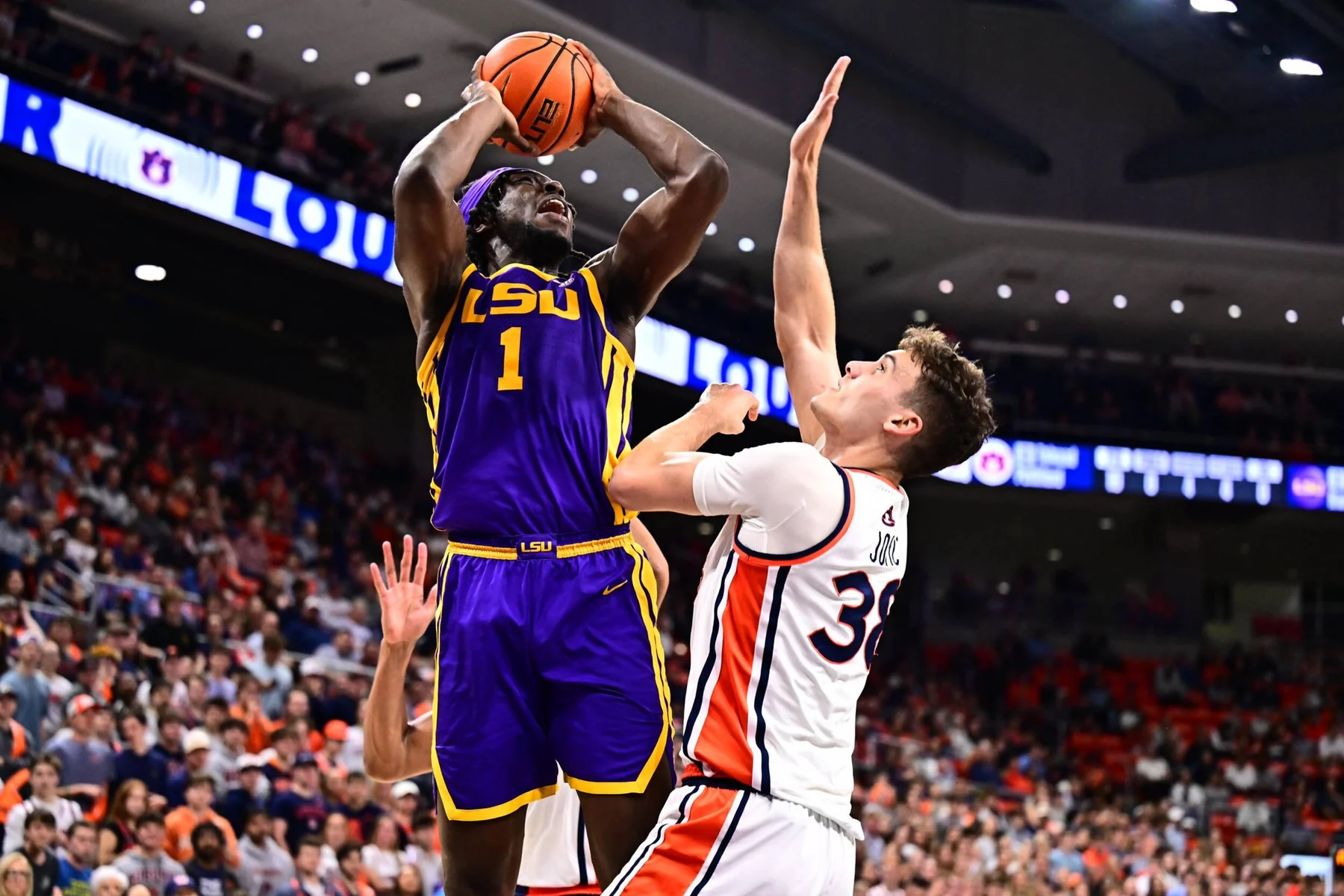
On the perimeter, Wade described Donovan Dent as a guard who can get into the paint and create for teammates, and Skyy Clark as a shooter and leader. If both can compete, those traits could support a more varied attack than the four-profile page suggests. If either is unavailable, other listed or as-yet-unlisted guards would need to handle more possessions and absorb foul trouble. Neither scenario can be assigned a probability from Wade's practice comments alone. The same caution applies to Abdi Bashir Jr., whom LSU announced had arrived on campus: a published profile and a signing announcement identify a player, but do not tell us his opening-night minutes or a coach's final offensive role.
Inside, LSU has one officially displayed forward, Mouhamed Dioubate. His LSU signing release records 5.5 rebounds per game across 31 Kentucky appearances in 2025–26 and Wade's view that he has defended every position during his SEC career. That is credible past performance and a coach's versatility assessment; it is not evidence that Dioubate alone can supply LSU's rebounding, rim defense and frontcourt foul depth this season. Wade's descriptions of Michael Ruzic, Saliou Niang and Brice Dessert suggest different options for size, touch and physical play if they become available for games. Their absence from the public four-name list makes an exact big-man rotation premature.
The first games will reveal more than any speculative lineup graphic. Watch who initiates half-court possessions, who finishes defensive possessions with a rebound, whether LSU can run without losing the ball, and which forwards defend without quick fouls. That approach converts a confusing roster headline into observable basketball questions. It also leaves room for the answer to change as LSU publishes more names or receives decisions on individual eligibility. A September web snapshot cannot bear the weight of a full-season forecast.
The dates and evidence fans should watch next
The best way to follow this story is to check a short series of dated, primary records instead of treating one September roster screenshot as permanent. Start with LSU's official roster page, noting the day it was checked and exactly which names appear. Then compare the school's game notes and official box score for each outing with any LSU or SEC notice about a named player's status. A coach's remarks can explain what the program expects, but a player appearing in an official game is stronger evidence of actual participation. Even then, avoid turning one appearance into a guarantee about the rest of the season while litigation or certification remains active.
October 8 exhibition at McNeese
LSU's published schedule places the first exhibition at McNeese on Thursday, October 8, in Lake Charles, Louisiana, with a 6:30 p.m. Central listed start. It is an opportunity to see which Tigers dress, how Wade distributes ball-handling and frontcourt minutes, and whether the defensive rebounding and turnover concerns he mentioned show up against a different team. The game may reveal combinations that practice reporting cannot. If Dent or Clark handles the ball, or an international addition plays alongside Dioubate, that will be a more concrete observation than a speculative September depth chart.
The key qualifier is the word exhibition. An October 8 appearance is not the same document as a final regular-season roster, and a player missing from an exhibition could be absent for several reasons. Fans should resist declaring someone ineligible solely because he was not in that particular box score. LSU's schedule also shows exhibitions against UCF on October 14 in Baton Rouge and at Florida State on October 24. Those games provide further opportunities to observe the rotation before the regular-season opener. We have not assumed that all three exhibitions will use the same available group, and LSU can update its roster or provide new details between them.
November 3 opener against New Orleans
The first listed regular-season game is Tuesday, November 3, at home against LSU New Orleans at the Pete Maravich Assembly Center. LSU's official schedule showed the tip time as TBA when checked on September 29, so an exact broadcast time should be confirmed closer to the date. The opening game is the clearest near-term benchmark for the roster issue because it requires a real competition lineup, not a description of who practices. Check the official roster and game notes immediately before tip, then the official box score afterward. Those records can tell fans who was publicly listed and who actually entered the game; they do not necessarily reveal every reason an absent athlete missed it.
Front Office Sports reported that LSU had not released the full practice list when asked, while Wade said he would update the posted roster when it made sense for the players. That is why the checklist must include official LSU and SEC statements as well as game participation. If the page grows from four names, record when it changed; if a court or conference decision is reported, seek the specific order or a school confirmation before changing a player's status label. For dates and opponents after opening night, use the site's men's college basketball schedule alongside LSU's official schedule, which can change. The practical answer to the roster question will arrive in dated pieces, not one dramatic announcement that explains every player at once.
Sign in with Google to join the discussion.