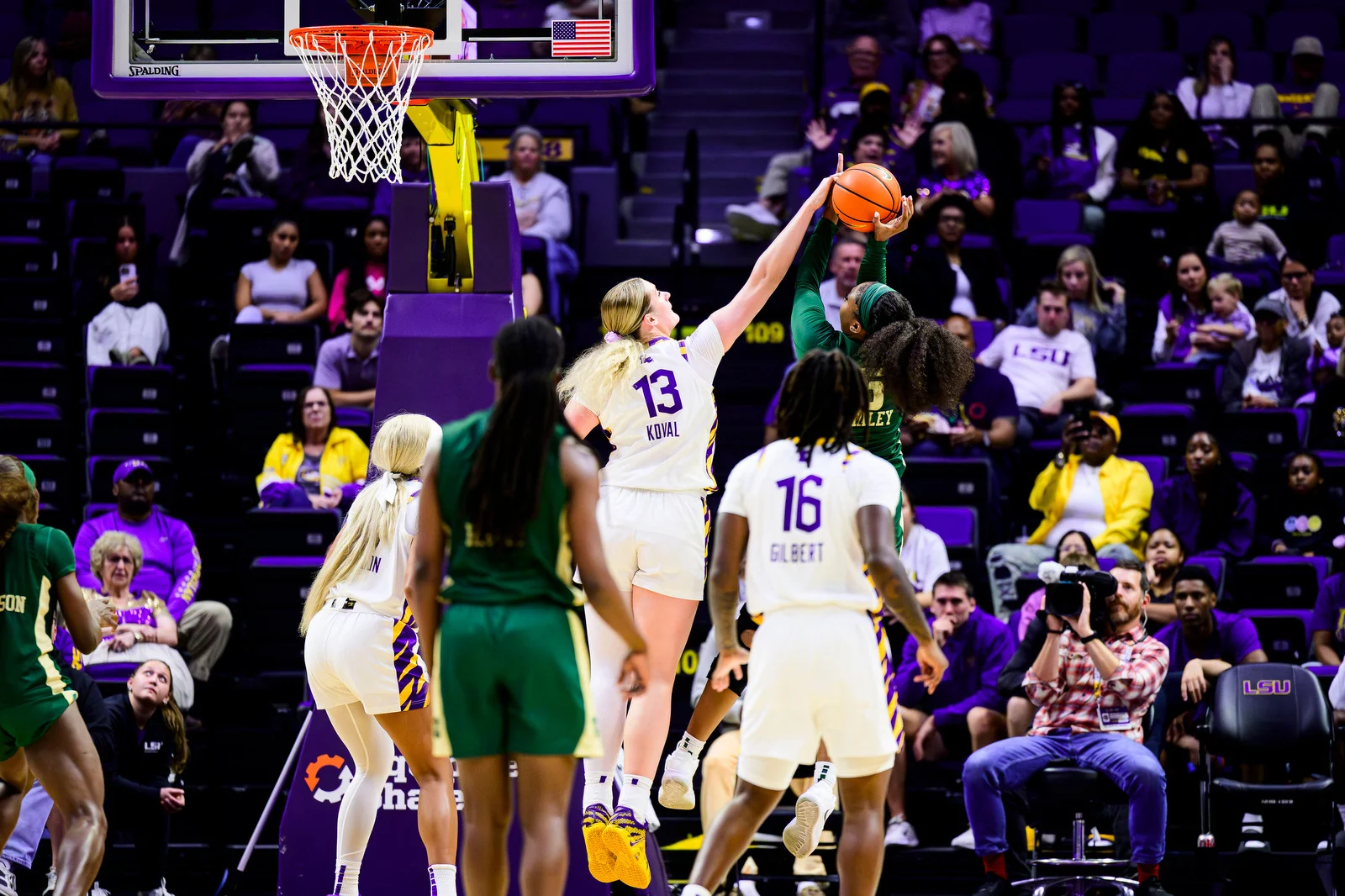
What Baylor has confirmed about Kate Koval
The clearest starting point is Baylor's own announcement: head coach Nicki Collen announced Kate Koval's signing on September 12, 2026, adding the 6-foot-5 post player to the Bears' 2026-27 women's roster. Baylor's player page lists her as No. 13, a junior forward from Kyiv, Ukraine, whose previous school is LSU. The signing is a completed roster event. How many minutes she plays, whether she starts, and which lineups work best are questions for games and coaching decisions, not facts established by a September press release.
Collen identified several parts of Koval's game: scoring near the rim, protecting it at the other end, and making decisions on the perimeter as a scorer or facilitator. Those are the coach's assessment of a recruit, not a statistical promise for the new season. The profile is more specific than saying Baylor simply added a tall player. A 6-foot-5 forward who can contest shots and make a pass from the high post can change which five-player combinations the coach can use. The test will be whether those skills appear consistently against Big 12 defenses and how they work with Baylor's returning personnel.
Koval comes from two college stops. She spent 2024-25 at Notre Dame and 2025-26 at LSU before signing with Baylor. That path gives fans actual Division I evidence to examine. It also makes her a different kind of addition from a freshman with no college minutes. Baylor's September 17 conference schedule release identifies her as one of six newcomers through the transfer portal and lists returning players including scorer Taliah Scott and forward Kyla Abraham. The school describes a group being assembled around several new pieces, rather than a roster whose roles are already settled.
The 2025-26 Bears went 25-9 and finished third in the Big 12, according to Baylor. Their strong shot-blocking and three-point defense last season supply useful team context, but they do not mean the 2026-27 group will automatically repeat those ranks. Personnel and opponents have changed. Koval's arrival gives Baylor another potential way to defend the paint while building around Scott's scoring, and that is the basketball question this article follows. For every upcoming matchup and the current official listings, use the broader women's college basketball schedule rather than treating a roster announcement as a game forecast.
What her two college seasons show
Koval's case is grounded in two full college seasons, not only in a high school recruiting ranking. The numbers trace a move from a freshman reserve and part-time starter at Notre Dame to a larger role at LSU. They also tell a more useful story than any single highlight: she has played in both the ACC and SEC, has made starts, and has blocked shots across different opponents. The exact Baylor role remains open, but those are meaningful samples when judging what skills she brings.
The Notre Dame freshman foundation
The Baylor player bio lists Koval as an All-ACC Freshman Team selection in 2024-25. She played all 32 Notre Dame games, started ten, and averaged 5.3 points and 4.7 rebounds. She registered 55 blocks and 40 assists. Fifty-five blocks are especially notable because the total spans a full season, but the 40 assists matter as well: they support Collen's interest in using her as more than a player who waits beneath the basket. An assist total is no guarantee of high-post playmaking at Baylor, yet it shows she has made passes that finished possessions for teammates in college games.
Her introduction to college basketball was striking. Baylor says that across her first three Notre Dame games she accumulated 40 points, 33 rebounds, 15 blocks and eight assists, and notes she was the first Division I freshman, male or female, to reach that combination since Anthony Davis. One early burst should not be mistaken for a season-long rate. A better reading is that she displayed several tools quickly, then spent the rest of the year in a changing rotation. Her 14-point, 16-rebound double-double against James Madison and seven blocks at Lafayette give concrete examples of production, while the season averages keep those games in perspective.
The LSU season in usable numbers
At LSU in 2025-26, Koval appeared in all 35 games and started 17. Both LSU and Baylor report 8.3 points and 6.3 rebounds per game, with 43 blocks for the season. Baylor credits her with seven double-doubles, including two during the NCAA tournament. She scored a college-high 23 against Alabama State, and the school highlights five-block games against Arkansas and at Mississippi State. Those examples are more relevant to Baylor than a claim that she will average a double-double: they show she has produced scoring, rebounding and rim protection in specific games, while the season mean reveals what happened over the full schedule.
The comparison needs context. Her LSU averages rose from her Notre Dame freshman averages, but the teams, opponents, playing time and responsibilities changed. More minutes or a different shot diet can lift raw averages without proving that every skill improved at the same rate. Conversely, a block total can drop even while a defender changes shots or makes fewer risky gambles. For Baylor fans, the reliable takeaways are availability over 35 LSU games, meaningful starting experience, 43 recorded blocks and demonstrated work on the boards. The next step is to see how those skills translate into Collen's lineups rather than multiply last year's numbers into a prediction for 2026-27.
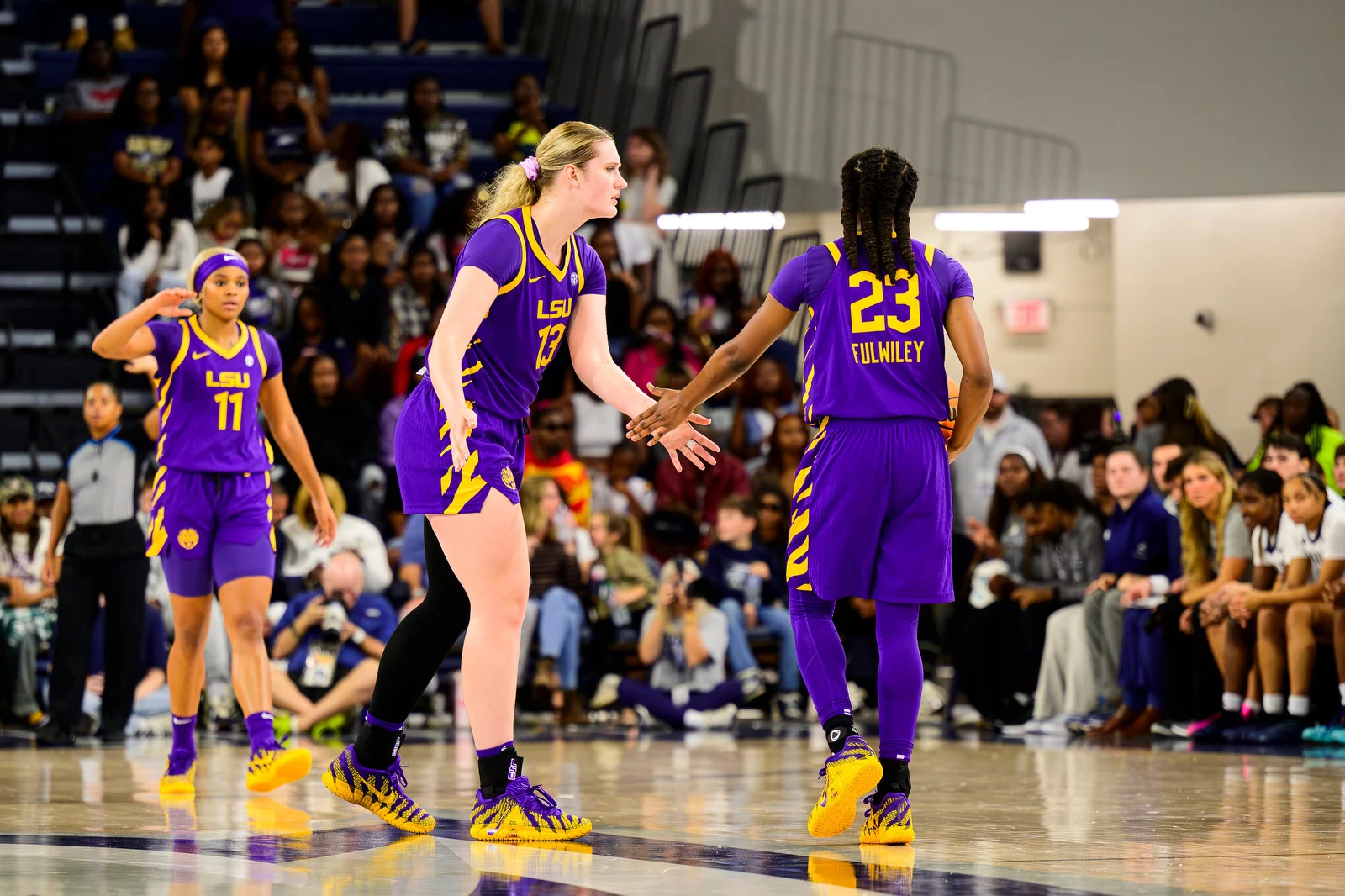
How Koval could fit Baylor's frontcourt
The key question is not whether Baylor has a tall player; it is which combinations become more effective when Koval is on the floor. The current roster lists her at 6-foot-5, Lorena Awou at 6-foot-5, Kyla Abraham at 6-foot-3 and Reese Ross at 6-foot-1. There is therefore no reason to assume a single open post job or an automatic starting five. Collen can test different sizes and skills. Koval's past production gives a basis for several possibilities, while practice and games will determine which survive contact with actual opponents.
Rim protection without assuming a starting spot
Collen specifically described Koval's shot blocking as a potential anchor for Baylor's defense. She made 43 blocks at LSU last season after 55 at Notre Dame as a freshman. A shot blocker can have an effect even without recording a block on a given possession: a guard may change a layup attempt, pass the ball away or finish at a worse angle. The measurable version of that idea will be Baylor's defense at the rim with Koval in different lineups, along with fouls and defensive rebounds. A spectacular swat followed by an opponent's putback is not the same as a finished defensive stop.
Baylor says its 2025-26 team led the Big 12 in blocks per game and three-point field-goal percentage defense. Those ranks explain why a coach would value another proven rim protector, but they are from a different team. Koval might help preserve the defensive identity; she might also need time to learn spacing and communication with new guards. Watch whether she can contest without leaving a free offensive rebound and whether Baylor guards can trust help behind them. Starting status is a much less useful early judgment than those possession-level details.
Scoring around the basket and passing options
The Baylor signing release says Collen sees Koval as a scorer near the rim and a decision-maker on the perimeter. Her 23-point LSU game against Alabama State supports the possibility of a productive scoring night, but her 8.3-point season average is the stronger baseline. A post touch can still improve an offense without ending in her own shot. If a defense collapses, a pass to a cutter or a kick-out can create a better attempt for a teammate. Her 40 assists as a Notre Dame freshman show she has at least some record of making plays for others; they do not prove she will run an offense from the elbow every night.
Taliah Scott, whom Baylor describes as a returning 19.7-point scorer, makes that link useful. If Scott draws attention on the perimeter, Koval's positioning can create a target near the rim. If Koval attracts help inside, a reliable pass out can give Scott or another guard room. These are basketball possibilities, not announced set plays. Fans can evaluate them by looking at shot quality and turnovers when those players share the court, rather than declaring the partnership successful after one highlight.
Rotations with Abraham, Awou and the wings
Abraham provides continuity. Her Baylor bio lists 34 games in 2025-26, 4.1 points, 3.8 rebounds and about 16 minutes per game off the bench, plus a strong 58.9 percent field-goal mark. Awou is another 6-foot-5 option, listed as a center after transferring from NC State; her prior season included only three games, so projecting a large role from that small sample would be unsound. Ross is a different kind of frontcourt piece: Baylor's signing release credits her with 8.2 rebounds per game and 30 Utah starts in 2025-26, alongside some outside shooting.
One possible lineup uses Koval as the primary interior defender and Ross beside her for rebounding and spacing. Another pairs Koval with Awou or Abraham for more size. Either may be useful against particular opponents, but none is a reported starting plan. The trade-offs are ordinary: bigger groups may defend the lane and glass differently, while smaller groups may move the ball or cover perimeter matchups differently. Foul trouble can change the rotation quickly. Baylor's first games will reveal far more about the fit than a depth chart made before the team has played together.
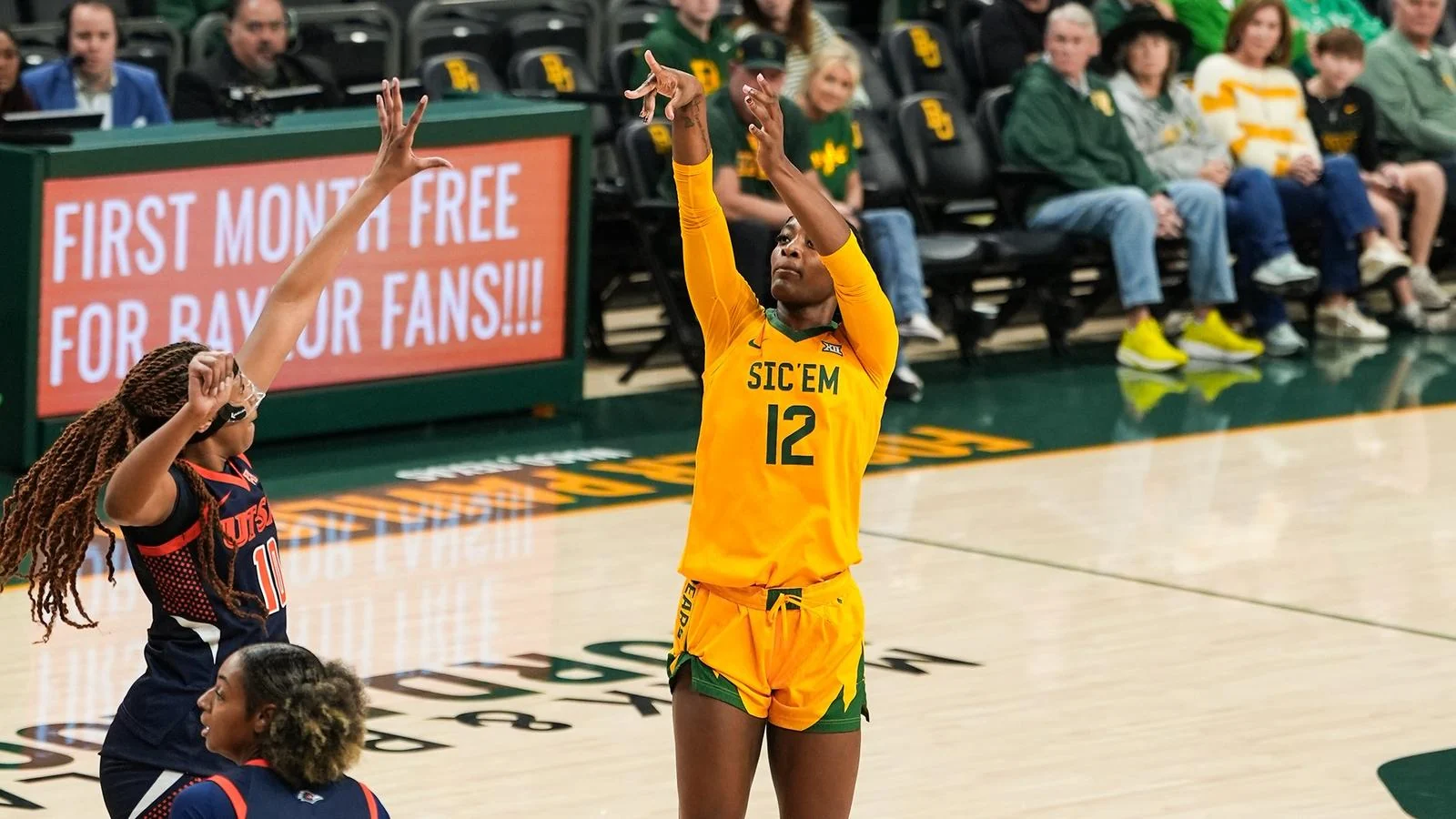
What is known about the late transfer
Koval's move happened later than the usual spring transfer cycle, and the reason she gave deserves accurate attribution. In a September 2 public statement on Instagram, as reported by The Associated Press, she said LSU's decision to add a Russian player was deeply personal to her as someone from Ukraine whose family and community have been affected by the war. She said the timing made her question whether LSU remained the right place for her. Those are Koval's publicly stated reasons. They should not be expanded into claims about private discussions, the views of the incoming player, or anyone else's intent.
The procedural timeline is also narrower than many headlines suggest. Koval said she learned of LSU's decision after the ordinary transfer window had closed and hoped the NCAA would allow her to compete elsewhere in 2026-27. On September 12, AP reported, citing a person familiar with the situation, that the NCAA had granted a legislative relief waiver allowing her to enter the portal outside the normal window. That report concerns permission for a late portal entry. It is not a publicly linked NCAA ruling that specifies every separate participation condition. Baylor then publicly announced her signing and listed her on its 2026-27 roster. Those are the firm school-published facts relevant to this article.
Fans discussing the Bears' depth can reasonably include Koval in the roster because Baylor does. They should still distinguish roster status from a guarantee of minutes, starts or a particular first-game appearance. The official schedule and game-day team information will be the best sources for who actually dresses and plays. The distinction is especially useful here because a late addition invites overconfident claims in both directions: that she is certain to lead the frontcourt immediately, or that a portal rule necessarily keeps her out. Neither conclusion follows from the available Baylor release and AP reporting.
The human context should not become a proxy contest between teams or players. Koval made her own account public; it can be reported without asking a basketball article to judge another student athlete's character. From Baylor's standpoint, the immediate on-court question is how a junior with two years of ACC and SEC experience can join a new group in time to learn its defensive calls, spacing and rebounding habits. That is a real transition worth following through the opening games, separate from assumptions about why individual coaches made past roster decisions.
Games and measures to watch in 2026-27
Baylor's published calendar offers checkpoints for observing the new group without inventing a forecast. The aim is to see how Koval is used against different styles and how her presence affects the rest of the Bears. A player's value is rarely captured by a single scoring average, especially for a post defender whose best possessions may end with someone else's rebound or a forced pass.
Early tests on Baylor's schedule
The school's non-conference release lists an October 25 exhibition against West Texas A&M, followed by the official opener at Foster Pavilion against Fairleigh Dickinson on November 2. The exhibition can show early combinations, but it does not count as a regular-season result and should not settle a rotation debate. The first several home games may give Collen chances to see how new teammates communicate. Whether Koval appears in each game and how much she plays must be checked in the actual lineup and box score.
The schedule then changes its demands. Baylor faces Southern California on November 20 at a neutral site in Los Angeles and Tennessee on December 18 at a neutral site in Nashville. Those announced matchups can test physical rebounding, transition defense and the decision-making of a rebuilt frontcourt against different opposition. Describing them as tests is an editorial reading of the schedule, not a prediction that Koval will start or dominate either one. The game footage will reveal whether she is most effective as a lone interior defender, beside another big, or in shorter spells tied to matchups.
The Big 12 schedule opens at Houston on December 21, then includes road games at TCU on January 14 and a home date with TCU on February 28. That home-and-away pairing is particularly useful: fans can compare how a Baylor lineup handles the same opponent in different buildings, several weeks apart. Conference games will also expose whether the frontcourt can rebound through foul trouble and make disciplined rotations. For updated opponents, locations and start times, consult Baylor's live calendar or the broader women's college basketball schedule before attending or tuning in.
A practical scorecard for her impact
First, follow the glass. Koval averaged 6.3 rebounds at LSU, but the useful Baylor question is whether the Bears finish defensive possessions when she contests a shot. Second, count fouls and look at the quality of contests, not only the block column. A player with one block and reliable positioning may help more than a player who swats three shots but sits through foul trouble. Third, look at the offense around her: do post catches turn into efficient attempts, open perimeter looks or costly turnovers? Collen's stated interest in Koval's perimeter decisions makes this especially relevant.
Finally, note who shares the floor with her. A Koval-Awou pairing asks different spacing questions from a Koval-Ross pairing, and Abraham's experience provides another rotation option. The box score alone may not identify why one group worked; opponent size and pace matter. Comparing lineups over several games will offer a fairer picture than grading a late transfer on her first night. The confirmed facts today are a Baylor signing, two seasons of college evidence and an announced schedule. The answer to how much Koval changes Baylor's 2026-27 ceiling will come from possessions played together, not from September certainty.
Sign in with Google to join the discussion.