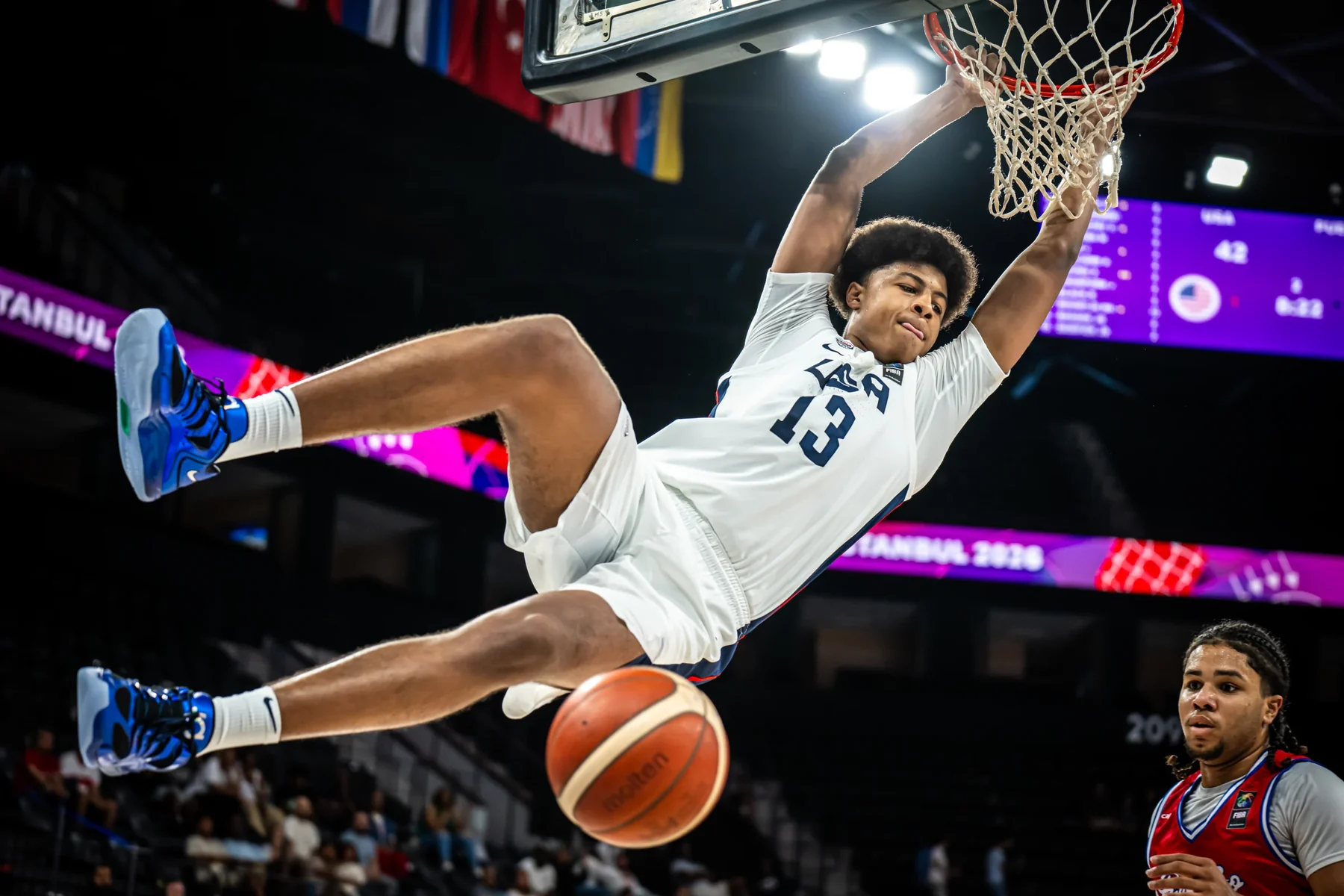
What the 2027 recruiting class actually tells you
College basketball recruiting rankings for 2027 describe high-school prospects in the graduating class of 2027. They do not rank the players currently producing in the 2026–27 college season. The useful answer identifies the evaluator, separates individual prospects from school recruiting classes, and dates the comparison. Keep the publisher's name beside every ranking.
A recruit's number is an evaluation within a defined pool. It can help identify which future guards, wings and big men deserve attention, but it does not promise a starting job or establish a college team's strength. A player commonly associated with a 2027 college arrival still needs an actual enrollment and eligibility path. The projected college season is generally 2027–28; a class change can alter that timeline.
The class label also differs from a youth national-team age group. USA Basketball's September 24 minicamp announcement groups athletes by graduating class while bringing the classes of 2027 through 2030 together for development and competition. Black, Rosser and Daughtry appear in its 2027 group. Sharing a camp does not put every participant into one recruiting class, just as playing in an under-17 tournament does not make every athlete a 2027 graduate.
Keep three questions separate: where an individual prospect is evaluated, where a school's collection of recruits is rated, and how the eventual college team performs. The first two are recruiting products; the third requires games, roles and results. If your question concerns actual college teams, the AP, Coaches Poll and NET explanation addresses those different measures. Here, the useful task is understanding the incoming class and what its rankings can reasonably reveal.
The men's leaders depend on which ranking you open
The following comparison is a dated snapshot, checked October 19, 2026. It compares the standalone 247Sports list, Rivals Industry ranking and Prep Hoops national board. The Rivals Industry page displays an October 16 update. These are distinct products, so the column labels are part of the information.
| Prospect | 247Sports | Rivals Industry | Prep Hoops |
|---|---|---|---|
| Beckham Black | 1 | 1 | 2 |
| CJ Rosser | 2 | 2 | 3 |
| Cayden Daughtry | 3 | 6 | 1 |
| DeMarcus Henry | 4 | 3 | 7 |
| AJ Williams | 5 | 4 | 5 |
Black and Rosser lead two prominent boards
Black and Rosser occupy the first two places on both 247Sports and Rivals Industry. That is meaningful agreement at the top of those boards, although it is not unanimity across every evaluator. Their listed roles also offer different college questions: 247Sports identifies Black as a point guard and Rosser as a power forward. A staff evaluating backcourt creation is solving a different roster problem from one looking for frontcourt skill and size.
Both players carry a displayed grade of 98 on 247Sports. Both show 98.73 on the Industry board. Equal displayed ratings can coexist with different rank positions; the ordinal order supplies a distinction that the rounded grade does not show. Avoid turning the gap between first and second into a measured performance margin. Neither number tells you how many extra college possessions, wins or minutes the higher-ranked player will provide.
Daughtry shows why the source label matters
Daughtry makes the comparison especially useful. He is first at Prep Hoops, third at 247Sports and sixth on the Industry list. Calling him simply “the No. 1 recruit” leaves out information a reader needs. Calling him the Prep Hoops No. 1 preserves the actual claim and allows a fair comparison with the other boards.
Henry and Williams also move within this small group. That does not establish which evaluator will eventually be correct. It tells a fan where to investigate: ball handling against pressure, decisions after the initial action, shooting that survives defensive attention, and the positions a player can defend. Those are scouting questions to test on film, not explanations we can assign to a publisher without its own evaluation.
Use one board consistently when tracking movement, then consult others for perspective. Switching sources between updates can create an apparent rise or fall that never occurred on either list. A clear sentence needs the player, service, class and check date; a screenshot with only an integer is a weaker piece of evidence.
Why a prospect moves without becoming a different player
A recruiting rank can change because the evidence changes or because the pool changes. Summer competition, a different role and a larger body of evaluated possessions can alter an assessment. A new entrant can also push everyone below him down one place without those players doing anything differently. Before interpreting a movement as a development story, establish what actually changed.
The available opening of 247Sports' post-summer evaluation update illustrates both processes. Its evaluators had established an initial top group after July observation, then AJ Williams' move into the class added another major prospect to consider. The article describes an evaluation process; the resulting integer is a summary of that work, not the work itself.
Reclassification changes the comparison group
Williams provides the direct 2027 example. In an August 4 report based on his announcement to Rivals, he moved from the class of 2028 into 2027. A player previously described as the leading prospect in one class can occupy a different position in another. That is a change of comparison group; it should not automatically be described as a loss of ability.
LJ Smith shows the other side of the same timeline. Ohio State announced on June 16 that Smith had joined its 2026 signing class after reclassifying from 2027. The school placed him among four freshmen for 2026–27. A saved 2027 list containing his earlier entry can therefore be historically accurate and still be unsuitable for a current class comparison.
For a fan, the important distinction is whether a player has improved within a continuing evaluation or simply changed the season in which a college staff expects to need him. Earlier arrival can alter the backcourt depth being assembled, the veterans with whom he might share possessions and the amount of preparation before college competition. Those are questions to follow through the school's actual roster, not consequences guaranteed by the class change. When an old screenshot and a current board disagree, check the class membership before constructing a story about rising or falling stock.
Team recruiting rankings need a roster question
A team recruiting ranking evaluates a collection of additions. It does not evaluate every player who will be available in the eventual college season. The distinction matters most in October, when schools have different numbers of commitments and substantial roster decisions still lie ahead.
Read class points alongside average rating and size
The October 19 247Sports team table provides a clear example. Houston leads with four commitments, all listed as four-star prospects, a 91.25 average rating and 51.55 points. UConn follows with two five-star commitments, a 98.00 average and 50.42 points. The higher average and the higher total belong to different schools.
247Sports explains that its formula weights the highest-rated recruit most heavily, with reduced contributions farther down a class. That allows multiple additions to matter without making the total a simple headcount. Read the points as the output of that formula, the average as a different summary of the committed group, and the class size as essential context. None of those fields measures how well the players will share the floor.
The Rivals Industry team board places Connecticut first and Houston fifth in its current table. That is another reason to name the service instead of advertising an unqualified national class position. Its score and 247Sports' points are different products; comparing their raw totals as if they shared a scale would mislead.
An October commitment list is still unfinished
Commitment status needs its own reading. The NCAA recruiting guide distinguishes a verbal commitment from signing and explains that a verbal agreement is not binding on the athlete or school. A prediction percentage is a different category again. Do not add a projected destination to a school's committed class or describe every listed commitment as an enrolled freshman.
The basketball question is what the additions could solve. A hypothetical class with two primary ball handlers may have excellent individual ratings but still need shooting away from the ball and someone to protect the rim. A smaller class might fit a returning lineup more precisely. Those are roster scenarios, not claims about Houston's or UConn's eventual rotation. To evaluate either program, connect the committed players' roles with confirmed returners, departures and later additions. A recruiting-class trophy cannot tell you who will finish a close conference game, and the October table cannot settle that future lineup.
Read the women's 2027 board on its own terms
The women's class requires its own list, not a footnote attached to the men's numbers. On October 19, both Rivals Industry's women's board and Prep Girls Hoops put Kaleena Smith first, Ivanna Wilson-Manyacka second and Haylen Ayers third. That agreement identifies a leading group within these two women's evaluations. It does not put any of them into the men's comparison table.
Keep the same source discipline when reading further down the board. A women's national ranking, positional ranking and state ranking still answer different questions. A prospect's first-place position among guards in one state is not automatically a first-place national evaluation. Likewise, the number of athletes a service publishes is the size of its list, not the total number of college prospects available.
Smith's playmaking puts her ranking in context
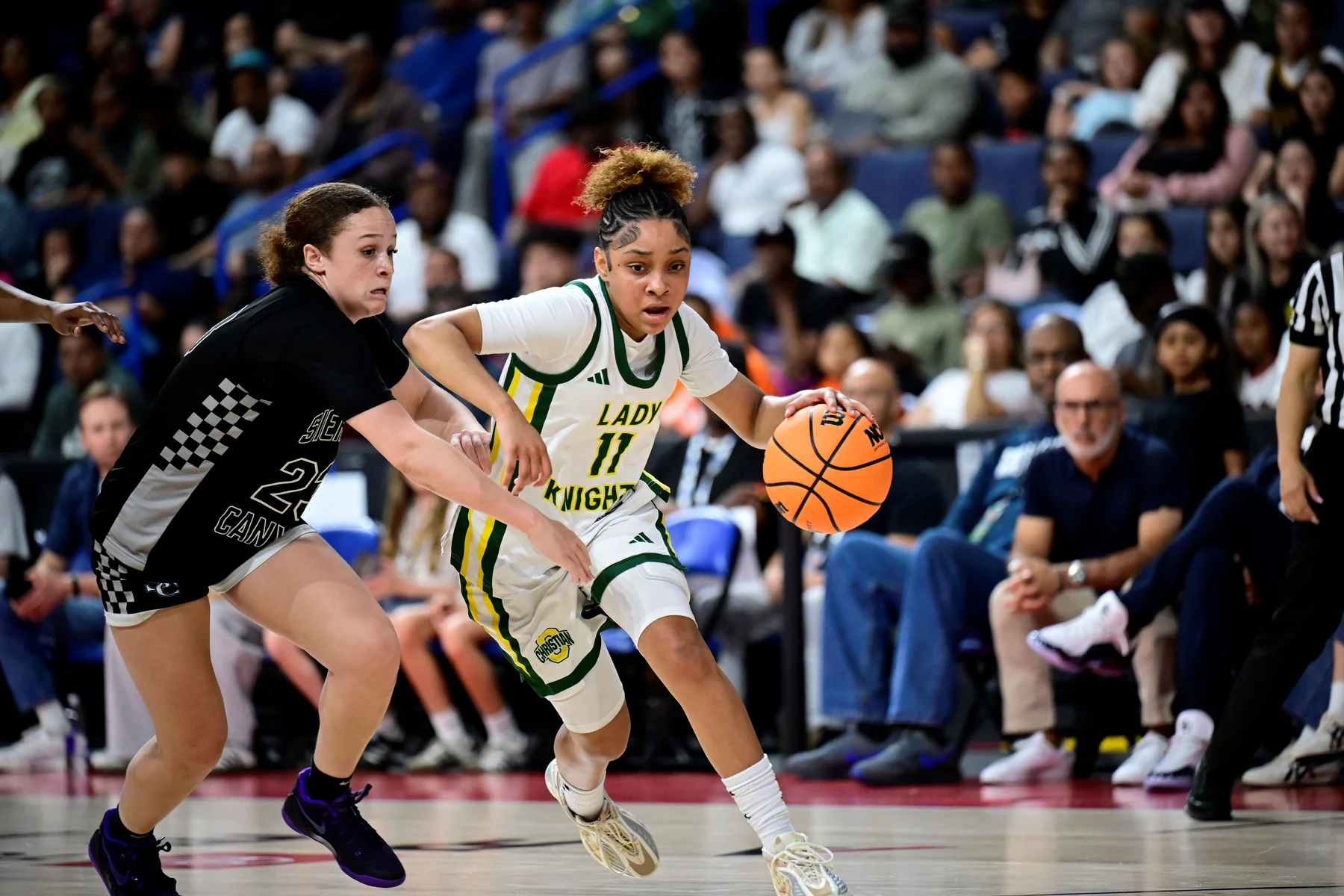
Smith's production offers more substance than a star badge. In its March 13, 2026 California award announcement, Gatorade reported that the Ontario Christian junior averaged 32.1 points and 7.0 assists through 34 games. Those figures belong to the selection-time sample. They should not be relabeled as a final-season average or silently combined with a later report using a different cutoff.
The combination raises a useful college question: how does a guard balance her own scoring with the opportunities she creates for others? A high scoring average alone cannot answer whether the offense repeatedly produces efficient team shots. Watch what happens when the first driving lane closes, whether the pass reaches a shooter on time, and whether a teammate's screen creates a two-defender decision. These are ways to investigate a point guard's role, not a promise that Smith will reproduce her high-school averages against college defenses.
Apply the same standard to the forwards and other guards on the board. Size, shooting, decision-making and defensive responsibilities interact with the players around them. A prospect can be highly ranked while still needing a specific development plan. Keep the women's class comparison current, then wait for confirmed college choices and actual team context before turning an individual evaluation into a forecast for a program's next season.
Turn a prospect rank into a basketball scouting question
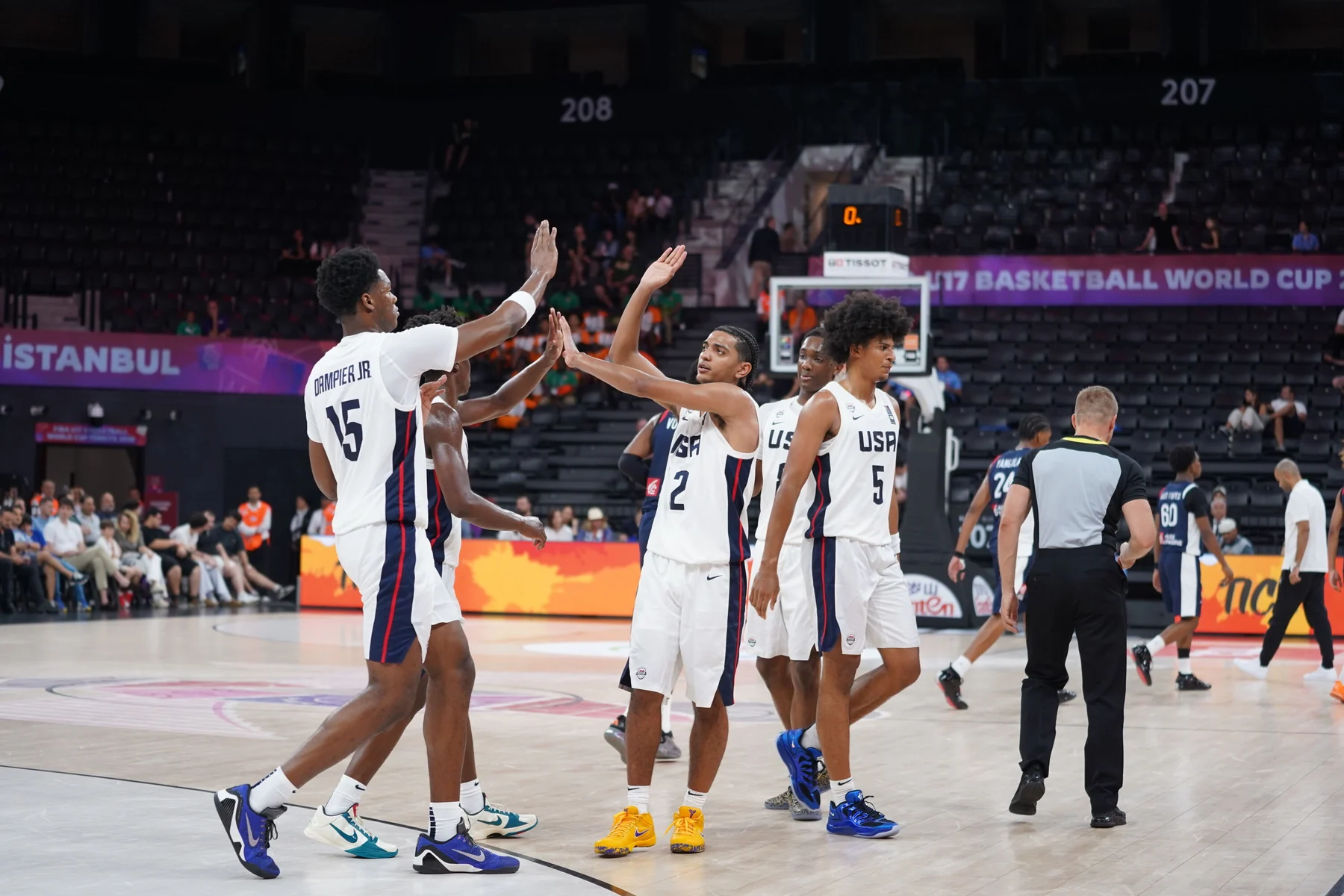
Black's international record gives a useful example of looking below the ranking. USA Basketball's July 5 account of the U17 World Cup final records his 12 points and 10 assists against Serbia. It also reports that he finished one assist short of Quinn Cook's tournament record of 59. That directs attention toward possession management and chance creation rather than asking only why a highly ranked guard did not lead his team in scoring.
The same report illustrates complementary jobs within a talented group. In the 107–81 victory, Rosser scored 23 points and Joaquim Boumtje Boumtje contributed 20 points and 15 rebounds. An individual ranking does not require every player to perform the same role. College coaches eventually need those roles to connect.
For a lead guard, watch the possessions after a defense takes away his preferred first action. Does he preserve his dribble long enough to find the next pass? Can he get the offense organized against pressure without consuming the entire clock? After giving up the ball, does he relocate into a useful shooting or cutting position? These questions reveal more about potential responsibility than a highlight compilation of successful isolation possessions.
For a wing or forward, follow the next decision after a catch against a closing defender. Rivals' published evaluation of Williams emphasizes his shotmaking, purposeful approach and rebounding. Those qualities suggest useful things to investigate beyond the star count. A productive attack can finish at the rim, create a pass to the corner or force help that opens a teammate. On defense, include the box-out and recovery after the first contest; completing the possession matters too.
Keep the evidence proportional. A youth tournament offers a defined competitive setting, while strong teammates and a national-team role differ from a future campus offense. One successful final does not settle college shooting, defensive versatility or the ability to sustain a workload over a season. Use the numbers to choose what to examine over a larger run of possessions. The ranking can bring you to the game; the decisions within the game explain how a prospect might help a team.
Follow the class through signing and its first college season
A useful recruiting watchlist should survive the next update. Save the player's graduating class, the service, the ranking date and the stated status together. When the number changes, compare like with like: the same board and class, then the reason given by that publisher. A commitment announcement, a class change and a new evaluation are different events even if they all produce movement on the page.
Next, look for the school's confirmation of its signing class. Use current terminology. The NCAA's financial-aid explanation says Division I eliminated the National Letter of Intent in 2024 and describes the financial aid agreement used for a formal scholarship commitment. Sport-specific signing periods still matter; an old signing-date graphic should not be reused simply because the month looks familiar. Ohio State's announcement of Smith in its 2026 class shows the value of a school release that explicitly identifies the arrival season.
Signing and readiness to compete are also separate checkpoints. The NCAA Eligibility Center explains that initial certification governs first-year practice, competition and athletics aid. A recruiting rank is not that certification. This is a general distinction in the process, not a suggestion that any named prospect has an eligibility problem.
Once the player reaches college, change the evidence you emphasize. Follow minutes against meaningful opposition, the possessions he or she is trusted to initiate, defensive assignments and which teammates share the court. A freshman asked to defend, rebound and move the ball may be contributing without matching a high-school scoring average. Another may need more time before taking on a larger role. Neither case can be diagnosed from the old ranking alone.
Use the men's college basketball schedule or women's schedule when the relevant college season and games are available. The 2027 recruiting boards identify players to follow now. School confirmation, the completed roster and actual college possessions will show how those individual evaluations translate into a team.
Sign in with Google to join the discussion.