
Which college basketball previews can you buy for 2026-27?
Lindy's and Blue Ribbon both have verified 2026-27 college basketball products available through their official stores. The useful choice is between a lower-priced magazine and a yearbook offered in several formats, rather than between promises about who will predict March correctly. This guide checks publisher listings and purchase conditions as of November 12, 2026. It is a buying guide, not a claim that we have read and tested every paid publication.
| Publication or format | Listed price | Buying consideration |
|---|---|---|
| Lindy's 2026-27 College Basketball | $12.99 | Single annual magazine; choose the edition before the cover |
| Blue Ribbon perfect bound | $25.95 | Conventional printed yearbook |
| Blue Ribbon spiral bound | $28.95 | Alternative physical binding |
| Blue Ribbon digital | $19.95 | Downloadable edition with specific PDF restrictions |
These are product prices, before any shipping or tax. Lindy's lists September 15, 2026 as its on-sale date. Blue Ribbon's current homepage says physical copies are shipping daily and the digital edition is available immediately. Older preorder language remains on some individual product pages, so read the current availability message and checkout information together rather than treating an old search snippet as a delivery promise.
Start with the job the book must do. A reader who follows one team and wants an annual overview may value a compact purchase that can stay beside the couch. Someone who watches several conferences every week may prefer a reference format that makes it easier to move between opponents. Neither use requires buying multiple books immediately. Try to identify the information you repeatedly miss during games before paying for overlapping coverage.
A preseason reference also has a different purpose from a schedule service. It can organize expectations about personnel, roles and conference races. It cannot tell you that tonight's tipoff moved, that a starter is unavailable or that a November rotation has changed since printing. Keep the current college basketball schedule alongside whichever annual you buy.
Check the audience as carefully as the date. Blue Ribbon explicitly describes its current yearbook as covering Division I men's basketball. A general college basketball title is not sufficient evidence that an edition includes a comprehensive women's preview. If women's coverage is the main reason for the purchase, request a contents page or explicit publisher confirmation before ordering. That small check matters more than an attractive cover or a broad claim that a book covers the sport.
What Lindy's offers and what the cover does not change
Lindy's describes its current college edition as containing more than 360 team previews, rosters, national and recruiting features, player rankings, a Top 10 and a list of 100 incoming freshmen. Those are publisher specifications, rather than our assessment of the depth or accuracy of every team entry. The main appeal for a buyer is the ability to move through the national landscape without assembling dozens of separate preseason articles.
The cover choice has a clear limit: the publisher says the contents are the same regardless of which team appears on the cover. Ordering another regional cover does not unlock extra scouting pages for that region. A second copy may make sense as a collectible or a gift, but it should not be purchased under the impression that it contains a different conference preview.
Check the edition before choosing a cover
Read the full product name and season before selecting a team. College basketball and professional basketball are separate editions, even when the same publisher uses a similar design. A search listing that shows a basketball player, a familiar brand and the right calendar year can still be the wrong competition. The relevant season here is 2026-27, not a back issue about the team that played in spring 2026.
For the reader, the useful material is the relationship between a roster and a projected role. A freshman ranking can identify a name worth watching; it does not establish that the player will handle the ball late in close games. A roster can show available size; it does not establish which combination will defend a ball screen. When reading a team entry, turn each projection into something you can recognize on the floor: who initiates offense, who creates an extra possession and which reserve changes the lineup's spacing.
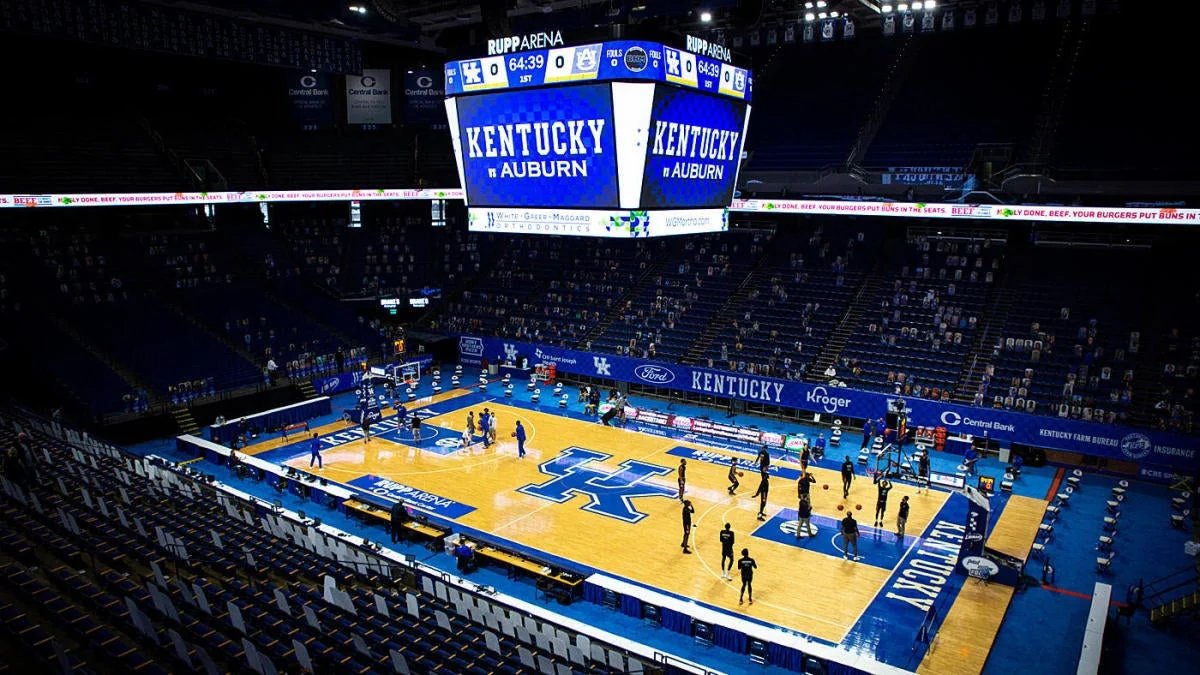
This is also a reason to resist buying based only on the highest preseason ranking for your favorite school. A publication that likes the team may be enjoyable, but the useful test is whether its explanations help you understand opponents. Before a Kentucky game, for example, a fan benefits from reading about the opposing backcourt and frontcourt as well as the Kentucky entry. That is a reading method, not a claim about the current Wildcats' rotation.
If ordering for a particular weekend, account for delivery separately from the on-sale date. Lindy's product page gives a domestic estimate of seven to ten business days; that is an estimate, not a guaranteed arrival date. Check destination, shipping charge and edition in the final cart. A national overview that arrives after your planned trip can still be useful all season, but it will not solve an immediate need for tonight's game information.
Blue Ribbon: choosing print, spiral binding or a digital PDF
Blue Ribbon offers three versions of its 2026-27 yearbook: perfect-bound print, spiral-bound print and a digital download. The publisher advertises previews of 365 Division I men's teams, including programs in the transition process. That coverage description is not a statement that all 365 teams have the same postseason eligibility. For a fan seeking information about an unfamiliar nonconference opponent, coverage beyond the nationally televised teams is the useful part of the proposition.
What the digital download allows
The official digital product page says purchasers receive an emailed download link. The edition is an interactive PDF with a school and conference index and links to official websites. It is not advertised as a free download. More unusually, the listing explicitly says it is for viewing, with copying, pasting and printing unavailable, and that digital purchases are nonrefundable.
That restriction should shape the purchase. If your plan is to print opponent pages for a trip or extract roster text into a personal spreadsheet, do not assume a PDF will support that workflow. Ask the publisher about the exact use you need before paying. A downloadable file also does not imply a continually updated roster database. Treat the edition as a season preview that can be consulted offline, with fresh information checked elsewhere.
Which format fits your viewing routine?
The physical editions are listed at $25.95 for perfect binding and $28.95 for spiral binding. The $3 difference is a format choice rather than evidence of a different set of predictions. A reader who likes keeping a book open beside a score sheet may find spiral binding attractive; a reader who mainly shelves annual editions may prefer conventional binding. Those are practical considerations, not conclusions from a durability test of these particular books.
Digital is easier to carry when the alternative is leaving the book at home. Print gives the reader a separate surface from the phone already being used for scores and messages. Think about a Saturday with several games: will you actually move from one opponent entry to another, or will the book mostly sit closed? The cheaper format is poor value if it does not match that routine.
Do not let a word-count claim make the decision for you. Extensive coverage can be useful, but the reader still needs to separate projected roles from observed roles. A good personal test is to choose one team you know well and one you rarely watch, then assess how you intend to use those entries. You may want background on a rival's bench more than another national Top 25 list. Buy the format that helps answer that question, with the current checkout conditions in front of you.
What happened to Athlon, Sporting News and The Almanac?
A familiar name in a search result does not establish that a current college basketball annual exists. As of our November 12 check, Athlon's official store was promoting a 2026-27 NBA preview. We did not verify an equivalent current-season Athlon college basketball print edition. That is a limit on what we can recommend purchasing today, rather than a claim that Athlon has permanently stopped publishing any particular title.
The distinction is more than theoretical. A Newsstand retailer page is headed Athlon College Basketball Magazine, but its current issue is identified as NBA PRVW. Its listed release date of November 3, 2026 is therefore not evidence of a 2026-27 NCAA preview release. Before placing an order from an ambiguous page, ask the seller to confirm the actual cover, competition and issue. Do not use the page heading alone to resolve a contradiction in the product details.
We also did not verify a current 2026-27 Sporting News college basketball print preview for this guide. Sporting News coverage of college basketball on the web and the historical existence of its magazines answer different questions. An archived cover or an old release-date discussion can be useful to a collector without showing that a new annual is ready to ship. Avoid assigning a current release date by copying the month in which a past edition appeared.
The Almanac requires the same care with dates. The Field of 68 has accessible announcements for its 2022-23 guide and a second volume for 2023-24. Those pages verify historical products. They do not, by themselves, verify a 2026-27 edition, current price or current download. If you see an Almanac offer, read the season in the actual sales page rather than assuming that a live historical announcement is advertising this year's teams.
For collectors, an old issue can still be the right purchase. It preserves expectations before a memorable run, shows how a program was viewed at the time and can be read alongside the season's eventual results. For someone preparing to watch a game this week, that same issue has a different value. An entry about a previous roster is background reading, not an opponent preview.
The safest buying rule is simple: require a matching season, competition, format and current fulfillment statement. If one is missing, contact the publisher or choose a verified alternative. There is no need to infer a whole publishing history from a missing search result, and no need to pay for the wrong book just because its brand is familiar.
How to use a preseason book once games have started
By November 12, a preseason book is best treated as a set of expectations to test. Keep the original prediction visible, but add what the team is actually doing. That approach preserves the value of the preview without asking a printed annual to perform a live news service's job. A changed rotation does not make every page useless; it tells the reader which part of the original case needs another look.
Build a matchup question, then test it
Before a game, write one question about each team. If a preview emphasizes size, ask whether that size produces offensive rebounds or protects the rim without creating foul trouble. If the entry emphasizes a perimeter scorer, watch how the opponent makes that player work: a second defender, a change of ball-screen coverage or pressure before the first pass. These are examples of a viewing method, not claims about a specific 2026-27 matchup.
During the game, separate the result of a possession from the quality of the opportunity. A made contested shot and a missed open shot can point in different directions from the scoreboard. Afterward, check the box score for minutes, turnovers, rebounds and free-throw attempts, then return to the question. Did the team win through the strength described in the preview, or did a different player or lineup solve the problem?

Keep predictions separate from current rankings
A magazine's preseason ranking, a media poll, a conference record and an efficiency metric are different descriptions of a team. Do not write a new number over the old one without labeling the source and date. The original ranking records what an editor expected before games supplied new evidence. A current list may weigh different information or answer a different question.
For a concrete notebook layout, use four columns: the preview's expectation, the date you watched, the evidence you observed and the question still unresolved. A team that makes a flurry of threes in one game has shown that performance, not established a season-long shooting level. An opponent missing its primary ball handler also changes how much to infer from a defensive result. Keep those limits in the same note as the impressive statistic.
Our guide to AP, Coaches and NET rankings explains the distinctions in more detail. The statistics database guide can help with the next check. The point of using a book and current data together is to ask better questions, not to force every early result to confirm a preseason opinion.
Buying checks, subscriptions and free reading alternatives
An annual preview and a subscription are not automatically the same purchase. Lindy's FAQ describes its magazines as annual publications, not monthly or weekly issues. A retailer may offer a continuing order arrangement, but that does not mean the book itself receives weekly updates. A newsletter subscription, a yearbook purchase and a paid digital edition can also be separate products from the same publisher.
Ask what the charge buys: one current issue, several future issues, access to an online service or a downloadable file. Then ask what happens next year. Do not infer automatic renewal from the word annual, or infer permanent account access from the word digital. The order terms, rather than a broad search title, should settle those questions.
A practical checklist before checkout
- Match the competition and season: NCAA college basketball, 2026-27, with the men's or women's scope you need.
- Confirm whether the item is print, a paid PDF or another digital product, including copying and printing restrictions.
- Compare the final total after shipping and tax, rather than only the cover price.
- Read current stock and delivery information; an on-sale date is not an arrival date.
- Check the return or refund terms, especially before a digital purchase.
- If buying a gift, choose a format the recipient can actually use and an edition that matches their interest.
Readers searching for a free college basketball magazine PDF should distinguish a publisher-authorized sample from the full paid edition. A sample can help assess the layout or writing, when one is offered, but it does not prove that the entire current annual is free. We have not verified a free full 2026-27 edition of either featured publication and do not label the paid Blue Ribbon download as one.
You can still build a useful viewing routine without buying a book. Start with official school rosters and game notes, read openly available team reporting, keep a personal matchup notebook and use a current schedule. The printable college basketball schedule serves a different purpose from a yearbook PDF: it helps organize when to watch, rather than supplying a season's worth of team previews. A free schedule is not a substitute for paid editorial work, but it may be the only missing tool for a reader who already follows the teams closely.
For most buyers, one verified current-season publication is a sensible starting point. Choose Lindy's for its lower listed entry price, or consider Blue Ribbon when its reference format better matches your habits. Those are judgments about the purchase options, not a forecast-accuracy award. The best value is the book you return to with a question about the next opponent, then update with what the games actually show.
Sign in with Google to join the discussion.