What the Big Ten actually prohibited on September 28
The Big Ten's September 28 announcement answers the central question more narrowly than the shorthand “former pros cannot return to college.” The conference unanimously adopted a rule that bars certain players from men's or women's basketball competition at a Big Ten institution. It identifies NBA, NBA G League and WNBA contracts, rosters and draft-return procedures. It does not claim to rewrite every NCAA eligibility rule or decide whether a player may compete for a school outside the conference. For a fan checking a 2026–27 depth chart, the league and the athlete's specific history matter as much as the player's name on a team page.
The timing is material. The statement arrived on September 28, after many programs had assembled preseason rosters but before games could settle lineup questions. A school can recruit, announce or list a player while eligibility work continues. The public conference text establishes a standard; it is not an individual clearance list. If a returning scorer or projected starting center falls into one of its categories, the practical basketball effect could be a different primary creator, a smaller frontcourt rotation, or more minutes for a newcomer. Those effects are possibilities, not findings about any unnamed team.
Three separate triggers in the conference statement
The first trigger is a professional contract with the NBA, G League or WNBA, or with a team belonging to one of those leagues. The second is being on a roster of an NBA, G League or WNBA team at any point. The conference wrote both tests; simply asking whether someone logged regular-season minutes would miss the roster test, while searching only a public roster might miss a signed contract. The third concerns a player who declared for the NBA or WNBA draft but did not withdraw or declare an intent to return to college within the required timeframe. The qualifying words after “declared” are crucial. The sentence does not say that every exploratory draft declaration, followed by a valid return, automatically ends college basketball.
The language explicitly includes both women's and men's college hoops, even though discussions online may focus on the NBA. A WNBA contract, WNBA roster stint or unresolved WNBA draft return can matter under the same conference announcement. Conversely, the NBA G League is expressly named rather than left to an assumption about whether a developmental league counts. The NCAA's April 2026 rule update also recognizes a route for certain prospects to test an opt-in professional draft and withdraw by the applicable deadline. Reading the Big Ten's full final clause, alongside the NCAA's procedure, gives a better answer than treating a headline containing “draft” as a permanent ban. Inside the Hall raised Indiana center Sam Alexis as an example of why Summer League participation should not be conflated with an NBA contract or roster spot; his particular status still deserves its own verification.
As of September 29, the conference had released this brief public statement, not a case-by-case chart of affected athletes. It separately said it was evaluating possible professional-athlete restrictions in other sports. That final sentence is another scope marker: the September announcement itself is a basketball-specific Big Ten competition rule. Fans evaluating a men's team or a women's team should start there, then look for school and conference decisions about the particular player.
Draft declaration, Summer League and overseas play: where the line is
The hardest part of the new Big Ten rule is not its headline; it is deciding which event in a player's timeline actually happened. “Worked out for a team,” “appeared in Summer League,” “entered a draft,” “signed a professional contract” and “made a league roster” describe different records. The conference's statement specifies some of those records, but it does not publish a table that resolves every offseason scenario. A school compliance office would need the underlying documents and dates before treating an athlete as cleared or barred. Fans can ask the same factual questions without pretending to make a binding eligibility decision.
Draft withdrawal and an intent to return
The draft clause has a built-in qualification: it addresses an athlete who declared for the NBA or WNBA draft and did not withdraw or declare an intent to return to college in the required timeframe. That makes the timeline decisive. A player who explored the draft and then completed the applicable return step is materially different from one who stayed in the process past the relevant deadline. It is also different from signing a contract or joining a professional roster, which the Big Ten lists as independent triggers.
The NCAA's April 15, 2026 governance update expressly allows qualifying precollege prospects to enter an opt-in professional draft once while preserving an eligibility route if they withdraw by the legislated deadline. NCAA legislative text contains separate basketball provisions for men's and women's draft exploration and return declarations. That is why a single unsourced internet claim such as “declaring always ends eligibility” is unsafe. It is equally unsafe to claim that every athlete who says they intended to return satisfied the required process. Check the relevant draft, college enrollment status, required written notice and dates with the school or NCAA before assigning a player's game status.
Summer League participation is not answered by a label alone
The NBA maintains a separate 2026 Summer League roster page. That public list tells fans who appeared in that event, but the Big Ten announcement does not say that every Summer League appearance by itself equals an NBA or G League contract or a covered league roster position. Nor does it say the appearance can be ignored in every case. Some Summer League players can have other professional agreements; the decisive facts are what the person signed and which team roster they actually joined under the conference rule.
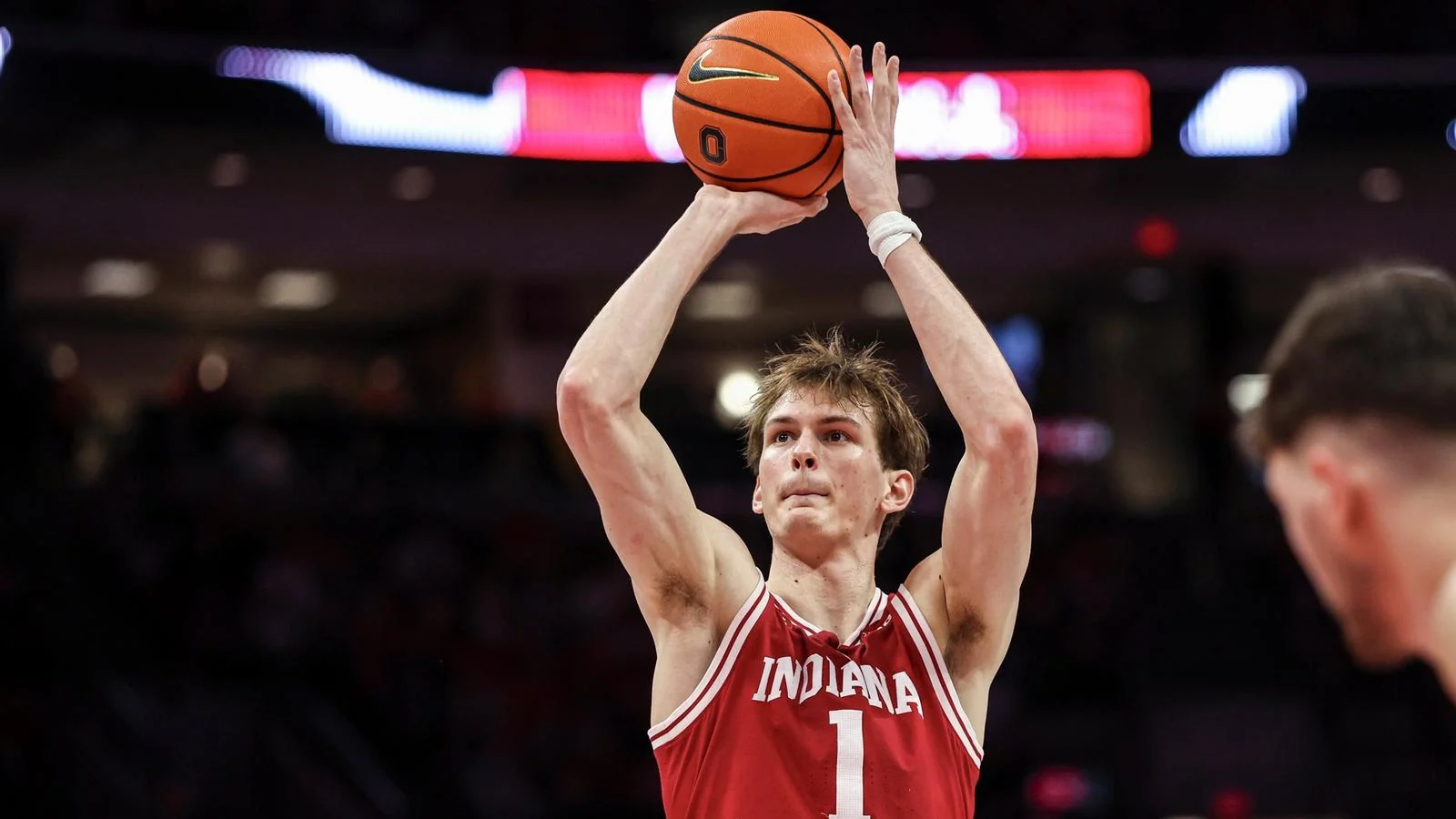
Indiana center Sam Alexis gives this distinction a real basketball setting. The Daily Hoosier reported on September 28 that Alexis played for Oklahoma City's Summer League side and is not expected to be negatively affected, based on the outlet's understanding that he did not sign a formal pro contract, join an official pro roster or declare for the draft. That is an outlet's qualified assessment, not a conference-issued ruling about Alexis or a universal Summer League exemption. It matters to Indiana fans because an interior player's availability changes how a coach allocates center minutes, screens and rebounding responsibilities.
The statement does not name overseas leagues
The Big Ten named the NBA, G League and WNBA. It did not expressly name European, Asian or other overseas leagues in this September basketball announcement. That omission is a limit on what the public text itself proves. It does not promise that a player with foreign professional experience has cleared NCAA standards, any separate conference rules, school admissions or an individual eligibility review. It also does not establish that such a player is disqualified by this exact Big Ten sentence. For an internationally experienced recruit, readers should look for an official school or conference eligibility statement tied to the player, rather than extending the NBA language by analogy. Until such evidence exists, the responsible basketball projection is conditional: the player's skill set may fit a rotation, while game eligibility remains unresolved.
Why an NCAA eligibility ruling does not settle a Big Ten case
There are two distinct questions behind many 2026–27 roster arguments. First, does an athlete have a remaining period of eligibility under NCAA rules, an applicable waiver or an operative court order? Second, if the athlete seeks to compete for a Big Ten school, does the new conference professional-history rule permit that competition? A favorable answer to one question is useful, but it is not automatically an answer to the other. The Big Ten announcement addresses contracts, professional rosters and draft return status. The NCAA's 2026 eligibility overhaul addresses how the period of college competition is measured. They are different tests, even when the same player appears in both conversations.
National eligibility and conference participation are separate questions
In June 2026, the NCAA Division I Cabinet approved an age-based eligibility model. Its published transition rules say that for 2026–27 first-time enrollees and current athletes who still had eligibility after 2025–26, schools apply the older four-seasons-in-five-years structure or the new age-based model, whichever benefits the individual. The same NCAA table says an athlete who already used a final season during 2025–26 does not gain an extra season simply because the framework changed. The NCAA Eligibility Center explanation also makes clear that schools continue to certify eligibility and report discrepancies. A public roster cannot replace those determinations.
Now place the Big Ten rule beside that framework. A veteran who has time left under an NCAA calculation could still face the conference's separate contract or roster restriction if the specified pro history exists. Conversely, an athlete with no qualifying NBA, G League or WNBA history does not receive a new season merely because the Big Ten rule does not cover that athlete. This is why the common question “Is he eligible?” needs a second sentence: eligible under which rule, for which school and as of which date? The same care applies to a women's player with WNBA draft or roster history. It avoids turning a conference press release into a national rule or treating an NCAA clock change as a blanket invitation back from professional basketball.
For a more detailed explanation of the national transition, see our NCAA five-year eligibility guide. It describes the age and enrollment model; this article adds the September Big Ten restriction. Neither source can decide a player's unpublished file.
Sam Alexis shows why individual records matter
Indiana center Sam Alexis is a useful example because his story has more than one moving part. The Daily Hoosier reported on September 23 that a Monroe County court granted him a preliminary injunction against the NCAA in his fifth-season dispute. Five days later, the Big Ten announced its basketball pro-history rule. The outlet then reported its understanding that Alexis was unlikely to be harmed by the new rule, because his Summer League appearance was not, on the facts it had, an NBA contract, official pro roster stint or unresolved draft declaration. A preliminary injunction and a reporter's eligibility assessment have different roles; neither should be described as a final Big Ten ruling.
The basketball reason to follow Alexis is straightforward. He played center for Indiana, and the same report credits him with 8.8 points, 4.8 rebounds and 1.2 blocks in 21.3 minutes per game the prior season. Those are meaningful interior minutes for a team projecting its frontcourt, but the numbers do not tell us what a future legal order or compliance decision will say. The responsible preseason reading is that his expected role can be analyzed while his participation status remains tied to current, player-specific decisions. Before claiming Indiana gains or loses a starting big, check the latest school statement and the governing orders, then the actual game lineup.
How the rule could shape 2026–27 men's and women's rosters
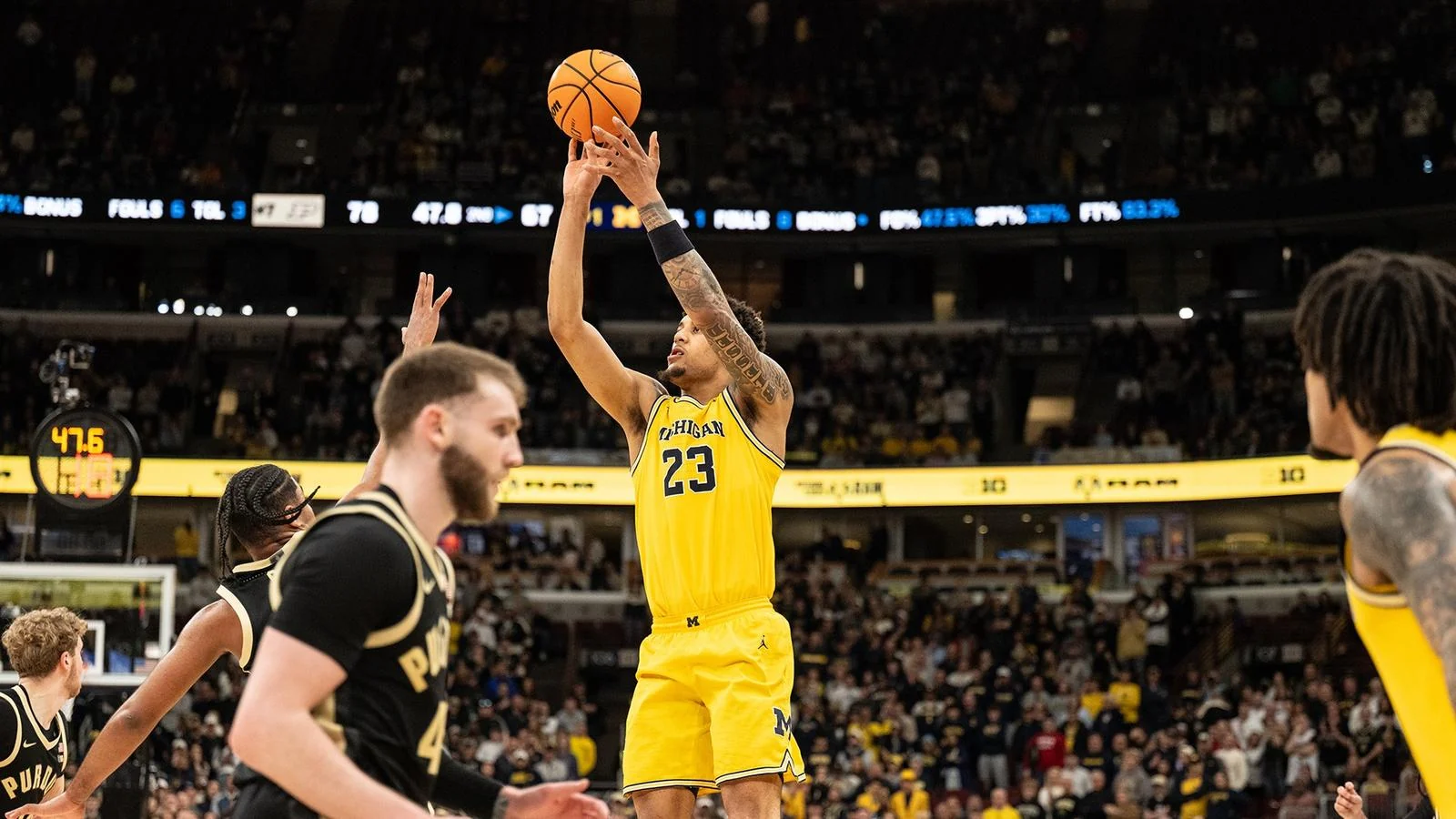
Eligibility rules become tangible when a coach has to name five starters, build a second unit and survive foul trouble across a long conference slate. The Big Ten's 2026–27 men's schedule release puts each of its 18 schools into 20 league games. The women's schedule release gives each school 18 league games. One unresolved frontcourt player might be manageable in an exhibition; the same uncertainty can reshape a month of conference play, particularly around road travel, short rest or a stretch against bigger opponents. The conference's September 28 basketball rule applies on both sides, so women's teams and fans need the same careful distinction between draft exploration, contract history and official roster history.
The men's format also creates three opponents played home and away, with 14 others faced once. On the women's side, one opponent is played twice and 16 once. Those structures do not make an eligibility case more likely. They make the consequence of any unavailable player harder to smooth out: a team cannot simply expect a second meeting to repair a one-off result against most opponents. A coach who had projected a veteran post as the first screener in ball-screen offense may instead ask a more mobile forward to roll or pop, changing shot selection and offensive-rebound positioning. If the missing player is a guard, the team may need a second ball handler, which can alter spacing and turnover pressure. This is basketball analysis of possible effects, not a claim that a named Big Ten player has already been barred.
Indiana illustrates why a fan should compare sources carefully. The official 2026–27 men's roster, checked September 29, did not list Sam Alexis at that moment, even though contemporaneous reporting discussed his court order and the new conference rule. That absence alone does not tell readers whether he will play; a roster page can reflect a timing or administrative decision, and a legal story can change. It simply means a projected depth chart that counts him as certain deserves a date and a caveat. The first Indiana league game listed by the Big Ten is Rutgers at Indiana on December 1, giving supporters a concrete date by which to revisit the official game notes and participation status.
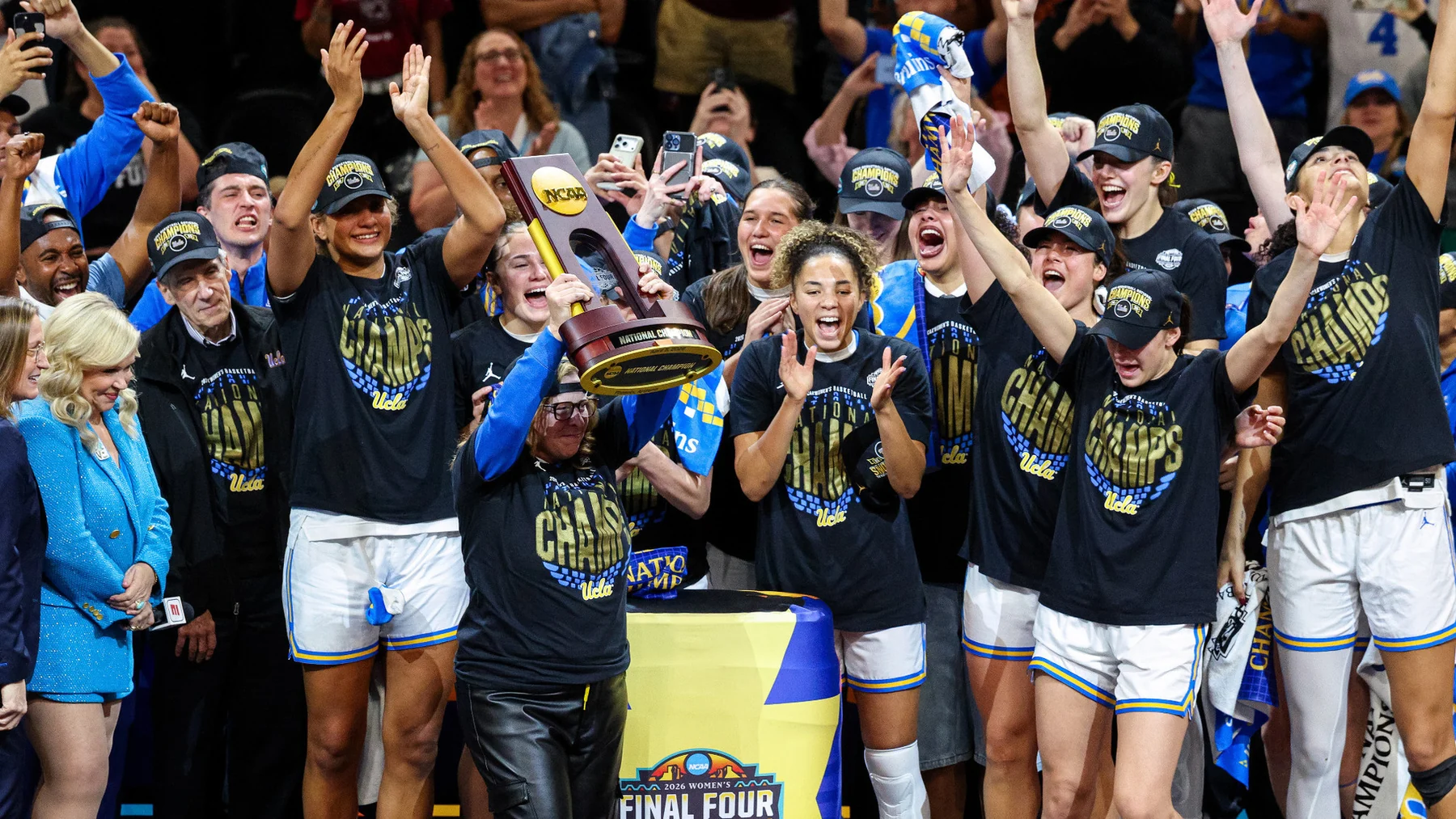
Women's fans can use the same method without inventing a particular affected athlete. The official Big Ten women's slate begins December 5, and its statement names the WNBA alongside the NBA and G League. If a team is assessing an athlete with WNBA draft or roster history, that team must sort the actual record before it can rely on the player for an 18-game league campaign. A missing rotation wing could change perimeter defensive assignments and three-point spacing; a missing center could alter defensive rebounding and foul management. The point is the role and minutes at risk, not a presumption that any current women's player fails the test.
To track when those questions have on-court consequences, use the site’s men's college basketball schedule or women's college basketball schedule, then compare the school's game notes and box score. The published schedules identify opponents and dates; the active lineup and minutes played provide later evidence of actual participation. As of September 29, tipoff times and television designations in the conference releases were still due later, so a fan should not infer a channel from the date alone.
What fans should verify before treating a player as available
The strongest reaction to the Big Ten announcement has been a request for clarity, not a settled list of banned names. In a September 28 college-basketball fan discussion, commenters asked whether Summer League counts, how foreign-league experience fits and whether court cases change a player's status. Those are fair questions; comments are evidence of what fans want answered, not evidence of a player's eligibility. The conference's published statement remains the starting point for what the Big Ten actually announced. Its short length is also a reason to mark unresolved details as unresolved.
A practical checklist for a fast-changing eligibility story
First, identify the school, conference, sport and season. The September rule specifically addresses men's and women's basketball competition at a Big Ten institution. A headline about an SEC, Big 12 or NCAA-wide decision may be relevant context, but it does not replace the Big Ten's own text. Check whether a later Big Ten statement has amended the rule since September 28 before repeating its language in a game preview.
Second, separate the athlete's actual events: Was there an NBA, G League or WNBA team contract? Was the athlete on an official roster of one of those leagues' teams? Was there an NBA or WNBA draft declaration, and what happened before the required withdrawal or intent-to-return deadline? A workout, an agent conversation, a Summer League appearance and an overseas club biography should not be silently converted into one of the listed triggers. They may prompt a question; they are not a substitute for contract, roster or draft documentation. For women, use WNBA-specific records and the applicable women's basketball procedures rather than copying men's NBA assumptions.
Third, look for an individual determination from the school, conference, NCAA or an operative court order, and note its date and scope. The NCAA Eligibility Center's current explanation says schools still certify eligibility and report discrepancies even with the new age-based period. A school roster can be useful but may be updated on a different timetable. Indiana's official 2026–27 roster, for example, did not list Sam Alexis when checked on September 29, while local reporting was still discussing his eligibility. Neither observation alone licenses a final verdict about his first regular-season appearance. A preliminary court order can also change; report what it does as of the check date instead of projecting the end of the lawsuit.
Finally, when games begin, verify the official game notes, active participation and box score. If a player appears, that proves participation in that game; it does not retroactively settle every legal interpretation discussed before tipoff. If a player does not appear, injury, coaching choice or an administrative issue could be responsible, so absence alone does not prove this Big Ten rule applied. For roster projections, use conditional language and identify the basketball consequence: which ball handler, rebounder or defender would take the minutes? That approach gives fans a usable picture without treating a social-media guess as a compliance ruling.
This guide was checked on September 29, 2026. The next meaningful updates would be a fuller Big Ten interpretation, a school-specific announcement, a relevant court development, or verified game participation. Until then, the clear rule is narrower than either extreme online: the Big Ten identified three professional-history pathways for its basketball programs, while individual cases require records and current decisions.
Sign in with Google to join the discussion.