The dates and format that define the BIG EAST season
The 2026–27 BIG EAST women's basketball conference schedule opens with Seton Hall at UConn on November 20 and finishes on February 28. All eleven schools play twenty league games: each opponent once at home and once away. The conference tournament follows March 5–8 at Mohegan Sun Arena in Uncasville, Connecticut. Those are three different planning landmarks: the first league game, the end of the standings race and the beginning of the tournament.
The official conference release establishes that structure. Its September warning that television details would follow has since been overtaken by October assignments. For example, the November opener is scheduled for 8 p.m. Eastern on Peacock. A September calendar remains useful for opponents, but October information is the better starting point for a viewing plan. The analysis here was checked on October 19, before regular-season results could tell us which teams will outperform expectations.
A double round robin gives the standings a useful symmetry. Nobody avoids a particular conference opponent altogether, and nobody gets both meetings on its own floor. It also gives fans a built-in second look: an opponent that disrupts a team's first action in December must later defend the adjustments. Watch whether a team gets into its offense earlier, handles ball pressure more cleanly or creates better second shots in the return game. Those are questions to investigate with actual possessions, rather than explanations to impose on a result in advance.
Equal opponents still leave considerable room for unequal sequencing. A team can play several road games before another has completed its second league fixture. A difficult opponent immediately after a trip is different from the same opponent after an uninterrupted preparation window. That is why a table of opponents alone cannot establish that two teams have had equivalent starts, even when their records match.
Use the women's college basketball schedule for the full daily slate. The purpose of this guide is to identify where that calendar deserves a closer reading: which return games come quickly, which stretches demand changes of venue and which broadcasts require a different service. A one-game November conference appearance also does not mean that the rest of a school's November opponents count toward the league standings. Conference and nonconference games can alternate on the same team calendar.
The conference games worth circling first
UConn and Villanova meet before Christmas
UConn visits Villanova on December 23 at 1 p.m. Eastern, with the return in Storrs on February 10 at 6 p.m.; both are assigned to Peacock. These are useful checkpoints because they reunite the previous conference tournament finalists at very different stages of the season. December offers an early comparison while February tests what has survived several weeks of league scouting. Neither date guarantees that the same two teams will finish first and second.
The first meeting also arrives before the conference calendar has become a uniform weekly routine. A team's November reputation can easily dominate the discussion, but that reputation mixes opponents from several leagues and different settings. In this game, the more revealing questions concern how each side creates dependable shots against a familiar opponent: can it start possessions without losing time to pressure, and does its spacing create a second option when the first pass is denied? Those are viewing priorities, not a forecast of either team's game plan.
For the February return, compare the decisions rather than just the score. Better shot selection can coexist with a lower shooting percentage on one evening. Conversely, a winning team may have allowed repeated offensive rebounds that become a problem in a later meeting. The full UConn schedule guide supplies the single-team context without turning this league-wide preview into another Huskies calendar.
Creighton and Marquette bookend a different race
Creighton travels to Marquette on January 28, and Marquette returns the visit on February 27. The first is a 7 p.m. Eastern Peacock game; the second is scheduled for 12:30 p.m. Eastern on FOX. The month between them gives both coaching staffs more evidence than a rapid rematch would. A changed rotation, a better response to switching or an opponent's repeated rebounding weakness can become visible across several games.
These dates also create a useful league perspective beyond the headline program. Teams trying to improve their position must win direct meetings while managing the rest of the schedule. A late-February result can affect where they sit relative to one another, but its exact seeding importance will depend on records and any applicable tiebreaker at that time. Mark the date now; determine the precise stakes from the standings later.
A sensible viewing list therefore includes both meetings. The first establishes the questions, while the second tests whether the answers changed. Watching only the final weekend can miss why a coach shortened a rotation, moved a defender onto a different scorer or chose to protect the paint at the cost of a particular outside look.
Why Creighton's opening stretch needs a longer view
Four road games before the schedule settles
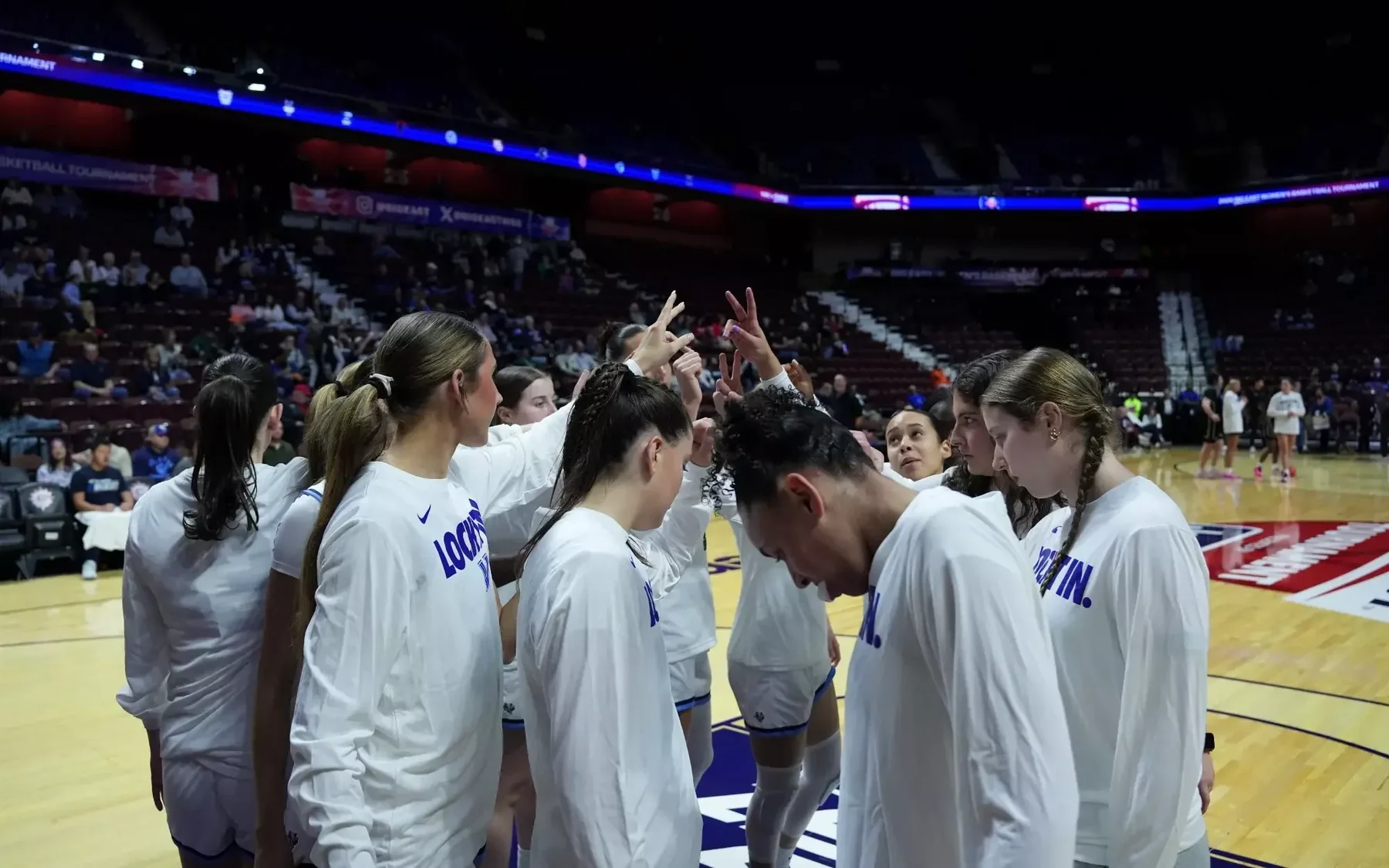
Creighton's first five conference games include visits to UConn, DePaul, Seton Hall and Georgetown, with only Butler at home. The school's schedule announcement explicitly identifies that imbalance. It is an excellent reason to look beneath an early league record. A team that has already absorbed four road settings has answered a different set of questions from one whose early fixtures were concentrated at home.
The dates make the issue concrete. Creighton opens at UConn on December 16, travels to DePaul on December 20 and hosts Butler on December 22. After the holiday break come Seton Hall on December 30 and Georgetown on January 2. The DePaul-to-Butler interval is two calendar days, with December 21 the only intervening date. That is not a claim about how many practices the staff can hold: travel, recovery and campus obligations occupy time too.
For a viewer, that first cluster is a chance to examine whether decision-making carries between settings. A ballhandler who faces pressure on the road must still organize the next game efficiently. A frontcourt that gives up extra possessions cannot solve the problem merely by playing at home two days later. Compare defensive rebounding and live-ball mistakes across the stretch, and ask whether the problem repeats against different opponents. One poor shooting night does not establish a structural weakness, whereas the same failed coverage appearing repeatedly deserves attention.
The following home sequence changes the setting. Villanova visits January 7, UConn January 10 and St. John's January 14. Three consecutive league home games provide a more stable geographic backdrop, but they are not an automatic recovery run. The opponents still determine the basketball task, and a home date does not guarantee a lighter competitive load. The calendar tells us where the Bluejays play; the games will tell us how well they use that setting.
This distinction matters when comparing standings in January. Home-road distribution is useful context for a record, rather than a replacement for the record. A team still needs wins, and schedule explanations cannot erase a result. They can help fans avoid declaring a season finished before the second half of a balanced schedule has arrived. The most informative comparison is whether Creighton improves the same possession-level problems when those opponents appear again, with the venues reversed and much more league film available to both staffs.
Where the quick turnarounds become basketball tests
Marquette's January road sequence
Marquette's January itinerary offers another way to read the league. The Golden Eagles play at DePaul on January 10 and at UConn on January 13, host Georgetown on January 17, then visit Butler on January 20 and Seton Hall on January 23. Creighton comes to Milwaukee January 28 before another away game at St. John's on January 31. Several changes of setting are built into the month, even though a schedule cannot tell us the team's actual travel itinerary.
The Butler-to-Seton Hall segment has January 21 and 22 between games. From a basketball perspective, that can put a premium on carrying defensive communication from one opponent to the next. A staff can simplify an adjustment, but players still have to identify a screen, finish the possession with a rebound and organize the next trip. The appropriate question is whether execution remains dependable through the sequence, not whether the calendar alone makes a loss inevitable.
Watch rotation usage alongside that execution. A starter's minutes after early foul trouble tell a different story from the same minutes in a close game without foul trouble. A short bench may be a tactical choice, an availability issue or a response to the matchup. The schedule makes those patterns worth checking; it cannot establish their cause. Without actual game evidence, declaring a particular road sequence the league's hardest would add confidence that the dates do not justify.
The February run into the final weekend
The final stretch creates a different compression. Marquette visits Villanova February 18, hosts Providence February 21 and DePaul February 24, then travels to Creighton February 27. Those are successive three-day date gaps, leaving two intervening dates each time. For fans, that is a helpful reminder that “three days between tips” is not the same as three full days available for practice and recovery.
UConn's early-February sequence also moves between settings: Butler away February 4, Marquette away February 7 and Villanova at home February 10. The Marquette game is at Fiserv Forum, rather than the Al McGuire Center used for most Golden Eagles home games. That venue detail matters to an attending fan even before anyone knows the standings.
By this stage, the useful evidence is cumulative. Repeated failures to finish defensive possessions deserve more attention than a single cold quarter. Improved ball security across several opponents is more persuasive than one low-turnover box score against passive pressure. Read the final-week calendar with those recurring issues in mind, while checking the host school's live schedule for the building and tip time before planning a trip.
How the television schedule changes your viewing plan
The broadcast schedule is a collection of game assignments, rather than a promise that one subscription covers the league. The October BIG EAST television release identifies FOX outlets, Peacock, TNT Sports and ESPN+. Read the actual women's game row before deciding what to buy or open. A service that carries a school's nonconference home game need not carry its next road game.
The league identifies FOX One as a streaming route for FOX, FS1 and FS2 games, and HBO Max as a streaming route for its TNT Sports games. Peacock has its own selected games. ESPN+ carries a substantial share of the women's slate, including conference fixtures, but that does not make an ESPN+ login a substitute for every other assignment. Access should be checked for the particular service, plan and location being used; this guide does not assume a free trial or quote a subscription price that may change.
For an example of a useful evening block, December 10 has Georgetown at St. John's at 7 p.m. Eastern followed by Villanova at Marquette at 9 p.m., both on truTV. That lets a fan compare two different conference matchups without changing the listed network. January 28 works differently: Creighton at Marquette is assigned to Peacock at 7 p.m. Eastern, while St. John's at Villanova starts at 8:30 p.m. on FS1. The games can overlap, so seeing both live is a different decision from simply having access to both.
Time zones deserve equal attention. The conference release labels its times Eastern. A school in the Central time zone can display the same tip one hour earlier on its own page. Before treating two listings as a disagreement, check that both use the same time zone and refer to the same season. For a trip, the local arena time is the practical reference; for a remote viewing calendar, save the event in your own zone.
Check the college basketball TV schedule near game day, then verify the school or broadcaster listing if anything remains unclear. In particular, do not recycle a previous March's conference tournament service into the 2027 plan. Rights and individual assignments have to be read for this season. Keep the game, network and date together in your notes so a remembered channel does not drift onto the wrong fixture.
What the regular season tells us before Mohegan Sun
The regular season finishes February 28, leaving the conference tournament to begin March 5 at Mohegan Sun. The published March 5–8 dates let fans identify the event window, but they do not yet identify a particular team's opening opponent or tip time. Those depend on the eventual bracket. A ticket or hotel plan should preserve that distinction instead of treating a favored team's expected seed as an announced assignment.
The double round robin gives the tournament a substantial scouting history. By March, conference opponents will have seen one another in both home and away settings. That can make small changes more interesting: a different entry pass, an earlier substitution against a pressing group or a deliberate decision about which player to help off. Familiarity creates opportunities for adjustment, but it does not make the next meeting a replay of the previous score. Shooting, foul distribution and the ability to finish possessions still have to be resolved on the floor.
Seeds and NCAA resumes answer different questions
A conference seed describes a team's position within the league's own tournament. NCAA selection evaluates a wider season. The NCAA's women's selection explanation and its discussion of selection myths make clear that a single ranking or a winning conference record does not itself guarantee an at-large invitation. Opponent quality, results, location and the broader body of work matter. No October schedule preview can award a bid in advance.
That is why a useful late-season viewing plan includes more than the league leader. A direct meeting between teams nearby in the standings can matter for conference positioning, while each team's nonconference results continue to belong to its national resume. For a fuller explanation of that second question, use the women's NET and selection guide. Keep any ranking date attached to the number rather than assuming an opponent retains the same evaluation all winter.
Before the tournament, return to three things this schedule can actually establish: whom a team has played, where those games took place and how its preparation windows were arranged. Add the season's real results and possession evidence when they exist. That produces a more useful judgment than declaring a favorite from name recognition or explaining every road defeat as travel. The calendar supplies a framework for watching the league; the coming games supply the evidence needed to judge it.

Sign in with Google to join the discussion.