
The men's ACC format leaves one opponent off each schedule
The 2026–27 ACC men's basketball conference calendar begins December 29 and ends March 6. Each school plays eighteen league games. The detail that most changes how to read those eighteen games is this: every team repeats two opponents and leaves one conference opponent off its regular-season league slate. A complete list of ACC members is therefore not the same thing as a particular team's list of scheduled opponents.
Two repeat partners create the eighteen-game count
The official matchup model gives every team a primary partner and a variable partner for home-and-away series. Those four games are joined by single games against fourteen of the remaining fifteen teams. Four plus fourteen produces eighteen games against sixteen distinct opponents. The variable partner is chosen for the particular season, so a remembered pairing from last winter should not automatically be carried forward.
Cal makes the arrangement easy to see. The Bears play Stanford and NC State twice and do not face Georgia Tech in their ACC regular-season schedule. Duke's repeated opponents are North Carolina and Virginia. Those details change the competitive exposures behind a conference record: a team can have the same number of home and road games as another while facing a different combination of opponents and repeat meetings.
That is a reason to examine the draw, rather than a reason to award an October strength-of-schedule verdict. The strength of each opponent will depend on the coming season's actual performance. A prestigious name can have a different roster and a different set of problems, while a less prominent opponent can become a difficult road assignment. The model tells us what was booked; it cannot tell us how efficiently those teams will play.
Use the men's college basketball schedule to follow every fixture. This breakdown focuses on examples that reveal the calendar's structure: Cal's paired trips, Duke's compressed transition into February and the difference between a conference-only list and a team's complete workload. It was checked October 19 and treats future games as appointments to evaluate, with results and standings still to be established. An omitted regular-season opponent could also appear in a later tournament bracket, which is a separate scheduling question.
Duke and North Carolina have two distinct late-season dates
North Carolina visits Duke February 13 at 5:30 p.m. Eastern on ABC. The return is March 6 at the Smith Center in Chapel Hill, with ESPN assigned and the tip listed in a 6 or 6:30 p.m. Eastern window. The first date offers a firmly identified early-evening broadcast; the second still requires a final time check. Both are conference games on the host school's floor, rather than neutral showcases.
The three-week gap gives fans a meaningful return comparison. The first meeting can establish a question about how a defense handles an initial action or which lineup can finish possessions. The return allows a second look after both teams have faced other opponents and had time to adjust. A close score alone will not reveal whether those adjustments worked. The possession details may show better shot creation even when the shots do not fall, or a winning team may still leave a repeated rebounding problem unresolved.
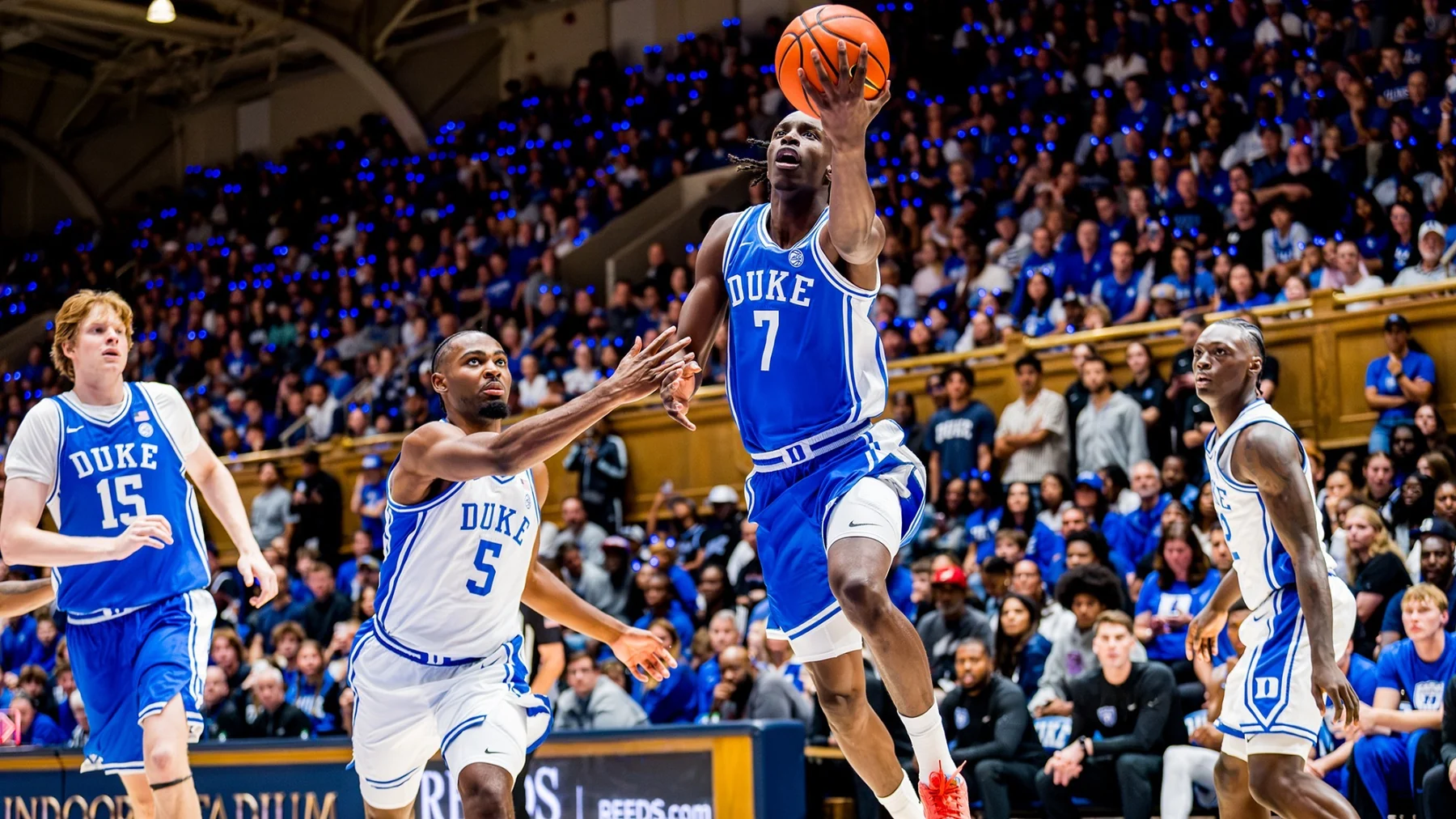
The February 13 game also sits within a specific Duke sequence. Before hosting North Carolina, the Blue Devils visit Virginia February 6 and SMU February 9. Those are two different road settings before the rivalry returns to Cameron Indoor Stadium. A television appointment with a clear tip time can look isolated on a fan's calendar, while the team reaches it through several other assignments. Track the workload and availability that actually develop through those games rather than treating the rivalry as a fresh start.
Virginia is Duke's variable repeat partner this season. Its visit to Cameron comes March 1, after the February 6 meeting in Charlottesville. That gives Duke two separate home-and-away comparisons late in the year: one against Virginia and one against North Carolina. Each creates a chance to investigate adjustments, but neither guarantees the same tactical problem or the same competitive stakes.
The March 6 rivalry belongs to the final regular-season weekend. Its place on the calendar makes it worth saving now, while the precise standings consequences have to wait for the preceding results. A fan buying a ticket should use the host's current listing for the building, admission and local tip; a viewer should retain the unresolved time window until it is finalized. The Duke schedule and North Carolina schedule are useful cross-checks when that date gets closer.
Cal's opening trips show why opponent lists are not enough
North Carolina and Duke come before the first league home game
Cal begins at North Carolina December 30 and Duke January 2 before hosting Florida State January 6 and Virginia January 9. The Bears' official announcement then sends them to Louisville January 13 and Notre Dame January 16. Four of the first six conference games are away. The opening North Carolina pair also leaves only December 31 and January 1 between games.
That is a useful sequence for evaluating how a team starts possessions in different environments. A visitor cannot rely on a difficult shot to settle an early run every time. Watch whether the guards initiate the offense with enough time to reach a second action and whether the team turns an opponent's miss into an actual possession. A low first-half score can reflect few possessions, poor shooting or poor shot quality; those explanations require different responses.
Cal's early schedule makes that distinction worth following across games. If a road offense repeatedly gets pushed late into the clock, its next home game offers a different setting in which to check the same issue. If the chances are sound and only the conversion changes, the interpretation should change too. A record without those details can make one early result carry more explanatory weight than it deserves.
The three-game homestand creates a different comparison
The Bears next host Stanford January 23, NC State January 27 and Syracuse January 30. Those consecutive Haas Pavilion dates contrast with the away-heavy beginning. They also contain the first meetings with both repeat partners: Stanford is the primary partner and NC State the variable partner. Cal later visits NC State February 20 and Stanford March 6, allowing the venue to reverse for the return comparisons.
The homestand is not simply a softer line on the calendar. Different opponents may demand different matchups, and a stable building cannot solve a poor response to pressure by itself. It does, however, remove a change of game site between those three appointments. That gives a fan a clearer setting in which to watch whether a rotation adjustment or a cleaner offensive entry carries from one game to the next.
The strongest reading of Cal's January is therefore sequential. Start with the two North Carolina visits, add the first home pair and the Louisville–Notre Dame trip, then evaluate what changes during the three-game home run. That approach uses the published schedule to ask better basketball questions without assuming how the Bears' conference record will look before any of those games has been played.

Duke's calendar tests preparation in more than one way
Clemson to Miami is a genuine short turnaround
Duke plays at Clemson January 30, with a 4 or 4:30 p.m. Eastern tip window, then hosts Miami February 1 at 7 p.m. on ESPN. January 31 is the only intervening calendar date. This is a concrete example of a quick transition from one opponent and building to another. It should be described with the actual dates rather than an invented number of full recovery hours.
For a fan watching both games, the useful connection is the response to the first game's problems. If an opponent repeatedly wins the first defensive rotation, does the next game show cleaner recognition? If an offense stalls late in the clock, does it reach its preferred action sooner? The Monday appointment can test the speed of an adjustment, but its result alone will not prove whether limited preparation caused anything.
The site's Big Monday guide provides the complete five-week television list. Within the full ACC calendar, the important extra detail is the preceding Saturday. A national broadcast window is part of a team's competitive sequence, with whatever minutes, fouls and availability the previous game actually produces.
A February nonconference game still belongs in the workload
Duke also has a February 20 neutral-site game against Gonzaga at Little Caesars Arena in Detroit, scheduled for 8 p.m. Eastern on Prime Video. The official Duke schedule and Gonzaga's announcement identify it as a nonconference matchup. It does not become an ACC standings game because it is played in the middle of the league season.
Its position still matters to workload. Duke hosts Florida State February 16, plays Gonzaga February 20, visits Louisville February 24 and hosts NC State February 27 before Virginia arrives March 1. A conference-only calendar can make February 20 look like open space when the team actually has a competitive appointment in another city. That changes how a viewer should interpret the preparation sequence even though only the ACC games affect the league record.
The neutral venue also changes the fan decision. Detroit is not a Duke home date and not a Gonzaga campus visit. Tickets, arrival and the broadcast belong to that particular event. Keep those details beside the fixture rather than carrying over the access route or arena information from the preceding ACC game. The complete team calendar remains necessary even when the main interest is the conference race.
The current television list is more useful than a September TBA
September's conference release is useful for opponents and dates, but its promise of later television information has now been followed by October assignments. Use the newer game row when planning to watch. The broad phrase “ACC on ESPN” cannot substitute for the actual network, and the full college basketball calendar includes events outside the conference's usual arrangements.
Separate the channel from the streaming entitlement
Three early Duke conference games show the difference. Cal visits January 2 at 2:15 p.m. Eastern on the CW. Pitt visits January 9 at 2 p.m. on CBS. Stanford visits January 13 at 9 p.m. on ACC Network. All three are league home games, but the current school schedule gives them three different television assignments. A viewer should preserve those labels in a reminder instead of copying the first game's channel onto the next fixture.
The October ESPN announcement specifically says the thirty ACC men's games distributed by the CW also stream in the ESPN App with ESPN Unlimited. That tells a viewer which subscription route is named for those games. It does not establish that any account with the app installed, or every plan bearing the ESPN name, can play the event.
For each fixture, check the channel or service first, then the account's actual access. A television package has to include the assigned network, while a direct streaming plan has to include the relevant event rights. The February Gonzaga game demonstrates a further reason to use the complete team schedule: its Prime Video assignment is attached to a nonconference neutral event, not to all Duke games or all ACC games.
Keep time and network branches intact until they are resolved. Clemson–Duke on January 30 remains listed in a 4 or 4:30 p.m. Eastern window with ESPN or ESPN2. Neither a final channel nor a precise recovery interval should be invented from that row. Use the college basketball TV schedule near game day and check the participating schools if listings disagree. The goal is a reminder that identifies the correct event, local time and working access route.
The last regular-season Saturday leads into Greensboro
The ACC regular season finishes March 6, and the men's tournament runs March 9–13 at First Horizon Coliseum in Greensboro. Those are separate events on the calendar. A final-week rivalry is still a regular-season conference game; the tournament bracket is determined from the completed standings and the league's procedures. March 7 and 8 are the only intervening dates before the event begins.
Not every team begins playing on that first date. The ACC's championship directory identifies a fifteen-team bracket, with seeds one through four receiving double byes and seeds five through nine receiving first-round byes. The school announcements also confirm that the top fifteen in the final league standings qualify. In an eighteen-team conference, that makes the qualification line and the bye boundaries meaningful parts of the late-season race.
A change from fourth to fifth, for example, means a different number of rounds in the confirmed format. That matters to how a fan plans an opening session and to the potential sequence of opponents. It does not mean a particular team is entitled to that position in October. The results, any ties and the official application of tiebreakers still have to determine the bracket.
The regular-season format also changes the meaning of a possible tournament meeting. Because each team omits one ACC opponent and sees fourteen others only once, a Greensboro matchup may not be a third meeting. It could be a second encounter with the location changed from one campus to a neutral arena, or even a first encounter that season. Preparation has to reflect that actual history rather than the assumption that all conference opponents have already traded home games.
For fans following the final weeks, combine three pieces of evidence: the current standings, each team's complete calendar and the possession-level strengths or problems that have repeated against different opponents. A win in a national window counts, but so does a less prominent midweek result. The calendar is most valuable when it keeps those games connected. Save the March 6 finish and Greensboro dates now, then attach confirmed seeds, sessions and opponents when the conference publishes the finished tournament information.
Sign in with Google to join the discussion.