What the January 2026 federal case actually alleges
The starting point is an accusation, not a verdict. On January 15, 2026, the U.S. Attorney's Office for the Eastern District of Pennsylvania announced charges against 26 people in what prosecutors describe as an alleged bribery and point-shaving operation touching Chinese professional basketball and NCAA Division I men's basketball. The government's account says the college portion ran during the 2023-24 and 2024-25 seasons. It does not allege a new set of manipulated games in the current 2026-27 schedule.
People charged
26
Players alleged
39+
DI men's teams
17+
Games alleged
29+
Those are the prosecution's scope figures. The indictment alleges that people described as fixers recruited players to make sure their teams failed to cover either a first-half spread or a full-game spread. Prosecutors say offers usually ranged from $10,000 to $30,000 per game, while bettors allegedly placed much larger wagers against the compromised team. Some alleged attempts did not deliver the betting result the organizers wanted. That matters: the theory is an agreement and attempted manipulation, not a claim that every suspicious-looking score unfolded according to plan.
The case is limited here to men's basketball. Nothing in the January announcement supports extending these allegations to NCAA women's teams. It also would be wrong to read a school's appearance in a game list as an accusation that the institution, its coaching staff or every player participated. ESPN reported a public list of 17 schools connected to current or former players named in the indictment, while the DOJ used the broader phrase “more than 17” teams when describing the alleged activity. Those formulations should not be collapsed into a claim that 17 entire programs were charged.
The NCAA said the alleged conduct was not entirely new to its integrity staff and that it had completed or opened investigations involving almost all teams in the indictment. That statement describes a separate athletics-enforcement process; it neither converts an NCAA inquiry into a federal conviction nor establishes the guilt of every charged person. Readers checking the current men's college basketball schedule should therefore treat it as schedule information, not as a map of this historical case.
How point shaving can change a bet without changing the winner
Point shaving is easiest to understand when the scoreboard result and the betting result are separated. A team can play hard enough to win yet still produce a margin that loses against the spread. Conversely, an underdog can lose the game and still cover. The January 2026 case alleges that organizers sought the latter kind of hidden result: prosecutors say players were recruited to help their own team fail to cover a first-half or full-game line while bettors backed the other side.
Full-game spreads and first-half lines create different targets
Consider a hypothetical favorite laying 6.5 points. A 75-71 victory counts in the standings, but the four-point margin does not cover. Now flip the example: an underdog receiving 8.5 points loses 76-70, yet covers because the six-point defeat stays inside the line. If that underdog loses 80-70, it fails to cover. None of those examples says anything about intent; they simply show why “the team won” or “the team lost” does not resolve a point-shaving allegation.
| Hypothetical market | Score | Game result | Spread result |
|---|---|---|---|
| Favorite -6.5 | 75-71 | Wins | Does not cover |
| Underdog +8.5 | 70-76 | Loses | Covers |
| Underdog +8.5 | 70-80 | Loses | Does not cover |
A first-half spread compresses the target. It settles at halftime, so a second-half comeback cannot change that wager. The NCAA's January 2026 letter to regulators treated certain first-half and individual markets as especially concerning because they isolate a smaller portion of a game. That is a policy judgment about risk, not proof that every unusual first half is manipulated.
Why one player's choices can matter without controlling every possession
Basketball gives an individual repeated opportunities to affect efficiency. A primary guard can influence pace, shot quality and live-ball turnovers. A center can affect defensive rebounding, rim protection and foul pressure. Poor transition decisions or missed block-outs can move a margin quickly. In a first half with roughly half a game's possessions, there is less time for ordinary performance to wash out one damaging stretch.
Influence is not control, however. A coach determines substitutions and can change who handles the ball. Teammates may make shots, win offensive rebounds or defend above expectation. The opponent can miss open looks or commit its own turnovers. ESPN's reconstruction of games named by prosecutors includes the same practical limit stressed at the federal announcement: one player can materially influence basketball, but cannot guarantee the desired score.
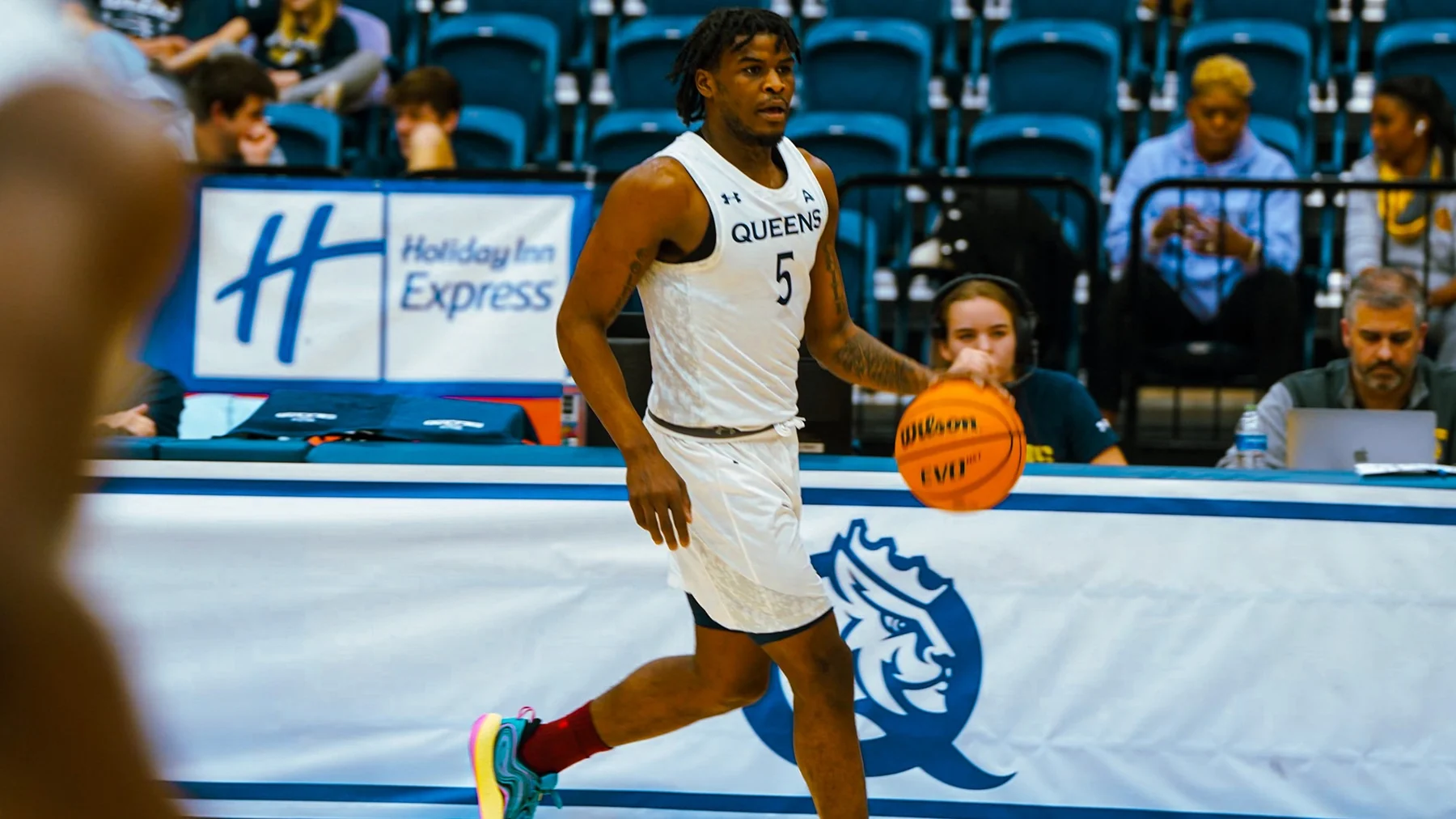
That uncertainty is why a box score should be treated as a record of what happened, not a window into motive. A scorer going cold, a guard committing turnovers or a favorite failing to cover occurs routinely without corruption. Evidence of an agreement—communications, payments, wagering records or corroborating testimony—is categorically different from a fan noticing a bad possession. The spread explains what an alleged scheme may have tried to change; it does not identify who acted intentionally.
Teams and games named in the allegations
Team names require the same care as defendant names. ESPN's review of the indictment lists 17 schools associated with current or former players whom prosecutors allege participated: Abilene Christian, Alabama State, Buffalo, Coppin State, DePaul, Eastern Michigan, Fordham, Kennesaw State, La Salle, New Orleans, Nicholls State, North Carolina A&T, Northwestern State, Robert Morris, Saint Louis, Southern Miss and Tulane.
What that list does not mean
The schools themselves are not the 26 people charged. A program's appearance does not accuse its coaches, administrators, current roster or every player from the cited seasons. Opponents appear because they played in a game described by prosecutors; that does not make an opposing school or athlete a participant in the alleged scheme.
The DOJ's summary says the alleged activity involved more than 17 Division I men's teams, so the public 17-school list should not be presented as a perfect synonym for the government's broader number. Nor should every game involving those programs be viewed suspiciously. The allegations identify particular communications, wagers and payments around particular dates. Outside that evidence, a team name is context—not a verdict.
DePaul illustrates an alleged first-half scheme
Prosecutors allege that multiple DePaul players agreed to underperform in three 2024 games, including the February 24 home game against Georgetown. ESPN reported that bettors connected to the alleged organizers placed at least $27,000 on Georgetown to cover the first-half spread. DePaul's official box score supplies the basketball facts: Georgetown led 41-28 at halftime, while DePaul won the second half 48-36 and lost the game 77-76.
That split is exactly why the first-half/full-game distinction matters. A one-point final says nothing about how a halftime bet settled. It also does not prove that any missed shot, turnover or defensive mistake was deliberate. The official box records DePaul's eight total turnovers, 12 steals and 48 second-half points; it cannot record a player's state of mind. The criminal allegation rests on evidence prosecutors say connects people, communications, money and betting activity—not on the 13-point halftime margin by itself.
Kennesaw State and Fordham show why outcomes alone prove nothing
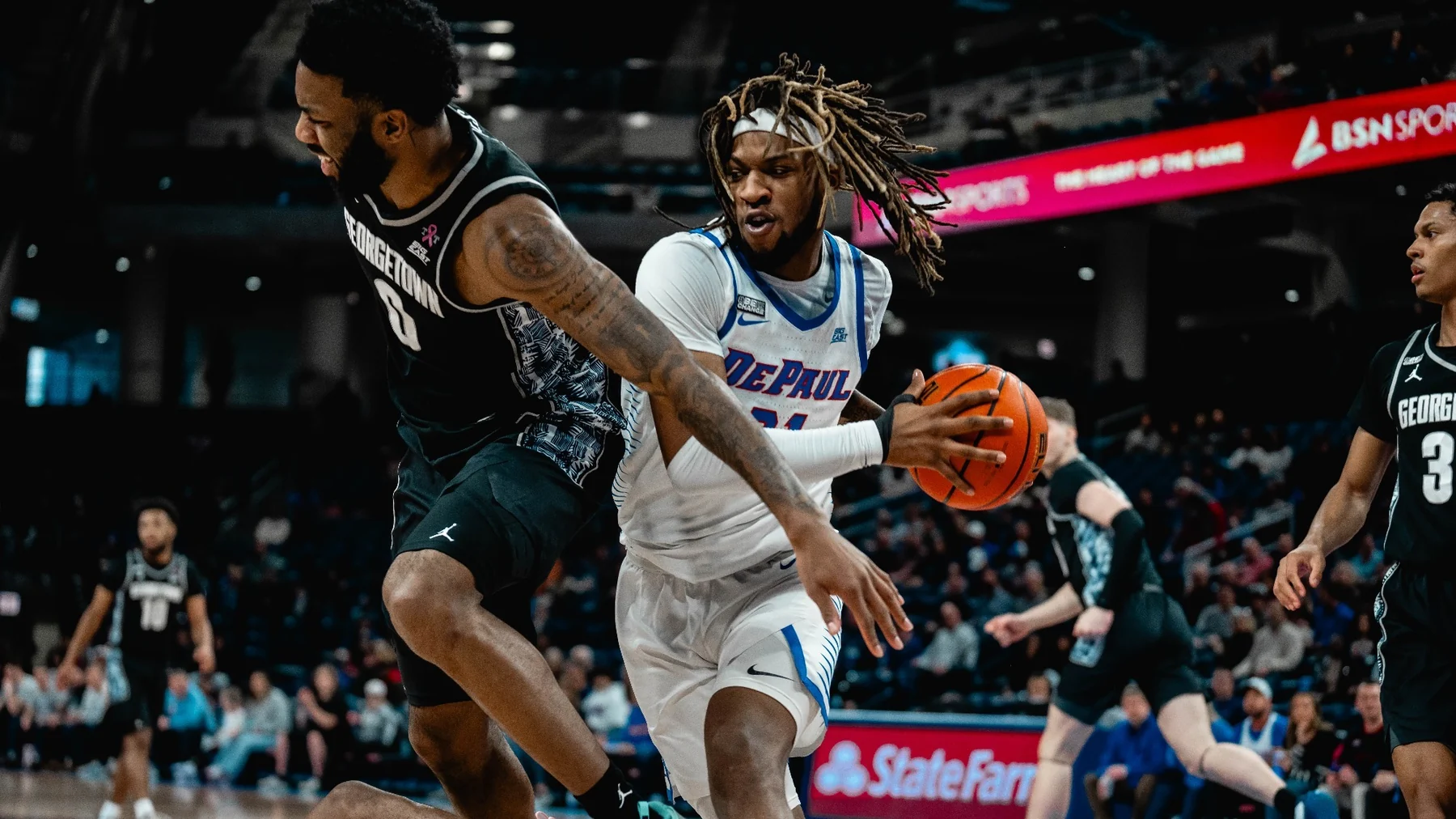
The March 1, 2024 Kennesaw State game at Queens offers another halftime-to-final contrast. The official box score shows Queens ahead 52-39 at the break and winning 91-82. Kennesaw State made 12 three-pointers and received 37 bench points, while Queens shot 54.1% in the first half. Prosecutors separately allege that two Kennesaw State players and another person received money connected to an attempted scheme. Those claims must be attributed to the government; the ordinary basketball statistics neither prove nor disprove them.
Fordham demonstrates a different limit. ESPN reports that alleged organizers wagered against Fordham covering versus Duquesne on February 23, 2024 and that an accused player later indicated he had tried, but the planned result allegedly failed. Fordham's own recap confirms a 79-67 Rams victory behind a game-high 23 points from senior guard Kyle Rose. Teammates, an opponent, shooting and coaching still shape the margin even when prosecutors allege someone sought to influence it.
For fans, the disciplined reading method is straightforward: use official records for date, score and performance; use the indictment or attributed reporting for what prosecutors allege; use later court records for what is admitted or proved. Never reverse that order by starting with an ugly half and inventing a conspiracy around it.
How prosecutors say players were recruited and paid
The government's theory is a network, not a spontaneous decision by one player after seeing a betting app. Prosecutors allege the operation began around September 2022 with Chinese Basketball Association games. After alleged profits there, people described in the filings as fixers turned toward NCAA men's basketball and added recruiters with relationships in the sport. The DOJ's chart separates those alleged organizers from players associated with particular teams and dates; it does not make everyone in a person's basketball network a participant.
According to the charging documents, approaches occurred face to face and through social media, text messages and phone calls. The alleged offers usually ranged from $10,000 to $30,000 for a game. Prosecutors say the requested conduct was underperformance designed to make a team fail to cover a first-half or full-game spread, generally with the organizers betting against that team. When wagers allegedly succeeded, the government says cash was delivered to players, including payments made during trips to college campuses.
The alleged structure could expand because one recruited player might approach a teammate. From a basketball standpoint, that would reduce—but never eliminate—the organizer's uncertainty. Multiple rotation players can touch more possessions through creation, shooting, rebounding and defensive assignments. Coaches still control lineups, uninvolved teammates still compete, and opponents still determine much of the score. The indictment alleges an attempted method; it does not prove that every named margin was controllable or successfully manipulated.
The indictment's NIL claim needs careful context
Prosecutors allege that recruiters focused on players for whom the offered bribe would meaningfully supplement or exceed legitimate name, image and likeness opportunities. That sentence describes the government's alleged targeting logic. It should not be rewritten as “NIL caused point shaving,” nor does it establish that lower NIL earnings predict criminal behavior.
Legitimate NIL compensation
The NCAA's current guidance describes payment for a genuine commercial use of an athlete's name, image or likeness—such as an endorsement, appearance or social post—with a valid business purpose and defined work.
An alleged bribe
Money allegedly offered in return for intentionally affecting athletic performance is not an NIL agreement. Calling it NIL would blur the difference between lawful athlete marketing and the conduct charged here.
Compensation policy can still be part of a prevention discussion. Schools can improve education, reporting channels and access to trustworthy financial advice; regulators can examine markets that isolate individual or first-half performance. But the moral and legal responsibility alleged by prosecutors belongs to the people accused of offering or accepting corrupt payments, subject to proof in court. It should not be shifted onto athletes who earn lawful NIL income, onto players with few commercial deals, or onto the mid-major level as a whole.
Charges are not convictions—and schools are not defendants
An indictment is the government's formal accusation. It requires a defendant to answer charges, but it is not a finding that the charged conduct occurred. The DOJ's own January announcement says every allegation in the charging documents is merely an accusation and every defendant is presumed innocent unless and until proved guilty. The federal judiciary likewise explains that prosecutors carry the burden at a criminal trial; a defendant does not have to prove innocence.
Charged
A person has been formally accused of one or more offenses. Use the present-tense procedural term, identify prosecutors as the source of the factual theory and preserve the presumption of innocence.
Pleaded guilty or convicted
A guilty plea is an admission by that person to the conduct and counts covered by the plea. A conviction follows a plea or a finding at trial. Neither status can be transferred to another defendant by association.
Suspended or ruled ineligible
A school or NCAA action can remove a player from competition under athletics policies and evidentiary procedures. It may change a rotation immediately, but it is not a federal criminal judgment.
The same discipline applies to institutions. The DOJ's defendant chart names 26 people and associates some of them with particular teams and games; it does not list universities as the criminal defendants. A school's name may locate an alleged act, identify a player's affiliation or describe a game in which wagering occurred. None of those functions proves that coaches, administrators or the institution joined the alleged agreement.
NCAA enforcement is capable of drawing that boundary expressly. In separately described 2025 men's basketball betting cases, the Association said schools and their staffs were not alleged to have participated and that school penalties were not being sought for the athletes' conduct. That statement should not be pasted automatically onto every fact in the 2026 federal case, but it demonstrates why “a player connected to School X” and “School X committed a violation” are different claims requiring different evidence.
Team consequences still matter to fans. A suspension can remove scoring, ballhandling or rim protection and change a coach's available rotation. Yet the competitive effect supplies no shortcut around legal accuracy. Report the roster status as roster status, the NCAA decision as an NCAA decision and the criminal case as a criminal case. If later court records change an individual's status, update that individual—do not retroactively label an entire team guilty.
How betting-integrity monitoring responds
An integrity system is best understood as a funnel. The wide end collects signals across thousands of contests. A smaller set receives human follow-up. Only cases supported by additional evidence should reach an enforcement decision or referral. The NCAA said in January 2026 that its layered monitoring program covers more than 22,000 contests, but that scale does not mean an algorithm can look at a final margin and pronounce a game fixed.
Unusual wagering is a lead, not a verdict
An alert can tell investigators that wagering around a game departed from an expected pattern. It cannot explain why. New lineup information, a late injury, thin betting volume or ordinary public reaction may move a market. On the court, an underdog can fall behind because it misses open threes, loses the defensive glass or turns the ball over against pressure. Each is a basketball explanation that must be tested, not ignored.
The NCAA's account of earlier men's basketball cases describes the next step: enforcement staff followed reports of unusual wagering and, in some cases, substantiated violations with text messages, social-media direct messages and other material evidence. That sequence is the important safeguard. Market activity generates a question; communications, account records, interviews and corroboration can help answer it. A fan's video clip or a single player's poor stat line occupies neither role.
1. Signal
Unusual betting activity or another integrity report prompts review.
2. Corroboration
Investigators seek messages, records, interviews or other material evidence.
3. Decision
The appropriate athletics or legal body applies its own rules and burden.
The NCAA's enforcement track is separate from federal court
The NCAA reported that its staff had opened integrity investigations involving approximately 40 athletes from 20 schools over the prior year. It also referenced 11 athletes found to have engaged in specified betting or manipulation conduct and 13 athletes found to have failed to cooperate, with some overlap between groups. Those figures cannot be added into a new total, and they are not a one-to-one substitute for the 26 people charged federally.
A later Kennesaw State decision makes the distinction concrete. The NCAA concluded that a former player failed to cooperate with its interview request after the federal indictment. That is an NCAA procedural finding with eligibility implications; it does not resolve whether prosecutors can prove the federal charges beyond a reasonable doubt. Cooperation, athletics eligibility and criminal guilt are separate questions.
Prevention also runs through market design. The NCAA has asked state commissions to eliminate individual college props and certain first-half markets, arguing that a smaller performance target is easier to isolate and can expose athletes to solicitation and harassment. States and operators, not the NCAA alone, decide which lawful wagers are available. Fans can use the college basketball TV guide for confirmed broadcasts while remembering that odds movement is not schedule information and an alert is not a public finding of misconduct.
What this scandal should change for college basketball fans
The allegations deserve serious attention because college basketball depends on a basic promise: both teams are trying to produce the best result they can. Protecting that promise does not require fans to become amateur prosecutors. It requires sharper distinctions—between a line and a score, an alert and evidence, a charge and a conviction, one person's alleged conduct and an entire program.
A responsible way to follow the case
- Start with the date and legal status. Ask whether a statement describes an allegation, charge, plea, conviction, dismissal or NCAA ruling. Do not use those terms interchangeably.
- Keep the unit of responsibility small. Apply a court or NCAA record to the person and conduct it covers, not to every teammate, coach, opponent or later roster at the same school.
- Use box scores for basketball facts. A halftime margin, turnover total or shooting slump can describe performance. It cannot establish motive without independent evidence.
- Wait for corroboration. Integrity monitoring can flag unusual wagering, but the NCAA's own descriptions show why messages, records, interviews and other material evidence matter.
- Do not turn a losing bet into athlete abuse. A wager gives no one a license to threaten, contact or publicly accuse a player.
The last point is not abstract. In the NCAA's February 2026 SNAP survey, one in three responding Division I men's basketball players reported being directly blamed by fans for betting losses, and 26% reported verbal or physical abuse. The broader survey drew 7,493 respondents from 154 participating Division I schools across sports, so its basketball percentages describe respondents rather than every player. Even with that limitation, the figures show how quickly bettor frustration can land on athletes who owe bettors nothing.
Normal college basketball supplies endless clips that can look incriminating when stripped of context: a guard dribbles into a trap, a big misses two free throws, a defender fouls while trailing late, or a favorite wins by four instead of seven. Those plays should be evaluated through tactics, role, score and time before anyone reaches for a theory of misconduct. The federal case relies on alleged communications, payments and wagering evidence—not merely on mistakes visible in a replay.
Continue to follow the men's college basketball schedule as a schedule, not a suspicion list. Revisit DOJ, court and NCAA records when the case changes. The strongest response to an integrity scandal is neither denial nor indiscriminate distrust; it is evidence-based accountability that protects fair competition and the people who continue to play it honestly.
Sign in with Google to join the discussion.